How Lexington, Nebraska Got Its Name (Goodbye, Plum Creek)
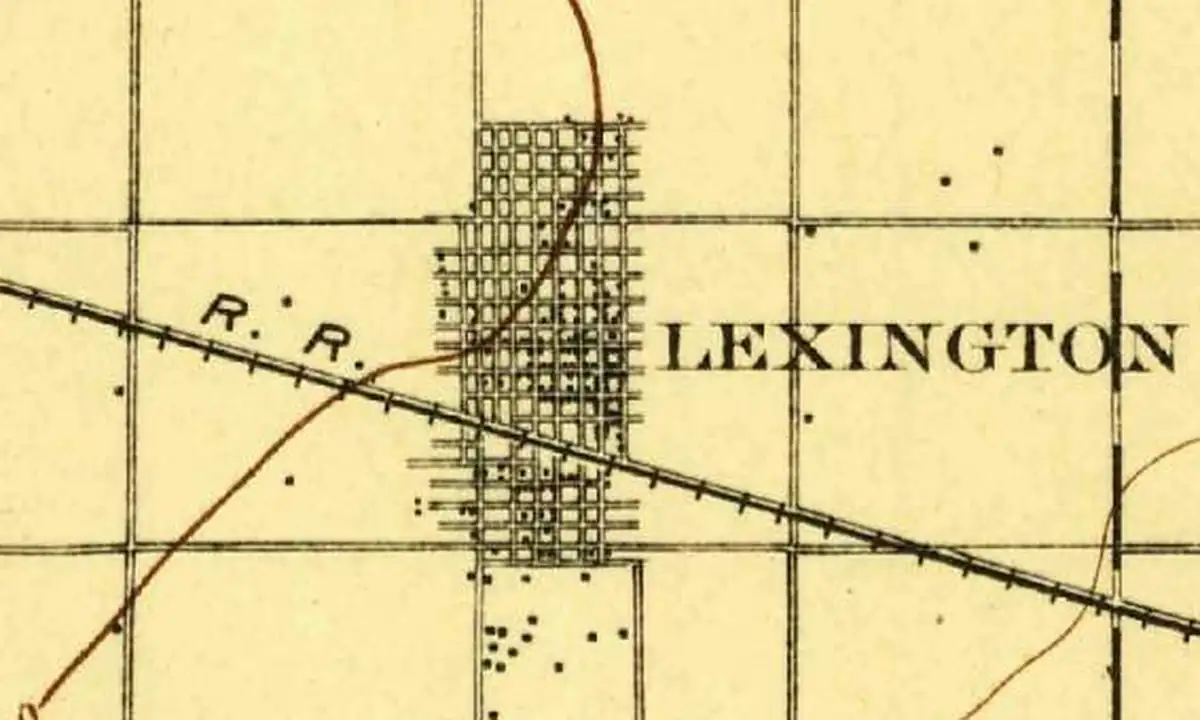
Lexington, Nebraska, was called Plum Creek until 1889, when the townspeople voted to rename it after the Battle of Lexington. Why they wanted a new name is a different story, and the sources don’t agree.
Where the name comes from
A 1925 study of Nebraska place names says the town started out as Plum Creek, on the south side of the Platte along the overland trail. Then, “in 1889, at a meeting of the citizens, the name was changed from Plum Creek to Lexington in commemoration of the battle of Lexington of the War of the Revolution.” That’s the 1775 fight in Massachusetts that opened the American Revolution. A Dawson County place-name list on the NEGenWeb site gives the same reason.
Why change it at all?
The 1925 study doesn’t say why the town wanted a new name. A local TV station, KOLN 10/11, asked the director of the Dawson County Historical Society and Museum, and she gave a blunter answer. She tied the change to the town’s image after a lynch mob hanged some homesteaders, saying the town “decided it needed to improve its image,” so in 1889 it held a vote and became Lexington.
The two accounts don’t have to clash. The vote could have been about leaving a bad reputation behind, and the battle could have been the reason for picking that particular new name. We give both, because each comes from a different kind of source.
From the trail to the railroad
The historical society director told KOLN that the settlement moved to its present spot when the Union Pacific came through in 1866. The 1925 study says the town was organized as Plum Creek in 1878 and incorporated in 1886. The U.S. Geological Survey’s record says it was founded in 1871 and incorporated in 1889. The dates don’t line up, so treat them with care. Lexington is the county seat of Dawson County.
Sources & further reading
- Lilian Linder Fitzpatrick, Nebraska Place-Names (University of Nebraska, 1925). A public-domain study of the state’s place names, county by county. Plum Creek, the 1889 citizens’ meeting and the Battle of Lexington.
- NEGenWeb, Dawson County places. The same account of the 1889 change.
- KOLN 10/11 News, “Our Town Lexington: Local History.” The historical society director on the vote and the town’s image.
- GNIS feature 830692 (U.S. Geological Survey). The federal record for Lexington. Founded 1871; incorporated 1889.
Spot something wrong? Corrections are noted here with their date, never made silently.