Ashland, Nebraska: A Prairie Town Named for a Kentucky Farm
Ashland, Nebraska, borrowed its name from a farm: Ashland, Henry Clay’s estate in Kentucky. The man who named the town was a big fan of Clay.
A fan of Henry Clay
Lilian Fitzpatrick’s 1925 book says the town “was named by Mr. Argyle after Ashland, the home of his ideal statesman, Henry Clay, near Lexington, Kentucky,” and that it was organized on March 4, 1870. A Saunders County history from 1983 says the same: Argyle, credited with organizing the town, “was a great admirer of the statesman, Henry Clay.”
And where did Clay get it?
You can follow the name one step further back. The estate’s own history page says Clay named his farm Ashland for the ash trees that grew there. So a Nebraska town ended up named, secondhand, for a stand of trees in Kentucky.
Before Ashland
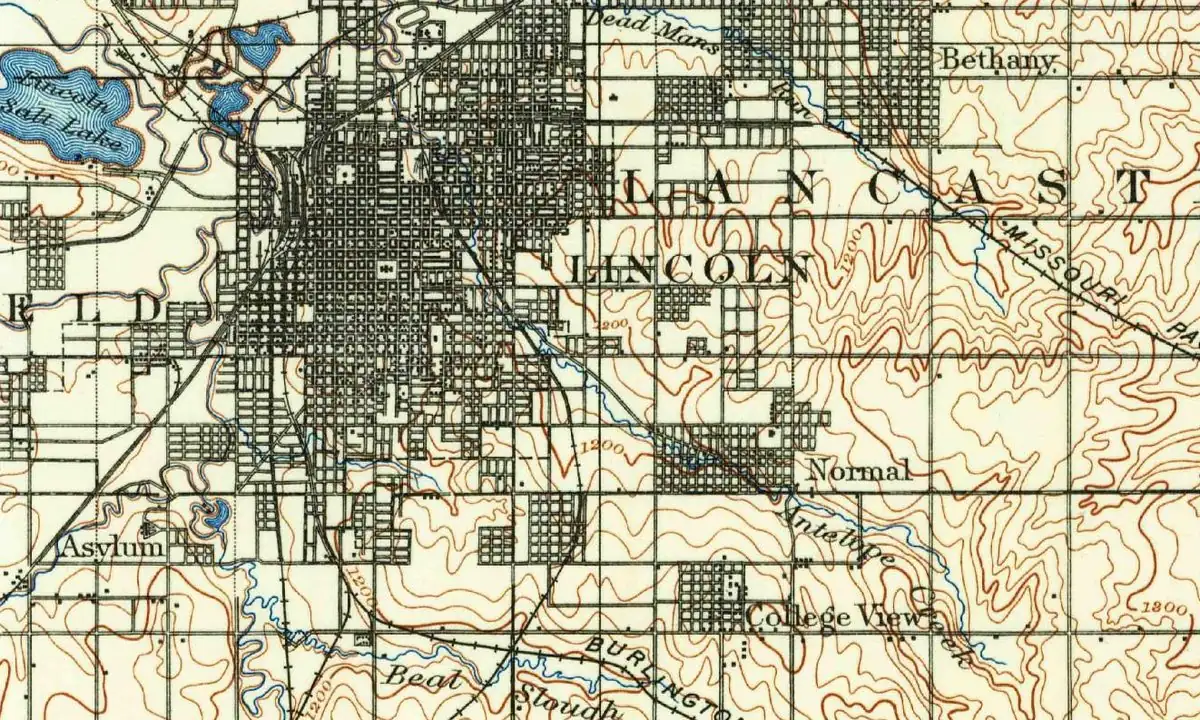
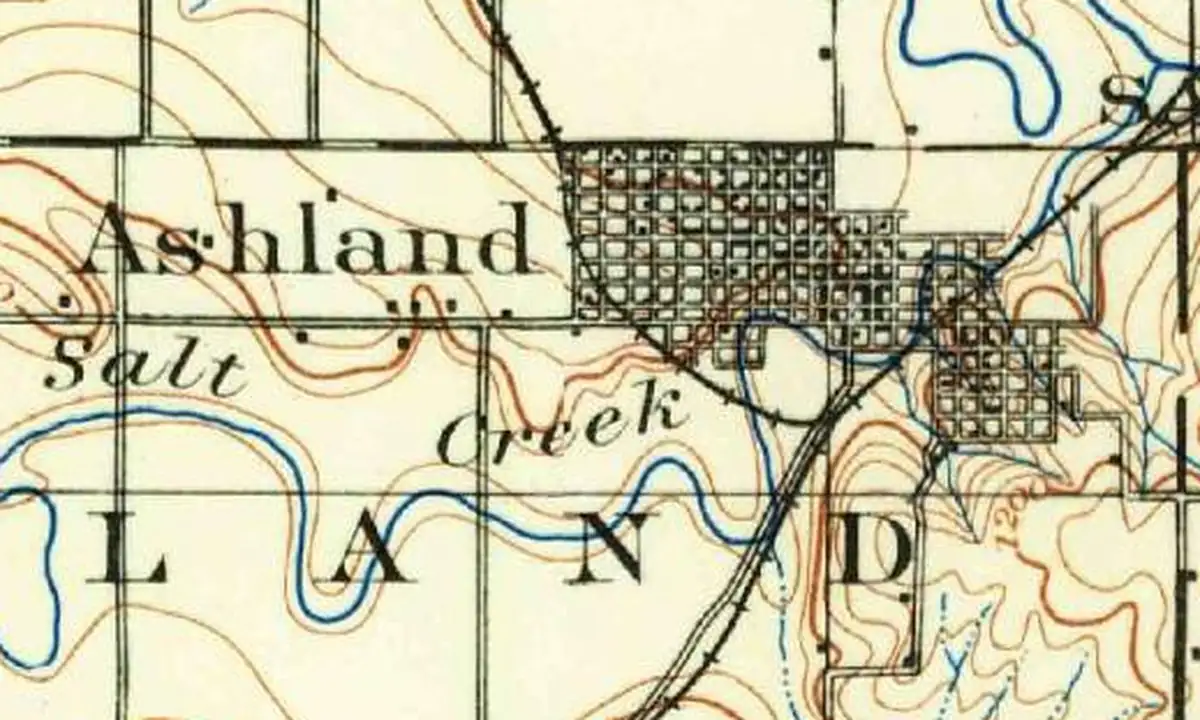
The county history says the spot was known first as Saline Ford, where the old government trail crossed Salt Creek, and that it became a supply stop for freighters and emigrants. It also calls this the site of the first settlement in what became Saunders County. If you look at the 1893 map above, you can see a creek winding along the south side of town.
Sources & further reading
- Lilian Linder Fitzpatrick, Nebraska Place-Names (University of Nebraska, 1925). The 1925 University of Nebraska study, now public domain. Mr. Argyle and Henry Clay’s Ashland.
- NEGenWeb, Saunders County history (1983), “Ashland.” Argyle, Saline Ford and the first settlement.
- Ashland, the Henry Clay Estate, “History of the Estate.” Why Clay called his farm Ashland.
- GNIS feature 827094 (U.S. Geological Survey). The federal record for Ashland. Founded March 4, 1870.
Spot something wrong, or know more? Tell us here. You can also email us or use our contact page. Corrections are noted here with their date, never made silently.