How Lincoln, Nebraska Got Its Name (A Trick That Backfired)
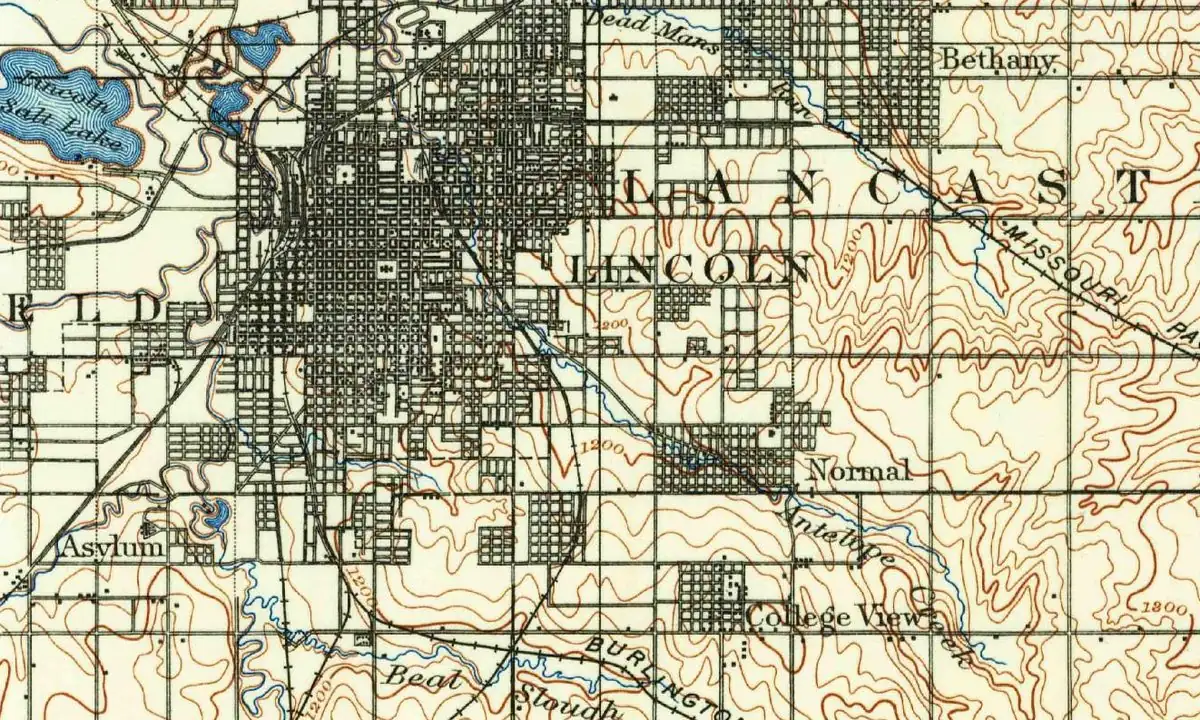
Lincoln, Nebraska, is named for Abraham Lincoln, but an 1889 history of the city says the name started as a trick by an Omaha senator who wanted to keep the capital in Omaha. It didn’t work, and the trick ended up naming the capital.
Before it was Lincoln: Lancaster
The town started out as Lancaster, a small village in Lancaster County. A 1925 study of Nebraska place names says it was “originally named Lancaster,” and that the site was formally picked as the new state capital in July 1867. The county kept the old name. It’s named after Lancaster, Pennsylvania, which was named after Lancaster County in England.
The fight over the capital
When Nebraska became a state in 1867, the capital was in Omaha, north of the Platte River. Lawmakers from south of the river wanted it moved, and the Legislature took up a bill to build a new capital farther south and west. History Nebraska, the state historical society, says Omaha didn’t have the votes to stop the bill, so its backers tried adding amendments that would make it harder to pass.
The trick
The best-known account comes from History of the City of Lincoln, Nebraska, published in 1889 by A. B. Hayes and Sam D. Cox. They say the bill first called the new town “Capital City.” Senator J. N. H. Patrick of Omaha moved to strike that out and put in “Lincoln” instead. The idea was to scare off Democrats from south of the Platte, including Senator Mills S. Reeves of Nebraska City, who, the book says, “had disliked the name of Lincoln more than he could that of Satan.”
It didn’t go as planned. According to the book, Reeves jumped up and said, “I second the motion of the Senator from Douglas.” The South Platte men went along, the amendment passed, and so did the bill. Hayes and Cox sum it up: the capital “bears the name it does as the result of an attempted sharp trick, designed to defeat the removal bill, and not owing to the admiration of the first State Legislature for the great war President.”
History Nebraska tells the same basic story and says the name was “an idea sure to be unpopular in the heavily Democratic South Platte region.” Flatwater Free Press, a Nebraska news site, also retells it from Hayes and Cox.
So who is it named for?
Abraham Lincoln, no question. The U.S. Geological Survey’s place-name record and the 1925 study both say so. The trick part is about why lawmakers put his name in the bill, and that comes mainly from one 1889 book, written about twenty years later. The book is the best source we found, but it’s not a record of the vote itself.
The USGS record gives 1856 for the founding of the town and 1869 for incorporation as Lincoln.
Sources & further reading
- A. B. Hayes and Sam D. Cox, History of the City of Lincoln, Nebraska (1889). The account of Senator Patrick’s amendment, “Capital City,” and Senator Reeves seconding it.
- Lilian Linder Fitzpatrick, Nebraska Place-Names (University of Nebraska, 1925). A public-domain study of the state’s place names, county by county. Says the town was originally Lancaster and gives July 1867 for the choice of the capital site.
- GNIS feature 837279 (U.S. Geological Survey). The federal record for Lincoln. Named for Abraham Lincoln; founded 1856, incorporated 1869, capital from 1867.
- History Nebraska, “How Lincoln Became the Nebraska State Capital.” The fight over moving the capital and the amendments Omaha’s backers tried.
- Flatwater Free Press, “Flatwater Explains: Why is Lincoln Nebraska’s capital?” A modern retelling based on Hayes and Cox.
Spot something wrong? Corrections are noted here with their date, never made silently.