How York, Nebraska Got Its Name (Nobody Knows Which York)
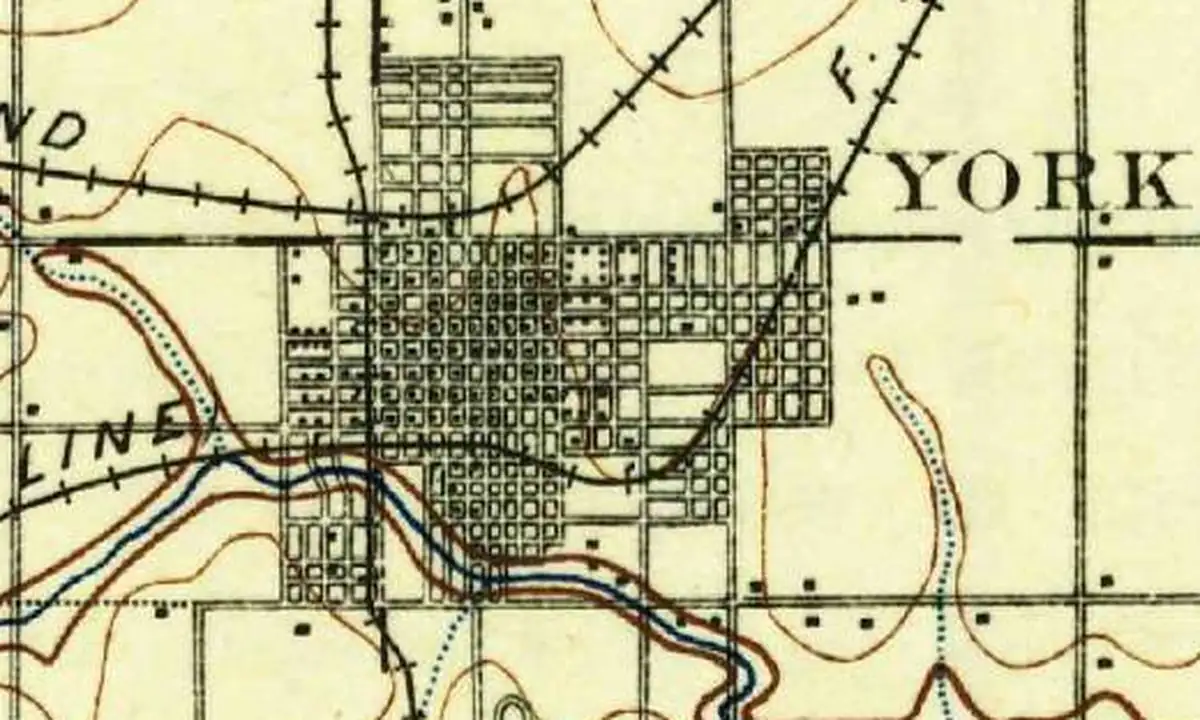
York, Nebraska, took its name from York County. Which York the county was named for is a puzzle: England and Pennsylvania both have backers, and nobody has settled it.
Where the name comes from
Even the 1925 study of Nebraska place names hedges. It says “it is presumed that the town took its name from York county, but nothing very definite is known about this.” The town was laid out in 1869, and the county had been on the map since the territorial legislature of 1855, so the county name came first.
Which York?
For the county, the 1925 study gives two stories. One is that Alfred D. Jones named it for York, England. The other is that “a number of early settlers came to the vicinity from York county, Pennsylvania, and named York county, Nebraska, after their former home.” It also mentions a third idea, from an older book on place names, that York and York County were named for a family that lived there.
A York County history page on the NEGenWeb site digs into it and comes up short. It says Jones did come from Pennsylvania, but not from York. It also floats the idea that the name was a nod to the territorial governor’s family, and says that’s unproven too. That’s why we list this one as disputed.
A New York next door
The 1925 study adds a fun detail. There was once a separate town called New York just outside York’s city limits, incorporated in 1880 and named by a landowner, a Mr. Wooley, “in honor of the metropolis.” It later became part of York.
The rest of the record
A. T. Andreas’s 1882 state history says the South Platte Land Company founded the town and had it surveyed and platted in October 1869. (The 1925 study prints the year as 1896, which has to be a misprint.) The U.S. Geological Survey’s record says York was incorporated as a village in 1875 and as a city in 1877. York is the county seat of York County.
Sources & further reading
- Lilian Linder Fitzpatrick, Nebraska Place-Names (University of Nebraska, 1925). A public-domain study of the state’s place names, county by county. The two York stories, the family idea and New York.
- NEGenWeb, York County, “Naming of York County.” Why neither story has been proven.
- A. T. Andreas, History of the State of Nebraska (1882), York County. The South Platte Land Company and the 1869 plat.
- GNIS feature 834911 (U.S. Geological Survey). The federal record for York. Platted 1869; village 1875; city 1877.
Spot something wrong, or know more? Tell us here. You can also email us or use our contact page. Corrections are noted here with their date, never made silently.