Lawton, Oklahoma, and the Officer Who Drew a Line in 1877
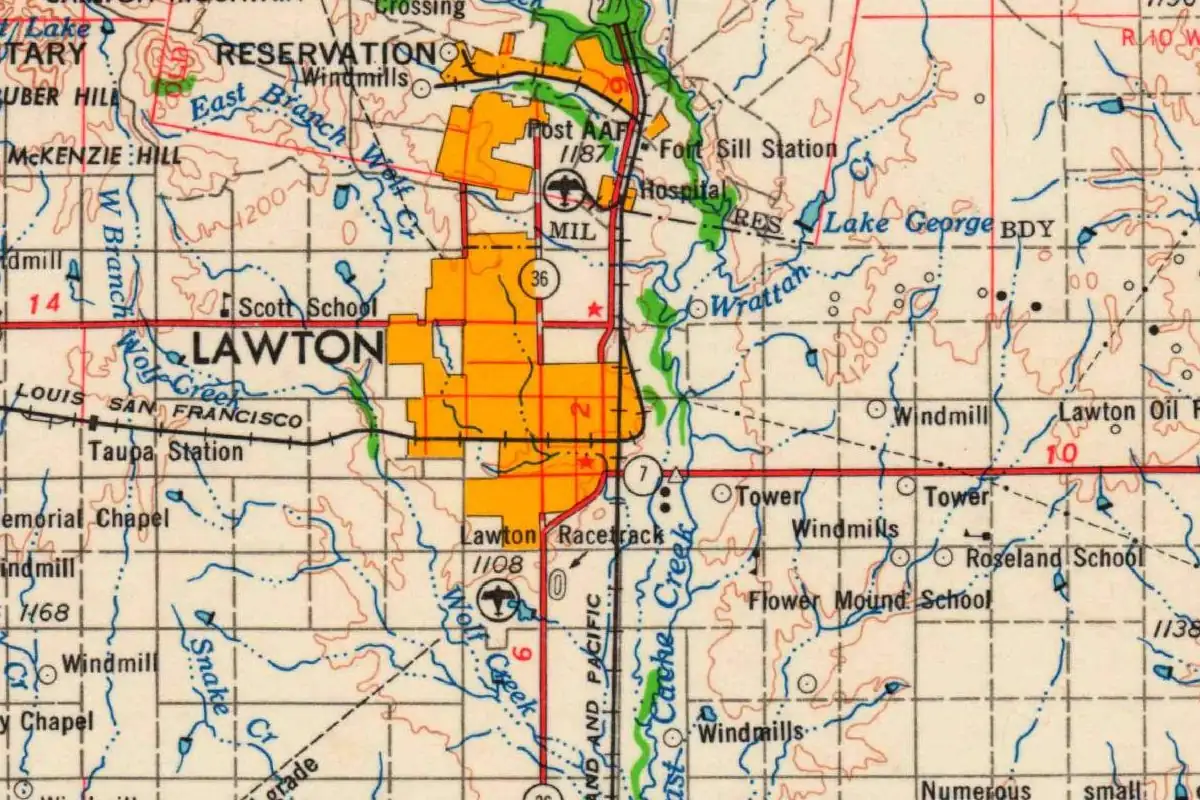
In 1877, the officer Lawton, Oklahoma, is named for pointed to a buffalo path and warned 66 armed men not to cross it. In 1901, when a new town opened on the Kiowa and Comanche lands, it took the name of that officer, by then General Henry W. Lawton.
Seventeen troopers and 900 captives
The story is in Joseph B. Thoburn’s A Standard History of Oklahoma, from 1916. In the summer of 1877, the Army moved more than 900 Northern Cheyennes from Fort Robinson, Nebraska, to Fort Reno, in the Indian Territory, where the government had decided to settle them with the Southern Cheyennes. Thoburn is blunt about one thing: the Northern Cheyennes “were not consulted.”
The escort was small on purpose. Thoburn’s account says it was “but seventeen cavalry troopers under the command of Lieut. Henry W. Lawton, of the Fourth U. S. Cavalry,” plus a pack train and twenty civilian employees. Sixty-six of the Cheyennes had been sworn in as Indian police and given horses and carbines, with three rounds of ammunition each.
The line in the dirt
After the party left Camp Supply, it ran into a buffalo herd. The Cheyenne police asked for more ammunition, and Lawton’s interpreter warned him they might use it to break away and head back north. He refused. When the police sent word that they’d take the cartridges by force, Lawton pointed to a buffalo path a few yards in front of him and told his interpreter: “Tell him that I will kill the first man who tries to cross that path.”
The police charged anyway, but “never a hoof crossed the dead line,” and the standoff ended. Keep in mind where this comes from: Thoburn says he got it from one of the civilian employees who rode with the escort, so you’re reading one eyewitness’s memory, not an Army report. The party reached Fort Reno on August 5, 1877. Thoburn and Isaac M. Holcomb’s 1908 A History of Oklahoma gives the same date and adds a footnote about the lieutenant: “Afterward Gen. Henry W. Lawton, who was killed in battle in the Phillipines.”
A land office town gets a name
Lawton’s career had started long before Oklahoma. A life sketch in Thoburn’s fourth volume mentions a Fort Wayne man who served in Company D of the 30th Indiana during the Civil War “under Captain Henry W. Lawton, who later was distinguished as Major-General in the Philippine War.”
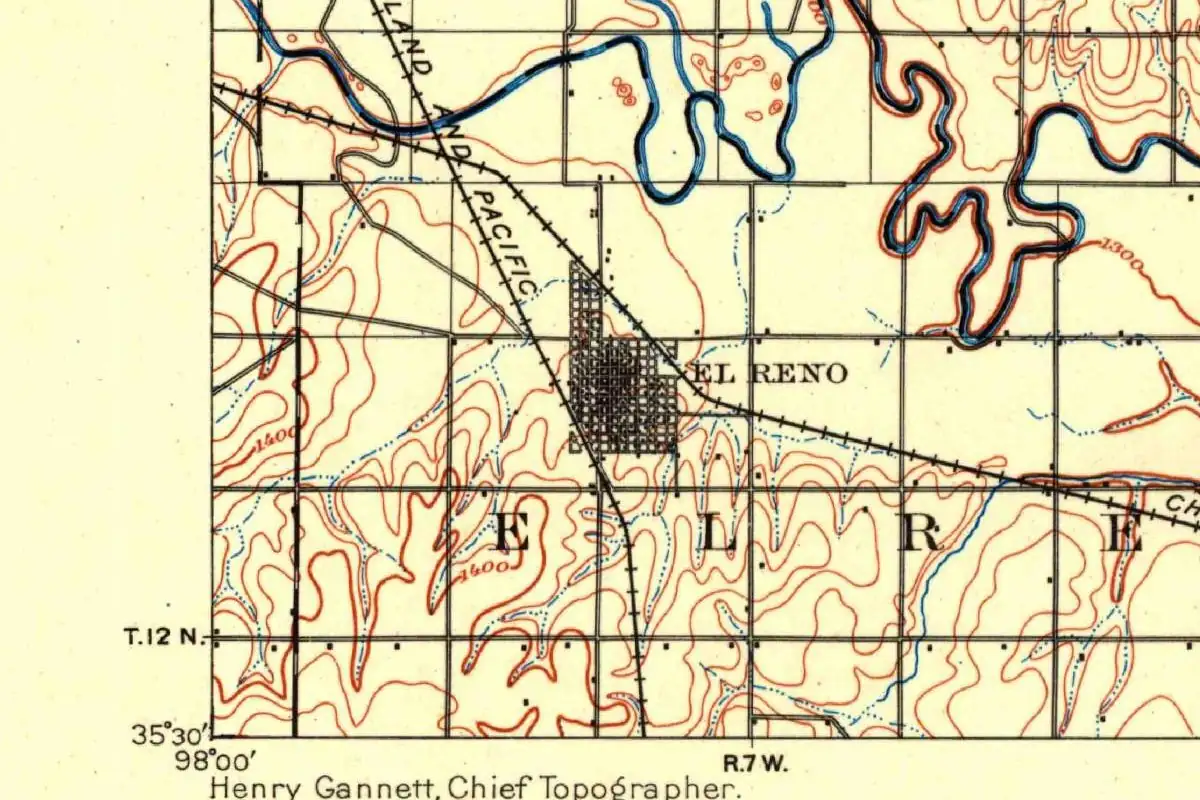
The town came in 1901, when the government opened the Kiowa, Comanche and Apache lands. Thoburn prints the proclamation that opened them on August 6, 1901, and it shows the name was picked before the town existed. Registration would happen at land offices “at El Reno and Lawton,” with the Lawton office in temporary quarters near Fort Sill “until suitable quarters can be provided at Lawton.” James L. Allhands, writing on the Frisco railroad in the Chronicles of Oklahoma in 1925, mentions “Lawton (named after General Lawton of the U. S. Army) which was designated as a U. S. Land Office.” The other land office was at El Reno, so if you want the other end of this story, it’s in how El Reno got its name, the town near the fort where Lawton delivered the Cheyennes 24 years earlier.
Sources & further reading
- Joseph B. Thoburn, A Standard History of Oklahoma, vol. 2 (1916). The 1877 escort to Fort Reno and the buffalo path (pp. 546-548); the land offices at El Reno and Lawton, the temporary office near Fort Sill and the opening of August 6, 1901 (pp. 729-736).
- Joseph B. Thoburn and Isaac M. Holcomb, A History of Oklahoma (1908), sec. 174. The arrival at Fort Reno on August 5, 1877, and Lawton’s death in the Philippines.
- James L. Allhands, Chronicles of Oklahoma (1925), p. 236. “Lawton (named after General Lawton of the U. S. Army).”
- Joseph B. Thoburn, A Standard History of Oklahoma, vol. 4 (1916), p. 1414. Captain Henry W. Lawton of the 30th Indiana.
- GNIS feature 1094539 (U.S. Geological Survey). The federal record for Lawton.
Spot something wrong, or know more? Tell us here. You can also email us or use our contact page. Corrections are noted here with their date, never made silently.