How Keystone, South Dakota Got Its Name (From a Gold Mine)
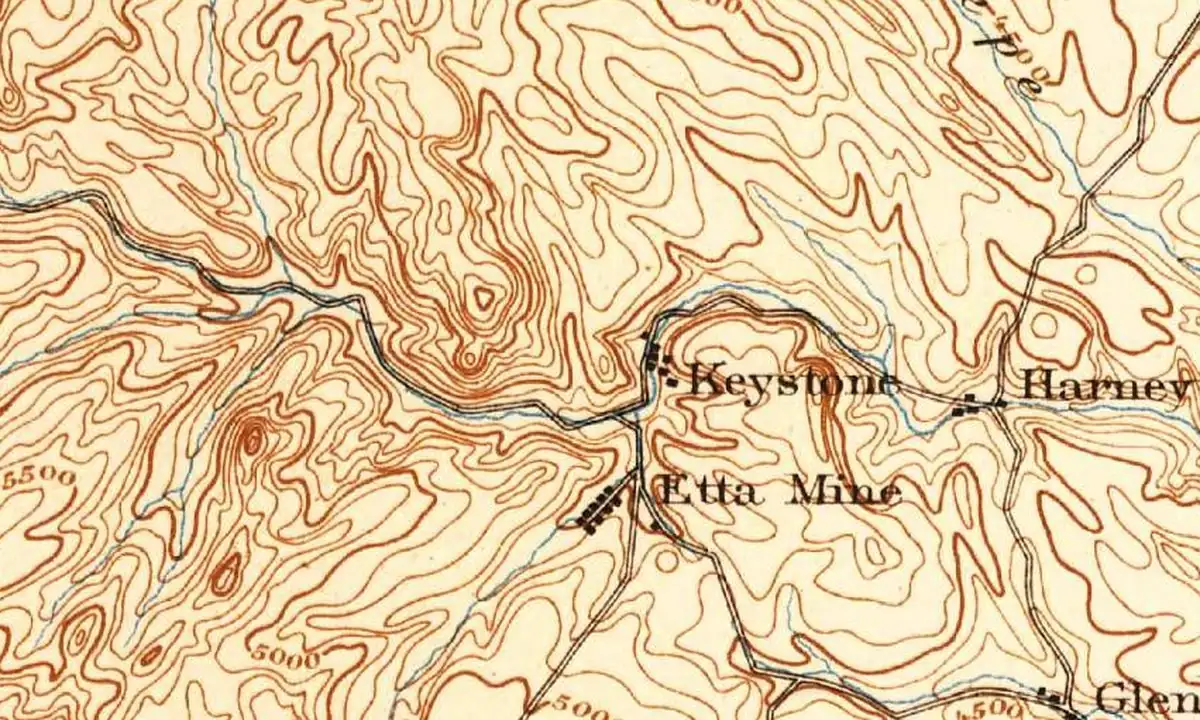
Keystone, South Dakota, is named for the Keystone Mine, a gold mine staked nearby in 1891, and the mine’s name most likely came from a Masonic emblem. So the town is named for a mine, and the mine may be named for a piece of jewelry.
Where the name comes from
The town and the mine go together. A historical marker put up by the Keystone Area Historical Society says that in 1891, William Franklin, “also known as Rocky Mountain Frank,” and his partners Jacob Reed and Tom Blair “located the Keystone Mine from which the town of Keystone was named.” The U.S. Geological Survey’s place-name record agrees that the town was founded in 1891 and named for the nearby Keystone Mine.
Why “Keystone”?
A keystone is the wedge-shaped stone at the top of an arch, the one that holds the rest in place. It’s also a symbol used by the Freemasons.
The USGS record, which cites an older South Dakota reference, says the mine’s name comes from “the Masonic emblem worn on the watchchain of the prospector who owned the mine.” That’s the only source we found that explains the mine’s name, and it doesn’t say which prospector it means. So the Masonic emblem is the best explanation on record, not a proven one.
Sources & further reading
- William and Jennie Franklin historical marker, Keystone Area Historical Society (2005). Says Franklin, Reed and Blair located the Keystone Mine in 1891 and that the town was named for it. Read through the Historical Marker Database listing.
- GNIS feature 1261912 (U.S. Geological Survey). The federal record for Keystone. Gives the 1891 founding, the Keystone Mine and the Masonic emblem, citing an older South Dakota reference.
Spot something wrong? Corrections are noted here with their date, never made silently.