Rehoboth Beach, Delaware: A Bible Name Older Than the Resort
Rehoboth Beach, Delaware, has a Bible name usually tied to an 1870s Methodist camp meeting, but Rehoboth shows up in local records as early as 1677. That’s almost 200 years before the camp meeting, so the Methodists weren’t the first to use it.
A well in Genesis
Rehoboth is the name of a well in the Book of Genesis. Isaac’s people dug two wells that the herdsmen of Gerar fought over, then a third that nobody fought over. In the King James Version, “he called the name of it Rehoboth; and he said, For now the LORD hath made room for us, and we shall be fruitful in the land.”
Henry Gannett, writing for the U.S. Geological Survey in 1905, calls it “A Hebrew word meaning ‘room,’ or ‘enlargements.’” That fits the verse, and there’s nothing in the sources that argues with it.
The camp-meeting story
Gannett’s book and the federal place-names database say the same thing, in the same words: the town was “given this scriptural name because it was first established as a place for yearly camp meetings.”
The camp meeting was real. Scharf’s big History of Delaware (1888) says the Rehoboth Association was incorporated on March 15, 1871, and in 1872 bought several hundred acres from Lorenzo D. Martin “for the purpose of establishing a resort with religious influences, and to hold in connection a yearly camp-meeting.” In January 1873, the legislature renamed the group the “Rehoboth Beach Camp-Meeting Association of the Methodist Episcopal Church.” A post office called Rehoboth Beach opened the same year. The religious side didn’t last long, though. Scharf says the camp meeting was dropped in 1881.
But the name was already there
Here’s the catch. Look at the dates in Scharf’s own book and you’ll see Rehoboth in the records long before any Methodists arrived.
- In 1677, a 240-acre tract called the “Vine-yard” was taken up “near unto Rehoboth.”
- In 1698, one of the county’s new overseers of highways was put in charge “for Rehoboth to the Inlett.”
- In 1727, David Cordrey was named overseer for Rehoboth Hundred. A hundred is a district of a county; Scharf notes that the Provincial Council told the counties to divide themselves into hundreds in 1690.
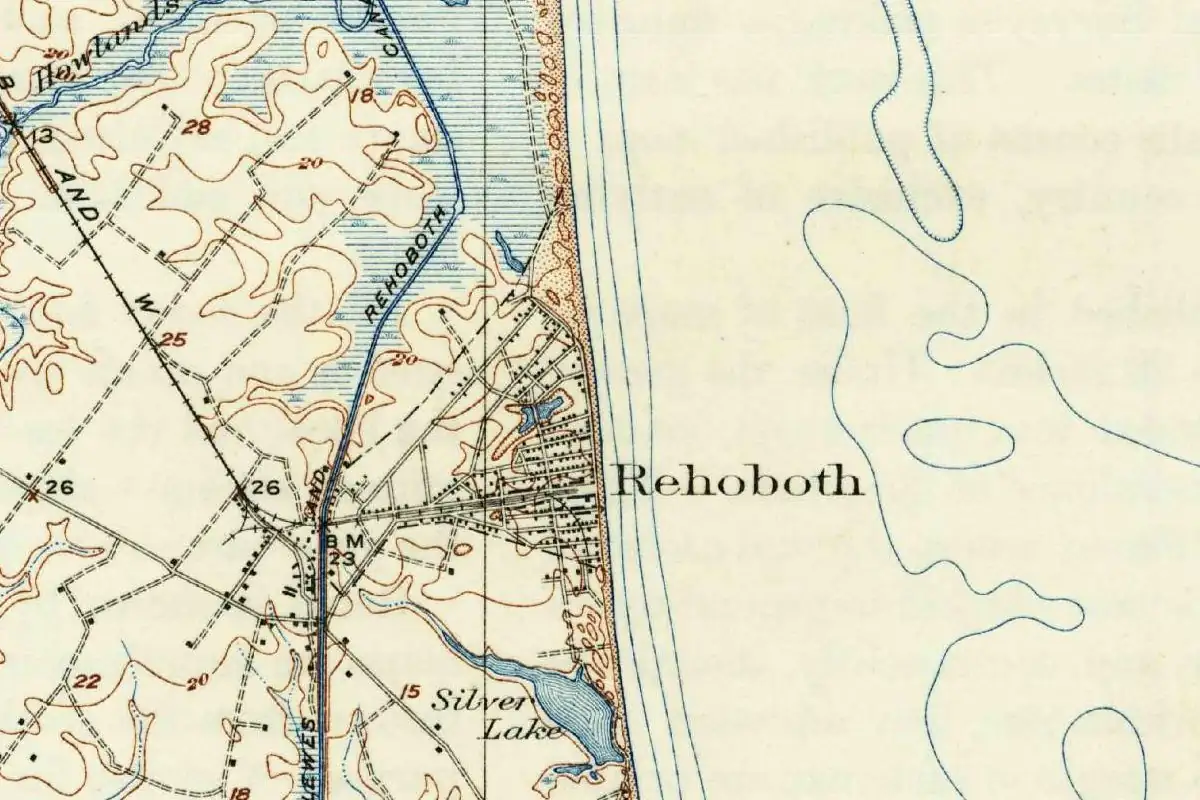
- In 1869, two years before the association, a separate “Rehoboth City” was laid out “at the head of Rehoboth Bay.”
So the bay, the hundred and the road all carried the name first. When the association called itself Rehoboth in 1871, it was using a name that local records had carried for almost 200 years.
Which story holds up
Both pieces have support, which is why the origin counts as disputed. Gannett and the federal record describe why the resort was founded and what the word means. Scharf’s records show the name didn’t start there. None of these sources says who first put a Bible name on that stretch of coast, or whether the Methodists chose the place partly because the name already suited them. That part’s a gap, and there’s no paperwork in these books to fill it.
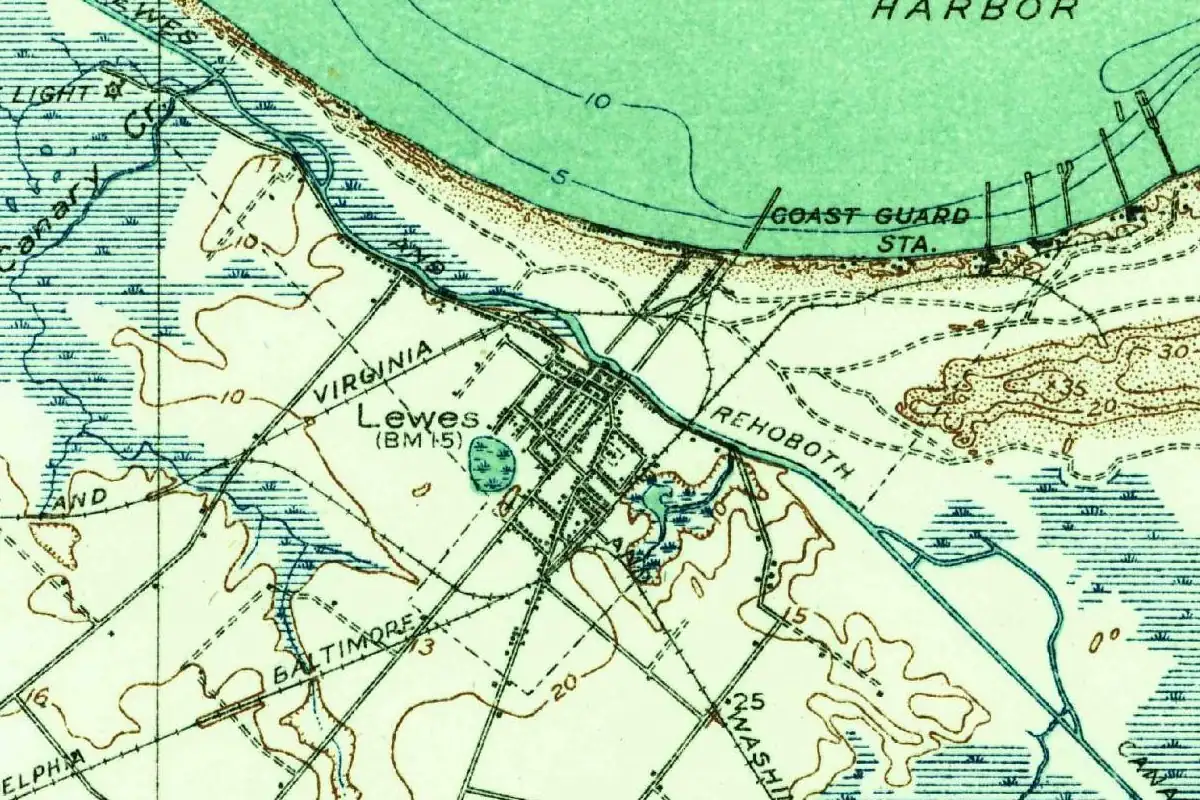
One more find from those old court records: in 1735, John Roads was put in charge of the road “from ye seaside to along Rehoboth road to ye place where a gallows stood towards Lewestown.” These days you can make the trip between the beach and Lewes without passing a gallows.
Sources & further reading
- GNIS feature 214535, Rehoboth Beach (U.S. Geological Survey). The federal record’s history note: “Given this scriptural name because it was first established as a place for yearly camp meetings,” and the Hebrew meaning.
- Henry Gannett, The Origin of Certain Place Names in the United States, 2nd ed. (USGS Bulletin 258, 1905), p. 261. The same explanation and the meaning “room,” or “enlargements.”
- J. Thomas Scharf, History of Delaware, 1609-1888, vol. 2 (1888), pp. 1202, 1204, 1219. The 1677 tract “near unto Rehoboth” (p. 1202); the 1698 overseer “for Rehoboth to the Inlett,” Rehoboth Hundred in 1727, the footnote on the hundreds of 1690 and the 1735 road “towards Lewestown” (p. 1204); Rehoboth City in 1869, the Rehoboth Association of 1871, the 1872 land purchase, the 1873 camp-meeting name, the 1873 post office and the end of the camp meeting in 1881 (p. 1219).
- The Bible, King James Version, Genesis 26:20–22. The wells Esek, Sitnah and Rehoboth, and “the LORD hath made room for us.”
Spot something wrong, or know more? Tell us here. You can also email us or use our contact page. Corrections are noted here with their date, never made silently.