Miami, Florida: A River Name From a 16th-Century Lake
Miami, Florida, is named for the Miami River, and the oldest trace of the name may be Mayaimi, a lake a Spanish captive described in the 1500s. What the word meant is another matter. The people who could have told us left almost nothing of their language behind, so the honest answer is that nobody knows.
Fontaneda’s Lake Mayaimi
Hernando de Escalante Fontaneda lived as a captive among the Calusa of southwest Florida, according to the Smithsonian’s Handbook of American Indians, which dates his memoir to about 1575. In it he describes Carlos, the Calusa province and chief, whose lands reached “as far as a town they call Guacata, on the Lake of Mayaimi, which is called Mayaimi because it is very large.” That’s the English of Buckingham Smith, who translated the memoir in 1854. The Spanish text, printed in Madrid in 1866, says the same thing: “Llámase laguna de Mayaimi porque es muy grande.”
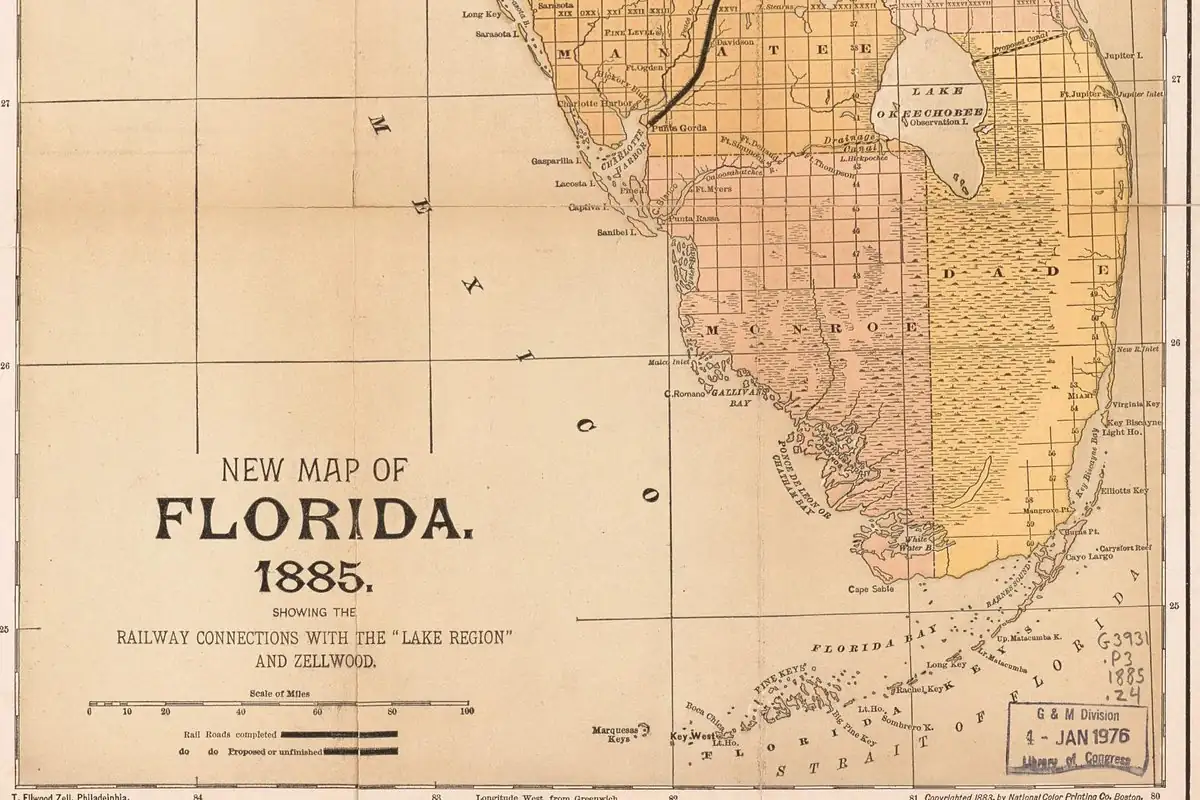
Fontaneda also wrote about the southeast coast. The island chain of the Martires, he said, ends near “a village of Indians called Tequesta,” on a river that runs inland “fifteen leagues” and comes out of another lake, which some Indians told him was “an arm of the Lake of Mayaimi.” In a note, Smith placed Tequesta at the mouth of the Miami River. The Handbook puts the Tequesta on the coast of today’s Dade and Monroe counties and says about all that’s known of them comes from short passages like Fontaneda’s.
From a lake to a river
The link between the lake and the river comes from Daniel G. Brinton, who published a study of the Florida peninsula in 1859. Brinton wrote that Lake Mayaimi “is identical with lake Okee-chobee.” He added that when Pedro Menéndez de Avilés, the founder of St. Augustine, went up the St. Johns River, the people there told him it rose “from a great lake called Maimi thirty leagues in extent.” His footnote gives the Spanish chronicle’s year as 1566. Then Brinton made the connection that matters here: “on the eastern shore the river Miami preserves the other form of the name.”
Later the river’s name traveled. The Handbook, drawing on a Bureau of American Ethnology report, lists a Seminole settlement called Miami River, with 63 people in 1880, on the Little Miami River about 10 miles (16 km) north of the site of Fort Dallas.
Lake Okeechobee didn’t keep the old name, by the way. The U.S. Geological Survey’s 1905 place-name book and its federal record for the lake both call Okeechobee a Seminole word meaning “large water.” That’s a different word, from the Seminoles, so you can’t borrow its meaning for Mayaimi.
What did Mayaimi mean?
Here’s where the sources split. There are three versions, and none of them rests on a study of the language.
“Because it is very large”
Fontaneda’s own line is the oldest. Notice what he actually says, though. He doesn’t translate the word. He says the lake is called Mayaimi because it’s so big, which may be his explanation or his hosts’. He doesn’t say which.
“Sweet Water”
In 1921, E. V. Blackman wrote in his history of Miami and Dade County that Miami “is a Seminole Indian word meaning ‘Sweet Water,’” which the Seminoles applied to the river. Blackman doesn’t say where he got that, and he doesn’t mention Fontaneda’s lake at all.
The tribe from Ohio and Indiana
Gannett’s 1905 book lumped Florida’s river and city in with Miami County, Indiana, and the Miami River in Ohio: “The name of a noted Indian tribe; the meaning of the word is uncertain.” That’s a different people. The Handbook describes the Miami as an Algonquian tribe first reported in 1658 at or near Green Bay, in what’s now Wisconsin, and follows them south to Indiana, where they show up in our stories on Kokomo and Fort Wayne. Brinton had already flagged the problem in 1859. The Ohio name was “said to be a pure Algic word,” he wrote, but “we are, however, not yet prepared to accept this explanation as applicable to the word as it appears in Florida.”
Why nobody can settle it
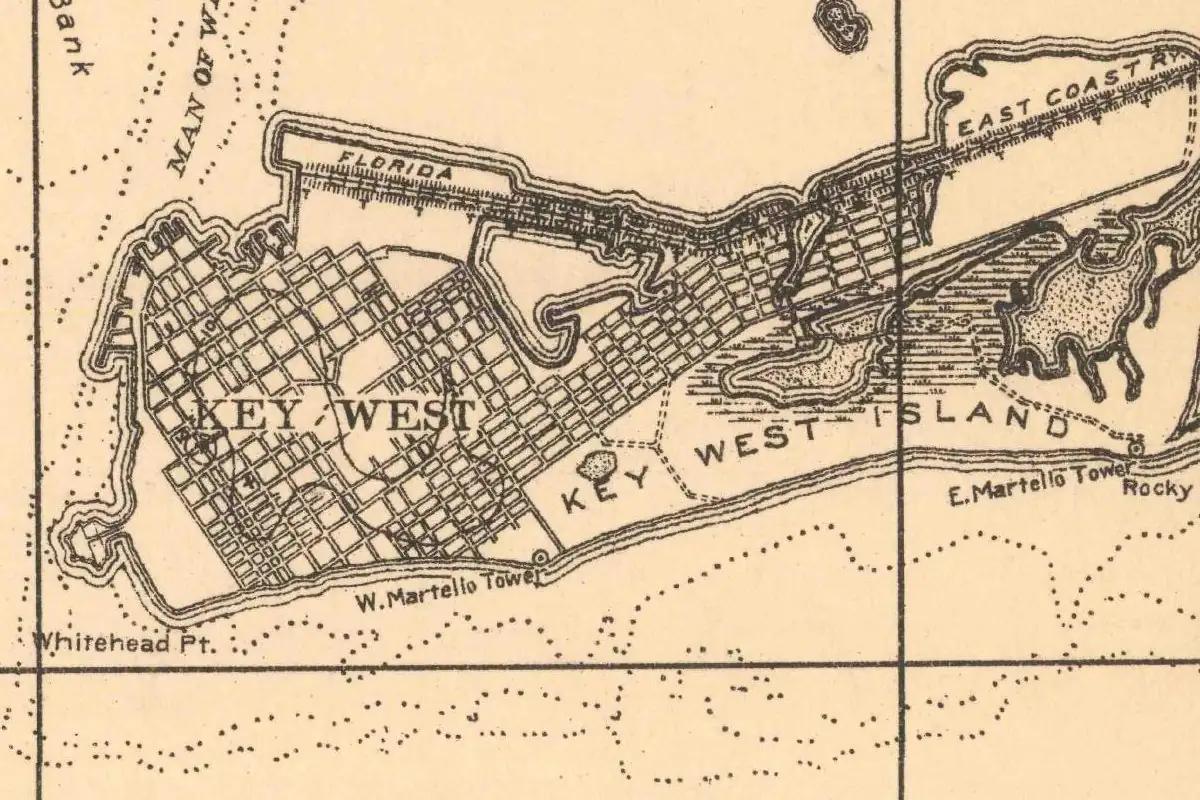
The Handbook is blunt about the languages of the Calusa and their neighbors. “Nothing is known of the linguistic affinity of the Calusa or their immediate neighbors,” it says, and the town names and few words Fontaneda recorded offer no basis “for serious interpretation.” It calls the Tequesta a tribe “of unknown linguistic affinity.” In the 1700s, the Handbook adds, raids by the Creeks and other Indian allies of the English drove the Calusa off the mainland and onto the keys, Key West among them.
So if you’ve seen “big water” given as the meaning of Miami, keep in mind that none of the sources here supports it. The nearest thing on the record is Fontaneda’s remark that the lake was very large.
Fort Dallas, Flagler, or Miami
The city got the name from the river. Before it incorporated, Blackman writes, the settlement was known as Fort Dallas, after the army post kept there during and after the Indian wars. The city was born on July 28, 1896, and “there was considerable discussion as to the name.” Many wanted to call it Flagler, in honor of Henry M. Flagler, “but it was finally decided to take the name Miami.”
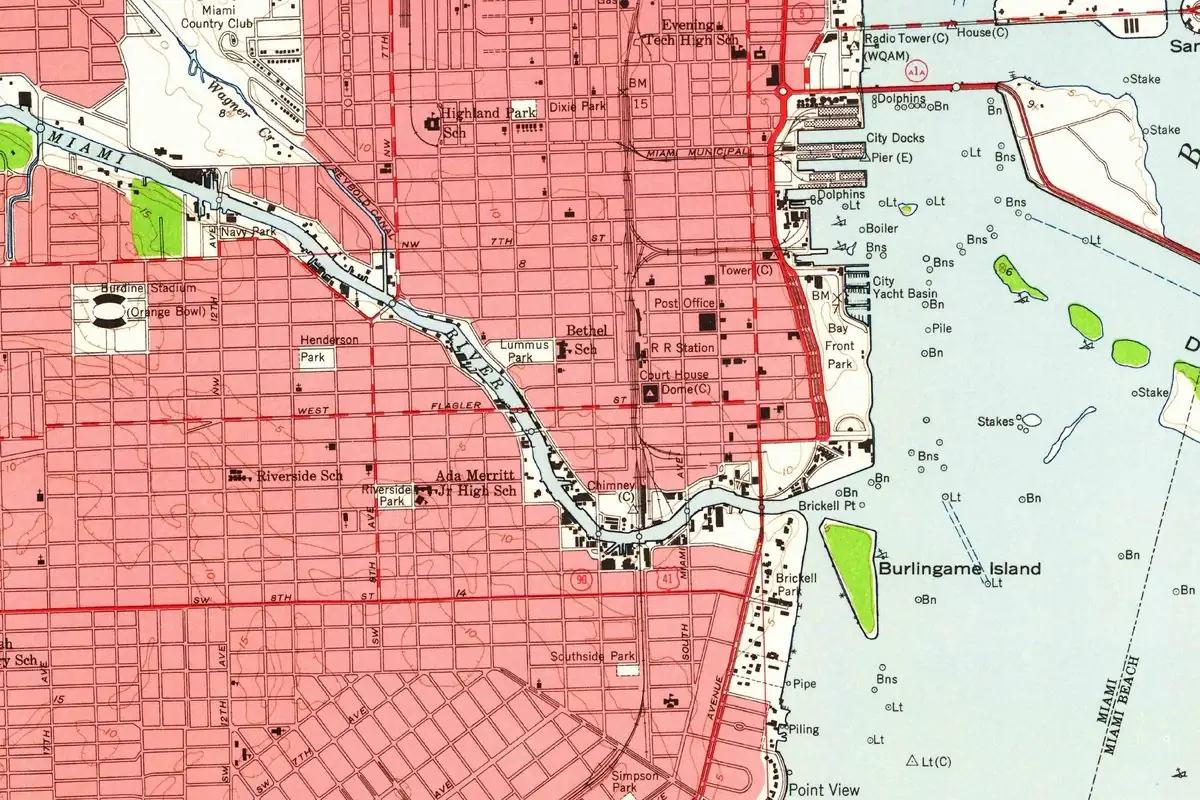
So Flagler lost out to a lake name that Spanish writers set down in Florida more than three centuries before the city existed. On the 1950 map at the top of this page, you can still follow the Miami River through the middle of downtown to the bay.
Quick answers
What does the name Miami mean?
Nobody knows. Fontaneda said around 1575 that the lake was “called Mayaimi because it is very large,” a 1921 history called it a Seminole word for “Sweet Water,” and the Smithsonian’s handbook says the few Calusa words on record offer no basis for serious interpretation.
Is Miami, Florida, named after the Miami tribe?
The sources don’t agree. Gannett’s 1905 book filed it under the Midwestern tribe, while Brinton in 1859 linked it to Mayaimi, a Florida lake in the 1500s records, and wasn’t prepared to apply the Ohio explanation to Florida.
Why didn’t Miami get named Flagler?
Blackman’s 1921 history says many wanted the name Flagler when the city incorporated in 1896, “but it was finally decided to take the name Miami,” the name of the river.
What was Miami called before 1896?
Fort Dallas. Blackman says the settlement took that name from the army post kept there for many years.
Key dates
- 1566Pedro Menéndez de Avilés hears of a great lake called Maimi, in the Spanish chronicle Brinton cites.
- ca. 1575Fontaneda writes that the lake "is called Mayaimi because it is very large."
- 1854Buckingham Smith publishes Fontaneda's memoir in English.
- 1859Daniel G. Brinton says the Miami River preserves the old lake name.
- 1896July 28: the city incorporates as Miami. Many had wanted to call it Flagler.
- 1905Gannett's place-name book files Florida's Miami under the Miami tribe of the Midwest.
- 1921E. V. Blackman calls Miami a Seminole word meaning "Sweet Water," without naming a source.
Getting there
The closest airports, Amtrak stations and intercity bus stops, measured in a straight line from the center of Miami.
Airports
- Miami International (MIA) 6 mi 10 km
- Fort Lauderdale/Hollywood International (FLL) 21 mi 33 km
Amtrak trains
- Miami station (MIA) 7 mi 11 km
- Hollywood station (HOL) 16 mi 27 km
Intercity buses
- FlixBus Miami Intermodal Center 4 mi 7 km
- Greyhound Boca Raton Trirail Station 43 mi 69 km
Distances are as the crow flies, not by road. We don't list schedules or fares because they change; check with the airline, Amtrak or the bus company before you go. Official data (FAA commercial service airports (2025), FAA airport locations, Amtrak stations and Intercity Bus Atlas) from the FAA and the U.S. Bureau of Transportation Statistics, checked Oct 31, 2026.
Historical Sources & References
- Hernando de Escalante Fontaneda, Memoir respecting Florida, translated by Buckingham Smith (1854), p. 15 and notes. The Lake of Mayaimi, “called Mayaimi because it is very large”; Tequesta on a river said to come from an arm of the lake; Smith’s note placing Tequesta at the mouth of the Miami River.
- Fontaneda, Memoria de las cosas y costa y indios de la Florida, in Colección de documentos inéditos, vol. 5 (1866), p. 534. The Spanish text: “Llámase laguna de Mayaimi porque es muy grande.”
- Frederick Webb Hodge, ed., Handbook of American Indians North of Mexico, part 1 (1907; 1912 printing). Fontaneda as a captive among the Calusa, their retreat to the keys including Key West, and “Nothing is known of the linguistic affinity of the Calusa” (pp. 195-196); Guacata on Lake “Mayaimi” (p. 508); the Algonquian Miami tribe (p. 852); the Seminole settlement called Miami River in 1880 (p. 855).
- Frederick Webb Hodge, ed., Handbook of American Indians North of Mexico, part 2 (1910; 1912 printing), p. 733. The Tequesta, “of unknown linguistic affinity,” on the coast of today’s Dade and Monroe counties.
- Daniel G. Brinton, Notes on the Floridian Peninsula (1859), pp. 114-115. Lake Mayaimi as Lake Okeechobee, the lake called Maimi in the Avilés account, the river Miami preserving “the other form of the name,” and his reluctance to apply the Ohio explanation to Florida.
- Henry Gannett, The Origin of Certain Place Names in the United States (USGS, 1905), pp. 207, 230. Files Florida’s Miami under the Midwestern tribe, “the meaning of the word is uncertain”; Okeechobee as a Seminole word meaning “large water.”
- E. V. Blackman, Miami and Dade County, Florida (1921), pp. 19-20, 85-86. Incorporation on July 28, 1896, the Flagler proposal, Fort Dallas as the earlier name, and the “Sweet Water” version.
- GNIS feature 295004 (U.S. Geological Survey). The federal record and coordinates for Miami, in Miami-Dade County. Also online: GNIS feature 307550, Lake Okeechobee, whose history note calls the name a Seminole word meaning “large water.”
Spot something wrong, or know more? Tell us here. You can also email us or use our contact page. Corrections are noted here with their date, never made silently.