Great Smoky Mountains: Why They're Called "Smoky"
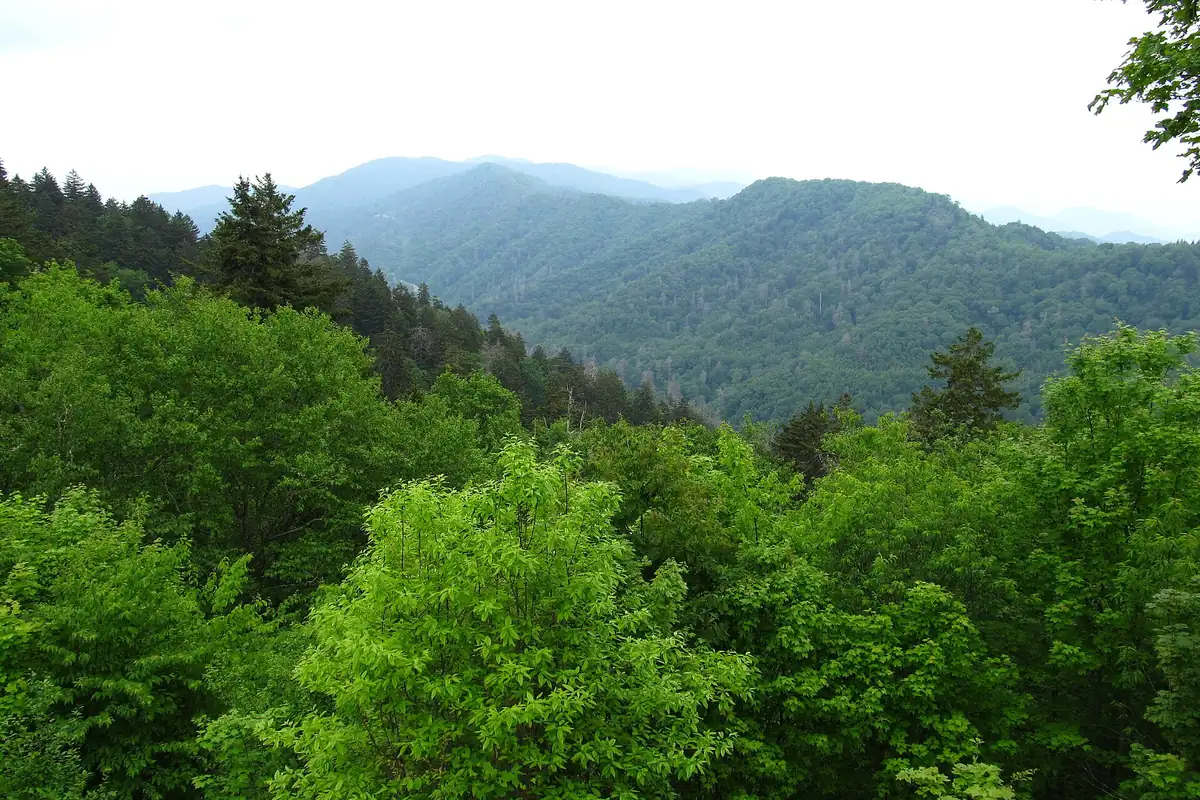
The Great Smoky Mountains are named for the blue haze that hangs over their ridges, and the National Park Service says the forest makes it. So the “smoke” isn’t smoke at all. No record says who first called these mountains smoky, but the name was already on paper in 1789, paired with another one that didn’t last: the Great Iron Mountain.
Smoke that comes from the trees
If you’ve stood at an overlook here and watched the far ridges go pale and blue, you’ve seen the name. Horace Kephart, who lived in a cabin on Hazel Creek from 1904 to 1907 gathering material for his 1913 book Our Southern Highlanders, described it this way: a “dreamy blue haze, like that of Indian summer intensified, that ever hovers over the mountains.” Then he spelled it out. “Both the Blue Ridge and the Smoky Mountains owe their names to this tenuous mist.”
The park tells it the same way today, with the chemistry added. In an article titled “Where Mountains Breathe,” the National Park Service says about 95% of the park is forest, and the plants give off water vapor and natural chemicals called volatile organic compounds. Sunlight and moisture turn those compounds into fine particles, which scatter “especially the shorter blue wavelengths, producing the bluish haze that gives these mountains their name.” The park singles out rhododendrons and hemlocks as heavy emitters.
There’s a second kind of haze, and it isn’t the one in the name. The park’s air quality page says pollution “typically appears as a uniform whitish haze, different from the natural mist-like clouds for which the Smokies were named.” So if the view looks milky white instead of blue, you’re probably looking at something that blew in from outside the park.
“The Great Iron or Smoaky Mountain”
As far as North Carolina’s standard place-name book can tell, the name first shows up in writing in a law. In December 1789, North Carolina passed an act handing its western lands, today’s Tennessee, to the federal government. The act traced the new boundary along the mountain tops, “to the place where it is called the Great Iron or Smoaky Mountain,” and from there to “Unicoy or Unaka Mountain.” Congress accepted the gift on April 2, 1790, in an act that quotes North Carolina’s act word for word, and that’s how the federal statute book prints it, odd spelling included. The North Carolina Gazetteer, edited by William S. Powell, calls this “probably” the first written reference to the name Smoky.
Notice that the act gives two names for the same mountain. “Great Iron” didn’t win, though it didn’t vanish either: the federal place-names database still lists Great Iron Mountains and Iron Mountains as variants of the official name. The other mountain in that line has a story too. James Mooney, the Bureau of American Ethnology’s expert on the Cherokee, wrote in 1900 that Unaka, “the present map name of a part of the Great Smoky range,” probably came from the Cherokee word for white.
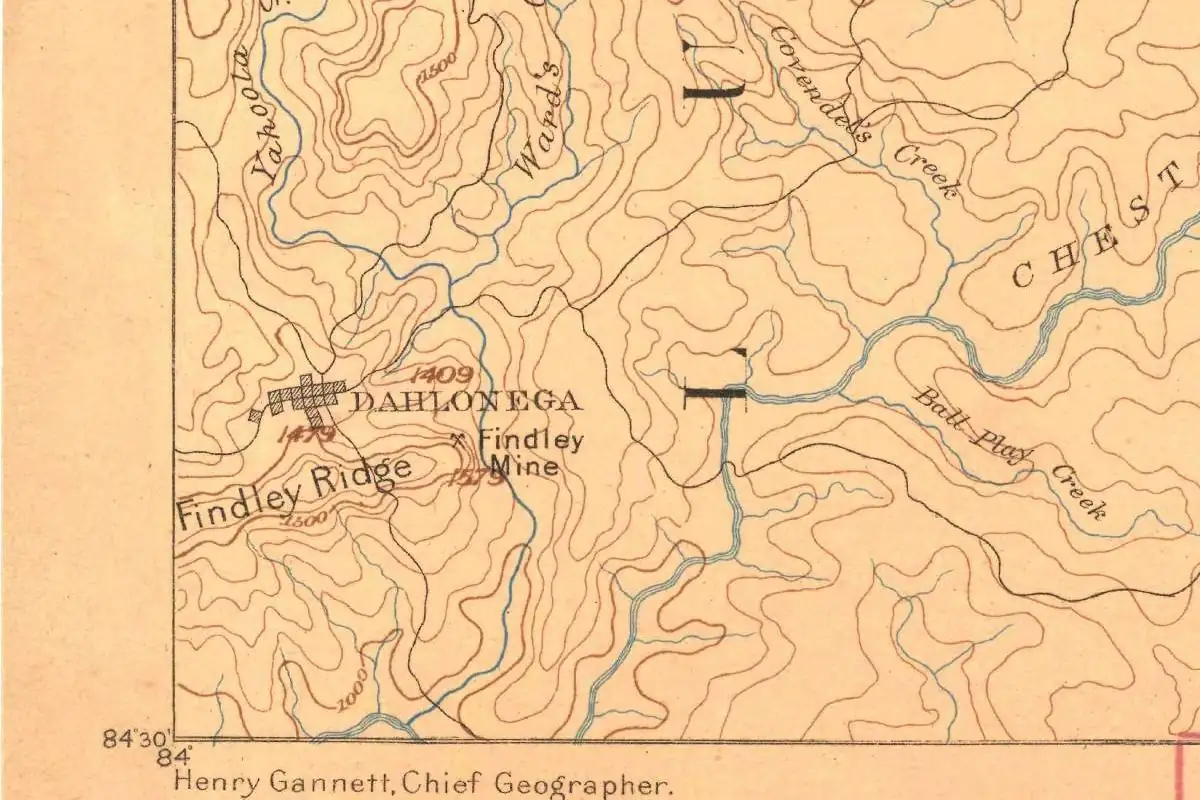
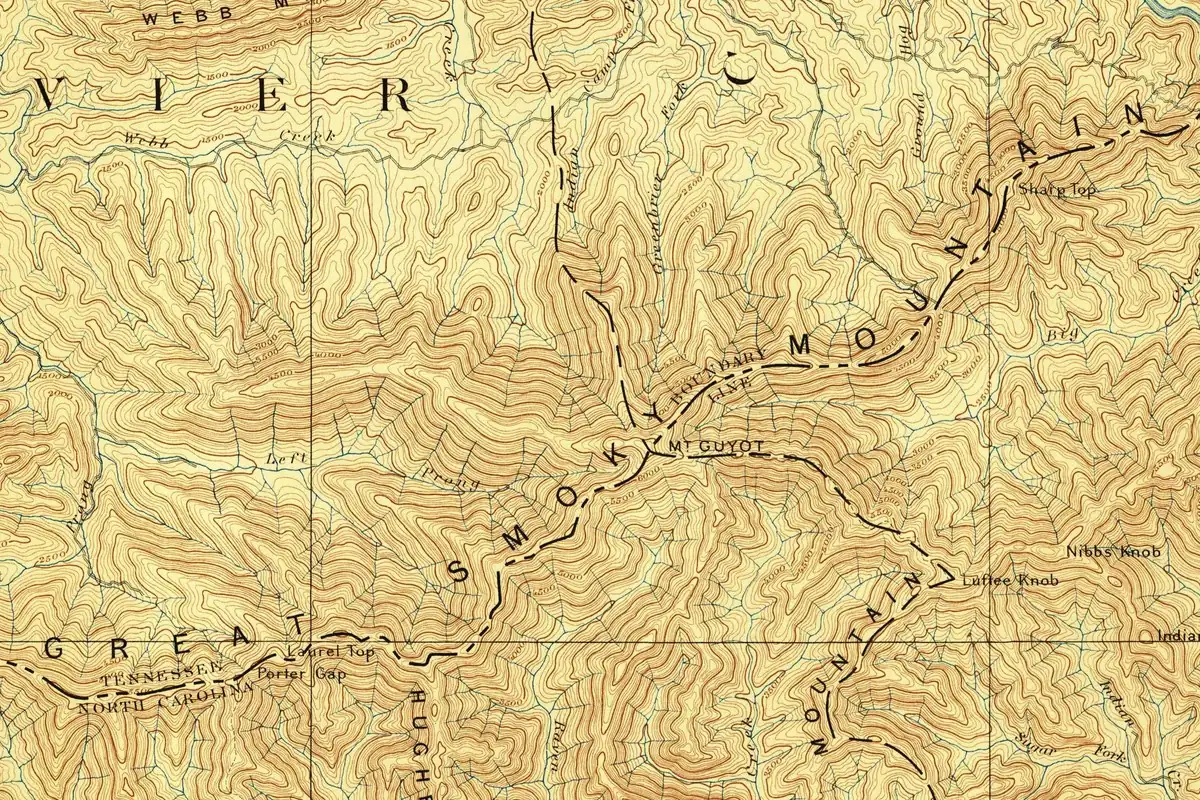
The name was still singular a century later. You can see it on the map at the bottom of this page: the U.S. Geological Survey’s Mt Guyot sheet, first printed in 1893, spells out GREAT SMOKY MOUNTAIN along the state line. The plural is the official form now. The federal place-names database lists Great Smoky Mountains as the official name, set by a decision of the U.S. Board on Geographic Names that it dates to 1932.
Shaconage, the Cherokee name
The park’s article says that “long before European settlers arrived, the Cherokee called this land Shaconage (Sha-Kon-O-Hey) which translates in English to ‘blue’ or ‘place of the blue smoke.’” The same article says the name “Great Smoky Mountains” has “its origins rooted with the Cherokee People,” and the park’s frequently asked questions page gives a third wording, “land of blue smoke.” The federal place-names database lists Shaconage among the range’s variant names, without a translation.
That’s where the trail runs out. Neither park page says where the word was recorded or by whom. Mooney’s glossary of Cherokee words and place names, published in 1900, gives Cherokee names for single peaks and spots in the range, such as Ataga’hi, “Gall place,” a mythic lake whose name he says was also used for the part of the range around Thunderhead Mountain. But it doesn’t give a name for the whole range, and Shaconage isn’t in it. Until a linguist or the Cherokee themselves pin down the word, it’s fair to treat “place of the blue smoke” as the park’s translation, not a settled one, and the idea that the English name came from it as the park’s claim, not a proven one.
Two towns at the ends of the road
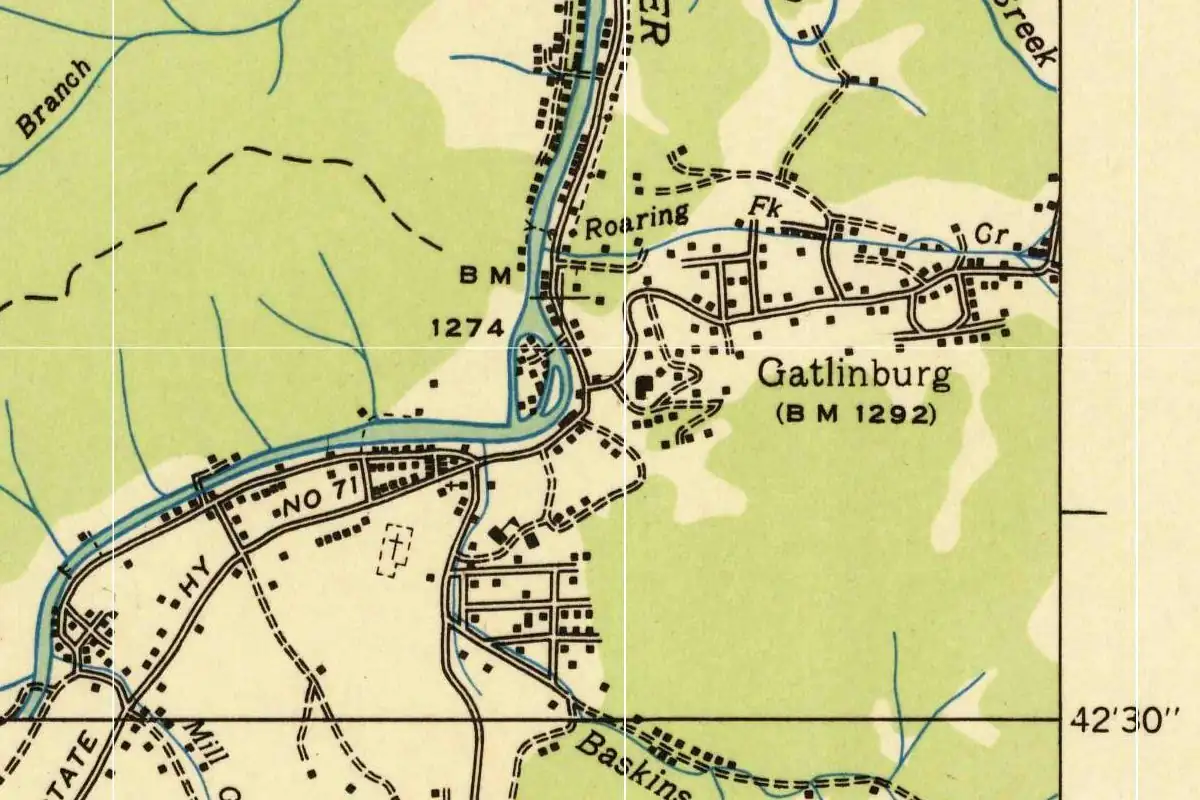
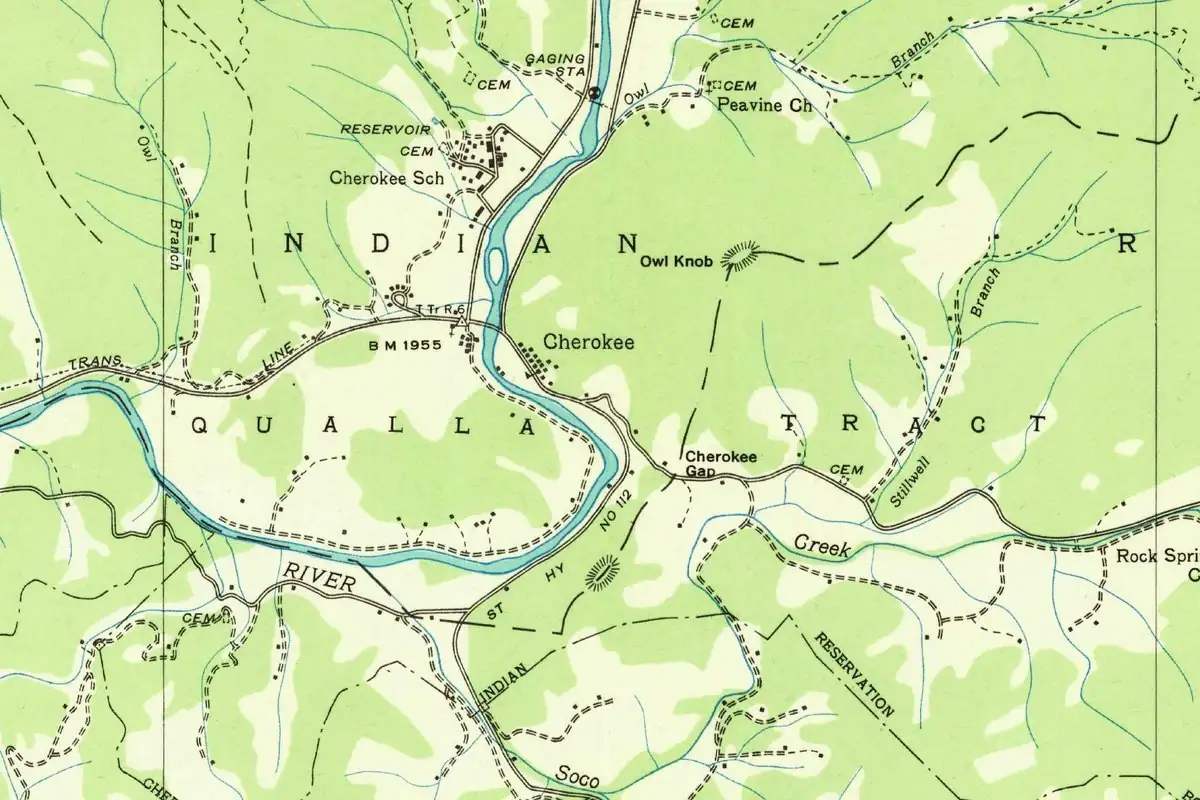
The first motor road over the Smokies opened in 1932, connecting Gatlinburg, Tennessee, and Cherokee, North Carolina, through Newfound Gap, according to the park’s historic resource study. The same study calls those two towns “the two main gateway communities for the park.” Both names have stories of their own on this site, and so do the states on either side of the line, Tennessee and North Carolina.
Kephart thought the haze made close mountains look far away and far ones melt into the sky. The lawmakers of 1789 only needed a ridge to run a state line along. Of the two names they wrote down, the hazy one is the one that stuck.
Quick answers
Why is it called the Smoky Mountains?
Because of the blue haze over the ridges. Horace Kephart wrote in 1913 that the Smoky Mountains “owe their names to this tenuous mist,” and the National Park Service says the haze comes from natural compounds the forest gives off, which form particles that scatter blue light.
What did the Cherokee call the Smoky Mountains?
Shaconage, according to the National Park Service, which translates it as “blue” or “place of the blue smoke” (its FAQ page says “land of blue smoke”). The park doesn’t say who recorded the word, and James Mooney’s 1900 Cherokee glossary doesn’t list it.
Were the Smoky Mountains ever called the Iron Mountains?
Yes. North Carolina’s 1789 cession act called the ridge “the Great Iron or Smoaky Mountain,” and the federal place-names database still lists Great Iron Mountains and Iron Mountains as variant names.
Is the smoke in the Smoky Mountains caused by pollution?
No, not the haze the name refers to. The park says pollution shows up as a “whitish haze, different from the natural mist-like clouds for which the Smokies were named.”
Key dates
- 1789December: North Carolina's cession act runs its boundary along "the Great Iron or Smoaky Mountain."
- 1790April 2: Congress accepts the cession in an act that quotes North Carolina's act in full.
- 1893The USGS Mt Guyot map prints "Great Smoky Mountain" along the state line.
- 1913Horace Kephart writes that the Smoky Mountains "owe their names" to the blue mist.
- 1932The first motor road over the Smokies opens between Gatlinburg and Cherokee. The federal names board also rules on the range's name.
Historical Sources & References
- Horace Kephart, Our Southern Highlanders (1913), p. 52. The “dreamy blue haze” over the mountains, and “Both the Blue Ridge and the Smoky Mountains owe their names to this tenuous mist.”
- National Park Service, “Where Mountains Breathe” (last updated January 28, 2026). The park’s story of the name: Shaconage, translated as “blue” or “place of the blue smoke,” the name’s “origins rooted with the Cherokee People,” and the science of the haze (forest cover of about 95%, volatile organic compounds, particles that scatter blue light, rhododendrons and hemlocks).
- National Park Service, Great Smoky Mountains NP, “Frequently Asked Questions”. “How did the Smokies get its name?”: the “smoke” gives the park its name, and Shaconage “translates to ‘land of blue smoke.’”
- National Park Service, Great Smoky Mountains NP, “Air Quality”. Pollution haze is whitish, “different from the natural mist-like clouds for which the Smokies were named.”
- Act accepting North Carolina’s cession, April 2, 1790, 1 Stat. 106-109. The federal act quotes North Carolina’s December 1789 act in full, with the boundary “to the place where it is called the Great Iron or Smoaky Mountain” and on to “Unicoy or Unaka Mountain” (p. 107).
- William S. Powell, ed., The North Carolina Gazetteer, “Great Smoky Mountains” (NCpedia). The 1789 cession act as “probably” the first written reference to the name Smoky.
- James Mooney, Myths of the Cherokee (Bureau of American Ethnology, 1900). Glossary entries for Unaka, “probably” from the Cherokee word for white, and Ataga’hi, “Gall place,” a mythic lake and a name for the part of the range around Thunderhead Mountain. No entry for Shaconage or for the range as a whole.
- Robert W. Blythe and others, Great Smoky Mountains National Park Historic Resource Study, vol. 1 (NPS, 2016), pp. 20, 72-73. Kephart’s cabin in the Hazel Creek country from 1904 to 1907 (p. 20); the first motor road over the Smokies, opened in 1932 between Gatlinburg and Cherokee via Newfound Gap (p. 72), and the two towns as “the two main gateway communities for the park” (p. 73).
- U.S. Geological Survey, Mt Guyot sheet (1:125,000), 1893 edition. The map at the bottom of this page, labeling the ridge “Great Smoky Mountain” along the state line (reprint of August 1897).
- GNIS feature 1307381, Great Smoky Mountains (U.S. Geological Survey). The official name, a Board on Geographic Names decision dated 1932, counties in both states, and the variants Great Iron Mountains, Iron Mountains, Shaconage, Giukoustee Mountains and Great Smokies.
Spot something wrong, or know more? Tell us here. You can also email us or use our contact page. Corrections are noted here with their date, never made silently.