Cozad, Nebraska: The Founder Who Gave Up His Own Name
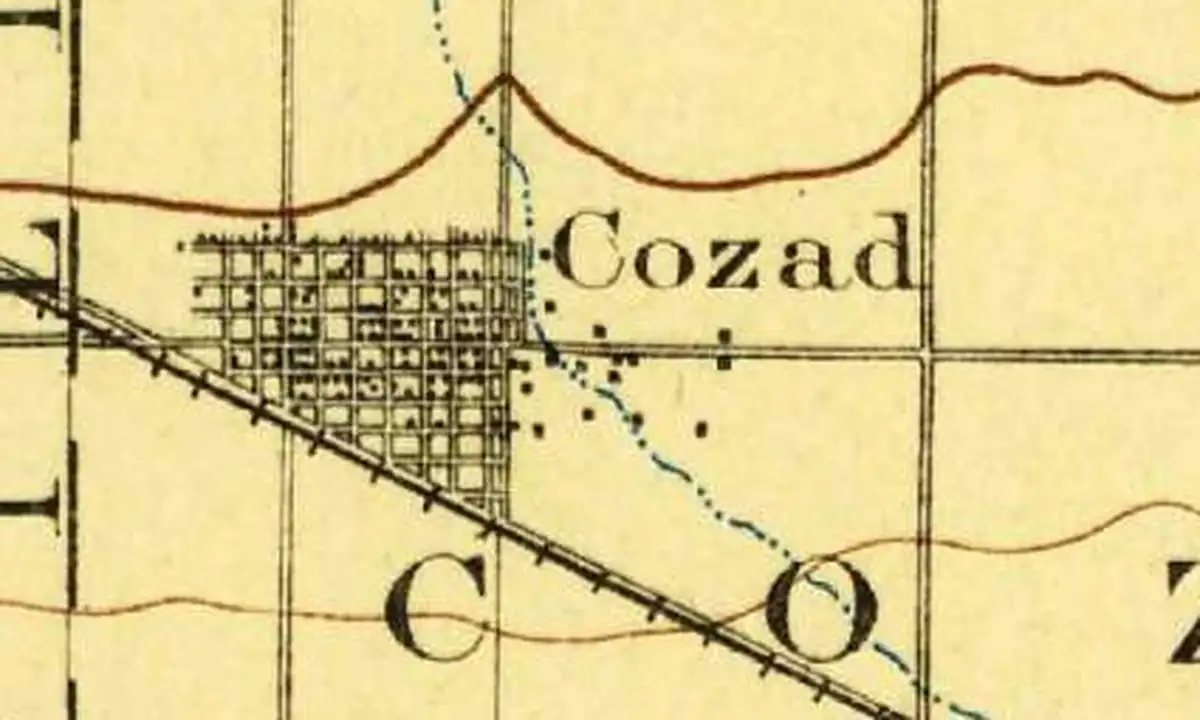
John J. Cozad founded Cozad, Nebraska, and gave it his name. After a shooting, he fled, and he and his family stopped using the name Cozad.
A sign seen from a train
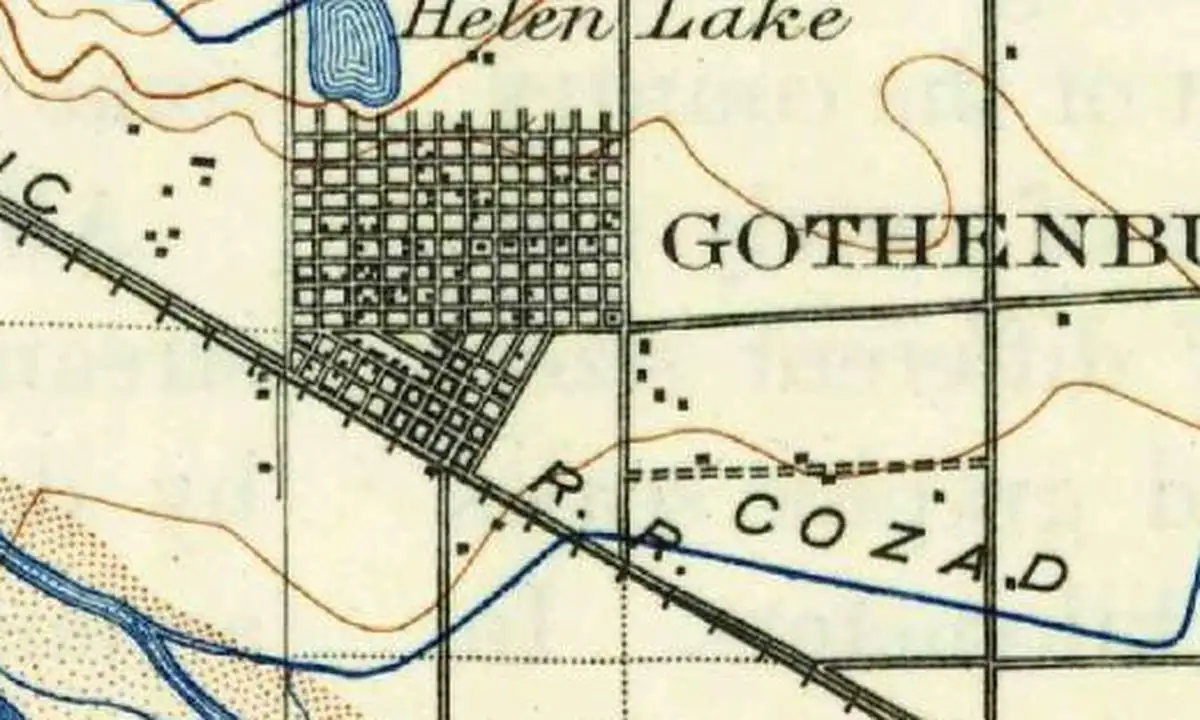
The Union Pacific tells the start of the story. Cozad was riding the railroad through the Platte River Valley in 1872 when he saw the sign for the 100th meridian. He bought land nearby and brought settlers out from Ohio. Lilian Fitzpatrick’s 1925 book on Nebraska place names backs up the name in one line: the town “derives its name from its founder, John J. Cozad, head of a company of pioneers from Ohio.” If you drive U.S. 30 through Cozad today, you’ll pass the spot: the National Park Service lists a 100th Meridian marker right on the old Lincoln Highway in town.
The shot that ended it
In October 1882, Cozad shot Alfred Pearson, a rancher, in a fight over land. Radio station KRVN, covering a museum talk about the case, puts the date at October 14. The Crystal Bridges museum says Cozad, afraid he’d be hanged, took shelter in Denver and his family joined him there. He was later cleared.
New names for everyone
Here’s the twist. The family didn’t just leave town; they left the name Cozad behind. Crystal Bridges says one son, Robert Henry Cozad, became Robert Henri, the painter. History Nebraska’s collection on the family notes that John Cozad himself went by Robert Henry Lee when he lived in New Jersey. So the founder ended up with a different name, while the town kept the one he’d stopped using.
Sources & further reading
- Lilian Linder Fitzpatrick, Nebraska Place-Names (University of Nebraska, 1925). A public-domain survey of the state’s place names. John J. Cozad and the Ohio pioneers.
- Union Pacific, “Cozad, NE.” The 100th meridian sign in 1872 and the Ohio settlers.
- Crystal Bridges Museum of American Art, “Robert Henri’s Clean Slate.” The acquittal, Denver and the new family names.
- National Park Service, “100th Meridian, Nebraska.” The marker on U.S. 30 in Cozad.
- KRVN, on the shooting of Alfred Pearson. The date, October 14, 1882.
- History Nebraska, John Jackson Cozad papers. Cozad as Robert Henry Lee in New Jersey.
- GNIS feature 828431 (U.S. Geological Survey). The federal record for Cozad. Founded 1873.
Spot something wrong, or know more? Tell us here. You can also email us or use our contact page. Corrections are noted here with their date, never made silently.