How Gothenburg, Nebraska Got Its Name (A Swedish Port on the Platte)
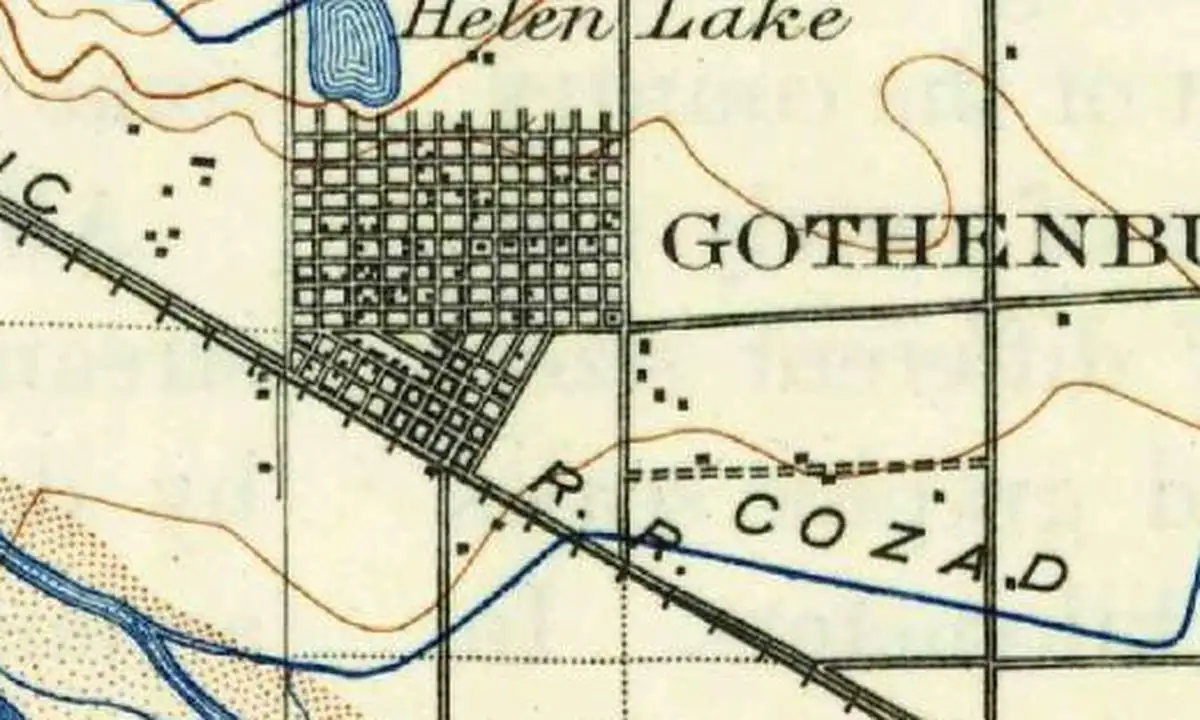
Gothenburg, Nebraska, is named for Gothenburg, Sweden. It was founded in 1882 by Olof Bergstrom, a Swedish immigrant who brought groups of settlers over from his home country.
Where the name comes from
A 1925 study of Nebraska place names says the town “was named by Mr. E. G. West after Gothenburg, Sweden.” Gothenburg (Göteborg in Swedish) is a port city on Sweden’s west coast.
The founder
The 1925 study doesn’t mention the man most sources call the founder. History Nebraska, the state historical society, says Olof Bergstrom came from Sweden in 1881, worked for the Union Pacific Railroad, homesteaded in Dawson County and became a land agent for the railroad. It says Bergstrom picked the site, the Union Pacific laid out the original eight blocks along the tracks, and he made several trips back to Sweden to lead groups of settlers to Dawson County. A local history site calls him “Olaf Bergstrom, a minister from Goteborg, Sweden.”
So who picked the name?
That’s the open question. The 1925 study credits E. G. West, a Swedish immigrant whose family, according to the local history site, ran businesses in town, among them a hardware company. The sources about Bergstrom say he founded the town but, at least in what we found, not that he chose the name. Either way, the name points straight to Sweden, so we list the origin as documented and leave the “who” open.
The rest of the record
The U.S. Geological Survey’s record says Gothenburg was founded in 1882. History Nebraska notes that Bergstrom’s life later took some strange turns, including a shooting at his home in 1890 for which he was acquitted, and that the folklorist Louise Pound connected his story to the tall tales of Febold Feboldson.
Sources & further reading
- Lilian Linder Fitzpatrick, Nebraska Place-Names (University of Nebraska, 1925). A public-domain study of the state’s place names, county by county. E. G. West and Gothenburg, Sweden.
- History Nebraska, “Olof Bergstrom.” The founder, the Union Pacific town and the Swedish settlers.
- Gothenburg History, “People.” Bergstrom as a minister from Göteborg and the West family.
- GNIS feature 829595 (U.S. Geological Survey). The federal record for Gothenburg. Founded 1882.
Spot something wrong, or know more? Tell us here. You can also email us or use our contact page. Corrections are noted here with their date, never made silently.