How Sturgis, South Dakota Got Its Name: A Father, a Son, and Little Bighorn
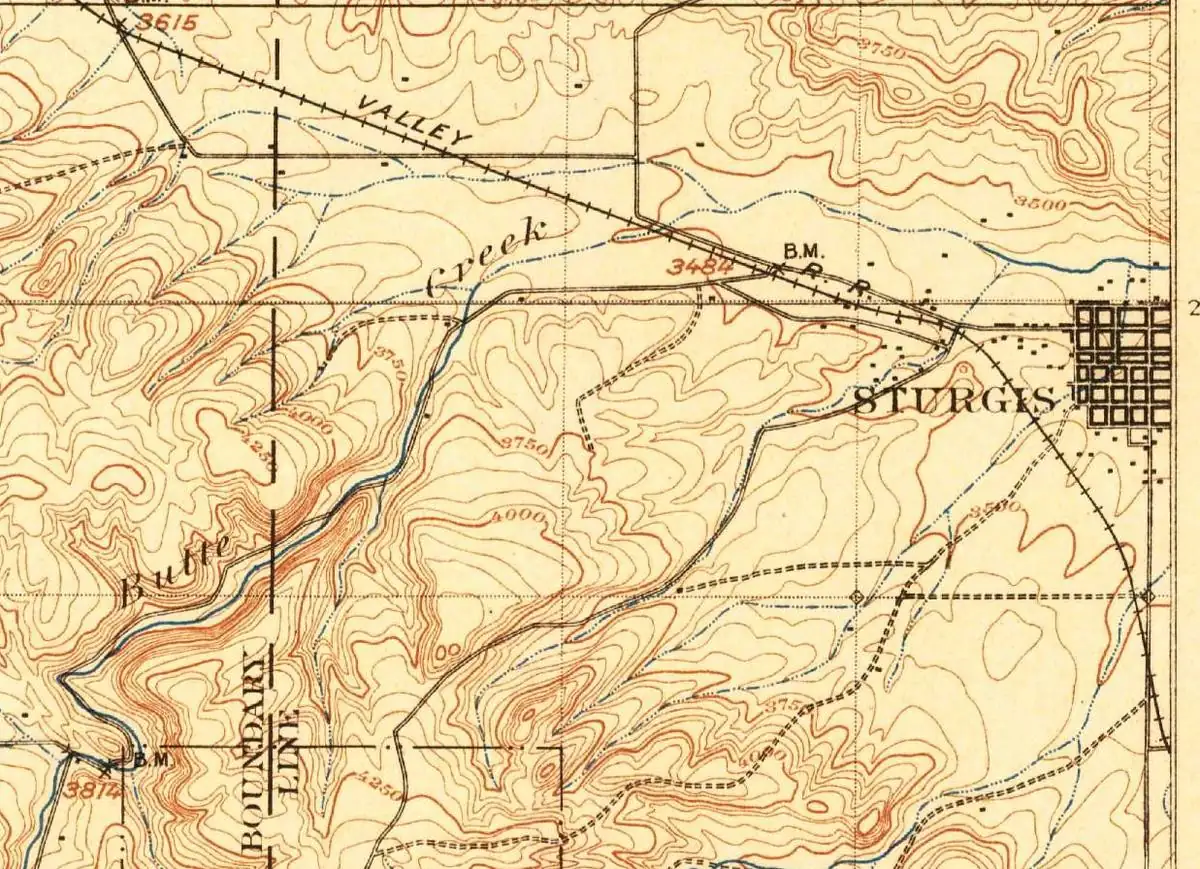
Sturgis, South Dakota, is named for the Sturgis family of the 7th Cavalry, but the sources split on which Sturgis. The oldest written account we found says the colonel, Samuel D. Sturgis, named it for his son, Lt. James G. “Jack” Sturgis, who was killed at the Battle of the Little Bighorn in 1876. A marker in town today says it honors the colonel himself.
As it turns out, both men really do have a claim. The question is which one the town itself was named for.
Where the name comes from
Start with the Army camp, because that’s where the name shows up first. In the summer of 1878, troops set up a temporary post near Bear Butte, not far from where the town is today. A South Dakota state historical marker put up in 1954 says the post was “named for Lt. J.G. Sturgis, killed June 25 1876 at Battle of Little Big Horn.” The same marker lists “Col. S.D. Sturgis” as the commanding officer, arriving on July 18, 1878. So the colonel was running a camp named for his own son, two years after his son died with Custer’s command.
That camp didn’t last. On August 28, 1878, the troops moved to the site that became Fort Meade. The town grew up next to the new fort, and that’s where the story splits.
The father, or the son?
The case for the son. A 1908 railroad guide to place names, written by a longtime officer of the Chicago & North Western, says Sturgis “was named by Colonel Samuel Sturgis, of the Seventh United States Cavalry, who at one time was in command of Fort Meade, for his son ‘Jack’ Sturgis who was killed with Custer in Montana.” The U.S. Geological Survey’s place-name record quotes that same book.
The case for the father. A historical marker in Sturgis, put up by a local monument committee, says Sturgis City was laid out by Major Jeremiah Wilcox on August 16, 1878, and named for Samuel D. Sturgis, the commander at Fort Meade. The marker doesn’t say where that comes from.
Here’s the thing: the son’s claim is rock-solid for the Army camp, and the oldest written source we found, from 1908, says the town was named for the son too. The case for the father rests on a modern marker that doesn’t cite its source. So the weight falls on the son, for now, with one honest caveat: nobody’s produced a town document from 1878 that settles it.
Scooptown
For a while, Sturgis also went by a nickname that tells you a lot about life near an Army post. The 1954 marker says soldiers called a store near Bear Butte “Scooptown,” because that was where they were likely to get “scooped,” or cleaned out of their pay. When the troops moved, the name moved with them, and for a time the town beside Fort Meade was called Scooptown too.
The name on the sign goes back to a father and a son in the same cavalry regiment, and to a battle in Montana two years before the town existed. If you’re heading west, Deadwood, just up the road, has its own name story.
Sources & further reading
- W. H. Stennett, A History of the Origin of the Place Names Connected with the Chicago & North Western and Chicago, St. Paul, Minneapolis & Omaha Railways (1908). The oldest source we found on the town’s name. Says Colonel Sturgis named it for his son “Jack.”
- GNIS feature 1265387 (U.S. Geological Survey). The federal record for Sturgis. Its history note quotes Stennett and gives 1878 as the founding year and 1888 for incorporation.
- State historical marker no. 33, “Camp J.G. Sturgis / Scooptown” (1954). Erected by the Meade County Commission, the State Highway Commission and the South Dakota Historical Society. Names the camp for Lt. J.G. Sturgis and explains “Scooptown.” Read through the Historical Marker Database transcription.
- Sturgis historical marker, Nolin Monument Committee. Says the town was laid out on August 16, 1878, and named for Samuel D. Sturgis. Read through the Historical Marker Database transcription.
- FortWiki, “Camp Sturgis.” Confirms the camp was named for Lt. James G. Sturgis, Colonel Sturgis’s son, and gives the camp’s dates. Cites Robert Lee, Fort Meade and the Black Hills (1991).
Spot something wrong? Corrections are noted here with their date, never made silently.