How Juneau, Alaska Got Its Name (It Was Almost Harrisburg)
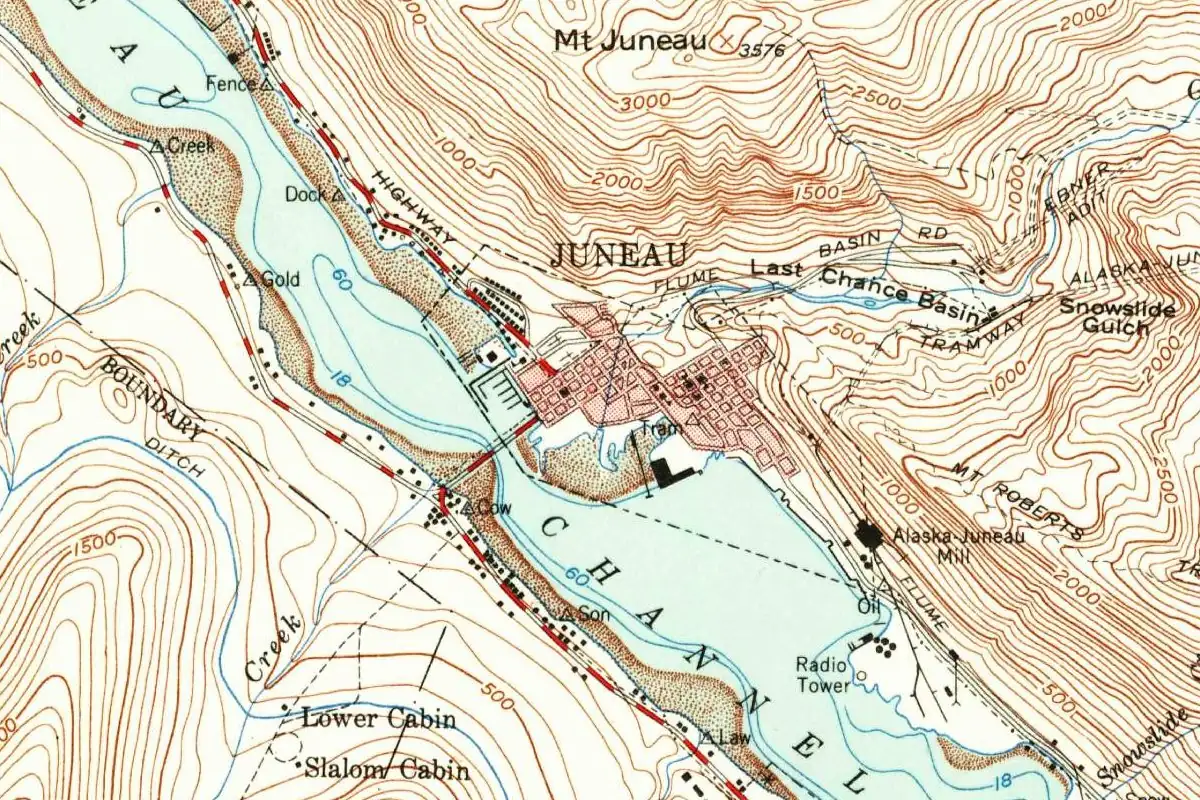
Juneau, Alaska’s capital, started out as a mining camp called Harrisburg, and the Navy called it Rockwell. The miners settled it by voting for Juneau, after Joseph Juneau, one of the two prospectors who found gold there.
Two prospectors out of Sitka
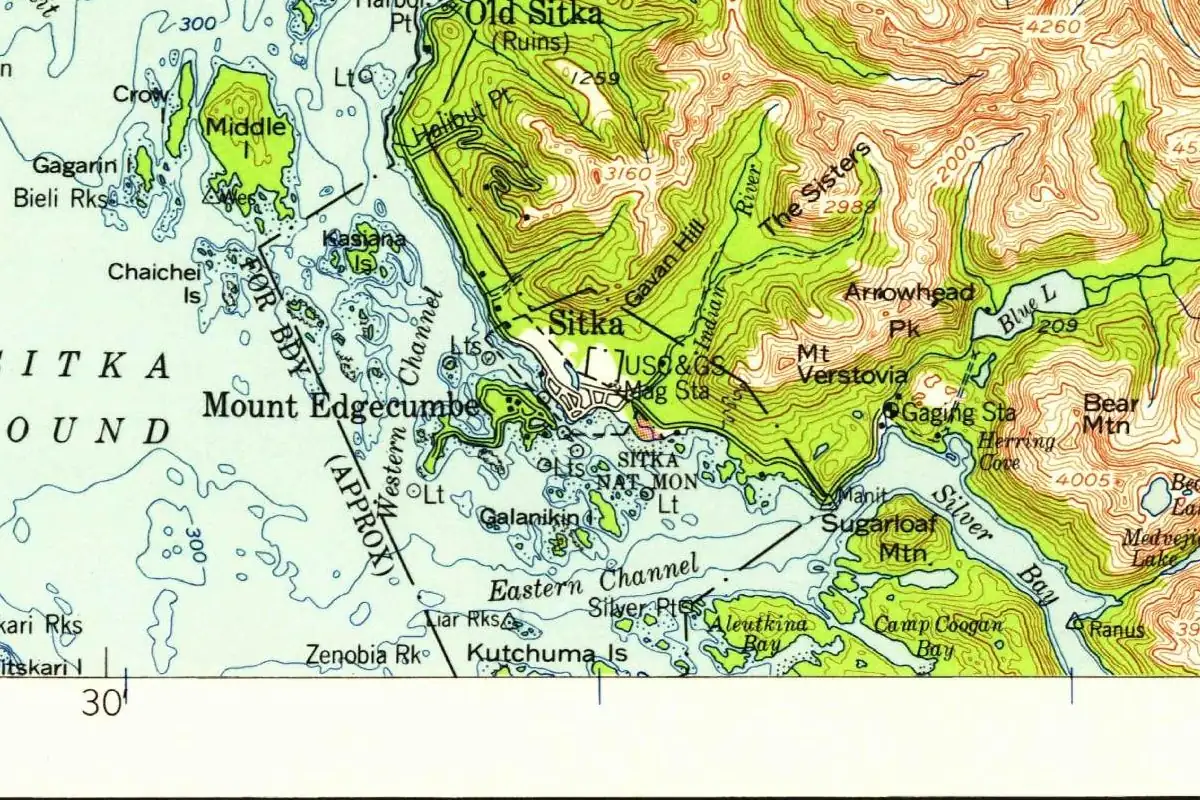
The story starts in Sitka, the old Russian capital, which kept the seat of government until 1900, when it moved to Juneau. Hubert Howe Bancroft’s 1886 History of Alaska says a prospecting party left Sitka “in charge of Joseph Juneau and Richard Harris.” They camped where the town now stands, followed a big creek up from the channel and found “rich placers and several promising ledges.” When they came back to Sitka “with sacks full of specimens,” a rush followed.
The federal place-names record puts the find in 1880, on Gold Creek, and says Harris and Juneau staked the beach as a town site. GNIS gives their dates, too: Harris lived from 1833 to 1907, Juneau from 1826 to 1899.
Harrisburg, Rockwell or Juneau?
The first name went to the other partner. The camp, “it is said, was named Harrisburg,” Marcus Baker wrote in his 1906 Geographic Dictionary of Alaska, while the mining district was called Juneau. GNIS says Harrisburg was for Richard Harris. That’s a setup for confusion all by itself.
Then the Navy added a third name. Baker says naval officers looked over the harbor around that time “and called the camp Rockwell, after Commander Charles H. Rockwell.” The USGS record adds that Rockwell was sent with a detachment of men to keep order in the camp. Bancroft cites an 1883 San Francisco newspaper that says the place was “also called Rockwell, the name of the acting officer of the Jamestown.”
So if you’d mailed a letter there in those first years, you could’ve picked from three names. Baker sums up what happened next: “Owing to the resulting confusion in names, the residents held a town meeting and adopted the name Juneau.”
When the vote happened
You’ll find two dates for that meeting. The USGS says the miners met in 1881. Bancroft, writing just a few years later, says “the name Juneau was formally adopted at a meeting of miners held in May 1882, though both are still used.” He meant Harrisburg and Juneau, and he used both himself, calling the place “Harrisburg, or Juneau.”
The post office dates don’t line up either. Baker says a post office called Juneau opened in April 1881, while the USGS record says 1882. What everyone agrees on is the result: Harris had the first word, and Juneau had the last.
A different year in Gannett’s book
Henry Gannett’s 1905 government guide to American place names gets the man right but gives a different year. It says Juneau was “named for Joseph Juneau, a gold prospector of 1851.” Every other source here puts the strike in 1880. It’s a small thing, but it shows why it pays to check more than one book.
Sources & further reading
- Marcus Baker, Geographic Dictionary of Alaska, 2nd ed. (USGS Bulletin 299, 1906), p. 339. “Two prospectors, Harris and Juneau, found mineral here, in 1880”; the camp “was named Harrisburg and the district Juneau”; naval officers “called the camp Rockwell, after Commander Charles H. Rockwell”; the town meeting that “adopted the name Juneau”; post office April 1881.
- Hubert Howe Bancroft, History of Alaska, 1730–1885 (1886), pp. 679, 738–739. The party that left Sitka “in charge of Joseph Juneau and Richard Harris”; the town “of Harrisburg, or Juneau”; the S.F. Bulletin of February 1, 1883, on the name Rockwell and the Jamestown; the miners’ meeting of May 1882.
- Donald J. Orth, Dictionary of Alaska Place Names (USGS, 1967), entry “Juneau.” The same account as GNIS, with Rockwell sent “to maintain order” and the miners’ meeting in 1881.
- Henry Gannett, The Origin of Certain Place Names in the United States (USGS, 1905), p. 171. “Named for Joseph Juneau, a gold prospector of 1851.”
- U.S. Geological Survey, GNIS feature 1404263. The federal record for Juneau: Harrisburg, Rockwell, the miners’ vote, the dates of Harris and Juneau, Gold Creek, and Juneau as capital since 1900.
Spot something wrong, or know more? Tell us here. You can also email us or use our contact page. Corrections are noted here with their date, never made silently.