How Seattle Got Its Name (and Why It's Spelled That Way)
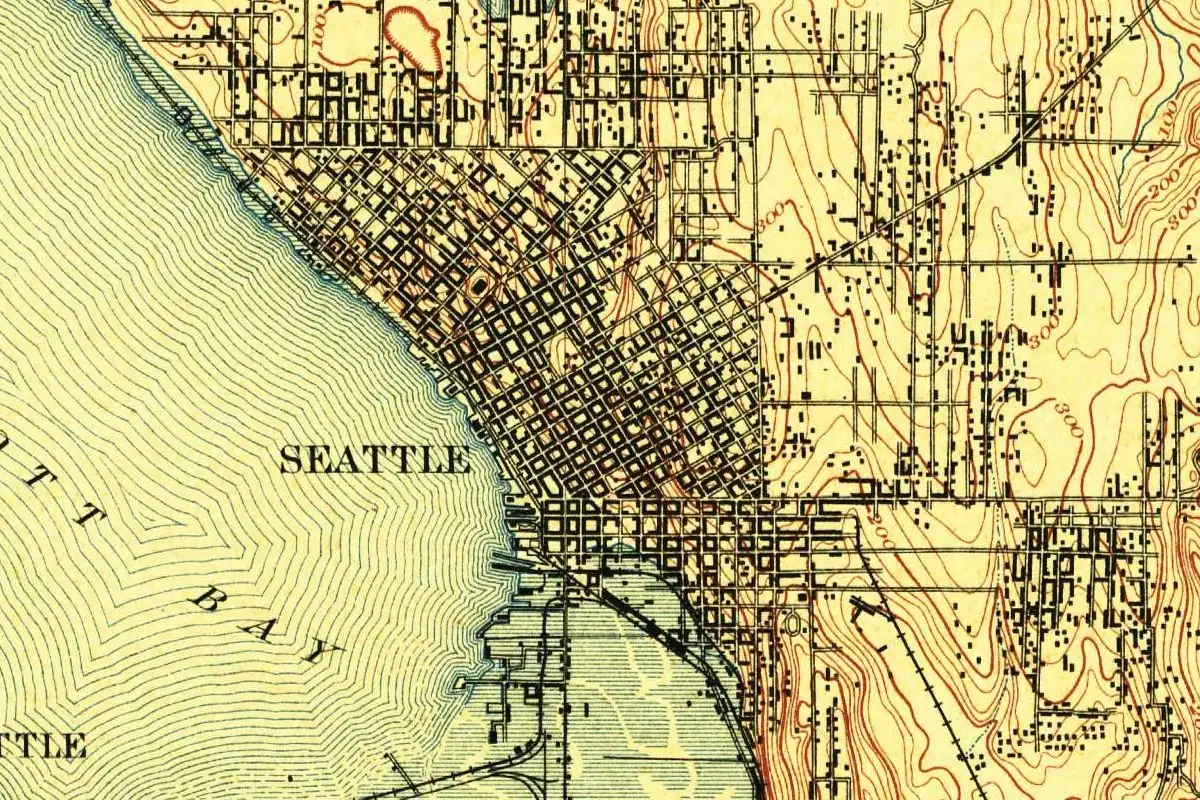
Long before Seattle got its name from Chief Seattle, a trader at Fort Nisqually was writing the chief’s name as “See yat.” The town’s founders on Elliott Bay put a smoother spelling on their first plat in 1853, and that’s the one that stuck.
Three claims and one name
The settlers who built Seattle didn’t start there. A party of twelve adults and twelve children landed at Alki Point on November 13, 1851, and spent a stormy winter on the point. On February 15, 1852, Arthur A. Denny, W. N. Bell and C. D. Boren marked out claims on the east shore of the bay instead. Dr. D. S. Maynard showed up in the spring of 1852, and the others shifted their lines to give him the claim to the south.
Clarence Bagley’s 1916 history of the city says Maynard had already won “the friendship and confidence of Chief Seattle, after whom the village was named,” and that the chief convinced him this was a good spot to trade. Denny’s own memoir doesn’t say whose idea the name was. It only says that “the policy of laying off a town, and the name, had been discussed and agreed upon by us” (Boren, Maynard and Denny) before Henry Yesler arrived to build his sawmill in October 1852. On May 23, 1853, Denny and Boren filed the first plat for “the town of Seattle,” and Maynard filed his part later that same day.
The chief behind the name
Chief Seattle didn’t know his own age. When he died in 1866, the pioneers guessed he was about 80, which would have made him a boy of six when George Vancouver’s ships anchored at Restoration Point in 1792. Edmond Meany’s 1923 book on Washington place names calls him a chief of the Suquamish, who took over from his father, Schweabe. Henry Gannett’s 1905 federal place-name book calls him “the chief of the Duwamish tribe.” His grave marker, set up by Denny and other pioneers in 1890, splits the difference: “Seattle, Chief of the Suquamps and Allied Tribes.”
His early record isn’t spotless, and Meany didn’t hide it. The Fort Nisqually journal calls him “a scamp” in 1835, and an 1837 entry accuses him of killing an Indian doctor. Those harsh entries stop after 1838, and Meany offers two reasons: the fort turned into a farming and livestock post, and the chief was baptized “Noah Sealth” by a Catholic missionary. From the time settlers arrived in 1851, Meany writes, he stayed their friend, right through the war of 1855 and 1856.
Seven ways to spell Seattle
You’ll find a surprising number of spellings in the old records. The Fort Nisqually journal tried “See alt,” “See yalt” and “See yat” in the 1830s. His baptismal name came out as “Sealth.” The writer Theodore Winthrop went with “Se-at-tlh” in 1853, the U.S. Coast Survey printed “Se-at-tl” in 1858, and Gannett’s 1905 book has “See-aa-thl.” Meany blamed “the difficulty in catching the gutteral pronunciation” for all the variety, and he noted that “the more euphonious spelling on that first pioneer plat has persisted.”
So if you’ve ever wondered why the city isn’t spelled Sealth, the answer is a piece of paper filed in 1853.
The place itself had an older name, too. Charles M. Buchanan of Tulalip told Meany the local name was “Tzee-tzee-lal-itch,” meaning “little portage,” after a short trail over to the big lake that’s now Lake Washington. That’s one man’s account, and Meany doesn’t give a second one.
Almost a second chief’s name
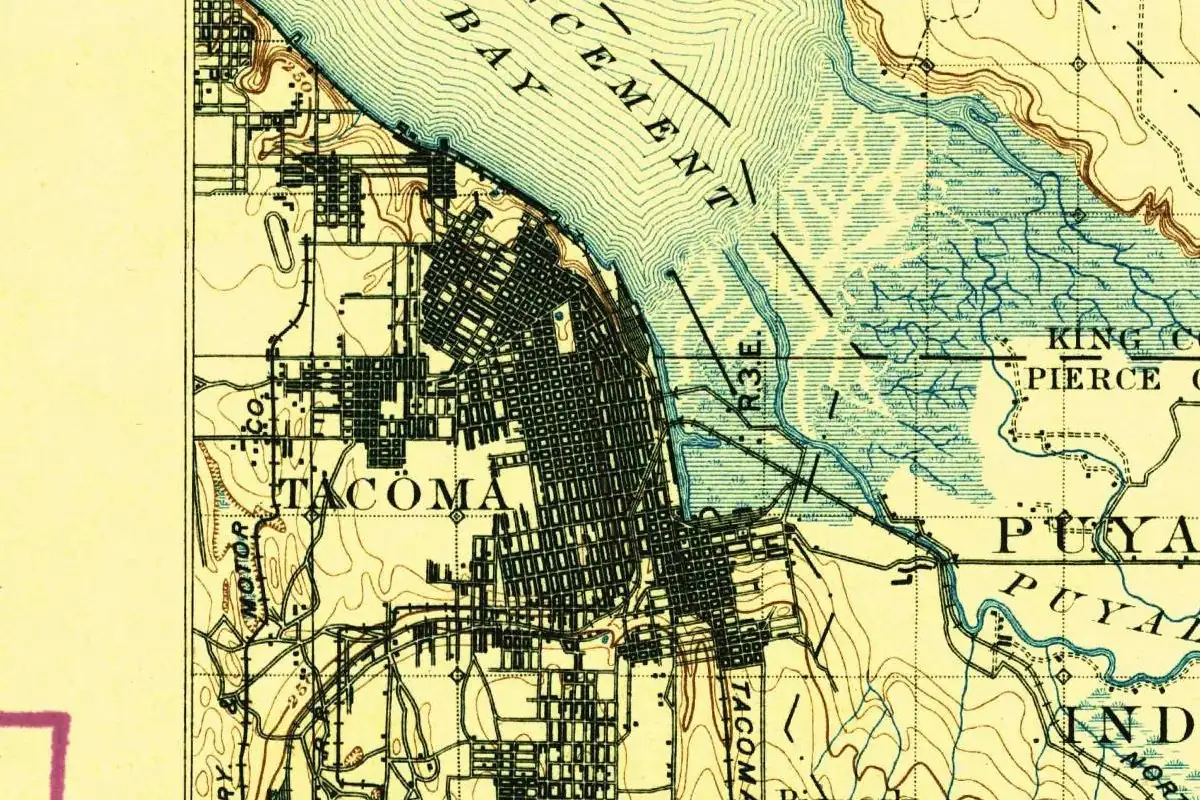
Seattle’s choice didn’t go unnoticed. In 1868, when the founders of a new town on Commencement Bay were arguing over a name, one partner said he’d rather call it “after an Indian chief, as had been done at Seattle,” according to Thomas Prosch’s 1906 history. He lost that argument. The town became Tacoma.
Sources & further reading
- Edmond S. Meany, Origin of Washington Geographic Names (1923), pp. 261–264. The landing at Alki, the claims and the 1853 plats; the Fort Nisqually journal entries; the baptism; the grave marker; the spellings; and Buchanan’s “little portage.”
- Arthur A. Denny, Pioneer Days on Puget Sound. Denny’s own account that he, Boren and Maynard agreed on the town and its name before Yesler arrived.
- Clarence B. Bagley, History of Seattle, Volume I (1916), p. 21. Maynard’s friendship with Chief Seattle and the chief’s advice on where to trade.
- Henry Gannett, The Origin of Certain Place Names in the United States (USGS, 1905). Names the chief as head of the Duwamish and spells him “See-aa-thl.”
- Thomas W. Prosch, McCarver and Tacoma (1906), pp. 164–165. The 1868 suggestion to name Tacoma after a chief, “as had been done at Seattle.”
- GNIS feature 1512650 (U.S. Geological Survey). The federal record for Seattle.
Spot something wrong, or know more? Tell us here. You can also email us or use our contact page. Corrections are noted here with their date, never made silently.