Tacoma, Washington: A Town Named Out of a Travel Book
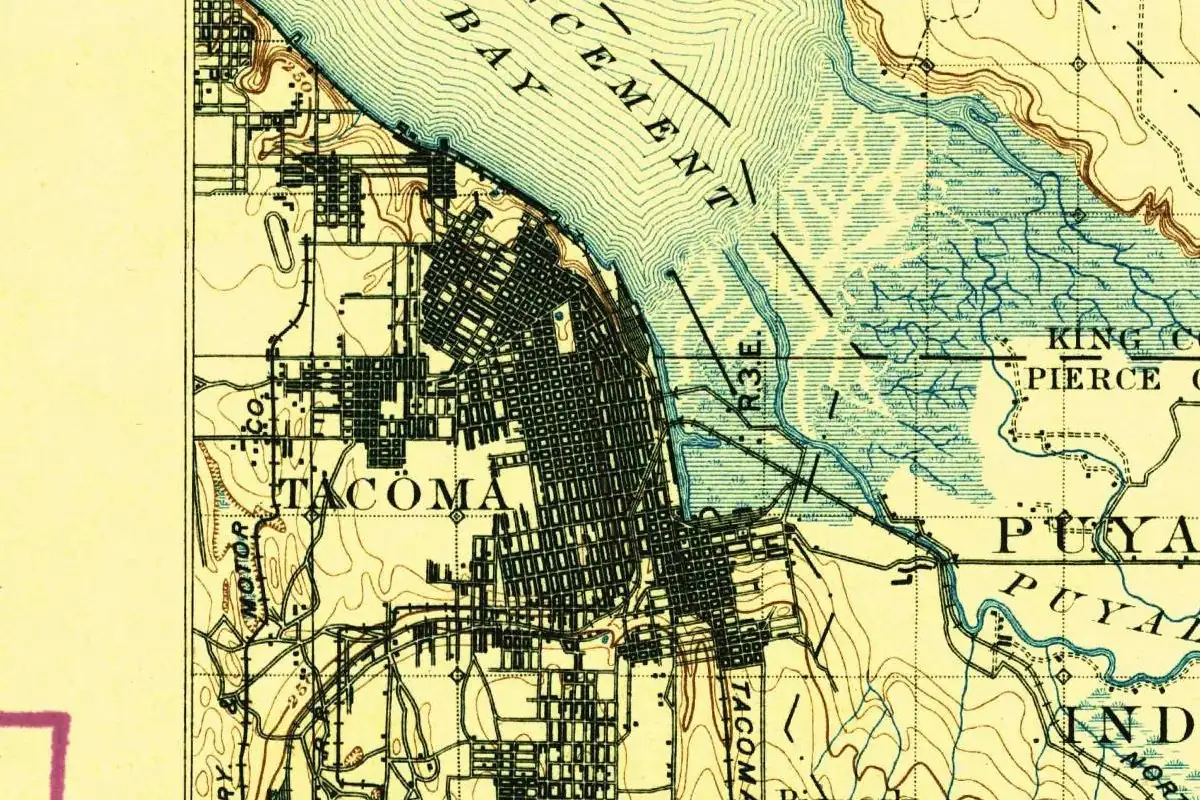
Tacoma, Washington, got its name out of a book: Theodore Winthrop’s The Canoe and the Saddle, which said the Indians called Mount Rainier “Tacoma.” In September 1868, Philip Ritz, who was gathering information for the Northern Pacific Railroad and had just read it, talked town founder Morton McCarver’s family into the name.
Commencement City, almost
When McCarver arrived on Commencement Bay in 1868, he was hunting for a townsite that could be the end of the line for the planned Northern Pacific Railroad. He bought most of Job Carr’s claim and drew up a town. According to Thomas Prosch, McCarver’s son-in-law and biographer, the neighbors tossed around Washington, Pierce, Puget, Pacific, Puyallup, Rainier, Vashon, Defiance, Chebaulip and Commencement. Chebaulip was the Indian name for the Carr land. Commencement won, and the first plat said “Commencement City,” though Edmond Meany notes it was never filed.
The night nobody slept
Ritz landed at Steilacoom on Friday, September 11, 1868, and he’d come with a name in mind. Prosch says he talked “with all the eloquence in him” about Tacoma and about Winthrop’s book. It worked on McCarver’s wife and daughters. “Sleep was banished from the McCarver house that night,” Prosch writes, and Saturday morning found them still talking about it.
In late October, McCarver put the name to his partners. Hadlock agreed right away. Starr hesitated but said it was McCarver’s town to name. John W. Ackerson said that if it were up to him, he’d name it “after an Indian chief, as had been done at Seattle,” and suggested Sitwell of Puyallup. Tacoma went on the plat anyway, and the federal place-name record dates the name to 1868.
What Winthrop actually wrote
Winthrop crossed the bay in 1853 and wrote his book later; it came out in 1862, after he’d been killed in the Civil War. Looking at the mountain, he grumbled that “Mount Regnier Christians have dubbed it, in stupid nomenclature perpetuating the name of somebody or nobody.” The local name was Tacoma, he wrote, “a generic term also applied to all snow peaks.”
Here’s the thing: settlers hadn’t heard the name before Winthrop’s book. Prosch, who married into the McCarver family, conceded that these names “were unknown to the white people until after the publication of this book.” Herbert Hunt’s 1916 history of the city had no doubt the word itself was real: “Undoubtedly ‘Tacoma’ is an Indian word; undoubtedly Winthrop heard the Indians apply it to the mountain.”
So what does Tacoma mean?
You’ll see a lot of answers, and they don’t agree. Even Henry Gannett’s federal place-name book changed its answer: the 1902 edition traced it to “Tahoma,” meaning “the highest” or “near heaven,” and the 1905 edition says only that it comes from “the Indian name meaning ‘mountain.’” Charles M. Buchanan of the Tulalip Reservation, whom Meany called the top authority on Puget Sound languages, said it wasn’t a local word at all but an Algonkin one meaning “near to heaven.” Meany also lists “nourishing breast,” “mother of waters” and “frozen waters.” Some writers thought Winthrop simply misheard the Chinook Jargon word for “white,” and Buchanan thought that was quite likely. If you’re hoping for one clean translation, the record doesn’t give you one.
Everybody wanted the credit
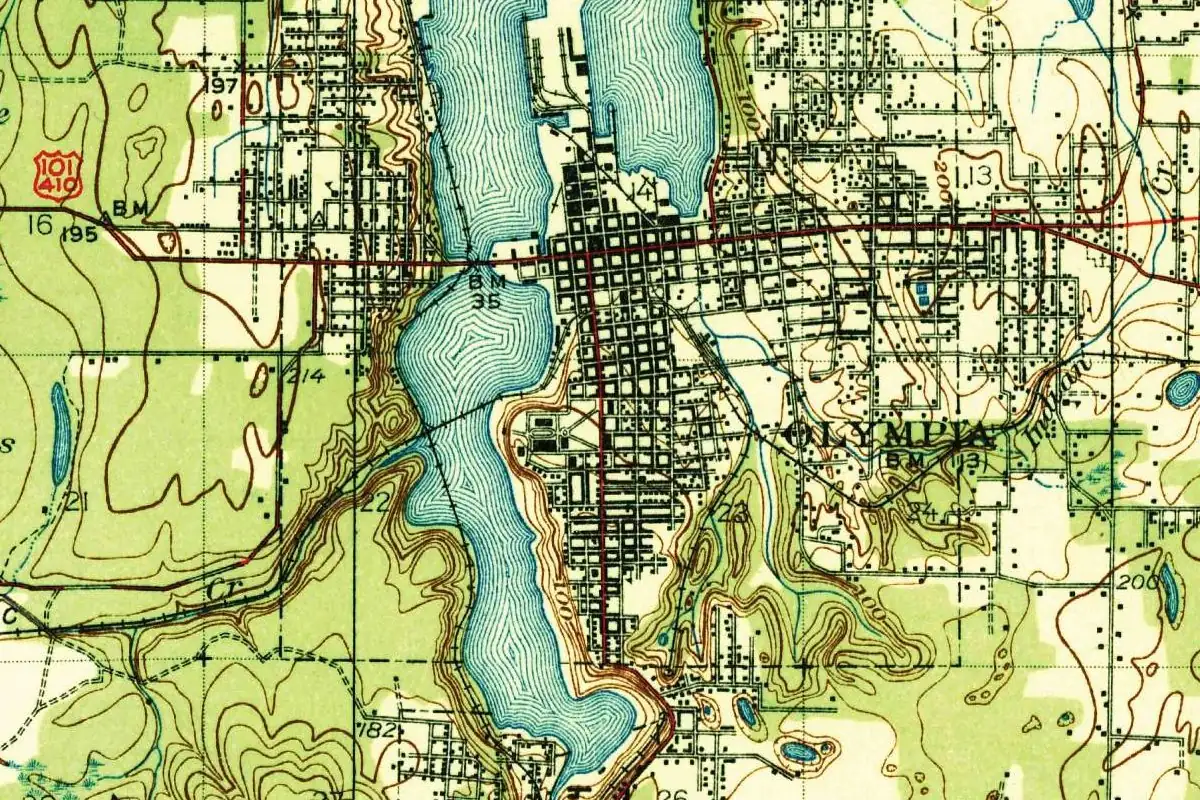
Once the name caught on, four different men claimed it. Hunt wrote that “Anthony Carr, M. M. McCarver, John W. Ackerson and C. P. Ferry each has claimed the honor of applying it to ‘Chebaulip.’” He also pointed out that a hotel in Olympia and a Good Templars lodge there were already using the name Tacoma more than a year before the town got it.
The name didn’t stop moving, either. In 1908, Benjamin C. Harvey of Tacoma started gathering letters and evidence for a campaign to rename Mount Rainier “Mount Tacoma.” So the word went from the mountain to a book, from the book to a town, and then people in the town tried to hand it back.
Sources & further reading
- Thomas W. Prosch, McCarver and Tacoma (1906), pp. 162–165. The names the settlers considered, Ritz’s visit, the sleepless night, the partners’ votes and Ackerson’s Seattle comparison.
- Theodore Winthrop, The Canoe and the Saddle (1862), pp. 44–45. The passage that put “Tacoma” in print as a name for Mount Rainier.
- Herbert Hunt, Tacoma, Its History and Its Builders (1916), Volume I, pp. 135–136. The four men who claimed credit for the name, and the Olympia hotel and lodge that used it first.
- Edmond S. Meany, Origin of Washington Geographic Names (1923), pp. 299–301. The unfiled Commencement City plat, Buchanan’s view and the list of meanings, and Harvey’s Mount Tacoma campaign.
- Henry Gannett, The Origin of Certain Place Names in the United States (USGS, 1902 and 1905). The first edition says “From the Indian word Tahoma, meaning ‘the highest,’ ‘near heaven’”; the second changed it to “the Indian name meaning ‘mountain.’”
- GNIS feature 1512713 (U.S. Geological Survey). The federal record: current name adopted in 1868.
Spot something wrong, or know more? Tell us here. You can also email us or use our contact page. Corrections are noted here with their date, never made silently.