Scottsdale, Arizona: Named for a Chaplain, Not a General
Scottsdale, Arizona, could have been Orangedale, the name a Rhode Island banker planned for his townsite before it took an Army chaplain’s name. The chaplain was Winfield Scott, a minister and Civil War captain who put money down on land here in 1888.
If that name rings a bell from your history class, that’s a different Winfield Scott. This one was a captain in the Civil War and an Army chaplain after it, and he only got the rank of major once he’d retired.
The Rev. Winfield Scott, captain and chaplain
Will C. Barnes, whose Arizona Place Names came out from the University of Arizona in 1935, keeps it short. Scottsdale, a “village east of Phoenix,” was “established by and named after the Rev. Winfield Scott, Civil War veteran, later a chaplain in the regular army.” He was stationed at Angel Island, San Francisco, in 1888, Barnes says, and “located a farm here and as a little settlement grew up around him they called it Scottsdale.”
The rest of the résumé is in his seminary’s alumni book. The Rochester Theological Seminary’s 1910 catalogue says he was born in West Novi, Michigan, on February 26, 1837, and ordained in Syracuse, New York, in 1861. He was a captain in the 126th New York Volunteers from 1862 to 1864, and the 1900 edition adds that he was “wounded five times.” After he left the regiment in 1864, he preached in Leavenworth, Kansas, in Denver, in Los Angeles and around San Francisco Bay, then served as an Army chaplain at posts in Washington, California and finally Fort Huachuca, Arizona.
That same 1910 entry lists him at “Scottsdale, awaiting retirement, 1893-98,” retired in 1898 and “promoted rank of Major” in 1904. The town’s name and the man’s address had become the same thing.
Fifty cents an acre down
The Scottsdale Historical Society’s timeline fills in the land deal. Scott visited the valley in February 1888, it says, and that July he made a down payment of 50 cents an acre on a section running east from today’s Scottsdale and Indian School roads, at a total cost of $2.50 an acre. In 1889 he sent his brother, George Washington Scott, to start clearing it, and asked for a transfer to Fort Huachuca to be closer to his farm.
The federal place-names record puts it a little later. It says Scott “homesteaded here in 1891” and that “it was his hope to develop the place as a health and farming area.” So you’ll see 1888 or 1891 depending on where you look. The Society is describing a purchase and GNIS a homestead, and neither one explains the gap.
Orangedale in the plans, Scottsdale on the map
Here’s where the other name comes in. In 1894, the Historical Society says, a Rhode Island banker named Albert G. Utley bought the section just south of Scott’s land and planned to turn 40 acres at its northwest corner into a townsite called Orangedale. Then, in the Society’s words, “For some unknown reason, the town site is changed to Scottsdale.”
Nobody in these sources says who made the switch. Barnes’s “they called it Scottsdale” is as close as it gets, and the parts of his entry we could read don’t mention Orangedale. What’s on record is the result. GNIS says the place was named in 1896, and the Historical Society says that’s the year a new school district was formed and named “Scotts-Dale,” with Scott on its first school board.
Tents, palms and “the little town of Scottsdale”
By 1901 the place was drawing a particular kind of newcomer. That August, Leslie’s Weekly ran a piece by Emma Paddock Telford, datelined “Camp Sunny-Sands, Scottsdale,” that pitched Arizona to people with weak lungs. She singled out “the little town of Scottsdale,” with “the well-fruited ranch of Chaplain Winfield Scott, United States Army; two or three neat adobe cottages, the village post-office and tiny district school, and all the rest, a more or less ephemeral canvas city, housing in all about one hundred souls.”
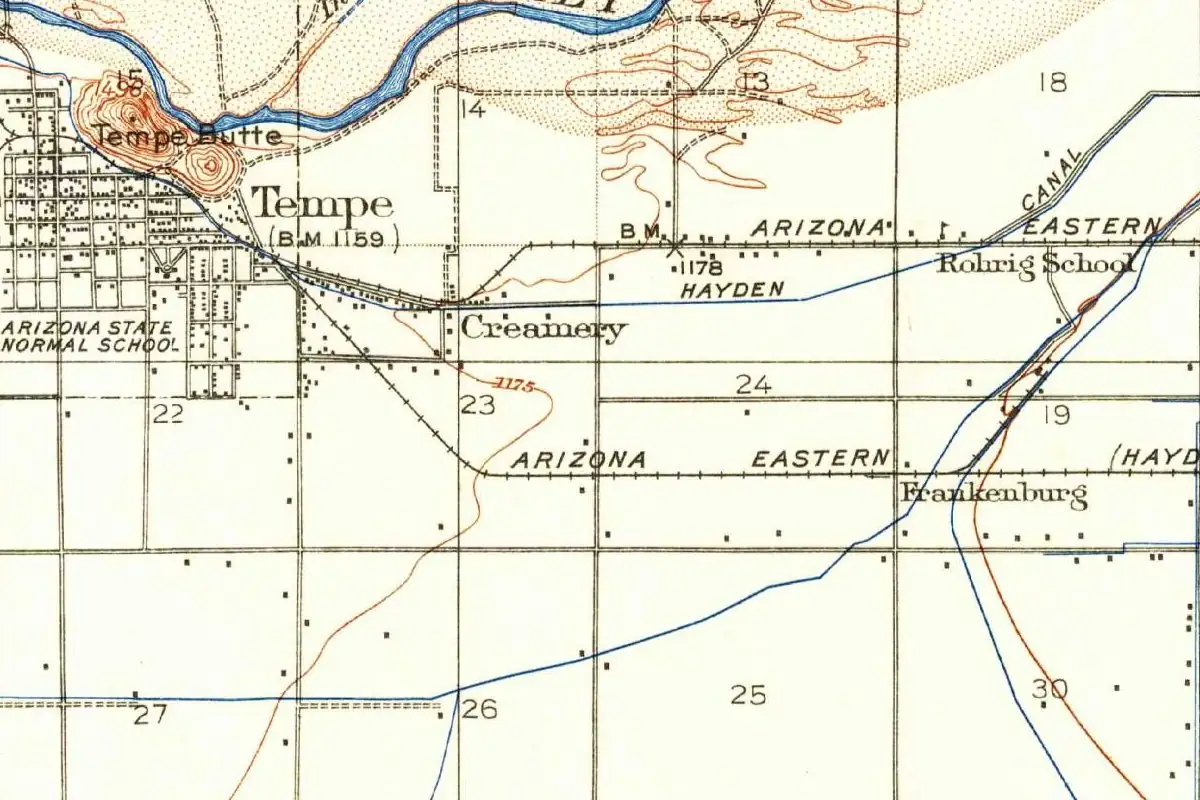
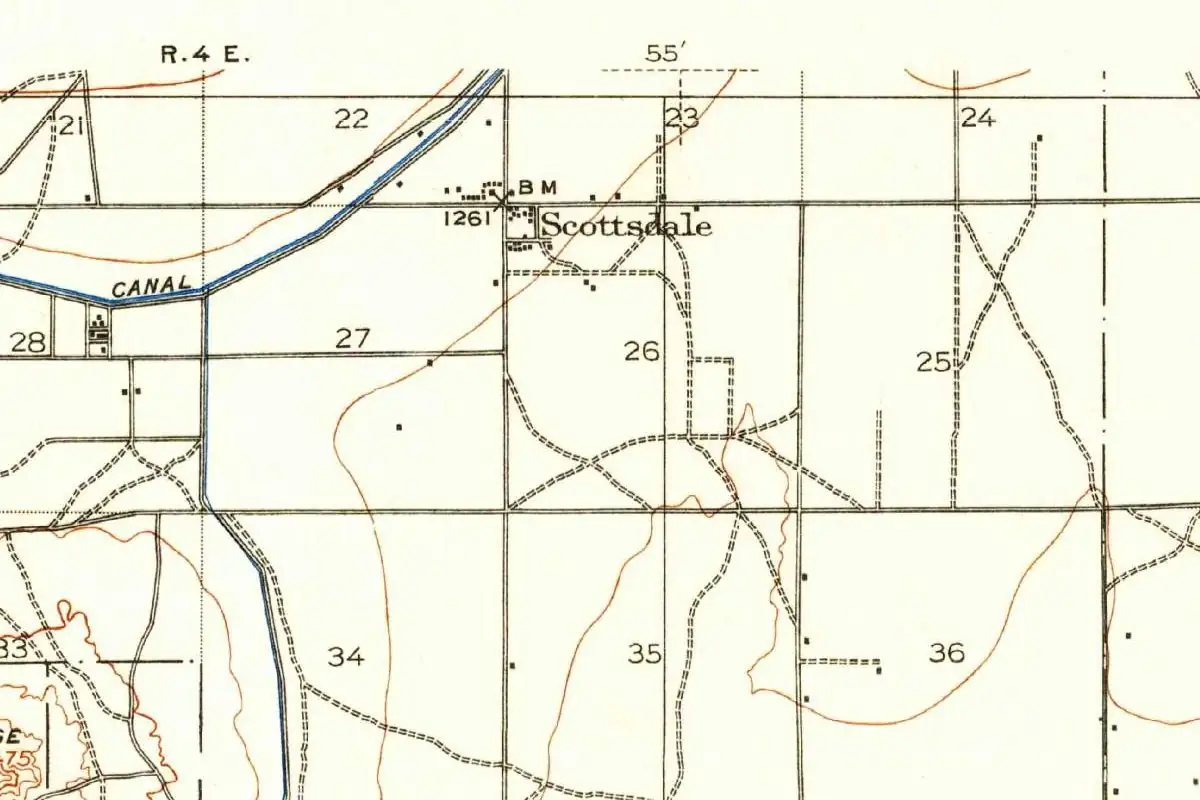
The federal mapmakers caught up in 1913. On the U.S. Geological Survey’s Mesa sheet, the same one that covers Tempe, you can see “Scottsdale” printed next to a benchmark marked 1261. Barnes gives the village’s elevation as 1,261 feet.
“Sound no taps”
Scott died on October 19, 1910, in a hospital in Phoenix, after he was taken there from his home in Scottsdale. The Army and Navy Journal blamed an old Civil War wound and passed along a request he’d often made of his comrades: “Sound no taps over my remains, but the reveille of the glad morning that will greet me on the other shore.”
He was buried in San Diego, where he’d bought a lot in the Grand Army plot on Memorial Day that year. In its December 2, 1911, issue the same journal reported that a memorial stone had just been unveiled at his grave in Mount Hope Cemetery, and that it said simply “Chaplain Winfield Scott.” The town he farmed in Arizona says it in a single word.
Quick answers
Is Scottsdale named after General Winfield Scott?
No. Barnes says it was named for the Rev. Winfield Scott, a Civil War veteran who became a chaplain in the regular army, and GNIS calls him an army chaplain.
Was Scottsdale ever called Orangedale?
As a planned name, according to the Scottsdale Historical Society. It says banker Albert G. Utley meant to call his 1894 townsite Orangedale, but “for some unknown reason” it was changed to Scottsdale.
When did Scottsdale get its name?
In 1896, according to GNIS. The Historical Society says a school district formed that year was named “Scotts-Dale.”
Why did Winfield Scott settle in Scottsdale?
To farm. Barnes says he “located a farm here,” and GNIS says he hoped to develop the place “as a health and farming area.”
Key dates
- 1837February 26: Winfield Scott is born in West Novi, Michigan, according to his seminary's 1910 catalogue.
- 1888Scott, then an Army chaplain at Angel Island, puts money down on land in the Salt River Valley.
- 1891The year GNIS gives for Scott's homestead.
- 1894Banker Albert G. Utley plans a townsite called Orangedale just south of Scott's land, the Scottsdale Historical Society says.
- 1896GNIS dates the name Scottsdale to this year; a new school district is named Scotts-Dale.
- 1901Leslie's Weekly describes "the little town of Scottsdale" and its camp of health seekers.
- 1910October 19: Scott dies in Phoenix.
- 1913A U.S. Geological Survey map prints the name Scottsdale.
Getting there
The closest airports, Amtrak stations and intercity bus stops, measured in a straight line from the center of Scottsdale.
Airports
- Phoenix Sky Harbor International (PHX) 8 mi 13 km
- Mesa Gateway (IWA) 20 mi 32 km
Amtrak trains
- Maricopa station (MRC) 32 mi 52 km
Intercity buses
- Stagecoach Express Amtrak Connecting Service · Tempe Amtrak Bus Stop 6 mi 10 km
- FlixBus Tempe University/Rural 6 mi 10 km
- Limousine Express Phoenix (Limousine Express Bus Terminal) 9 mi 14 km
Distances are as the crow flies, not by road. We don't list schedules or fares because they change; check with the airline, Amtrak or the bus company before you go. Official data (FAA commercial service airports (2025), FAA airport locations, Amtrak stations and Intercity Bus Atlas) from the FAA and the U.S. Bureau of Transportation Statistics, checked Oct 31, 2026.
Historical Sources & References
- Will C. Barnes, Arizona Place Names (University of Arizona, 1935), entry “Scottsdale”. “Village east of Phoenix,” elevation 1,261 feet, “established by and named after the Rev. Winfield Scott,” Angel Island in 1888, and “they called it Scottsdale.”
- Rochester Theological Seminary, General Catalogue, 1850 to 1910. Scott’s birth in West Novi, Michigan, his ordination in Syracuse, the 126th New York, his pulpits and Army posts, “Scottsdale, awaiting retirement, 1893-98,” and the rank of major in 1904. Also online: the 1900 edition, which adds “wounded five times.”
- Emma Paddock Telford, “Camp-life on the Desert,” Leslie’s Weekly, August 10, 1901, p. 115. A firsthand look at “the little town of Scottsdale,” its health seekers, and Chaplain Scott’s ranch.
- Army and Navy Journal, November 12, 1910. Scott’s obituary: his death in Phoenix on October 19, 1910, his home in Scottsdale, the Civil War wound, “Sound no taps,” and the lot in San Diego.
- Army and Navy Journal, December 2, 1911. The San Diego column reporting the stone at Mount Hope Cemetery inscribed “Chaplain Winfield Scott.”
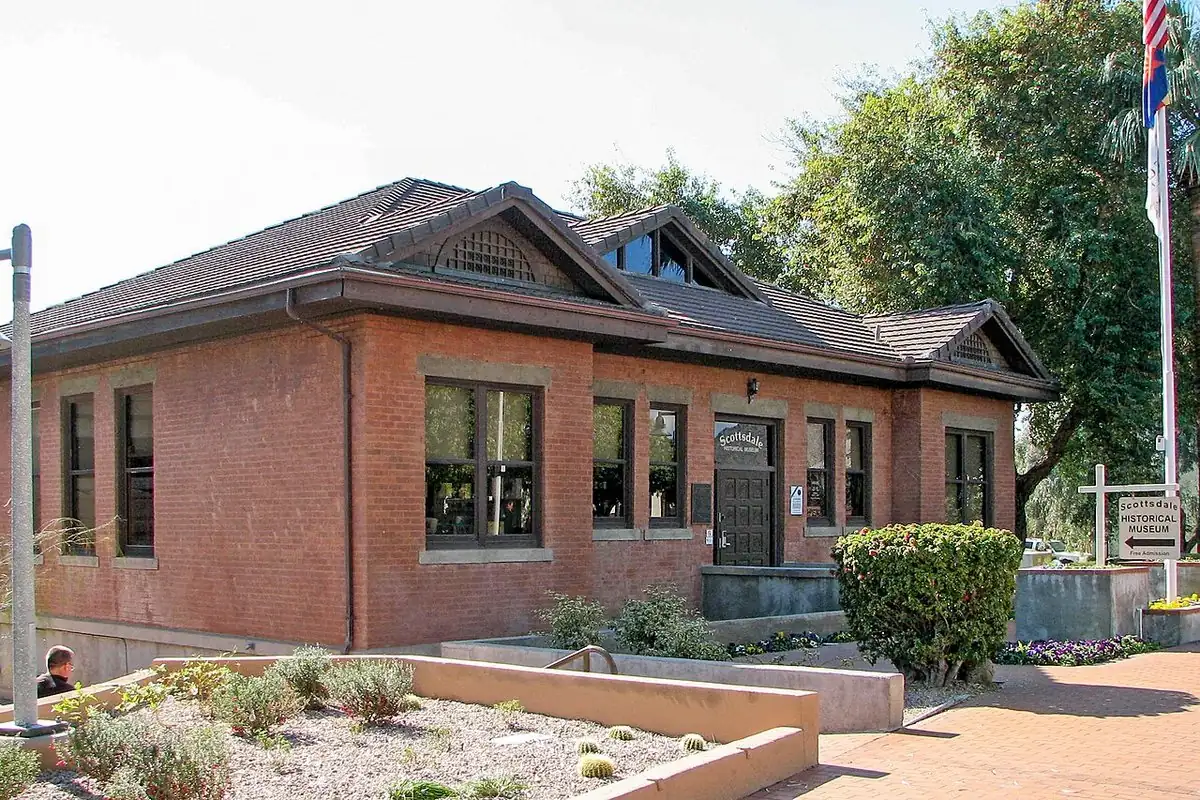
- Scottsdale Historical Society, “Historic Key Events”. The 1888 visit and down payment, George Washington Scott, Albert G. Utley’s Orangedale plan in 1894, the 1896 “Scotts-Dale” school district, and the 1909 red brick school that now houses the Historical Museum.
- Scottsdale Historical Society, “About Scottsdale”. The city’s own summary, credited to the City of Scottsdale: Scott’s 1888 visit and his down payment on 640 acres.
- GNIS feature 11029 (U.S. Geological Survey). Named in 1896 for “Major Winfield Scott (1837-1910), an army chaplain who homesteaded here in 1891,” and his hope for “a health and farming area.”
Spot something wrong, or know more? Tell us here. You can also email us or use our contact page. Corrections are noted here with their date, never made silently.