Sedona, Arizona: The Town Named for the Postmaster's Wife
Sedona, Arizona, carries a woman’s first name because postal officials told her husband that “Schnebly Station” was too long. So the post office he opened on Oak Creek in 1902 got his wife’s name instead: Sedona Schnebly.
“Schnebly Station” didn’t make the cut
The best telling comes from inside the family. Ellsworth M. Schnebly, T. C. Schnebly’s son, wrote a piece called “How Sedona Was Named” for Those Early Days, a collection of oldtimers’ memoirs put out by the Sedona Westerners. He says his father, Theodore C. Schnebly, got to Jerome on October 12, 1901, from his home in Gorin, Missouri. In his telling, the name sent in for the new post office was “Schnebly Station,” and “Dad was notified by the post office officials that the name was too long to put on the cancellation stamp.”
The Sedona Heritage Museum tells it with a little more detail. In its version T. C. Schnebly sent two names to Washington, Oak Creek Crossing and Schnebly Station, and the Postmaster General of the day “had a prejudice for one-word names for postmarks.” It was his brother Ellsworth, the museum says, who asked, “Why don’t you name it after your wife?”
You won’t find the Post Office Department’s side of that conversation in any of the sources here. The rejection and the brother’s suggestion come from the family and the museum, not from a government letter. What’s on paper is the result.
Mrs. Carl Schnebly’s first name
Will C. Barnes, whose Arizona Place Names came out from the University of Arizona in 1935, gives the record in a few lines. Sedona, he writes, was a “settlement and Forest Ranger station on Oak creek,” named “after Mrs. Carl Schnebly, wife of an early settler. Her given name was Sedona.” He adds the date and the postmaster: “P. O. established June 26, 1902. Theodore C. Schnebly, P. M.”
That’s the same couple in both places. Barnes calls the husband Carl in one line and Theodore C. in the next, and the museum calls him T. C. He’s the one who ran the office, and she’s the one the town still answers to.
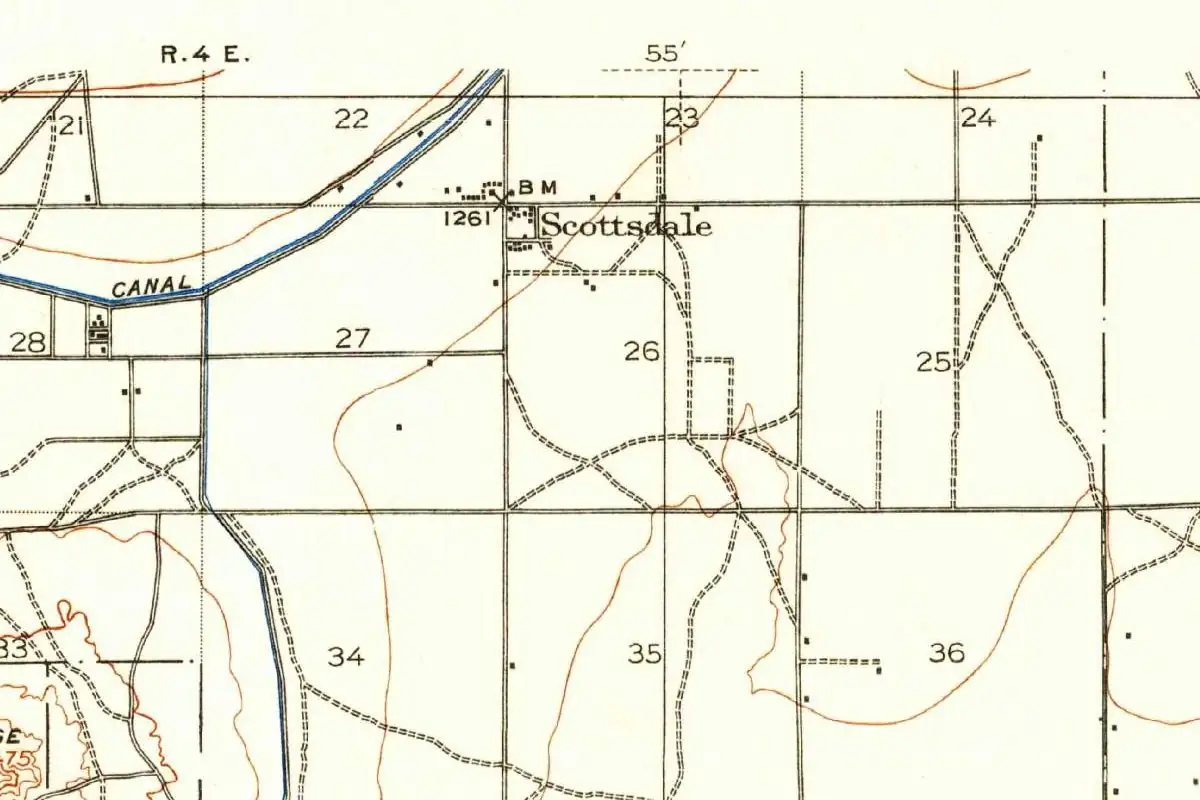
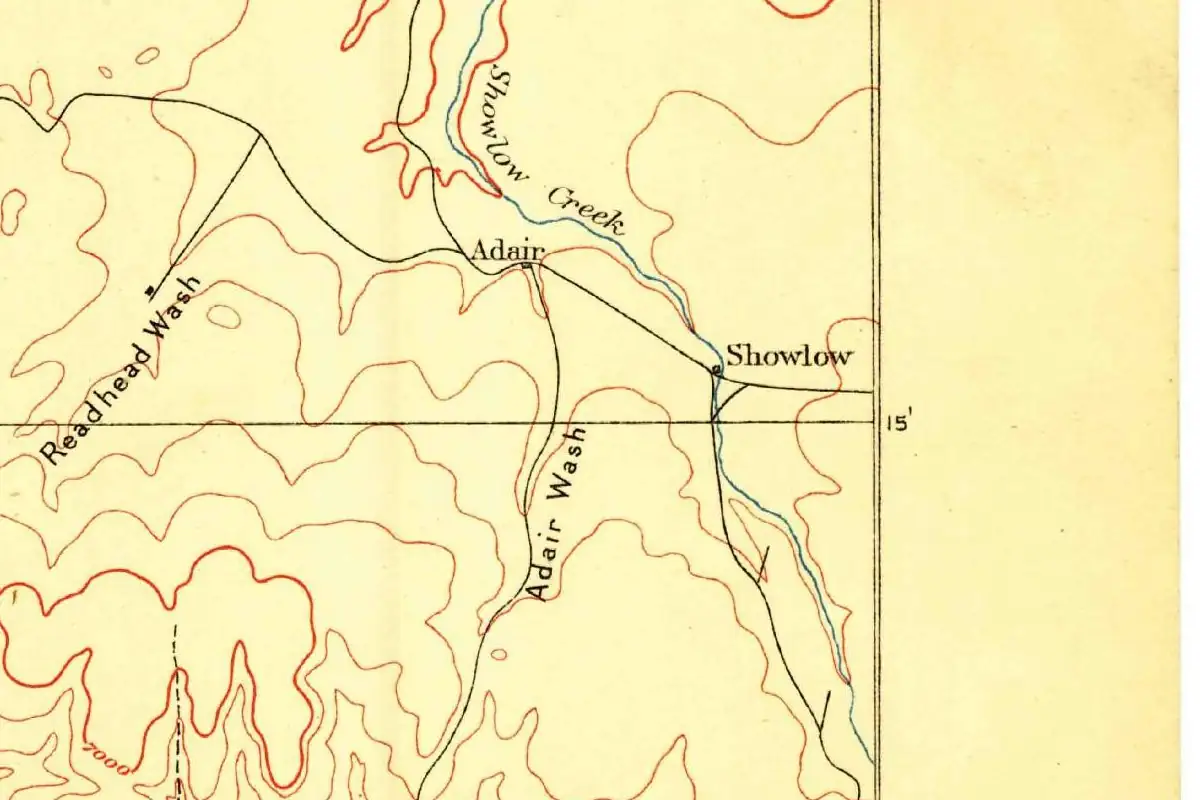
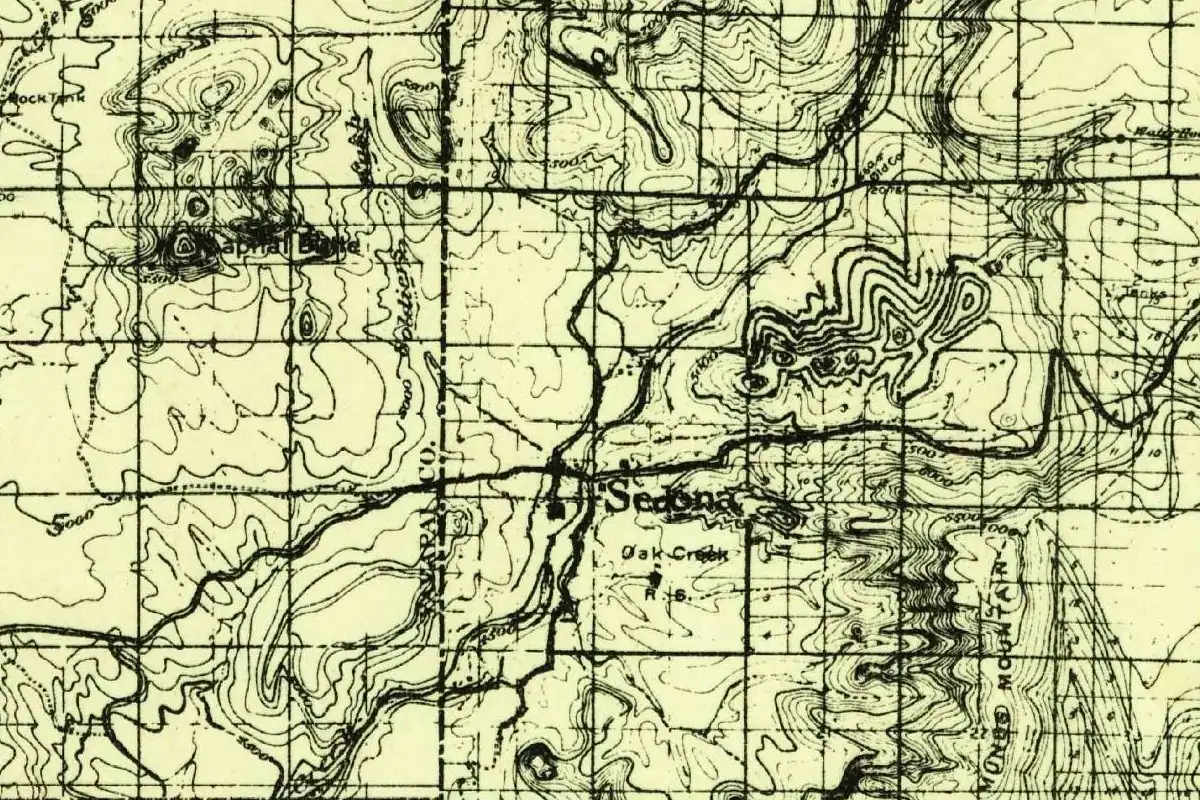
By 1923 the name was settled enough for the federal mapmakers. On the U.S. Geological Survey’s Camp Verde sheet, the map at the top of this page, you can see “Sedona” printed beside a small black square, with “Oak Creek” just below it.
A name her mother made up
So where did Sedona get her own name? The museum’s answer is that she was born on February 24, 1877, in Missouri, and that her mother, Amanda Miller, “just thought up” the name because she thought it sounded pretty. “So, the name Sedona isn’t Spanish, nor Native American,” the museum says.
The museum doesn’t say where that detail comes from, and nothing older in these sources backs it up or contradicts it. Barnes doesn’t say where the name came from, and the memoir pieces we could read don’t either. What the sources do agree on is that the town’s name is hers. She’s in good company, too: Beatrice, Nebraska, is named for a judge’s daughter, Julia Beatrice Kinney, and Sedalia, Missouri, started out as Sedville, after a founder’s daughter the family called “Sed.”
The family ended up on the map twice. In 1946 a writer for the Palm Springs Desert Sun, on a trip down Oak Creek Canyon, noticed the Schnebly Hill road coming in near “the village of Sedona” and called them “odd-sounding names,” both “taken from the name of an early settler’s wife, Mrs. Carl Schnebly, whose given name was Sedona.” Her last name went on the hill road, and her first name went on the town.
Quick answers
Who is Sedona, Arizona named after?
Sedona Schnebly. Will C. Barnes’s 1935 Arizona Place Names says the town was named “after Mrs. Carl Schnebly, wife of an early settler,” whose given name was Sedona, and lists her husband, Theodore C. Schnebly, as the postmaster.
What was Sedona almost called?
Schnebly Station. The Schneblys’ son Ellsworth wrote that post office officials told his father the name was too long, and the Sedona Heritage Museum says Oak Creek Crossing was also sent in and turned down.
Is Sedona a Native American or Spanish word?
No, according to the Sedona Heritage Museum. It says Sedona Schnebly’s mother, Amanda Miller, “just thought up” the name for her baby because it sounded pretty, though the museum doesn’t say where that comes from and none of the older sources here mention it.
When did Sedona get its name?
In 1902. Barnes gives June 26, 1902, as the date the Sedona post office was established.
Key dates
- 1877February 24: Sedona Miller is born in Missouri, according to the Sedona Heritage Museum.
- 1901October 12: Theodore C. Schnebly arrives in Jerome from Gorin, Missouri, his son later wrote.
- 1902June 26: The Sedona post office is established, with Theodore C. Schnebly as postmaster.
- 1923A U.S. Geological Survey map prints the name Sedona on Oak Creek.
- 1935Will C. Barnes's Arizona Place Names says the town is named for Mrs. Carl Schnebly.
Getting there
The closest airports, Amtrak stations and intercity bus stops, measured in a straight line from the center of Sedona.
Airports
- Flagstaff Pulliam (FLG) - Flagstaff 19 mi 31 km
- Prescott Regional/Ernest A Love Field (PRC) 40 mi 65 km
- Phoenix Sky Harbor International (PHX) 100 mi 161 km
Amtrak trains
- Flagstaff station (FLG) 24 mi 38 km
- Winslow station (WLO) 61 mi 99 km
Intercity buses
- Greyhound Sedona Sedona ARCO 2 mi 3 km
- Route 66 Express Amtrak Connecting Service · Flagstaff 24 mi 38 km
- FlixBus Flagstaff Train Station 24 mi 38 km
Distances are as the crow flies, not by road. We don't list schedules or fares because they change; check with the airline, Amtrak or the bus company before you go. Official data (FAA commercial service airports (2025), FAA airport locations, Amtrak stations and Intercity Bus Atlas) from the FAA and the U.S. Bureau of Transportation Statistics, checked Oct 31, 2026.
Historical Sources & References
- Will C. Barnes, Arizona Place Names (University of Arizona, 1935), entry “Sedona”. The “settlement and Forest Ranger station on Oak creek,” “after Mrs. Carl Schnebly, wife of an early settler. Her given name was Sedona,” and “P. O. established June 26, 1902. Theodore C. Schnebly, P. M.”
- Ellsworth M. Schnebly, “How Sedona Was Named,” in Those Early Days: Oldtimers’ Memoirs (Sedona Westerners). The son’s account: his father’s arrival in Jerome on October 12, 1901, the name “Schnebly Station,” and the post office officials’ answer that it was too long to put on the cancellation stamp.
- Sedona Heritage Museum, “History of Sedona”. Oak Creek Crossing and Schnebly Station, the Postmaster General’s “prejudice for one-word names for postmarks,” Ellsworth’s “Why don’t you name it after your wife?”, and Amanda Miller’s story of making up the name.
- Palm Springs Desert Sun, August 9, 1946. A travel piece on Oak Creek Canyon tying both Sedona and Schnebly Hill to “Mrs. Carl Schnebly, whose given name was Sedona.”
- GNIS feature 34242 (U.S. Geological Survey). The federal record, county and coordinates for Sedona.
Spot something wrong, or know more? Tell us here. You can also email us or use our contact page. Corrections are noted here with their date, never made silently.