Aspen, Colorado: How Ute City Got Renamed for Its Trees
Aspen, Colorado, was called Ute City when it got started in 1879, and the name it wears now came from the thick stands of aspen on the mountain above it. A promoter named B. Clark Wheeler did the renaming, and he did it while one of the men who had christened Ute City was away back East.
Ute City, November 1879
The rush to the upper Roaring Fork started with a set of maps. Frank Hall, who finished a four-volume history of Colorado in 1895, says a party of prospectors got hold of Hayden’s geological reports in 1879 and noticed that Hayden had found mineral formations near the head of the Roaring Fork like the ones at Leadville. Charles Bennett, S. E. Hoskins, A. C. Fellows and Walter S. Clark crossed Independence Pass that July. Others had been there in June, and claims went down on the slope Hall already calls Aspen mountain.
Then came September. After the killings at the White River Agency, Governor Frederick W. Pitkin sent a rider to warn the men on the Roaring Fork, and nearly all of them left. Two stayed, hiding in the timber on Aspen Mountain, and some of the others drifted back to sit out a hard winter.
In November 1879, H. B. Gillespie showed up to look at the Spar mine for a Cincinnati investor. While he was there, Hall writes, he and the men already in camp “adopted measures for establishing a town, which was christened Ute City.” The Aspen Historical Society’s timeline puts it more simply: Gillespie laid out a town and called it Ute City. You won’t find, in any of these sources, a line on why they chose that name. The same timeline does say Ute people hunted all through the upper Roaring Fork Valley before the miners came, and that they were forced out of the area in 1881.
The snowshoe promoter
Some of the prospectors who fled the Ute alarm ended up in Denver, and that’s where they met B. Clark Wheeler and Charles A. Hallam, agents for a Cincinnati capitalist named D. M. Hyman. In January 1880 the two men took a bond on a whole string of claims, plus the two ranch claims that sat on what Hall calls “the Aspen town site.” They paid $5,000 down without ever seeing the ground.
Wheeler went to have a look in February, crossing the mountains on snowshoes through deep snow and bitter cold. Some of his party went snow-blind. Before he left, Hall says, he and Hallam had gotten an order from the surveyor general of Colorado to survey “the proposed Aspen town site, so named from the dense growth of aspen trees on the mountain under whose shadow a beautiful city has since arisen.” That’s the whole origin story in one sentence, and it’s from a writer who was working within 15 years of the event.
Wheeler then talked the place up every way he could. He gave lectures in Denver, wrote for papers back East and later founded the Aspen Daily Times. Hall figured Aspen’s rise owed as much to Wheeler’s “untiring zeal” as to anything else.
Gillespie’s side of it
Gillespie, meanwhile, had gone to Washington to push for a post office, then stopped in Philadelphia to start a company to build a wagon road from Buena Vista “to Aspen (then called Ute City).” Hall’s account, built on what Gillespie told him, goes on: “During his absence B. Clark Wheeler had platted the town site, changing the name to ‘Aspen.’” The historical society’s timeline tells it the same way. Wheeler surveyed the town site in 1880 and renamed it Aspen.
Hall’s own pages don’t line up perfectly, though. Two pages before Gillespie’s account, he says no legal survey of Ute City was made and “ere long the proposed site was abandoned,” which isn’t the same thing as renamed. In between, he mentions a cabin built “in Aspen outside of Ute City,” as if they were two different spots. So it isn’t clear whether Wheeler renamed the same place or drew a new town right next to it. Either way, Ute City’s name didn’t last.
There was a Roaring Fork City, too
Ute City wasn’t the only name in play. In 1880, Hall writes, a pair of Leadville promoters, Dr. A. A. Smith and Judge J. W. Hanna, laid out Roaring Fork City on the plateau between Maroon and Castle creeks and sold lots in Leadville on the strength of big promises. It had exactly one building, a cabin meant to be the post office. The scheme fell apart, and the cabin was later moved to Aspen. If you’re keeping score, Aspen ended up with the other town’s only house.
The trees or the mountain
Henry Gannett’s place-name books for the U.S. Geological Survey, in 1902 and again in 1905, tell it a little differently. They say Aspen “takes its name from a near-by mountain, Quaking Asp.” Hall says the trees on the mountain. That’s not much of a fight, since either way the name goes back to the aspen. Gannett’s name for the mountain is the odd part. Frank Fossett’s mining guide, printed in 1880, already calls the peak Aspen mountain and lists “Highland City, Aspen, and Roaring Fork” as the towns of the district. The federal place-names record calls it Aspen Mountain today, and none of the other sources here use “Quaking Asp” for it.
Fossett’s guide is a good check on the timing, too. It’s dated 1880, and it calls the place both Aspen and Aspen City, with no mention of Ute City at all. Whatever Ute City had been, by then the new name was the one in print.
A silver town under its namesake
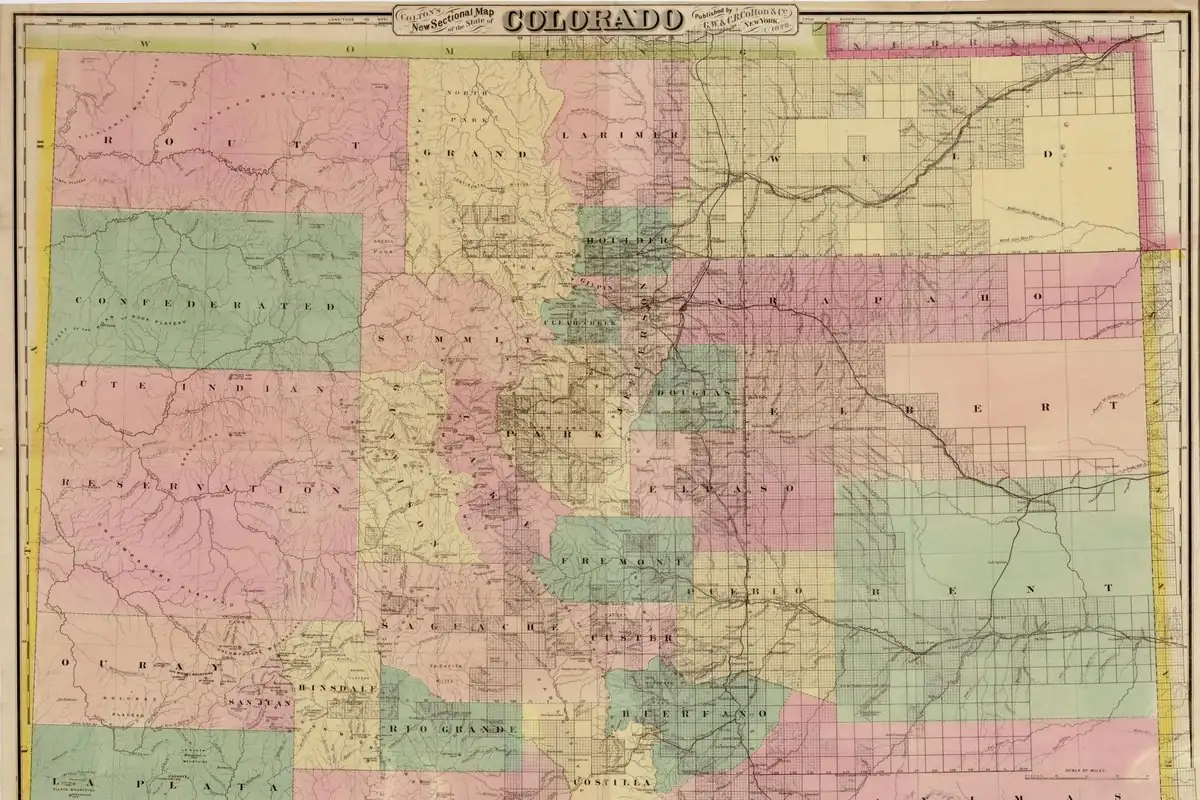
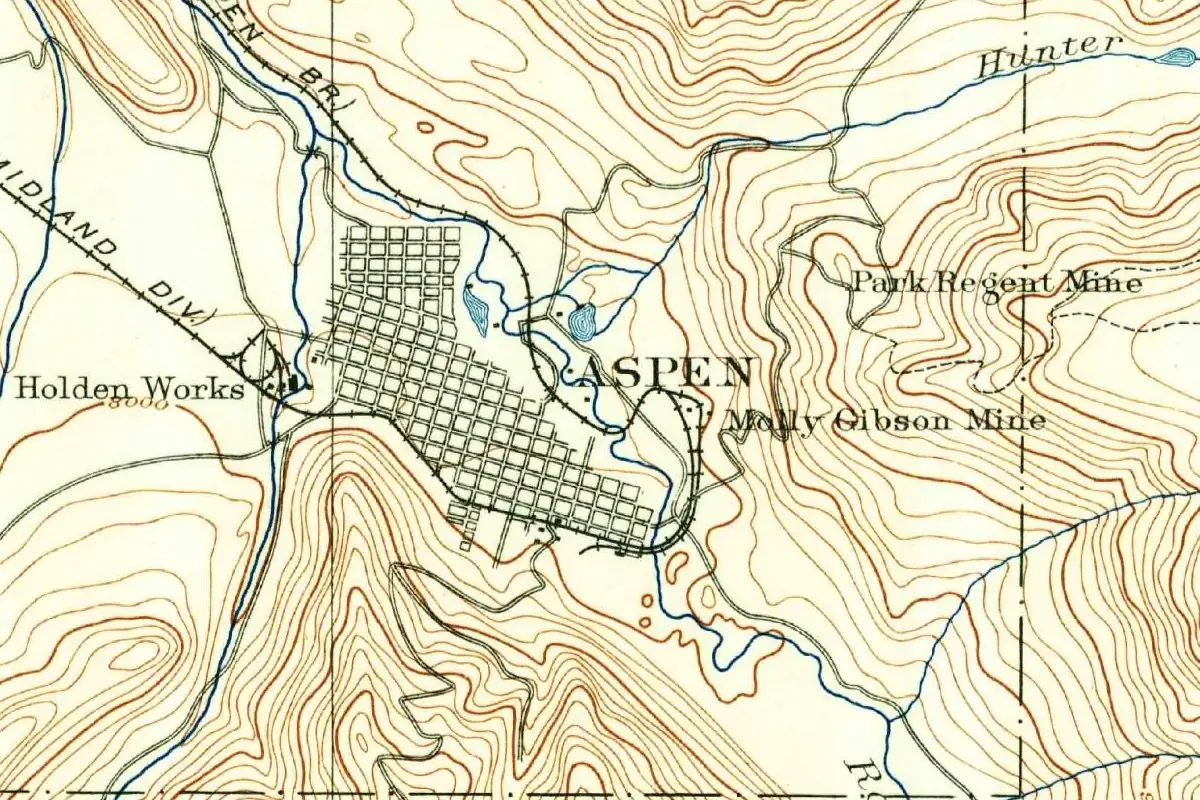
The rush that made Aspen was a silver one, the same kind of boom you’ll find in our mining rush collection. Pitkin County was carved out of Gunnison County on February 23, 1881, with Aspen as its seat, and named for the governor who had sent the warning rider. By 1893, Hall says, Aspen had an estimated 11,000 people. On the 1893 map at the top of this page, you can see the street grid with the river winding past and railroad lines curving around it, and the mines pressing in on the east.
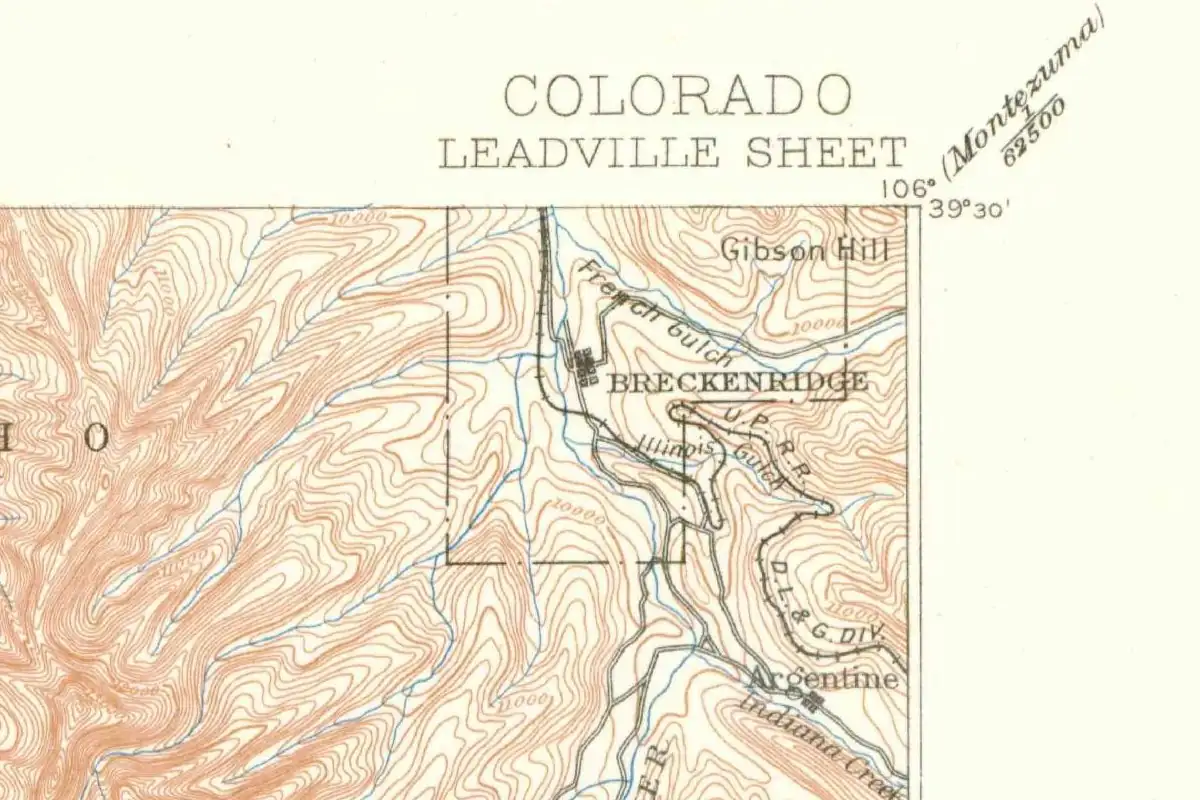
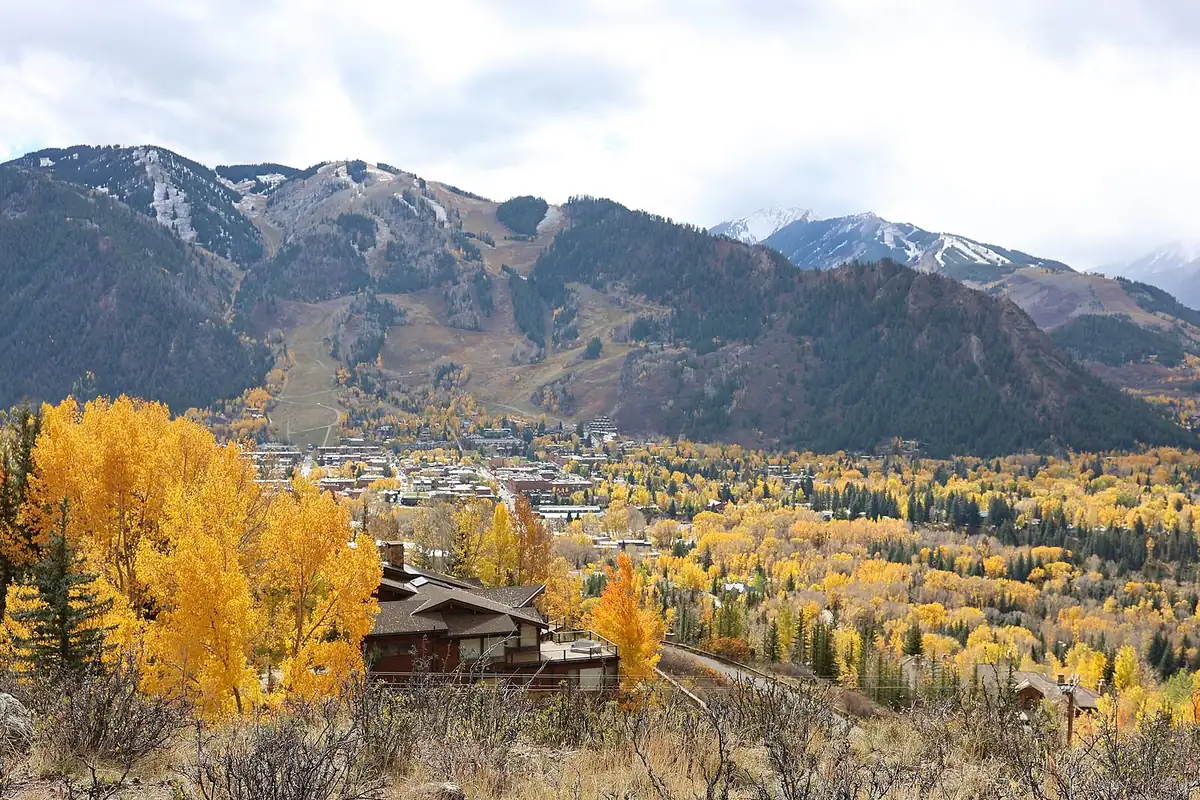
Hall’s picture of a city rising in the shadow of an aspen-covered mountain is about as close as these old histories get to poetry. The same volume also covers Breckenridge, whose spelling is a story of its own. For Aspen, though, there’s no puzzle. The prospectors called it Ute City, Wheeler called it Aspen, and the mountain full of trees settled the matter.
Quick answers
What was Aspen, Colorado, originally called?
Ute City. H. B. Gillespie and the prospectors already in camp christened a town by that name in November 1879, according to Frank Hall’s 1895 history, and the Aspen Historical Society’s timeline lists Ute City under 1879 too.
Who renamed Ute City to Aspen?
B. Clark Wheeler. Gillespie told Hall that while he was away, Wheeler “platted the town site, changing the name to ‘Aspen,’” and the historical society’s timeline says Wheeler surveyed the site in 1880 and renamed it.
Is Aspen named after the tree or the mountain?
Both, depending on the source. Hall says the town site was named for “the dense growth of aspen trees on the mountain,” and Henry Gannett’s USGS book says it took the name of a nearby mountain he calls Quaking Asp.
When did Aspen get its name?
By early 1880. Hall says Wheeler and Hallam had an order to survey “the proposed Aspen town site” before Wheeler’s February 1880 snowshoe trip, and Fossett’s 1880 guide already lists Aspen as a town.
Key dates
- 1879July: Charles Bennett's party crosses Independence Pass to prospect the head of the Roaring Fork.
- 1879September: word of the fighting at the White River Agency sends most of the prospectors out of the valley.
- 1879November: H. B. Gillespie and others lay out a town and christen it Ute City.
- 1880January: B. Clark Wheeler and Charles A. Hallam take a bond on the mining claims and the ranch claims on the future town site.
- 1880February: Wheeler crosses the mountains on snowshoes. By then the town site has the name Aspen.
- 1880Frank Fossett's mining guide lists Aspen among the towns of the Roaring Fork.
- 1881February 23: Pitkin County is created with Aspen as its county seat.
- 1905Henry Gannett's USGS book says Aspen takes its name from a nearby mountain, Quaking Asp.
Getting there
The closest airports, Amtrak stations and intercity bus stops, measured in a straight line from the center of Aspen.
Airports
- Aspen-Pitkin County/Sardy Field (ASE) 3 mi 6 km
- Eagle County Regional (EGE) 32 mi 51 km
- Denver International (DEN) 123 mi 198 km
Amtrak trains
- Glenwood Springs station (GSC) 37 mi 59 km
- Winter Park station (WPR) 74 mi 119 km
Intercity buses
- Bustang Outrider Bustang · Crested Butte 24 mi 38 km
- Colorado Department of Transportation Bustang · Eagle Chambers PnR 32 mi 52 km
- Greyhound Glenwood Springs W Glenwood Mall 39 mi 62 km
Distances are as the crow flies, not by road. We don't list schedules or fares because they change; check with the airline, Amtrak or the bus company before you go. Official data (FAA commercial service airports (2025), FAA airport locations, Amtrak stations and Intercity Bus Atlas) from the FAA and the U.S. Bureau of Transportation Statistics, checked Oct 31, 2026.
Historical Sources & References
- Frank Hall, History of the State of Colorado, vol. 4 (1895), pp. 272–276. The core of this story: the 1879 prospectors and the Ute alarm, Ute City “christened” in November 1879, Roaring Fork City, Wheeler and Hallam’s bond and survey order for “the proposed Aspen town site, so named from the dense growth of aspen trees on the mountain” (p. 273), and Gillespie’s account of Wheeler “changing the name to ‘Aspen’” (p. 275). Also Pitkin County’s creation and the 1893 population estimate.
- Henry Gannett, The Origin of Certain Place Names in the United States, 2nd ed. (USGS, 1905), p. 30. Aspen “takes its name from a near-by mountain, Quaking Asp.” Also online: the 1902 first edition, p. 30, which says the same.
- Frank Fossett, Colorado: Its Gold and Silver Mines, 2nd ed. (1880), pp. 571–573. Shows “Aspen mountain” and the town of Aspen already in print in 1880, listed with Highland City and Roaring Fork.
- Aspen Historical Society, “Local History Timeline”. Gillespie laying out Ute City in 1879, Wheeler surveying the town site and renaming it Aspen in 1880, and the Ute presence in the upper Roaring Fork Valley and removal in 1881.
- GNIS feature 204686 (U.S. Geological Survey). The federal record and coordinates for Aspen, in Pitkin County. The same database lists Aspen Mountain (feature 180059).
Spot something wrong, or know more? Tell us here. You can also email us or use our contact page. Corrections are noted here with their date, never made silently.