Gold Rush and Mining Boomtowns: How They Got Their Names
Say Lead, South Dakota, like the metal and you’ll give yourself away. It’s “leed,” an old miners’ word for a ledge of ore you could follow into the rock, and the town took it from the hills around it.
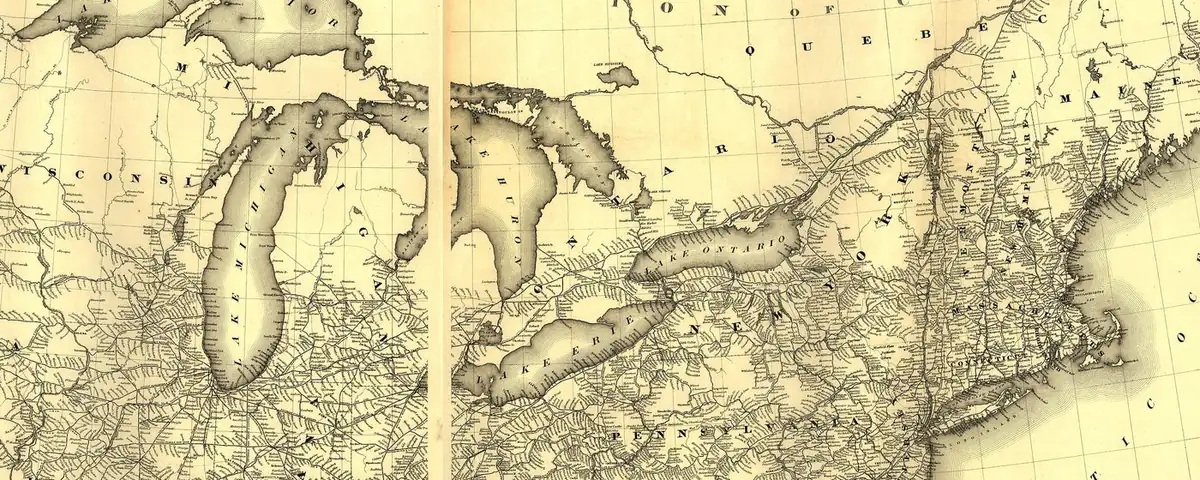
Every place here was born in a mining rush or grew up fast because of one. The list runs in order of when the rush hit, from the 1828 gold discovery in north Georgia to the 1902 stampede in Alaska’s Tanana Valley, so you can follow the gold west and then north.
The names tell you who was in camp. Some come straight from the ground: Deadwood from a gulch full of dead trees, Keystone and Tombstone from mining claims. Some honor the prospectors themselves, like Juneau and Kellogg, or a miner’s nickname, like Old Virginia in Virginia City. Others came out of a miners’ meeting, where Helena got its name, or out of the Civil War loyalties in camp, as when Custer beat Stonewall. Dahlonega’s name is a Cherokee word for yellow, the color of the gold that drew miners in, and Golden may be named for a prospector, a mountain pass or the gold itself.
How we picked these. The town was founded during a gold, silver or other mining rush, or grew into a town because of one, as an official, historical or encyclopedic source confirms. Each story below lists the source that confirms it.
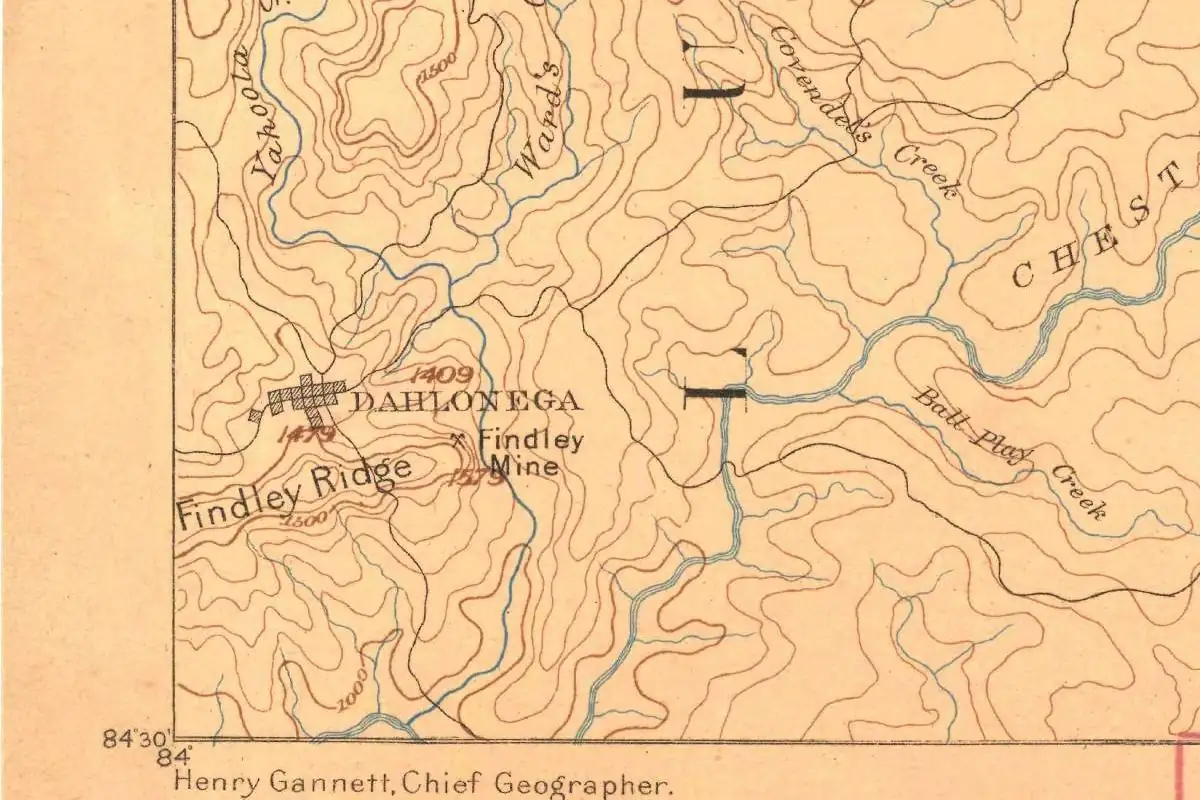 Lumpkin County, GA
In 1854, George White wrote that gold was "often found in the court-house square" of Dahlonega, Georgia, "particularly after a shower."
DocumentedNamed with a Cherokee word for yellow, it was incorporated in 1833, a few years after the 1828 gold find that started a rush. Source: About Our Town (City of Dahlonega)
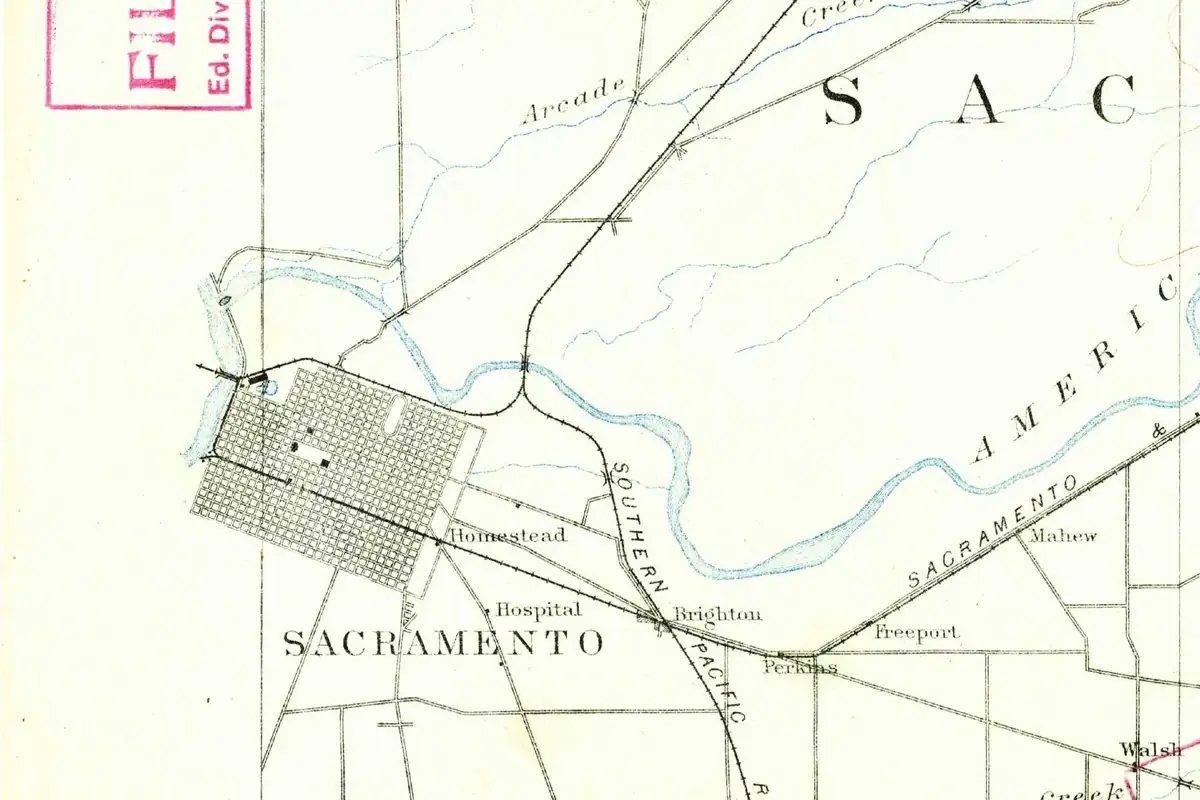 Sacramento County, CA
Sacramento, California, is named for a river, and the Spanish officer who named it in 1808 first gave the name to what's now the Feather River.
DocumentedLaid out in 1848, it grew fast as the river port for goods headed to the California gold fields. Source: City-Wide Historic Context (City of Sacramento)
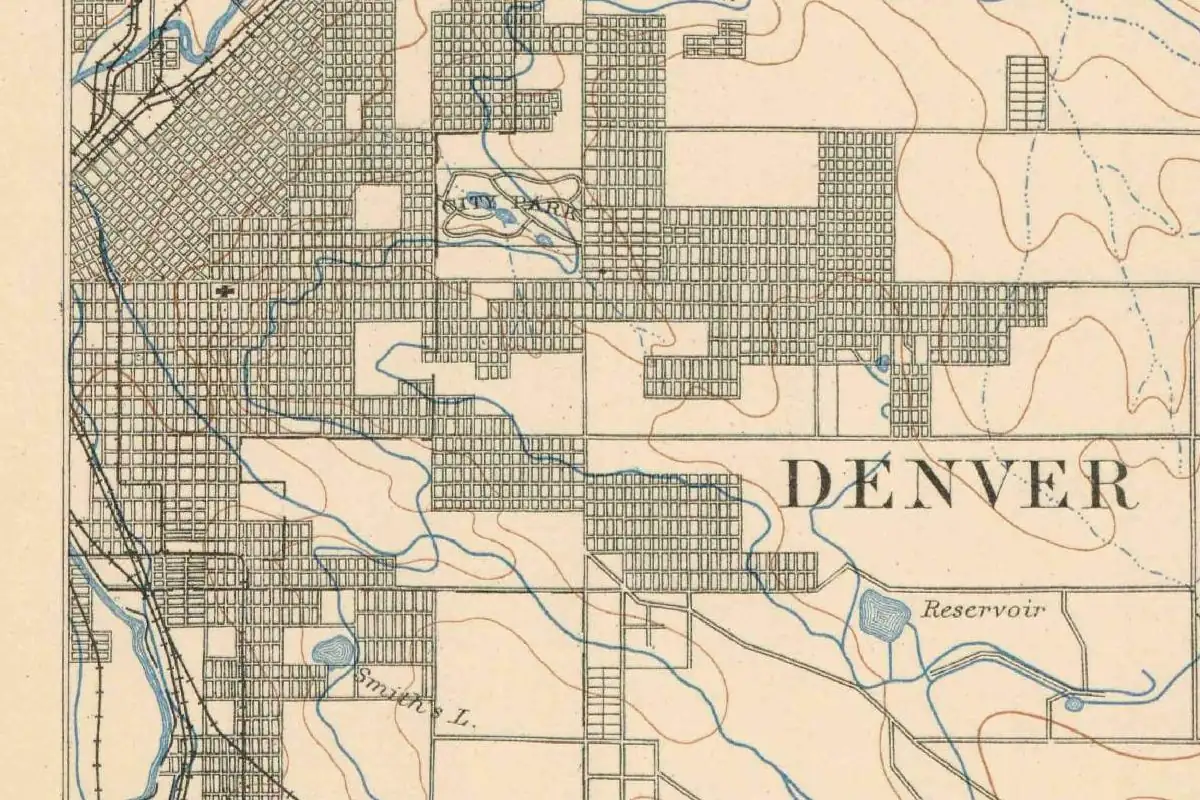 Denver County, CO
Denver, Colorado, sits on a town site that another company had already staked out and named St. Charles.
DocumentedFounded in 1858 on land gold seekers had claimed. The find that started the Colorado gold rush "gave birth to Denver." Source: Denver (Colorado Encyclopedia)
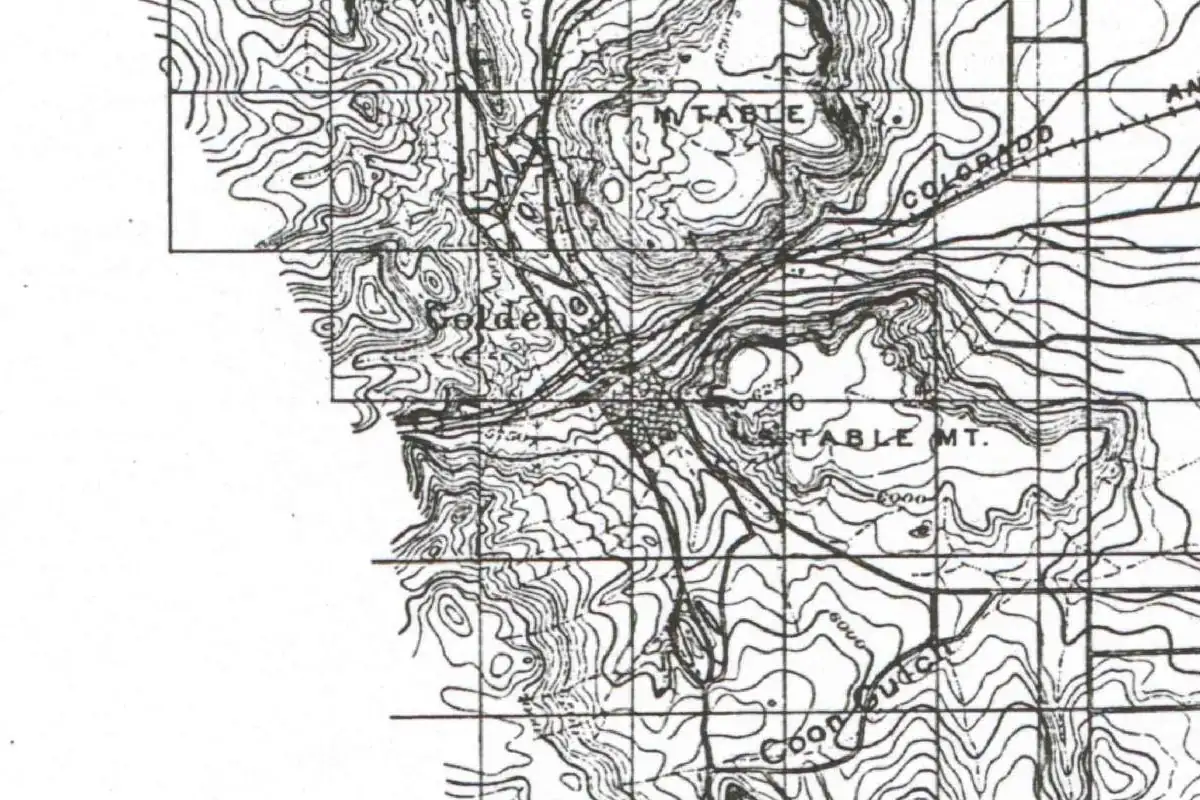 Jefferson County, CO
Old histories give three reasons for the name Golden, Colorado: a prospector named Tom Golden, a mountain pass called the Golden Gate, and the gold.
DisputedFounded in the Colorado gold rush of 1859, and one of the three old theories says the name points at the gold itself. Source: Golden (Colorado Encyclopedia)
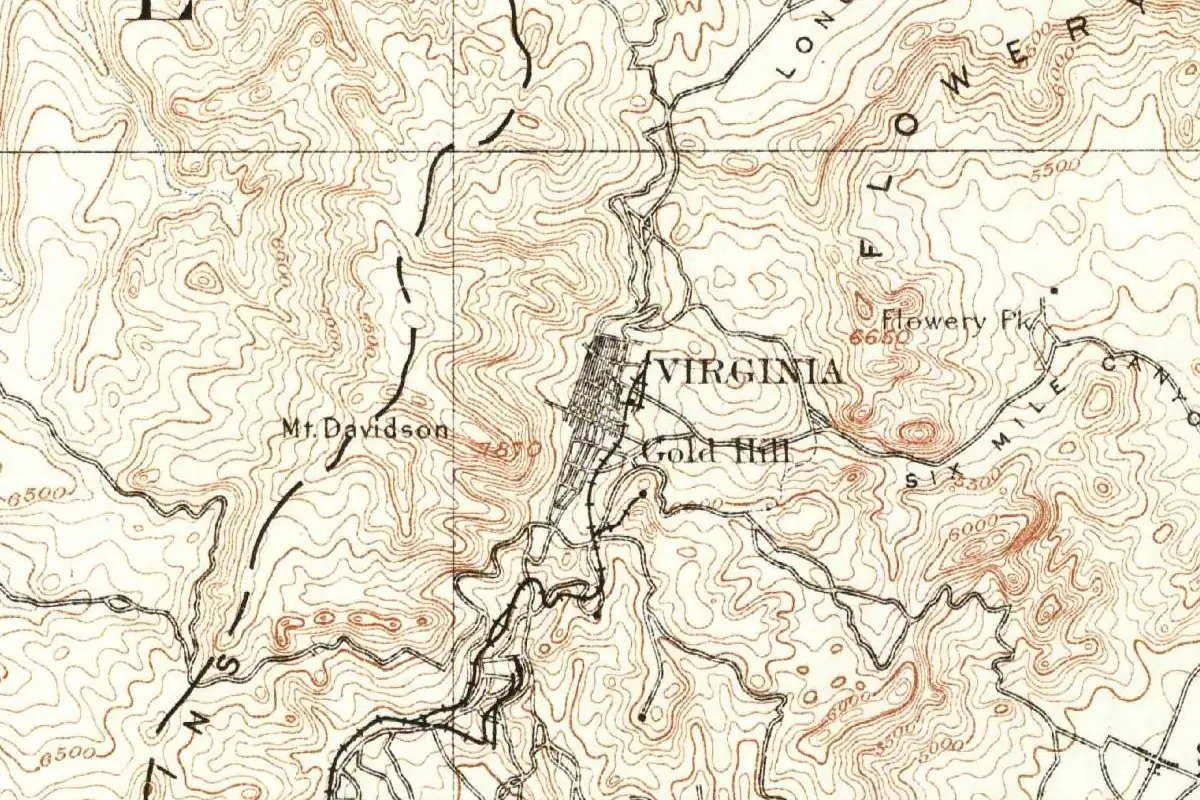 Storey County, NV
Virginia City, Nevada, is named for a miner called Old Virginia, and Henry Comstock said the man christened it by falling and breaking his whiskey bottle.
DocumentedGrew up on the 1859 Comstock Lode strike and carries the nickname of a miner, Old Virginia. Source: Virginia City Historic District, Nevada (National Park Service)
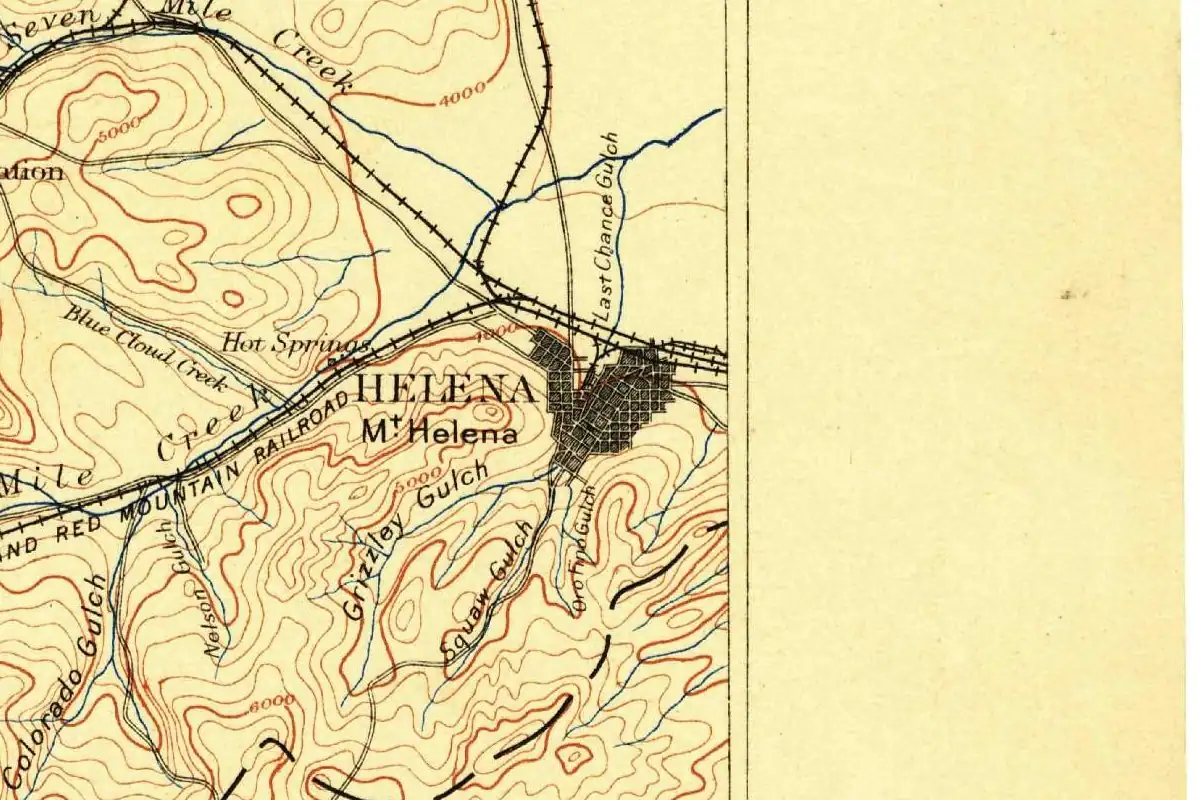 Lewis and Clark County, MT
Helena, Montana, got its name from a Minnesota miner at an 1864 meeting, but the old accounts don't agree on which Helena he had in mind.
DisputedBegan as Last Chance Gulch, where prospectors found gold in July 1864, and took the name Helena that fall. Source: Step into Helena's Past (Montana Historical Society)
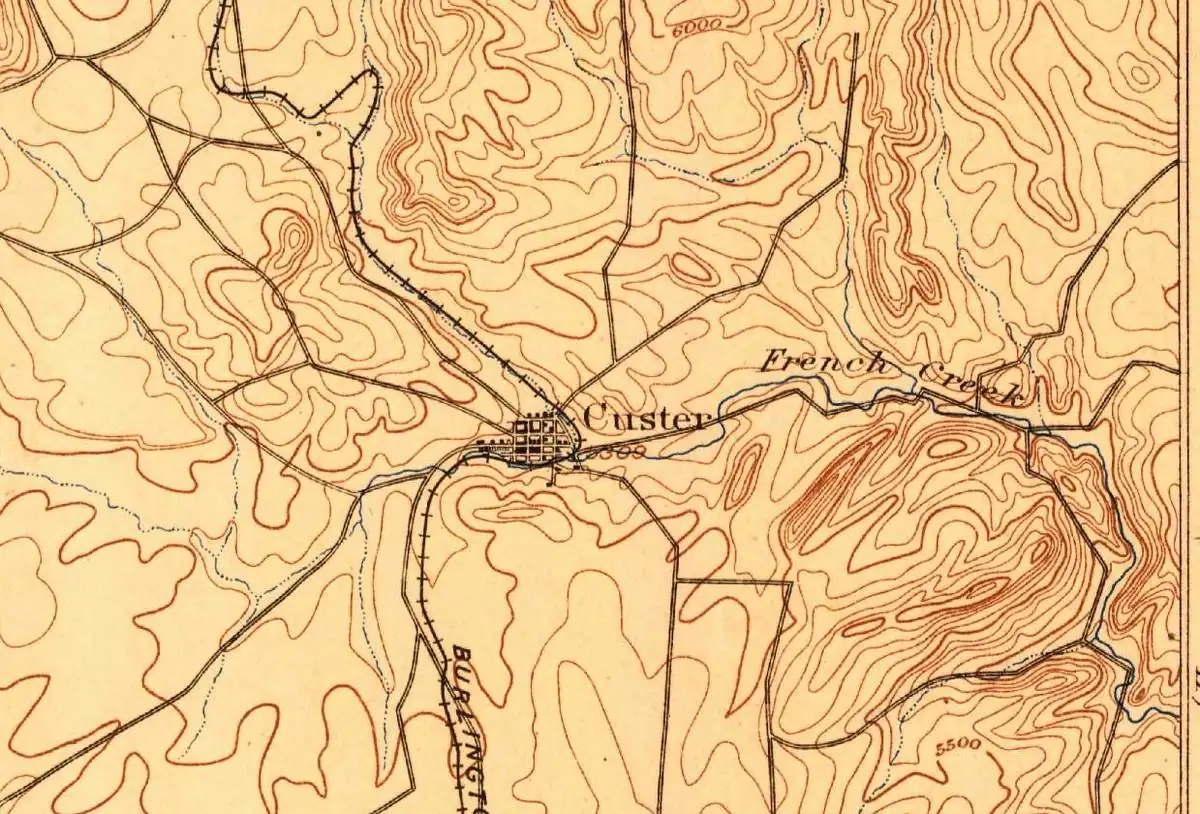 Custer County, SD
Custer, South Dakota, is named for George Armstrong Custer, whose 1874 expedition found gold nearby.
DocumentedStaked out in 1875 near the creek where Custer's 1874 expedition found gold, and thousands came to pan. Source: History (Custer County, South Dakota)
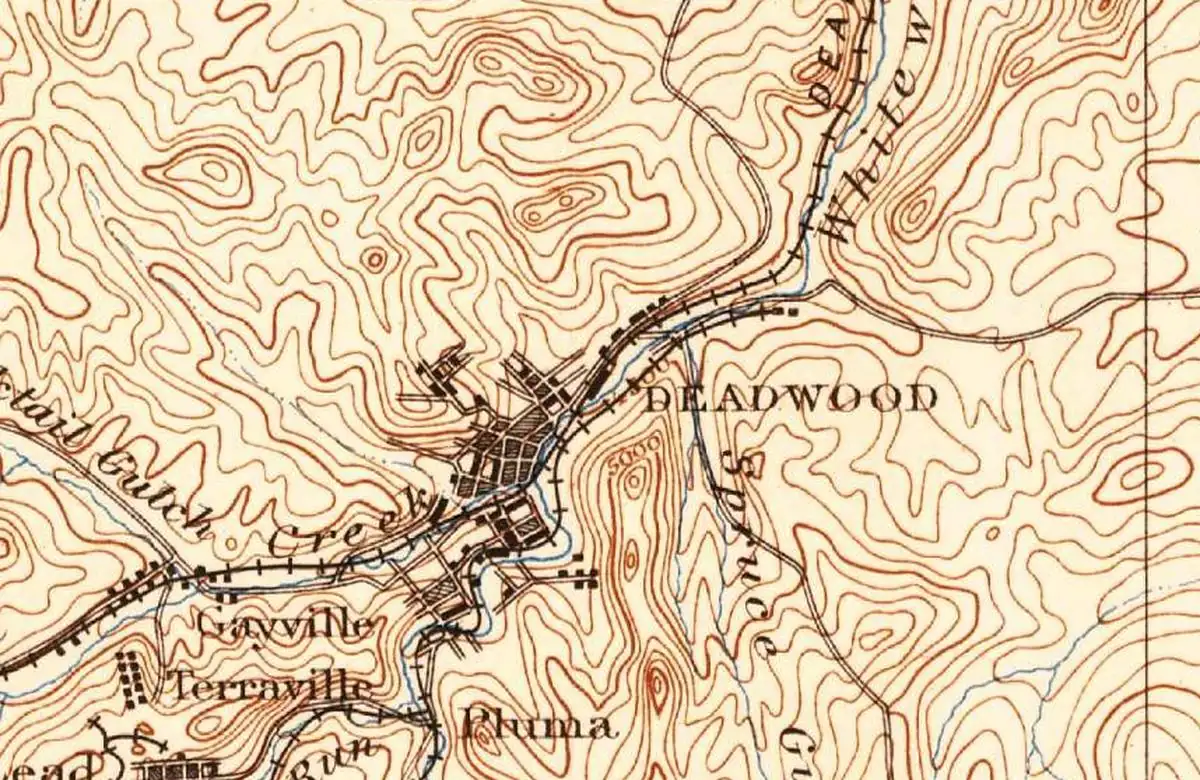 Lawrence County, SD
Deadwood, South Dakota, is named after the gulch it sits in, and the gulch got its name from the dead trees the first gold prospectors found there.
DocumentedA boom town of the Black Hills gold rush, named for a gulch full of dead trees where the first gold was dug. Source: Deadwood Historic District, National Register nomination (National Park Service)
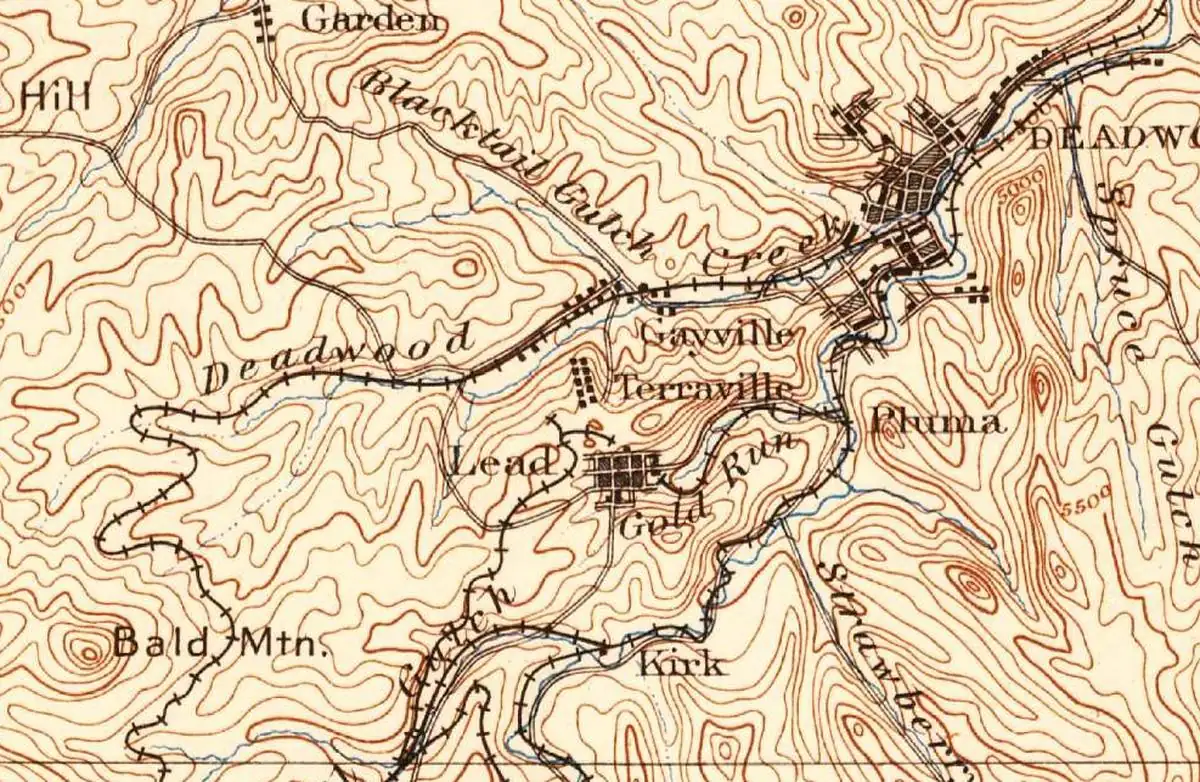 Lawrence County, SD
Lead, South Dakota, takes its name from an old miners' word: a "lead" is a ledge or vein of ore, and the hills around town were full of them.
DocumentedNamed for a miners' word for a vein of ore, it grew up as the company town of the Homestake gold mine. Source: Lead, South Dakota, Preserve America community profile (Advisory Council on Historic Preservation)
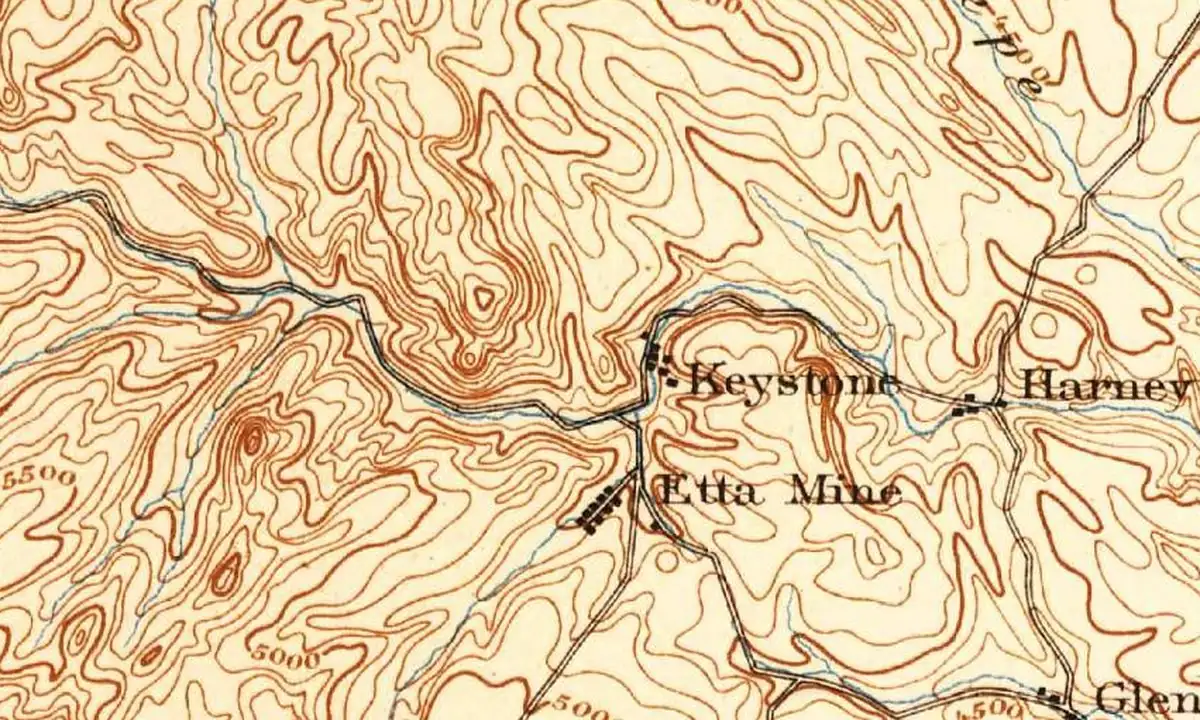 Pennington County, SD
Keystone, South Dakota, is named for the Keystone Mine, a gold mine staked nearby in 1891, and the mine's name most likely came from a Masonic emblem.
DocumentedMiners set up a gold "placer camp" here in 1876. The town was founded in 1891 and named for the Keystone Mine, staked that year. Source: Keystone Trading Company Store, National Register nomination (National Park Service)
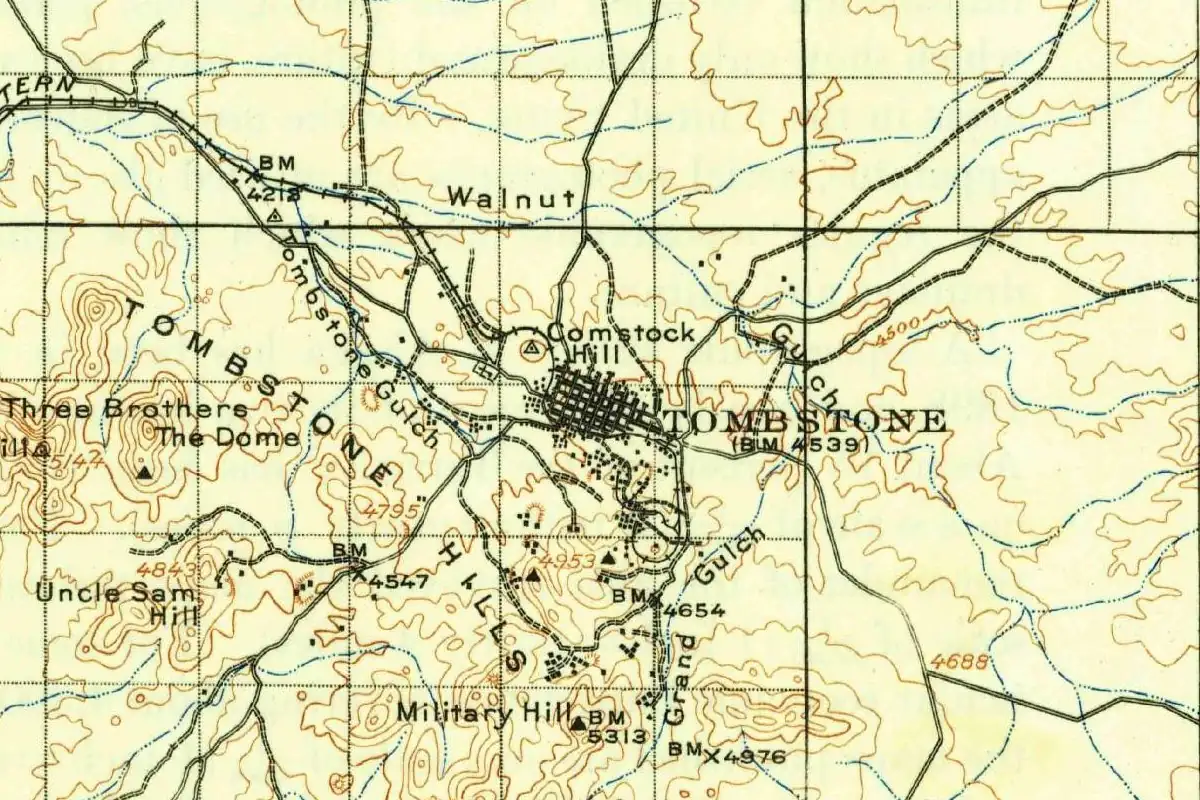 Cochise County, AZ
Ed Schieffelin was told the only stone he'd find in the hills of Tombstone, Arizona, would be his tombstone. He found silver and named his claim Tombstone.
DocumentedSchieffelin's 1877 silver find made it a boom town, and the name came from his claim, after a warning about his tombstone. Source: Tombstone Historic District, National Register nomination (National Park Service)
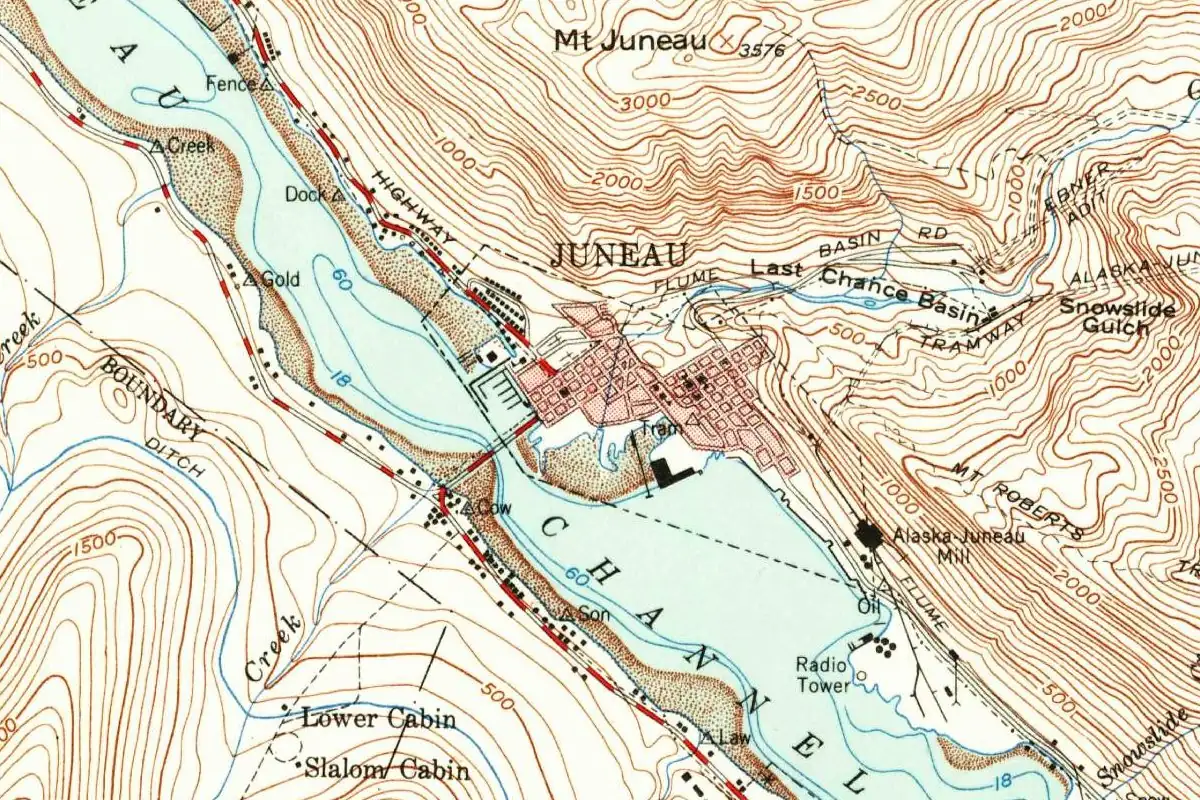 Juneau City and Borough, AK
Juneau, Alaska's capital, started out as a mining camp called Harrisburg, and the Navy called it Rockwell. The miners settled it by voting for Juneau.
DocumentedTwo prospectors found gold on Gold Creek in 1880 and staked a townsite, and the miners voted for the name Juneau. Source: History of Juneau (City and Borough of Juneau)
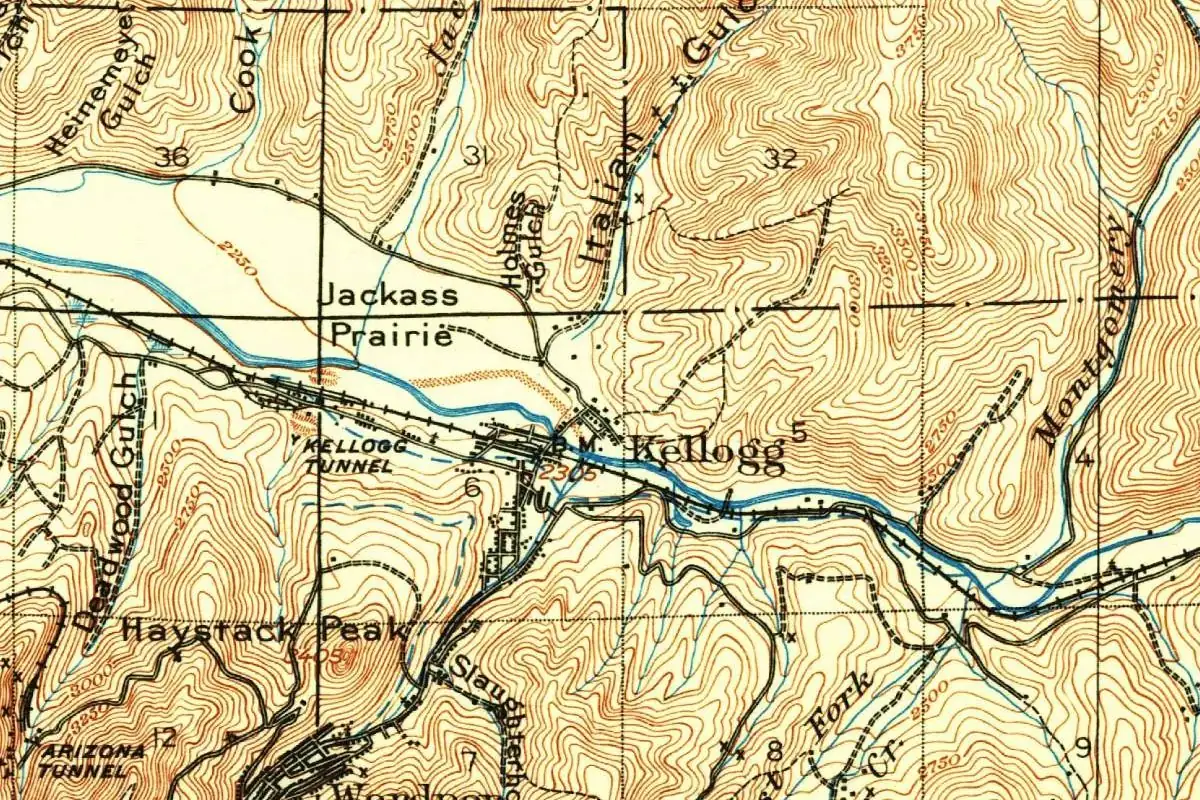 Shoshone County, ID
Kellogg, Idaho, is named for N. S. Kellogg, who found the Bunker Hill mine in 1885, though a famous story gives the credit to a jackass.
DocumentedLaid out in 1886, months after the Bunker Hill mine was found, and renamed for the prospector who found it. Source: An Illustrated History of North Idaho (1903)
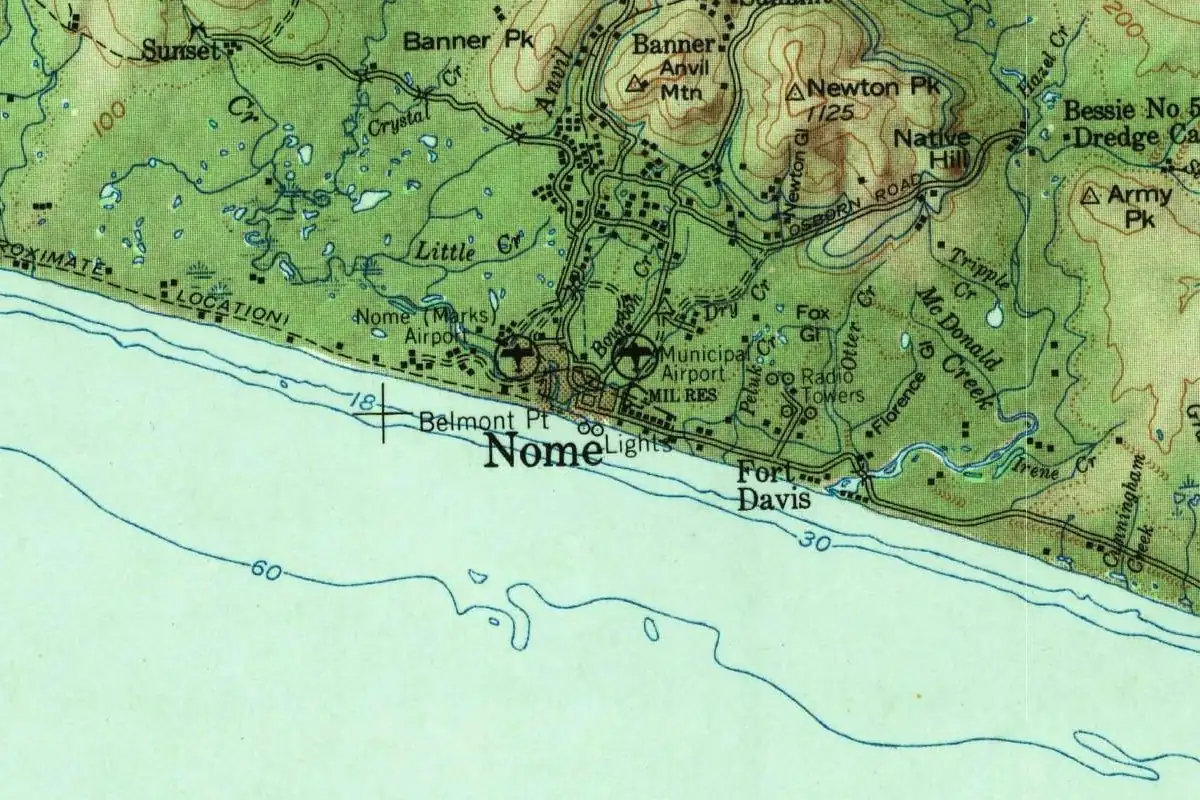 Nome Census Area, AK
A mapmaker's question mark may be the reason Nome, Alaska, is called Nome.
DisputedGrew from the 1898 Anvil Creek gold strike, and the rush that followed was Alaska's greatest gold stampede. Source: Cape Nome Mining District Discovery Sites National Historic Landmark (National Park Service)
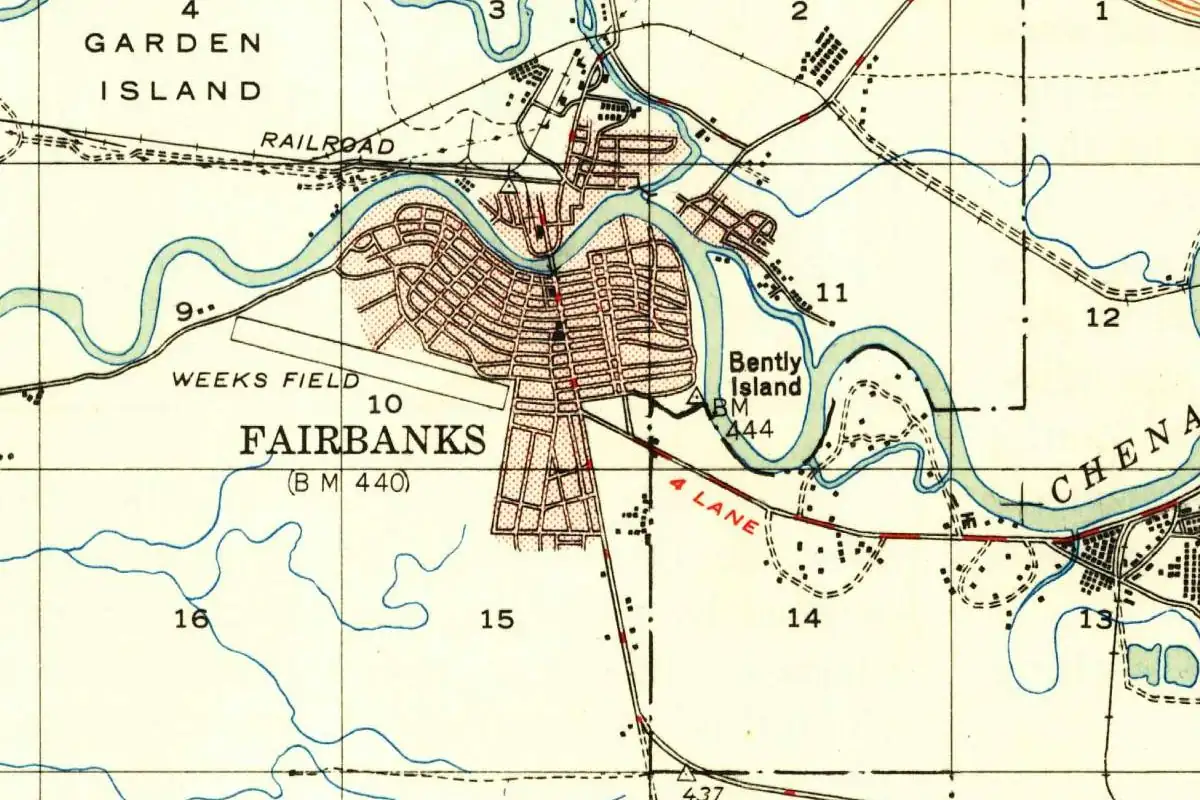 Fairbanks North Star Borough, AK
Fairbanks, Alaska, started out as Barnette's Cache, a trading post. In 1902 it took the name of an Indiana senator who'd later be vice president.
DocumentedGold seekers poured into Barnette's Cache after the 1902 Tanana Valley gold strike, the same year it became Fairbanks. Source: Wickersham State Historic Site (Alaska Department of Natural Resources, Division of Parks)
Sources for this page
- About Our Town (City of Dahlonega) (accessed Oct 31, 2026)
- Wickersham State Historic Site (Alaska Department of Natural Resources, Division of Parks) (accessed Oct 31, 2026)