Sacramento, California: A Name That Started on Another River
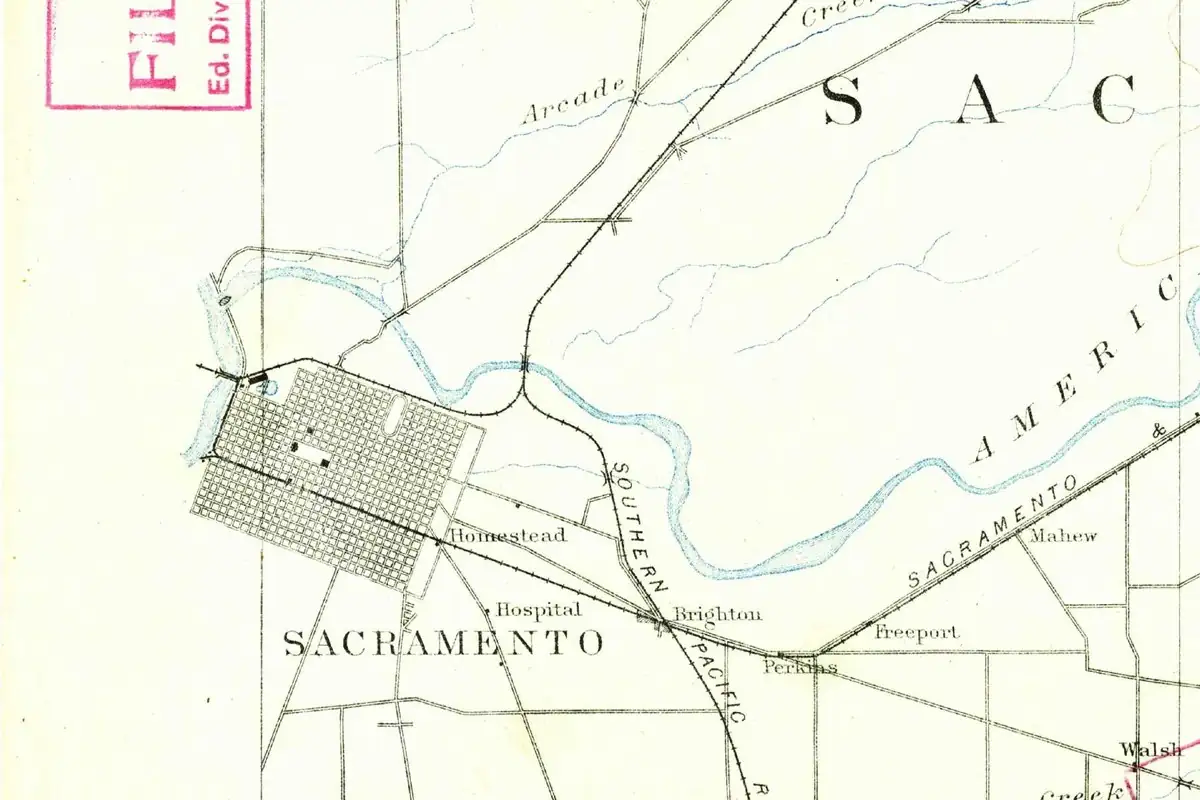
Sacramento, California, is named for a river, and the Spanish officer who named it in 1808 first gave the name to what’s now the Feather River. The word is Spanish for “sacrament,” and the river was named in honor of the Holy Sacrament.
Lieutenant Moraga’s two rivers
In 1808, Lieutenant Gabriel Moraga led a Spanish expedition up into the Great Valley. Nellie Van de Grift Sanchez, who wrote a 1914 guide to California’s Spanish and Indian place names, says he called the Feather River the Sacramento, and used the same name for the big river it runs into farther down. When he later reached the upper part of the river we now call the Sacramento, he took it for a branch and named it Jesus Maria.
It wasn’t a careless call. Sanchez points out that where the two rivers meet, the Feather lines up straight north and south with the lower river, while the upper Sacramento comes in from the west. If you look at the junction on a map, you can see how he read it that way.
The names didn’t stay put. A 1913 history of Sacramento County sums it up: “The Sacramento river was first named Jesus Maria by Lieutenant Moraga and the Feather was named by him the Sacramento, but later the names were changed to their present form.”
Why “sacrament”
Sanchez explains it as Spanish habit. The river was “christened first, being named in honor of the Holy Sacrament,” and the county and the city both took their names from it. Henry Gannett’s 1905 guide for the U.S. Geological Survey says it in fewer words: the name was given “by the Spaniards, the word meaning ‘sacrament.’” The federal place-names database still carries that same short definition for the city.
Sutter’s town lost out
The city itself came with the gold rush. An 1890 county history says people first crowded in around Sutter’s Fort and the river landing known by its Spanish name, the Embarcadero, and that the city was laid out in a survey in December 1848 by Captain William H. Warner of the U.S. Army, with help from W. T. Sherman, the future general.
John Sutter owned the land, but he’d already backed a different town three miles downriver, and that one carried his own name: Sutterville. After the gold discovery, the crowds settled at the landing instead. In the 1890 history’s words, Sutterville “soon had an existence only on paper.”
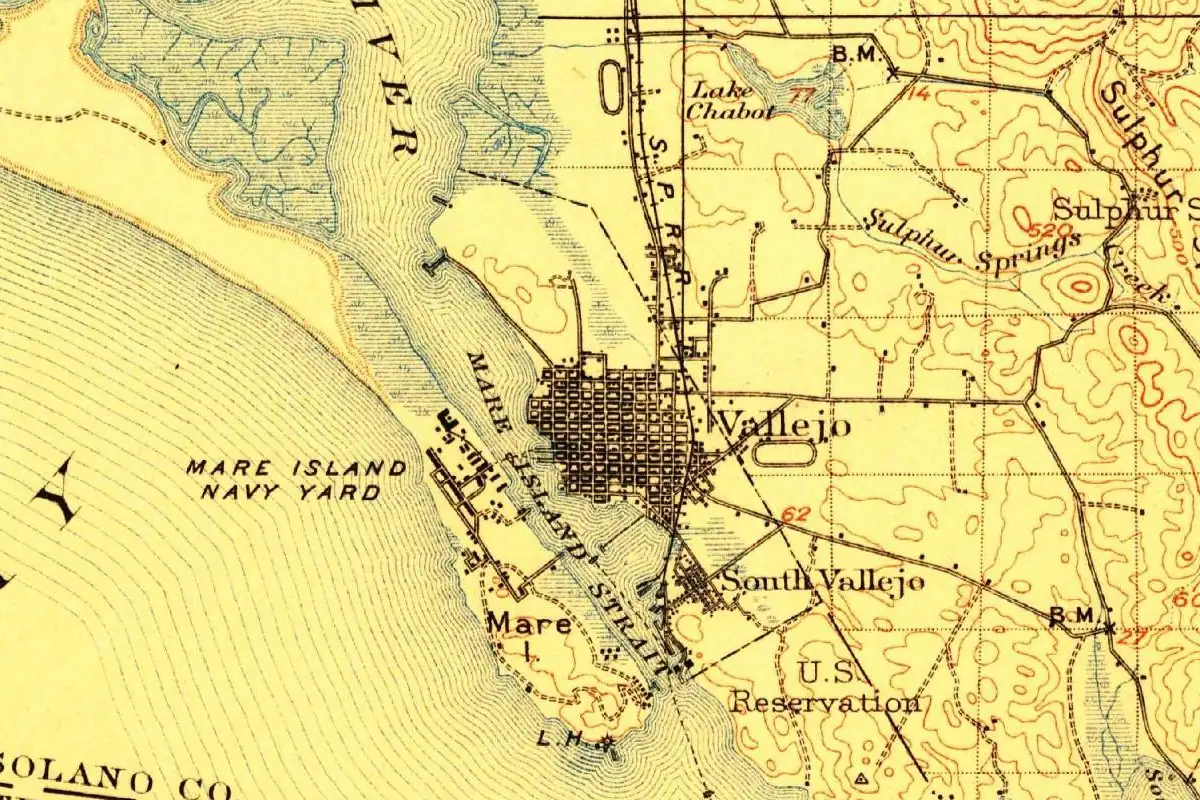
Sacramento didn’t have an easy path to becoming the capital, either. In 1852 and 1853 the legislature kept moving, and for a while it met in Vallejo, a town that got its name in a very different way. So the capital ended up named after a sacrament, by way of a river a Spanish lieutenant named his own way, while the man who owned the ground got a town that lived mostly on paper.
Sources & further reading
- Nellie Van de Grift Sanchez, Spanish and Indian Place Names of California (1914; 1922 edition), pp. 277-278. Moraga’s 1808 expedition, the Feather and the Jesus Maria, and the Holy Sacrament.
- William L. Willis, History of Sacramento County (1913). The county named for the river (p. 10) and the one-line account of how the river names were switched (p. 354).
- Winfield J. Davis, An Illustrated History of Sacramento County (1890), pp. 18-19. The Embarcadero, the December 1848 survey by Warner and Sherman, and the fading of Sutterville.
- J. P. Munro-Fraser, History of Solano County (1879), pp. 192-193. The legislature’s moves between Vallejo, Sacramento and Benicia in 1852 and 1853.
- Henry Gannett, The Origin of Certain Place Names in the United States (USGS, 1905). Named by the Spaniards, meaning “sacrament.”
- GNIS feature 1659564 (U.S. Geological Survey). The federal record: state capital and county seat, “A Spanish word meaning sacrament.”
Spot something wrong, or know more? Tell us here. You can also email us or use our contact page. Corrections are noted here with their date, never made silently.