Native Nations: Tribal Governments, Heritage Sites and Their Names
The Cherokee Nation calls Tahlequah, Oklahoma, its capital, and the town’s name came west with the Cherokees from an old town back East called Tellico. A lot of trips built around Native history end up in two kinds of places: towns where a tribal nation’s government has its address today, and towns next to a pueblo, a mound site or a village that a park agency, a state or UNESCO has set aside. The Bureau of Indian Affairs keeps a directory with contact information for every federally recognized tribe.
The names on these towns tell you a lot about who did the naming. Some are Native names that other people wrote down and carried on: Tahlequah, Tulsa from an old Muscogee (Creek) town, Natchez from the Natchez people, Sitka from the Tlingit name for the place, Tucson from an O’odham village. Some came secondhand. Taos reached Spanish from what the pueblo’s Tewa neighbors called it, and Mandan most likely came from the Dakota language, not from Mandan. Cherokee speakers said Chattanooga wasn’t their word at all. Pawhuska carries the name of a line of Osage chiefs. Others are Spanish, like Santa Fe and El Paso, or honor two Army generals and a railroad president.
This page is for you if you’re planning a trip around Native nations and their history and want to know where each town’s name came from before you get there. Each town links to its full story, and each note links to the source that puts it here, so you can check it yourself.
How we picked these. A federally recognized tribe's government has its address in the town, going by the tribe's own website or the Bureau of Indian Affairs directory, or the town is the way in to a Native heritage site recognized by the National Park Service, UNESCO or a state, according to an official source. Each story below lists the source that confirms it.
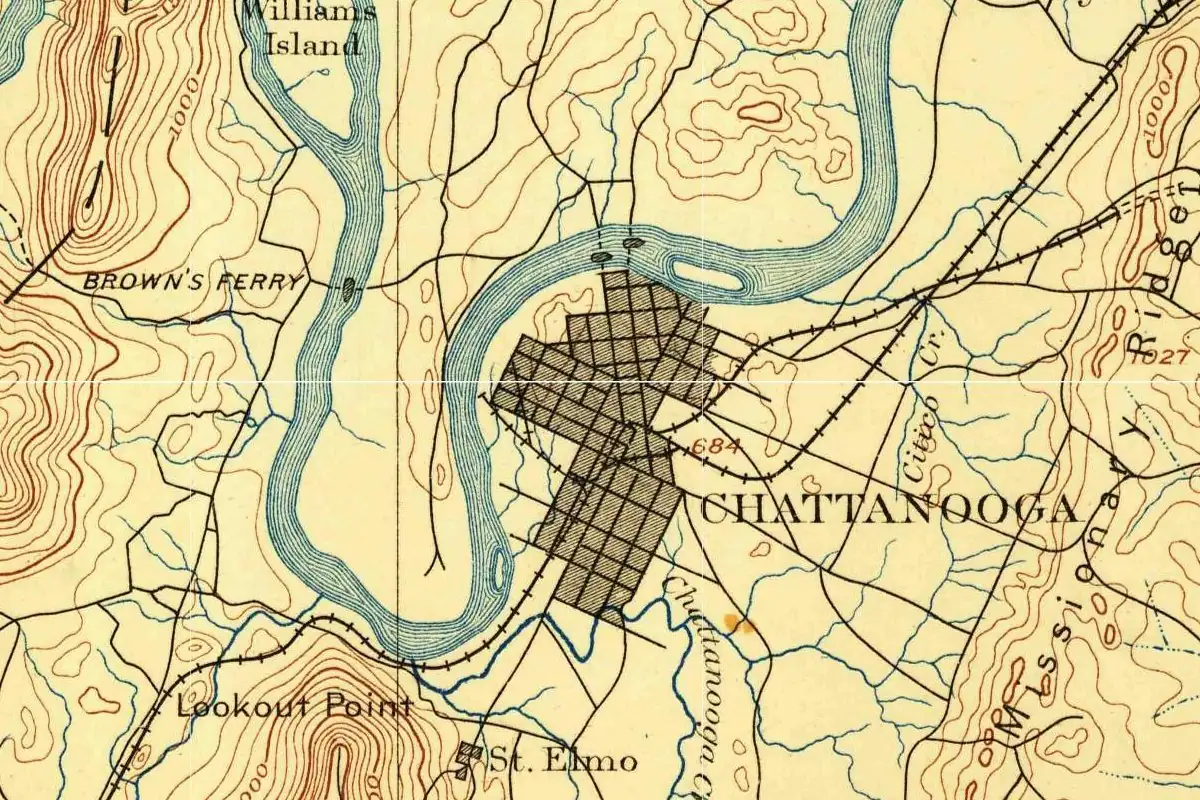 Hamilton County, TN
Chattanooga, Tennessee, took a Native name in 1838, but Cherokee speakers told James Mooney it wasn't a Cherokee word and had no meaning in their language.
DocumentedThe NPS says Moccasin Bend, across the river from downtown, holds sites from about 12,000 years of American Indian occupation. Source: Moccasin Bend National Archeological District (U.S. National Park Service)
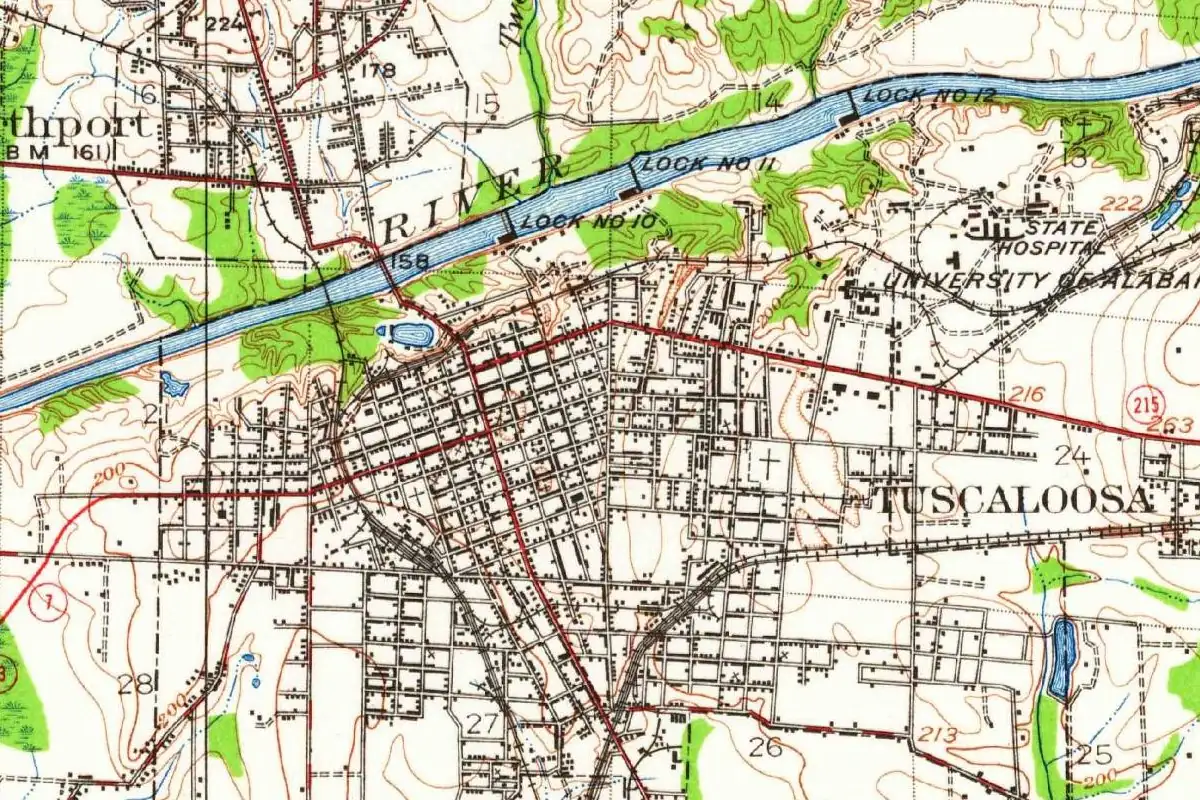 Tuscaloosa County, AL
Tuscaloosa, Alabama, comes from two Choctaw words that mean black warrior, the same name the river beside it carries in English.
DisputedThe University of Alabama's Moundville Archaeological Park, 13 mi (21 km) south of Tuscaloosa, keeps 29 earthen mounds built by Mississippian people about 800 years ago. Source: About Moundville - Moundville Archaeological Park (The University of Alabama)
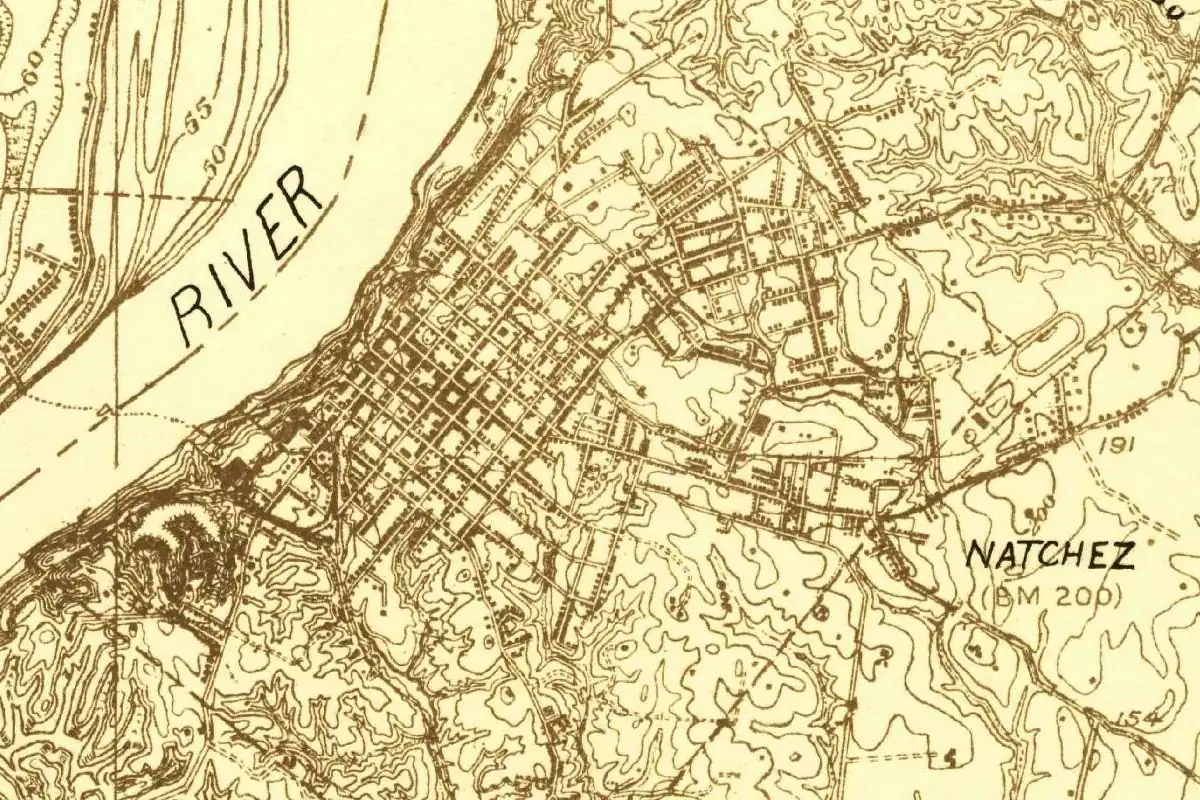 Adams County, MS
Natchez, Mississippi, nearly became Rosalie, after a French duchess, but the name of the Natchez people outlasted every name Europeans gave the place.
DocumentedThe state runs the Grand Village of the Natchez Indians in town, a park with three Native American mounds, two of them rebuilt. Source: Grand Village of the Natchez Indians | Mississippi Department of Archives & History
 Cherokee County, OK
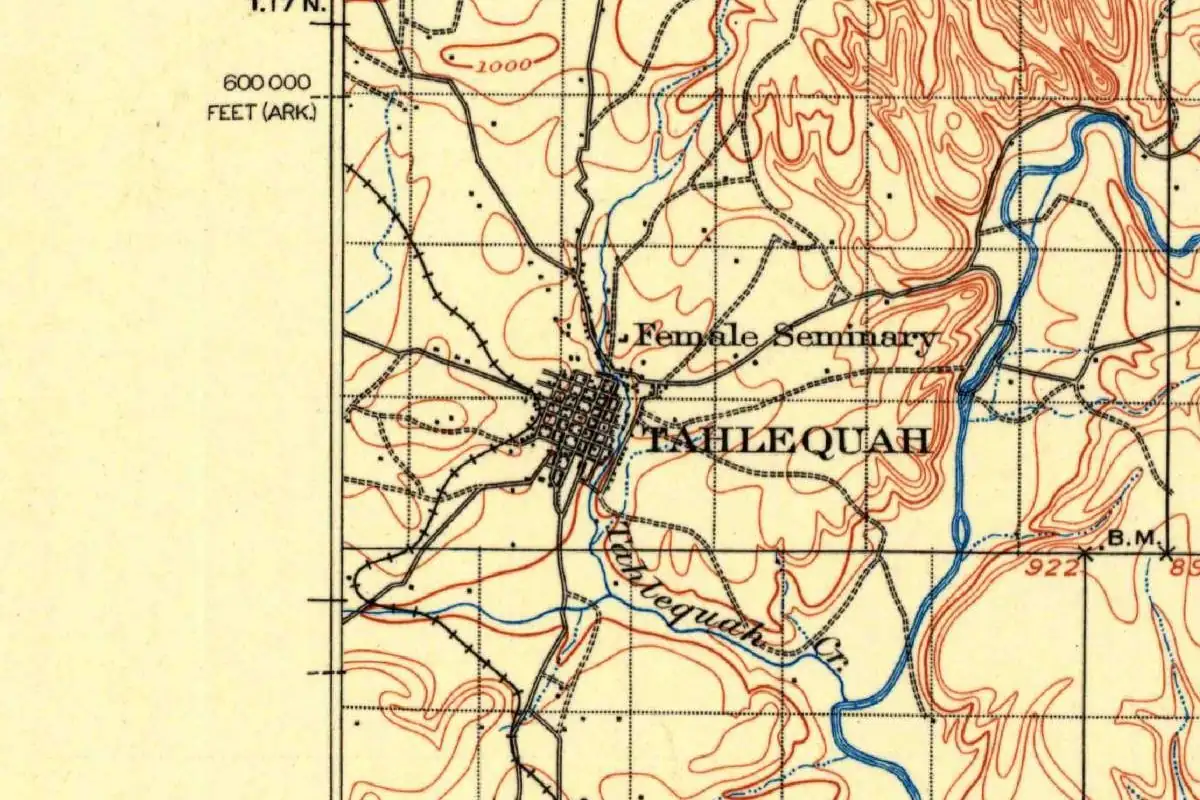
The AP told newspapers in 1963 that Tahlequah, Oklahoma, meant "two are enough." The name really came from Tellico, an old Cherokee town back East.
DocumentedThe Cherokee Nation's own website calls Tahlequah the capital of the Cherokee Nation. Source: About The Nation | Cherokee Nation
 Tulsa County, OK
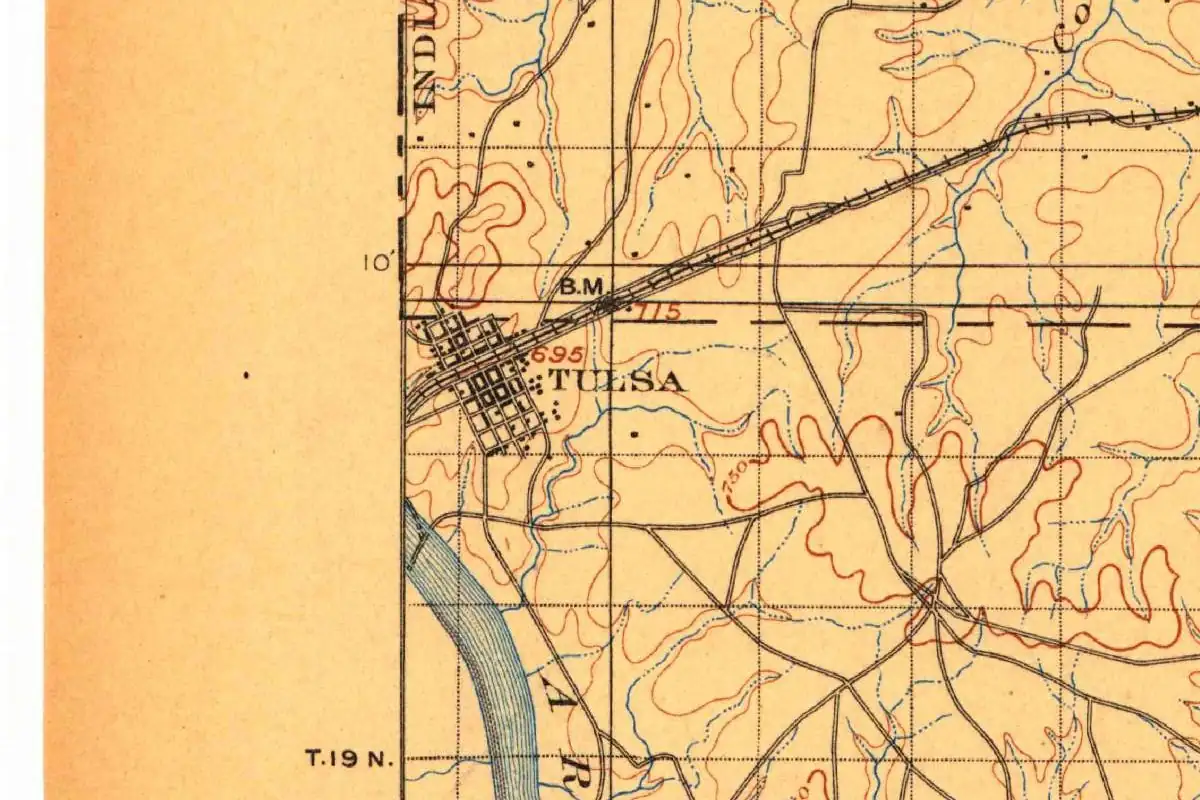
In 1903, a booklet history of Tulsa, Oklahoma, admitted it didn't know where the name came from. Tulsa is the name of an old Muscogee (Creek) town.
DocumentedThe National Register lists the Creek Council Tree Site in Tulsa for its Native American history, with 1836 and 1896 as its significant years. Source: Creek Council Tree Site - NPGallery Asset Detail (U.S. National Park Service)
 Osage County, OK
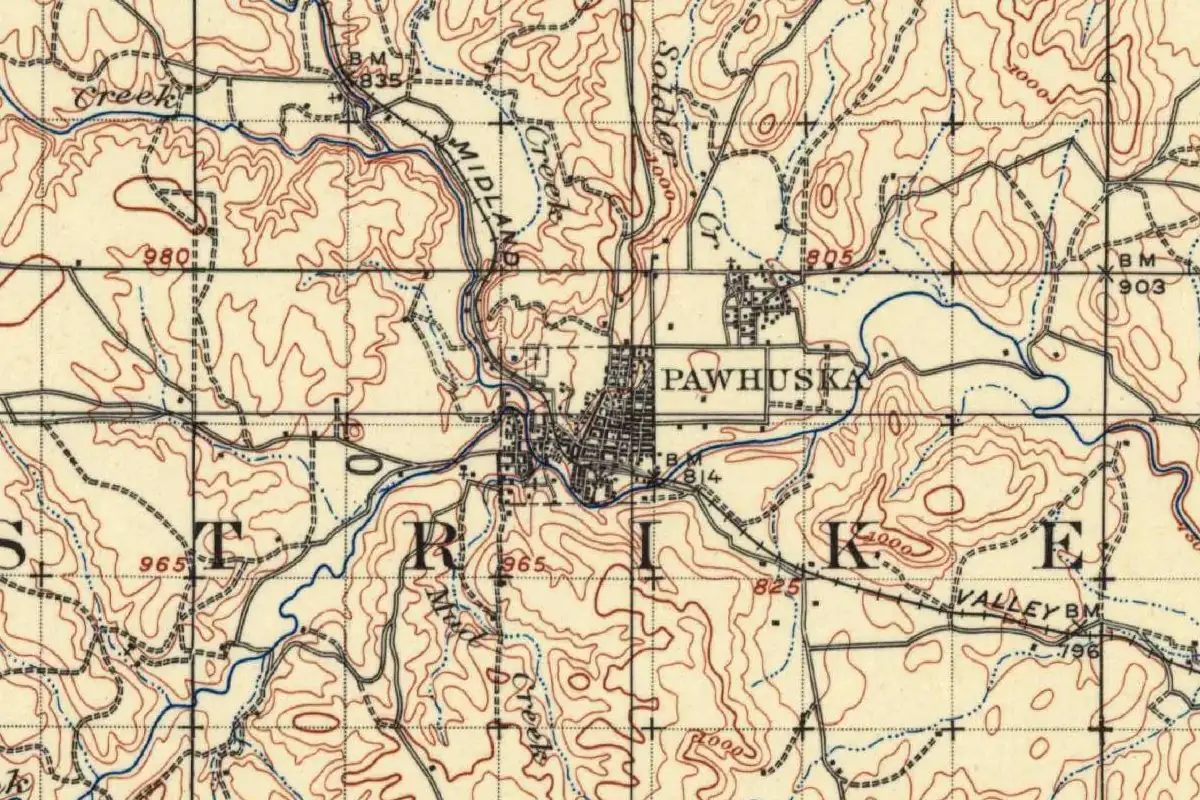
The first Osage chief called White Hair got his name from a white wig, an old story goes. Pawhuska, Oklahoma, carries that name: Pah-hue-skah.
DocumentedThe Osage Nation's own website puts its Executive Building at 627 Grandview Avenue in Pawhuska. Source: Osage Nation
 Davison County, SD
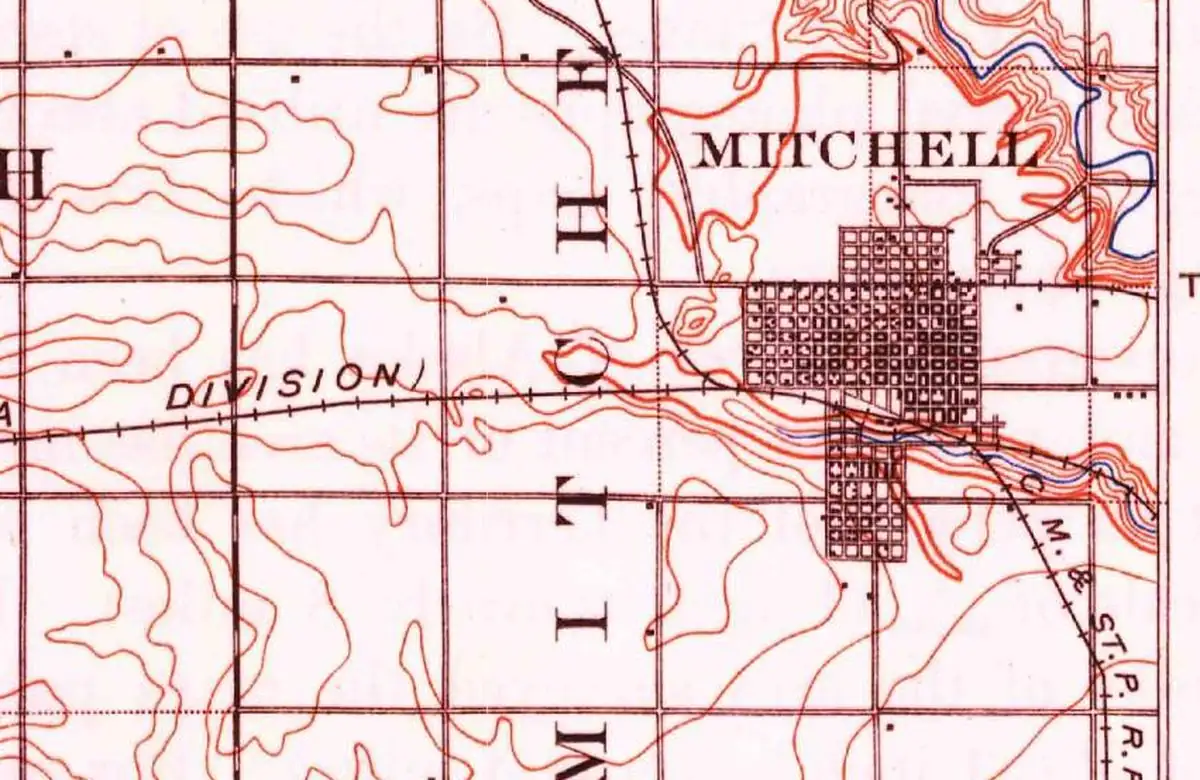
Mitchell, South Dakota, is named for Alexander Mitchell, the Milwaukee banker who was president of the Milwaukee Road when its tracks came through.
DocumentedThe Mitchell Site, a National Historic Landmark, keeps a 1,000-year-old village of people considered ancestral to the Mandan. Source: Our Organization - The Mitchell Indigenous Archaeological Site & Museum
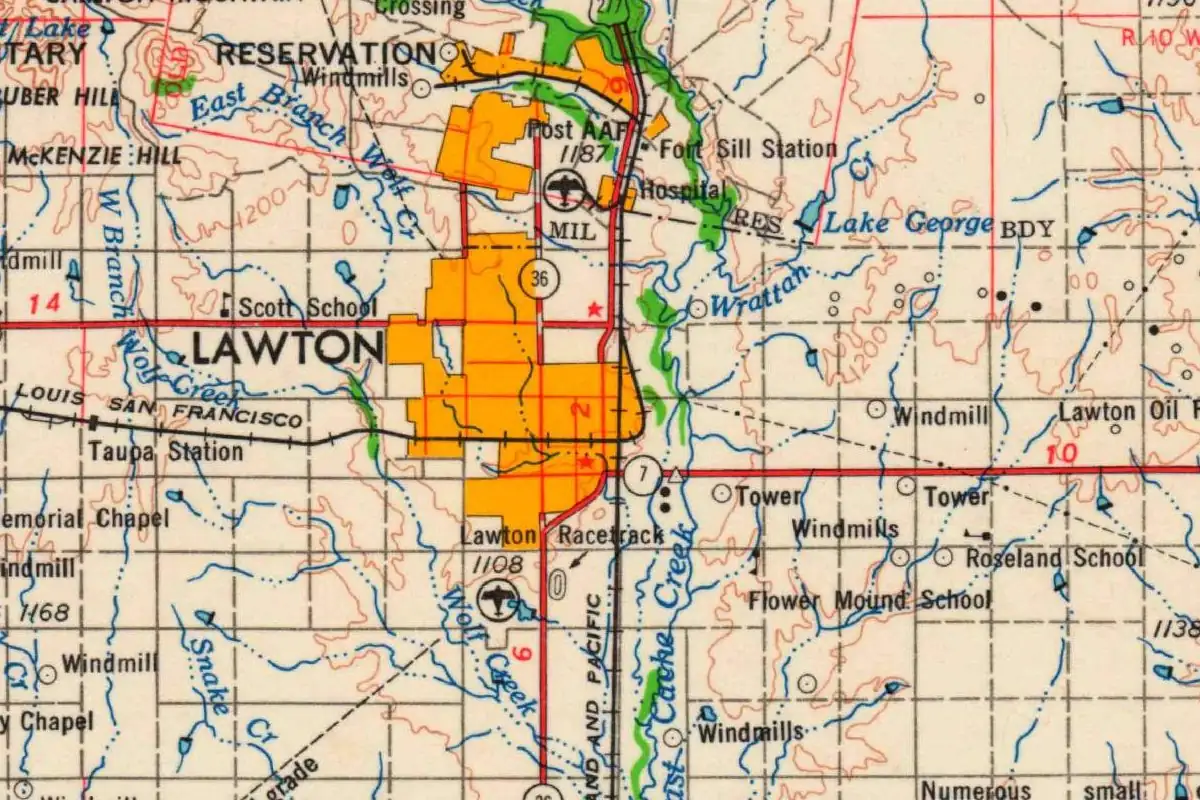 Comanche County, OK
In 1877, the officer Lawton, Oklahoma, is named for pointed to a buffalo path and warned 66 armed men not to cross it. In 1901, a new town took his name.
DocumentedThe Comanche Nation's own website gives the nation's physical address as 584 NW Bingo Road in Lawton. Source: Comanche Nation, Oklahoma Home Page
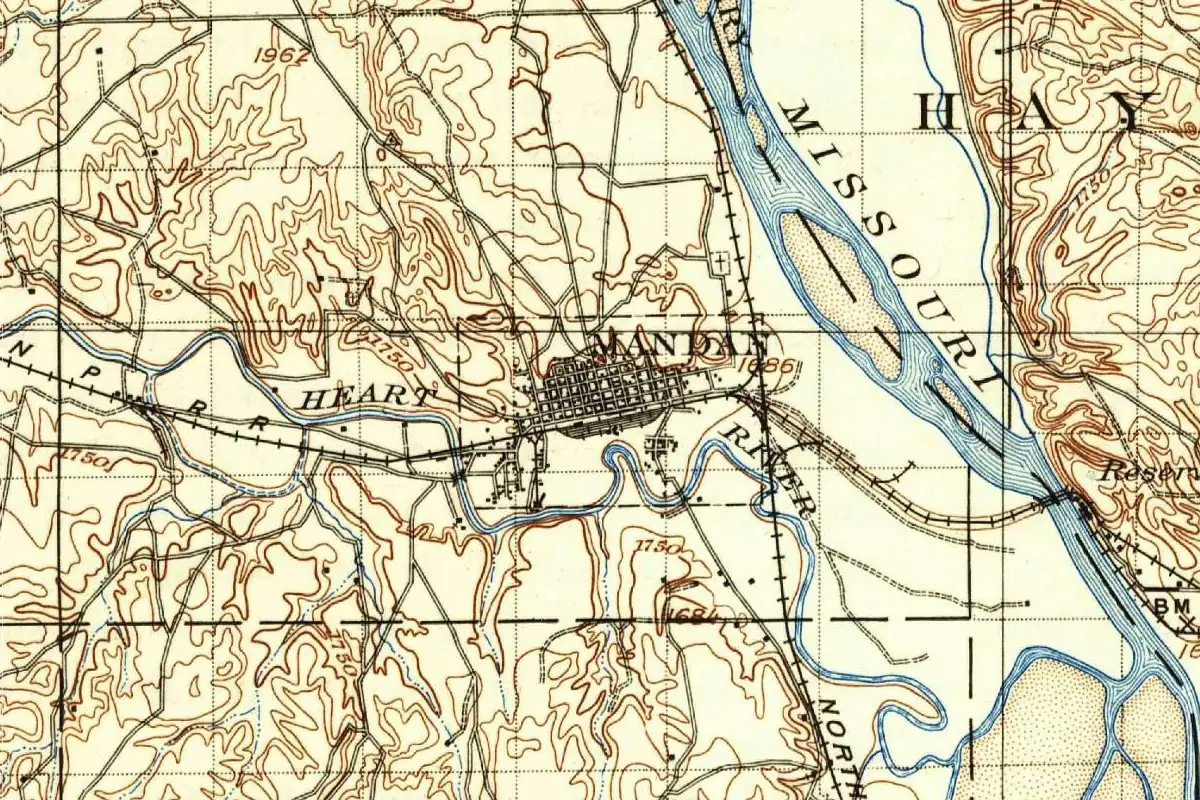 Morton County, ND
Mandan, North Dakota, is named for the Mandan people, but the word itself most likely came from their Dakota neighbors, not from the Mandan language.
DocumentedOn-a-Slant, a Mandan village site with six rebuilt earthlodges, is a state historic site in a state park with a Mandan address. Source: Fort Abraham Lincoln State Park | North Dakota Parks and Recreation
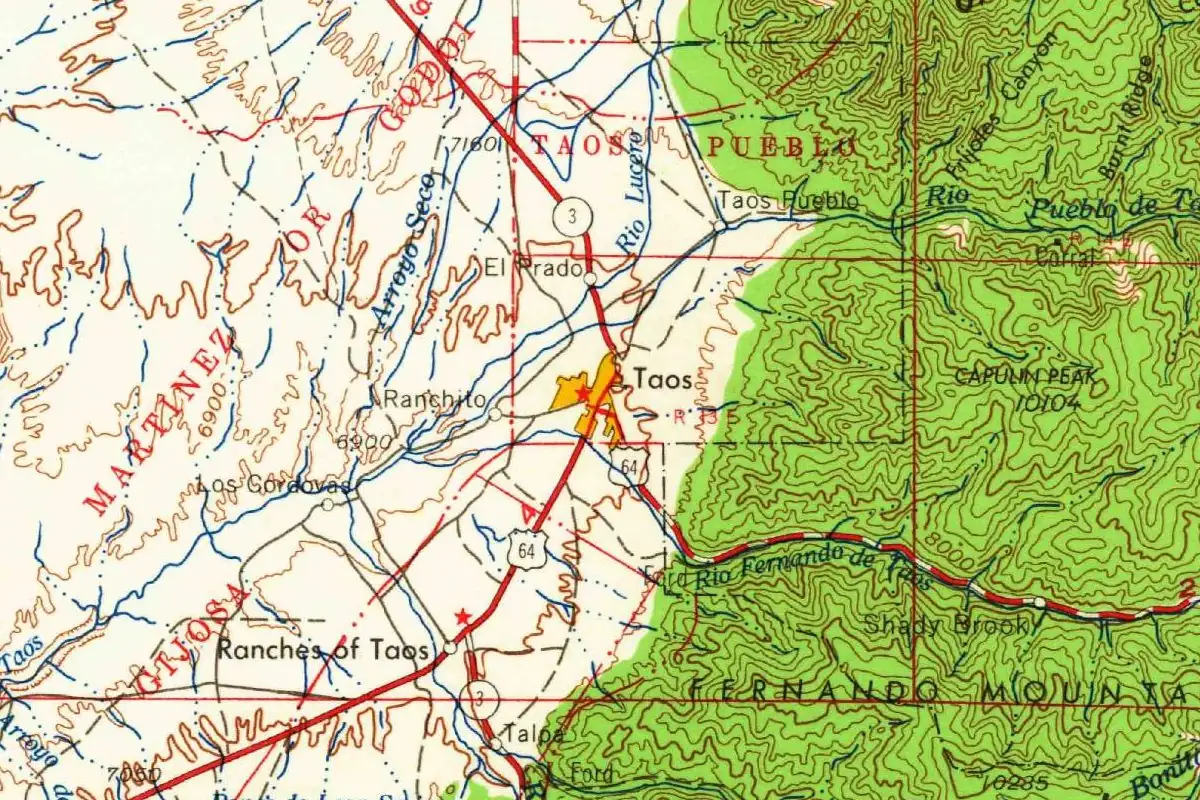 Taos County, NM
Taos, New Mexico, took its name from Taos Pueblo, 3 miles (5 km) away, and the pueblo's own name came to Spanish from what its Tewa neighbors called it.
DocumentedTaos Pueblo, which has a Taos address, says it joined the World Heritage list in 1992 and became a National Historic Landmark in 1965. Source: About Taos Pueblo
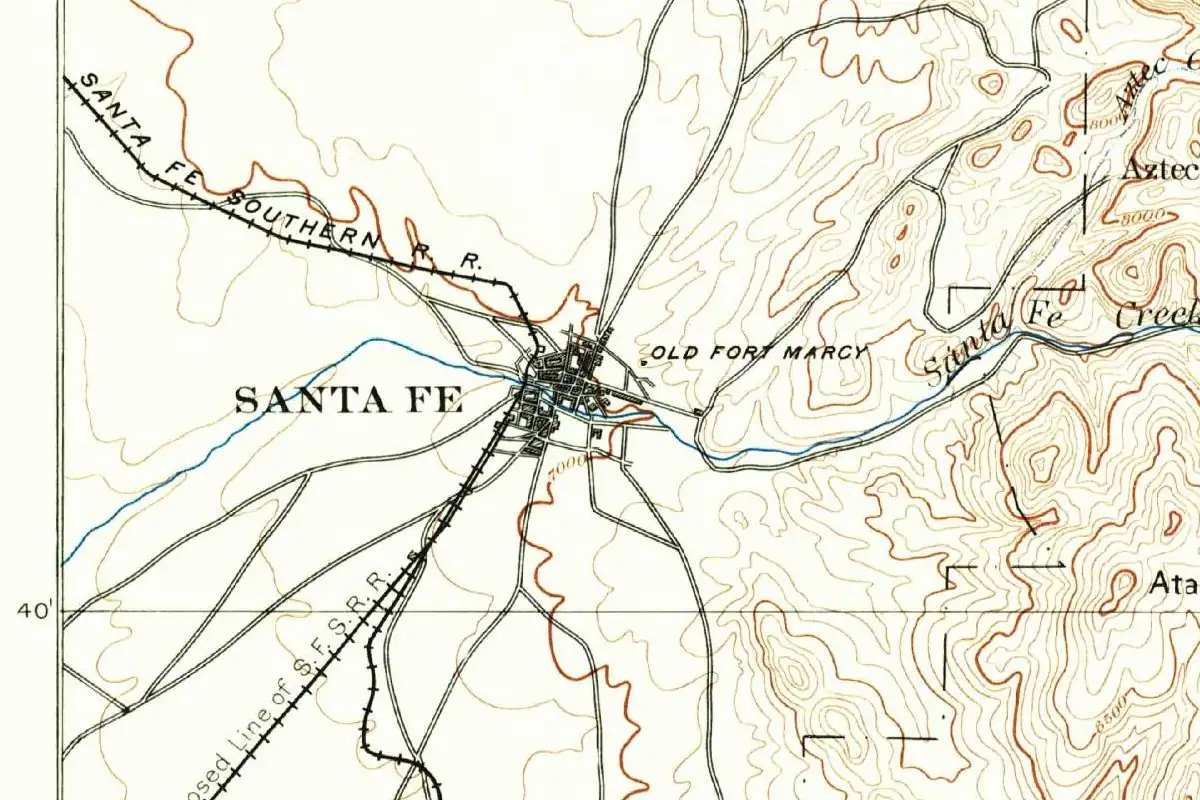 Santa Fe County, NM
Santa Fe means holy faith, and New Mexico's capital has carried that name for over 400 years, but even its first historians couldn't find the day it began.
DocumentedPecos National Historical Park, where a large pueblo once stood, is 25 mi (40 km) east of Santa Fe, the NPS says. Source: Directions - Pecos National Historical Park (U.S. National Park Service)
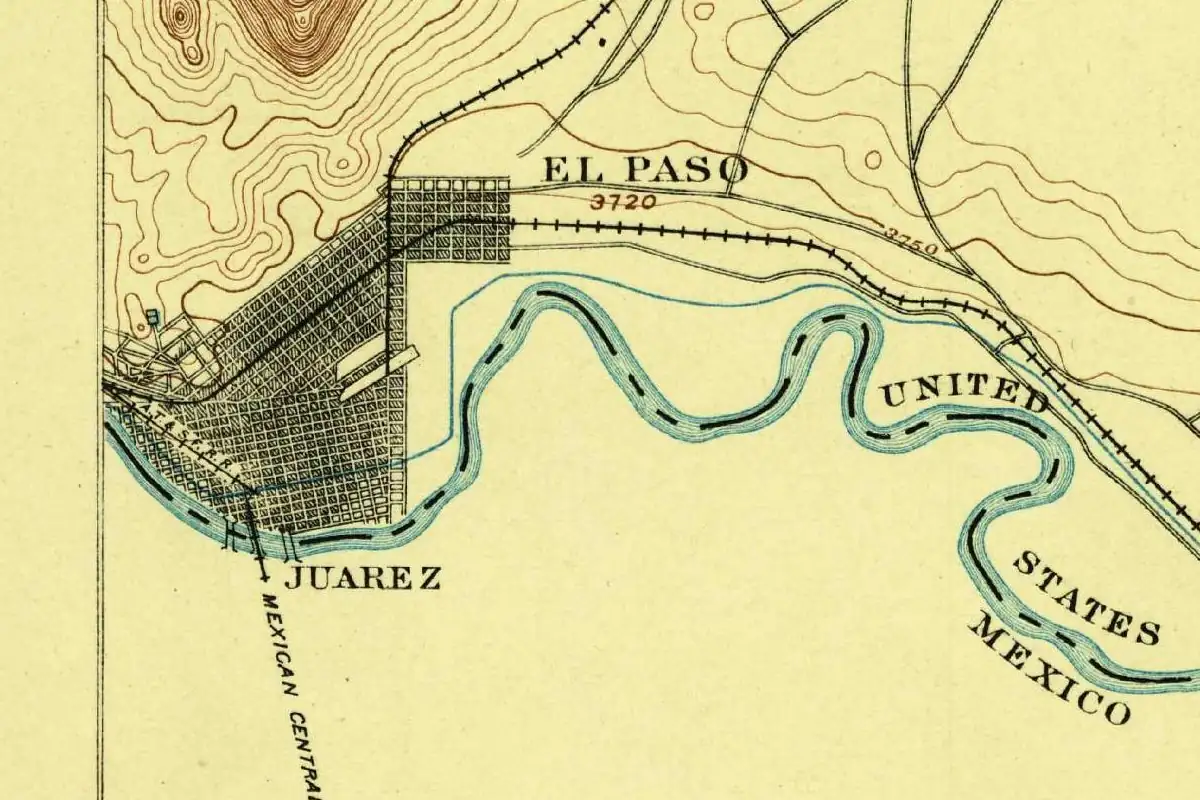 El Paso County, TX
When Anson Mills reached El Paso, Texas, in 1858, the American town was called Franklin, after a man who named the post office for himself.
DocumentedYsleta del Sur Pueblo, a federally recognized tribe, has its address in El Paso in the BIA's Tribal Leaders Directory. Source: Tribal Leaders Directory | Indian Affairs
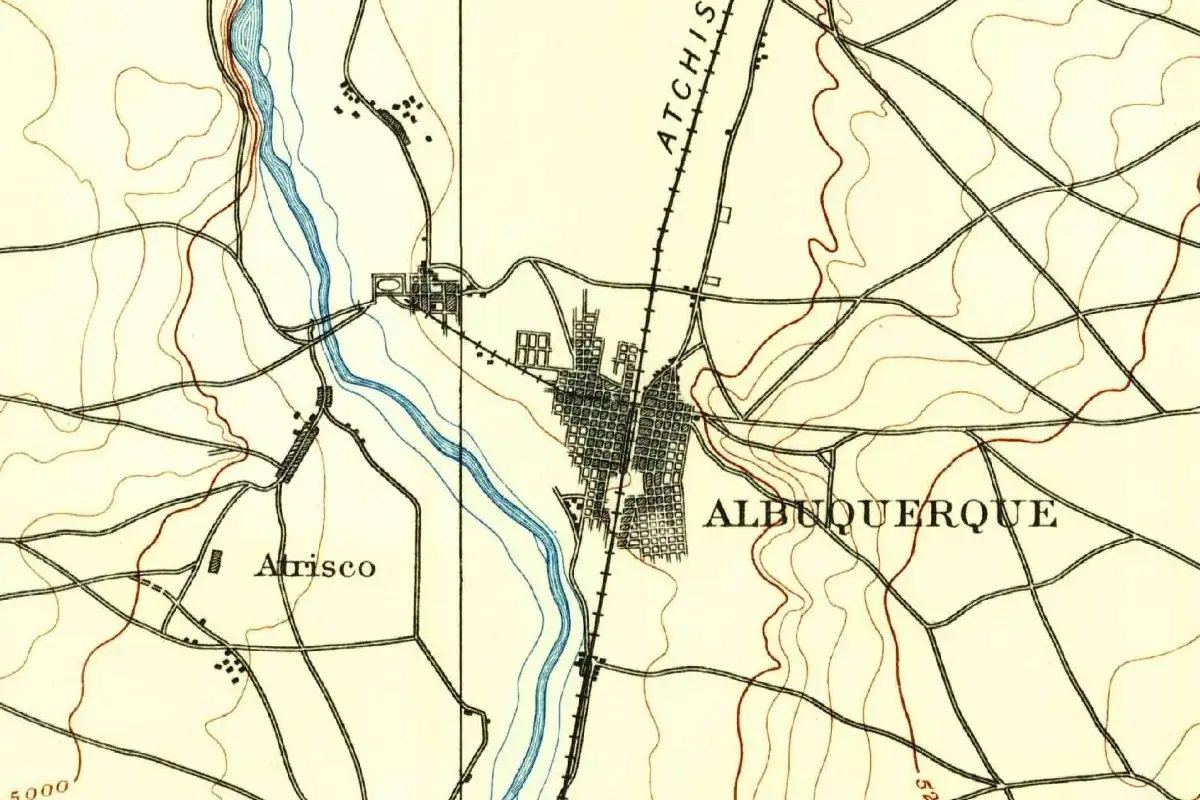 Bernalillo County, NM
The governor who founded Albuquerque, New Mexico, in 1706 named it for the viceroy, the Duke of Alburquerque, and got scolded for not asking first.
DocumentedPetroglyph National Monument, based in Albuquerque, protects designs carved into volcanic rock by Native Americans and Spanish settlers. Source: Petroglyph National Monument (U.S. National Park Service)
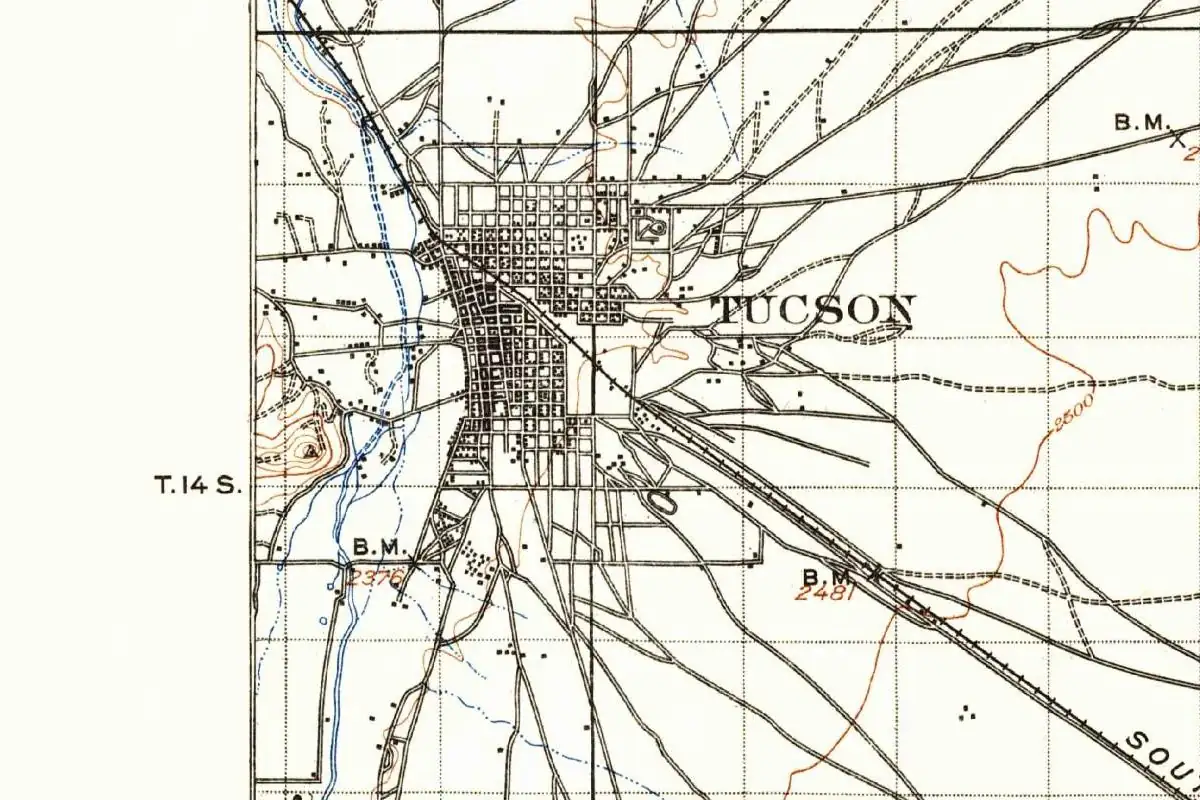 Pima County, AZ
Tucson, Arizona, took its name from an O'odham village on the Santa Cruz River. Old books translate it as black creek, dark spring, or black base.
DocumentedThe Bureau of Indian Affairs lists the Pascua Yaqui Tribe of Arizona at an address in Tucson. Source: Tribal Leaders Directory | Indian Affairs
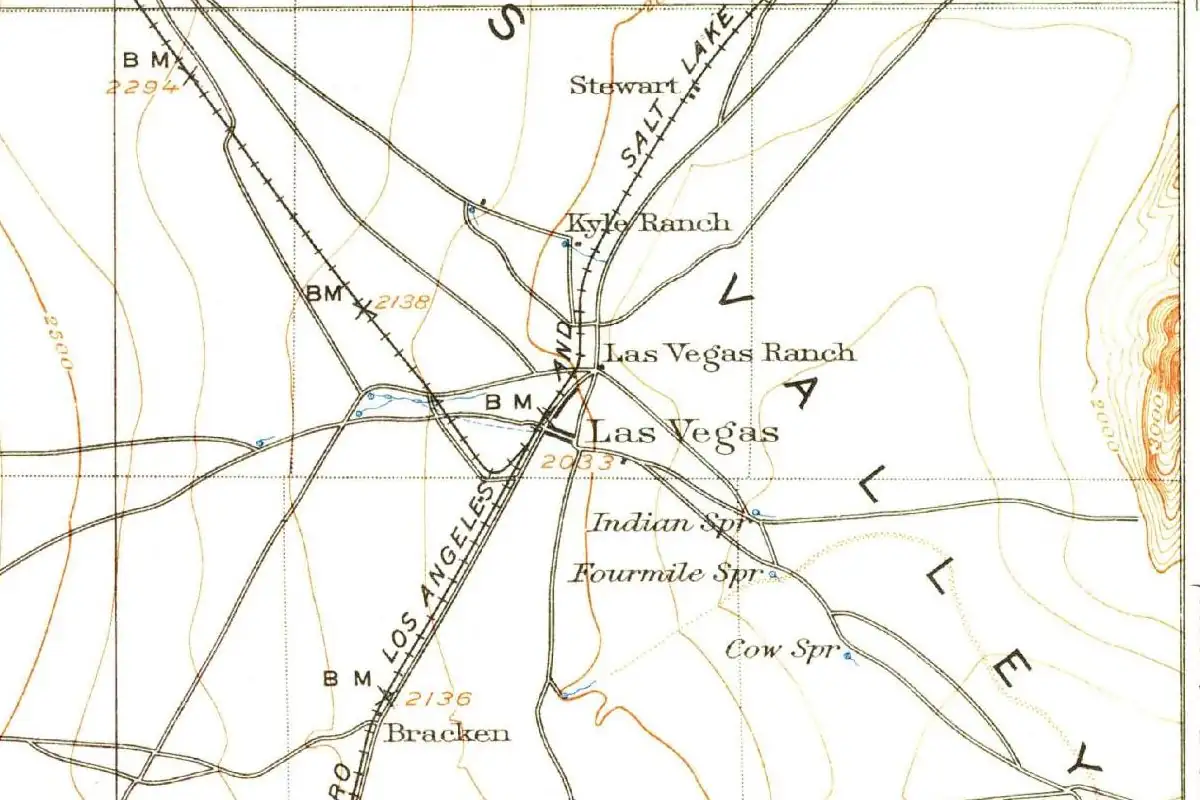 Clark County, NV
Everyone agrees the name of Las Vegas, Nevada, is Spanish for the meadows around its springs. Who first called it that is another matter.
DisputedThe Las Vegas Paiute Tribe says Helen J. Stewart deeded 10 acres in downtown Las Vegas to the Paiutes in 1911, which set up the Las Vegas Paiute Colony. Source: Las Vegas Paiute Tribe | Official Tribal Government Website
 Washoe County, NV
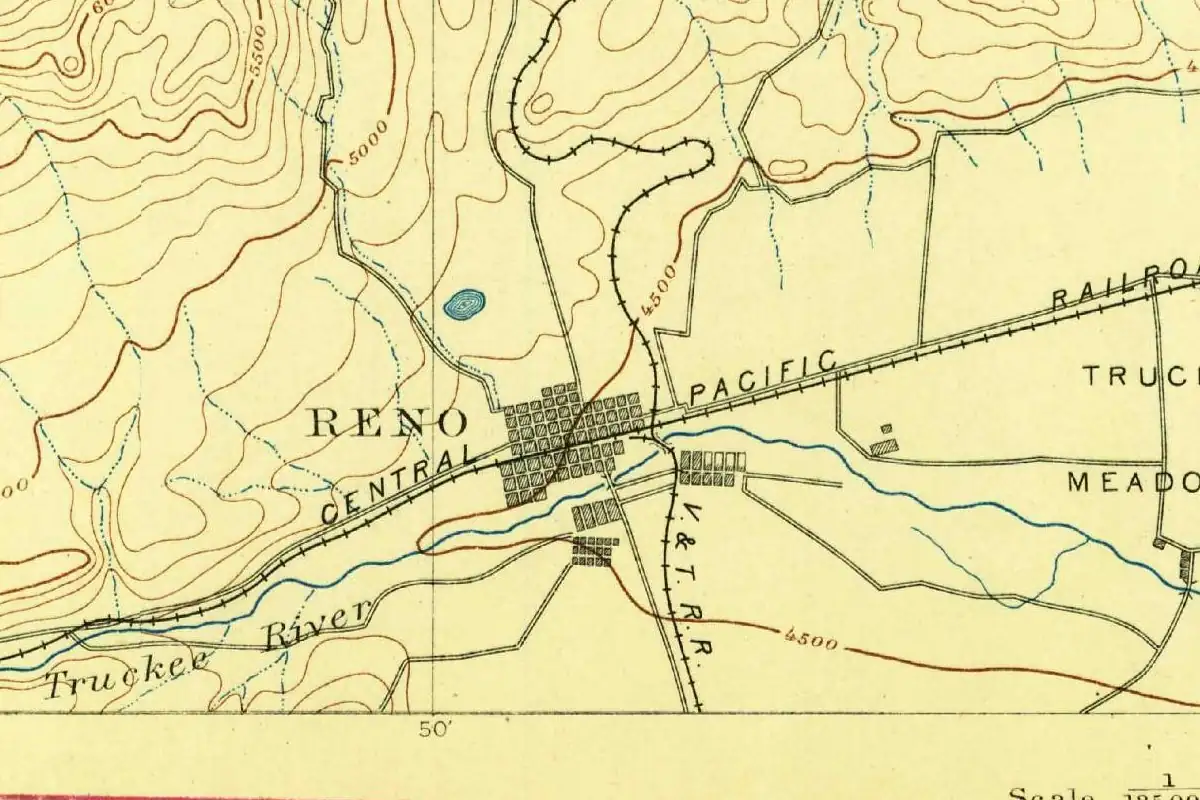
Before it was Reno, Nevada, it was Lake's Crossing, a toll bridge on the Truckee River. In 1868 the railroad's new town took the name of Gen. Jesse Reno.
DocumentedThe Reno-Sparks Indian Colony's own website gives its address as 34 Reservation Road in Reno. Source: Reno-Sparks Indian Colony, NV | Official Website
 Pierce County, WA
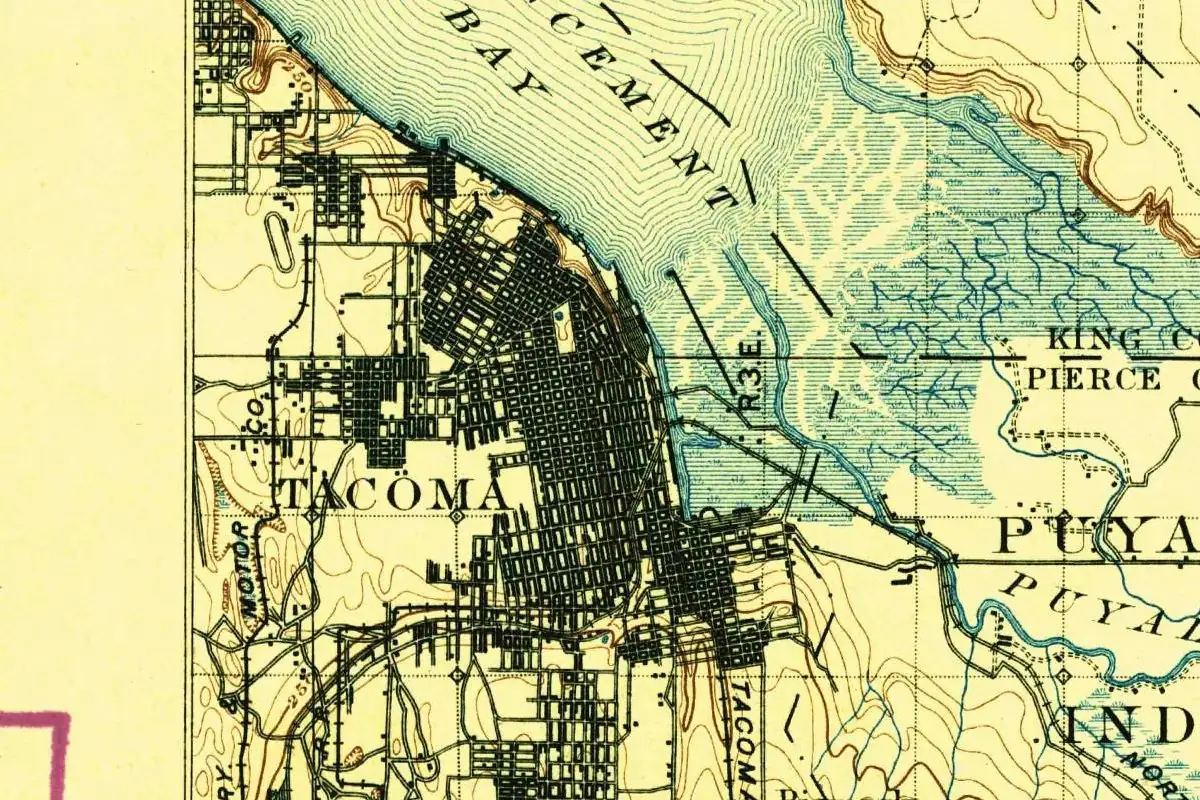
Tacoma, Washington, got its name out of a book: Theodore Winthrop's The Canoe and the Saddle, which said the Indians called Mount Rainier "Tacoma."
DisputedThe Puyallup Tribe of Indians gives a Tacoma physical address on its own website. Source: Home | Puyallup Tribe
 Juneau City and Borough, AK
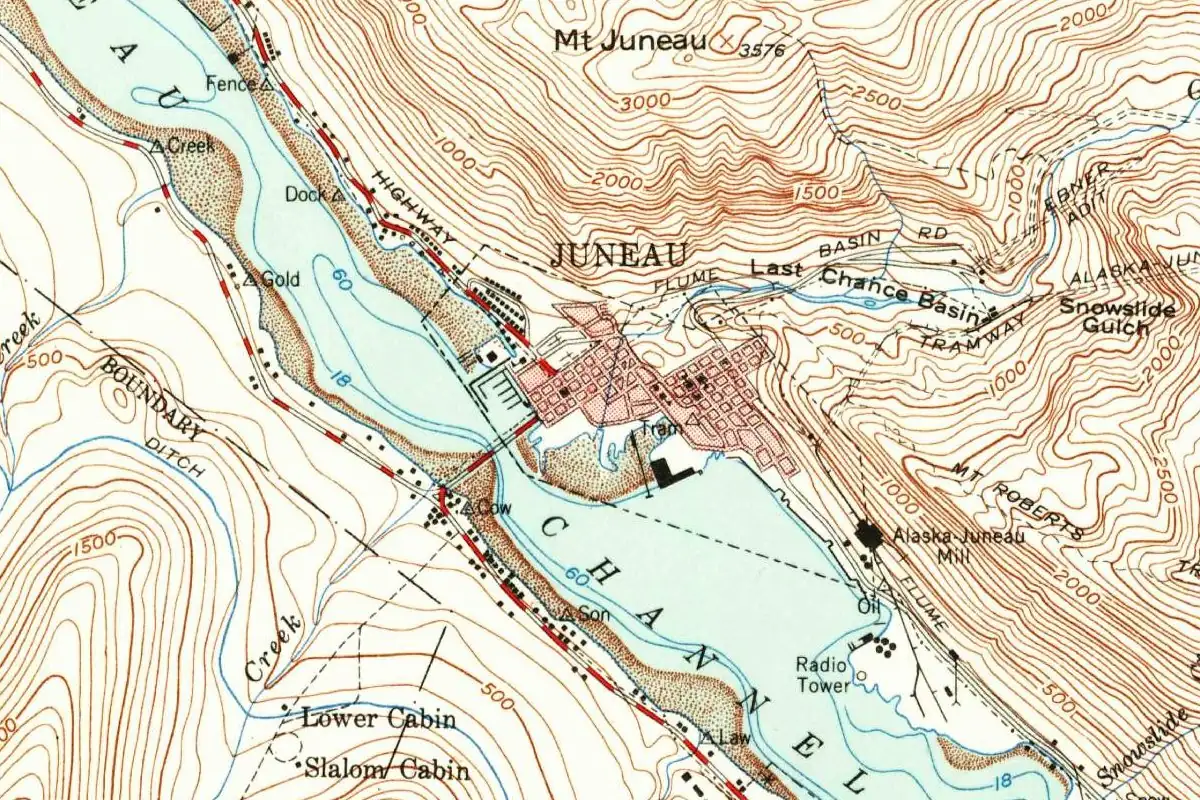
Juneau, Alaska's capital, started out as a mining camp called Harrisburg, and the Navy called it Rockwell. The miners settled it by voting for Juneau.
DocumentedThe BIA lists Juneau addresses for two tribes: the Central Council of the Tlingit & Haida Indian Tribes and the Douglas Indian Association. Source: Tribal Leaders Directory | Indian Affairs
 Sitka City and Borough, AK
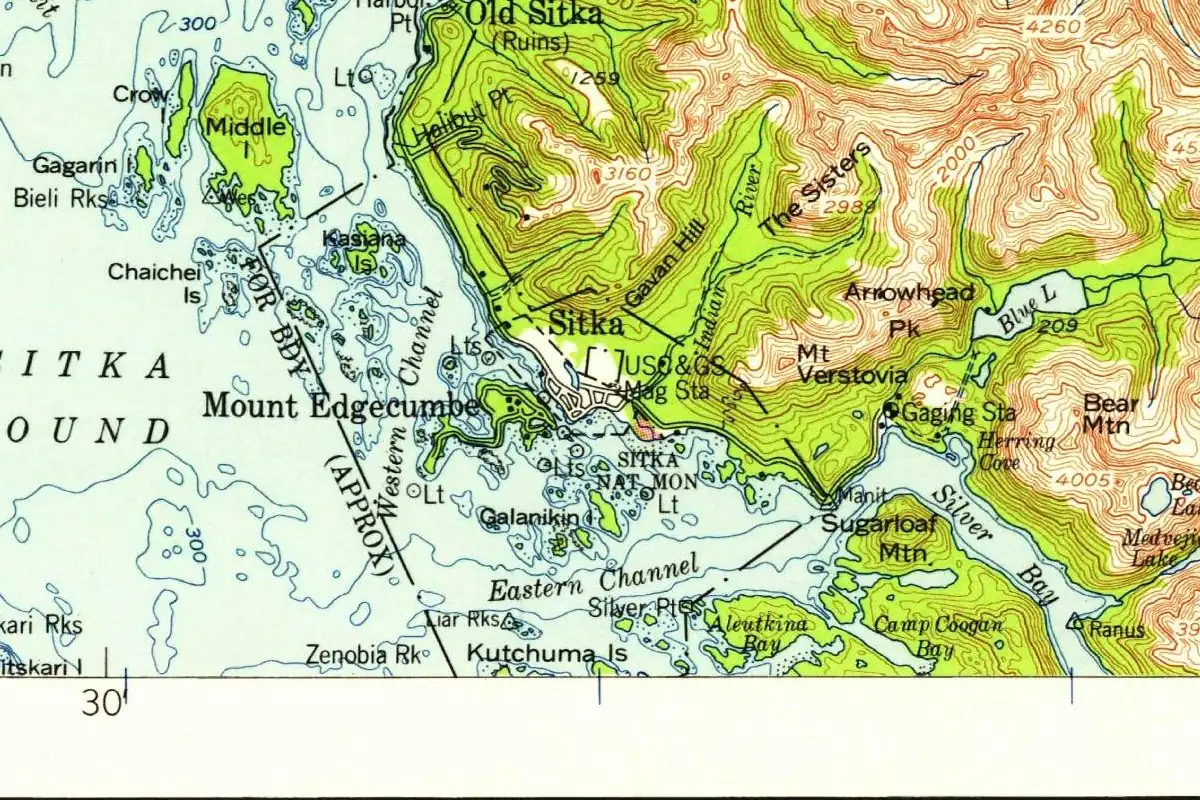
The Russians officially called their Alaska capital New Archangel, but the name that stuck was Sitka, taken from the Tlingit name for the place.
DocumentedThe NPS says Tlingit heritage in Sitka goes back over 10,000 years, and Sitka National Historical Park is right in town. Source: Sitka National Historical Park (U.S. National Park Service)
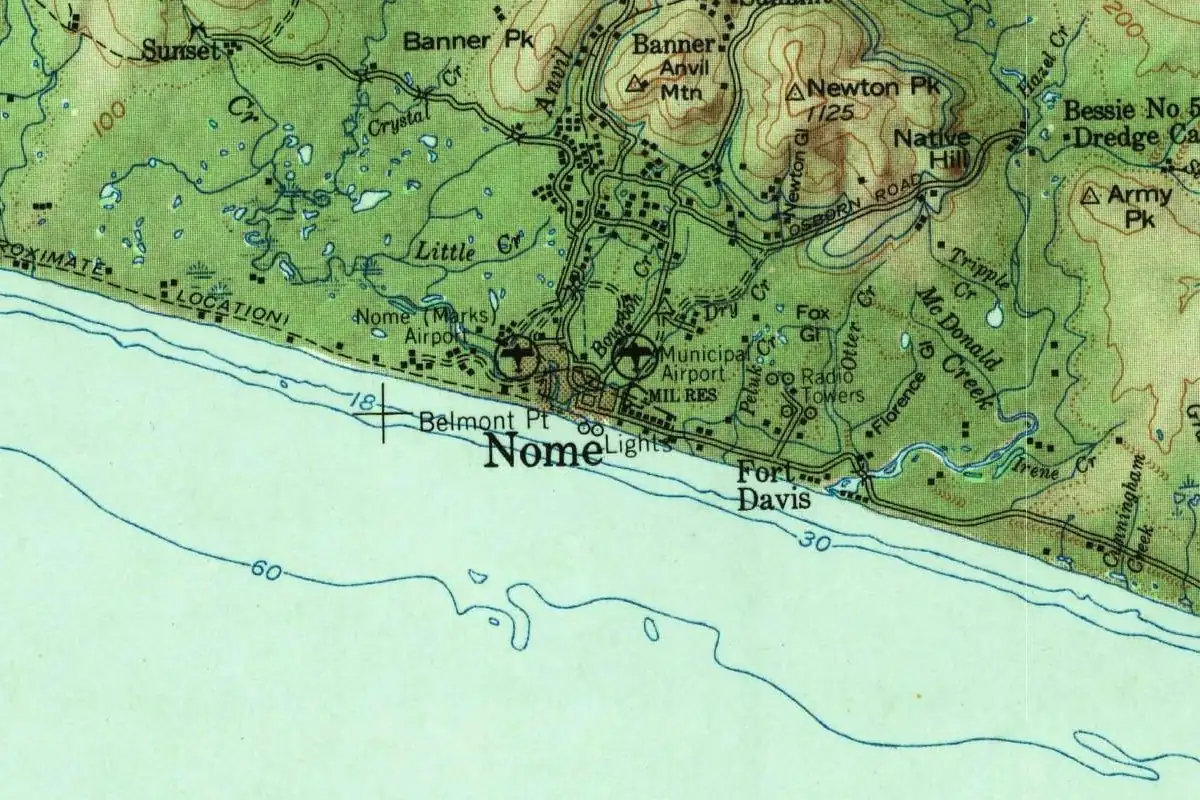 Nome Census Area, AK
A mapmaker's question mark may be the reason Nome, Alaska, is called Nome.
DisputedNome Eskimo Community and King Island Native Community, both federally recognized tribes, have Nome addresses in the BIA's directory. Source: Tribal Leaders Directory | Indian Affairs
Sources for this page
- About The Nation | Cherokee Nation (accessed Oct 31, 2026)
- Tribal Leaders Directory | Indian Affairs (accessed Oct 31, 2026)