Mandan, North Dakota: A Name From the Neighbors
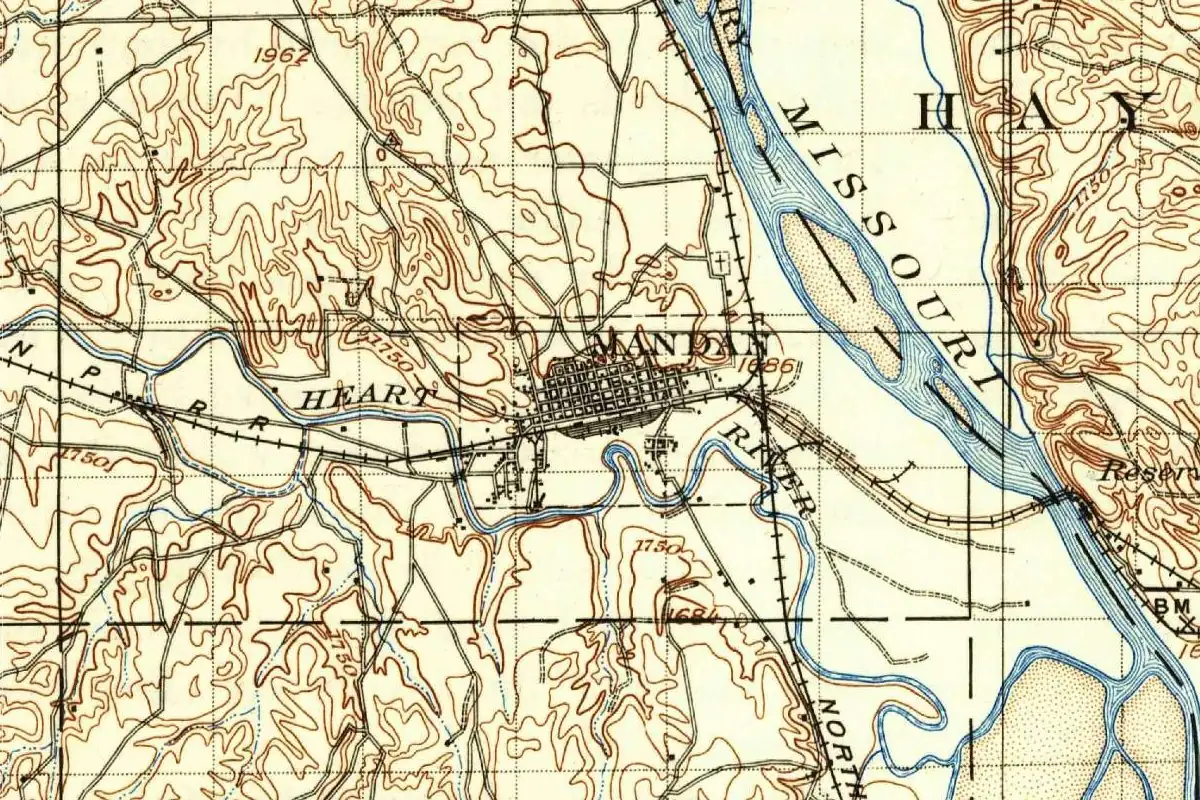
Mandan, North Dakota, is named for the Mandan people, but the word itself most likely came from their Dakota neighbors, not from the Mandan language. And the town took a couple of detours, through Morton and Cushman, before it settled on the name for good.
Whose word is “Mandan”?
The U.S. Geological Survey’s 1905 place-names book keeps it short: the city is “named for the Indian tribe.” The harder question is where the tribe’s English name came from, and here the Smithsonian’s Handbook of American Indians (1907) is careful. It says the name, “according to Maximilian, originally given by the Sioux,” is “believed by Matthews to be a corruption of the Dakota Mawatani.” The Handbook cites Maximilian’s book of travels from 1843 and Matthews’s 1877 study of the Hidatsa, the people it calls the Mandans’ closest associates.
The Handbook lists Dakota forms that look a lot like it. Stephen Riggs’s 1852 dictionary has Ma-wa’-ta-dan for the Santee and Ma-wa’-tan-na for the Yankton. Note the word “believed,” though. The Handbook doesn’t say what Mawatani means, and neither do we.
What the Mandan called themselves
The same entry gives several names the Mandan used for themselves, collected by different writers:
- Numakaki, “men” or “people,” their own name before 1837, according to Matthews. (The entry’s main text says “previous to 1830,” so even the Handbook doesn’t agree with itself on the year.)
- Metutahanke, their own name after 1837, from an old village, also according to Matthews.
- Mi-ah’-ta-nes, “people on the bank,” as Hayden recorded it in 1862.
- Me-too’-ta-hak, “south villagers,” as Morgan gave it in 1871.
So if you’re looking for “Mandan” in the Mandan language, you won’t find it in these lists. The town ended up with the outsiders’ word.
Morton, Mandan, Cushman, Mandan
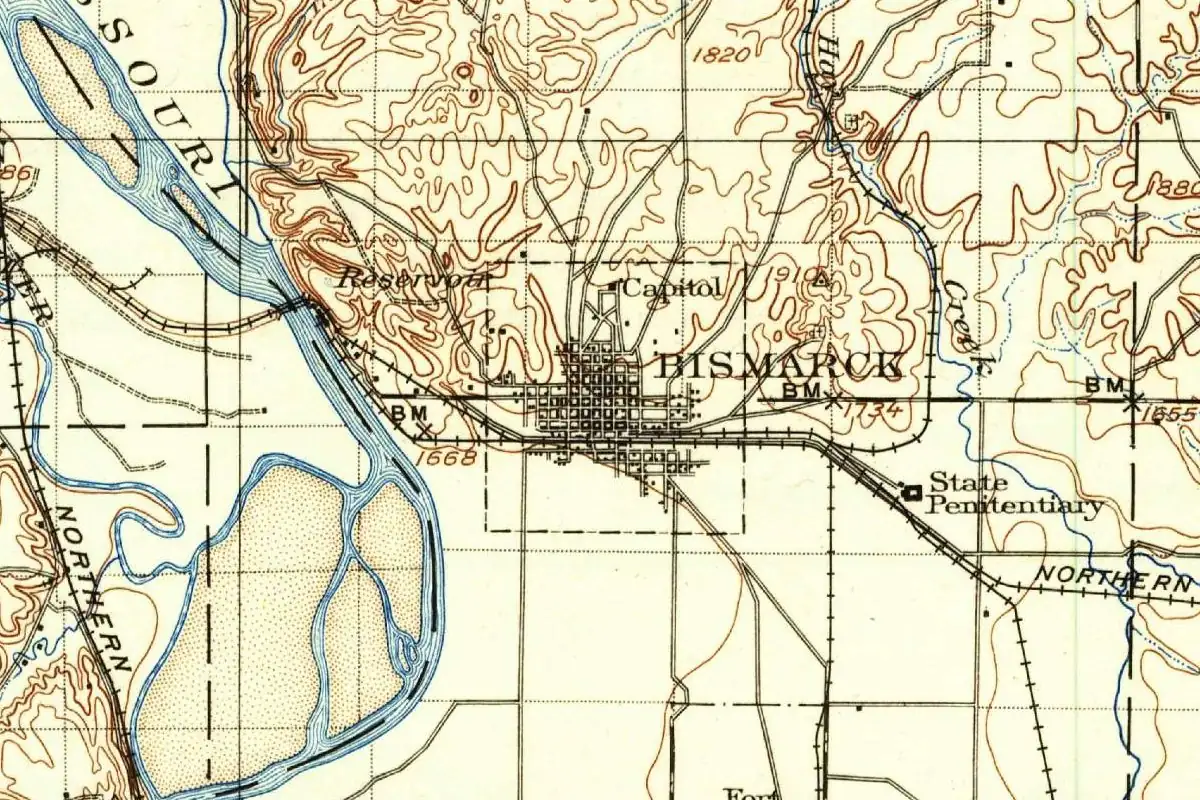
The town’s own record is short but busy. Its entry in GNIS, the U.S. Geological Survey’s index of names, says it was founded in 1879 and first named Morton, after the county, which honors Oliver P. Morton, a governor of Indiana. Then it was Mandan. Then it was named Cushman, for a new postmaster, and then “changed back to Mandan.” The record doesn’t give dates for those switches, and we didn’t find a source that does, so you’ll have to take the order as the only firm part.
The tribe’s name fit the place for a reason older than the town. The territory’s official 1889 abstract says Lewis and Clark spent their first winter “among the Mandan Indians, near the present town of Mandan.”
Sources & further reading
- Frederick Webb Hodge, ed., Handbook of American Indians North of Mexico, Part 1 (1907), entry “Mandan,” pp. 796–799. The name “originally given by the Sioux” according to Maximilian and “a corruption of the Dakota Mawatani” according to Matthews; the Dakota forms from Riggs; the Mandan names for themselves.
- Henry Gannett, The Origin of Certain Place Names in the United States (USGS, 1905), p. 197. Mandan “named for the Indian tribe.”
- Frank H. Hagerty, The Territory of Dakota (1889), p. 9. Lewis and Clark’s first winter “near the present town of Mandan.”
- GNIS feature 1030076 (U.S. Geological Survey). The federal record: founded 1879; Morton, Mandan, Cushman and Mandan again.
Spot something wrong, or know more? Tell us here. You can also email us or use our contact page. Corrections are noted here with their date, never made silently.