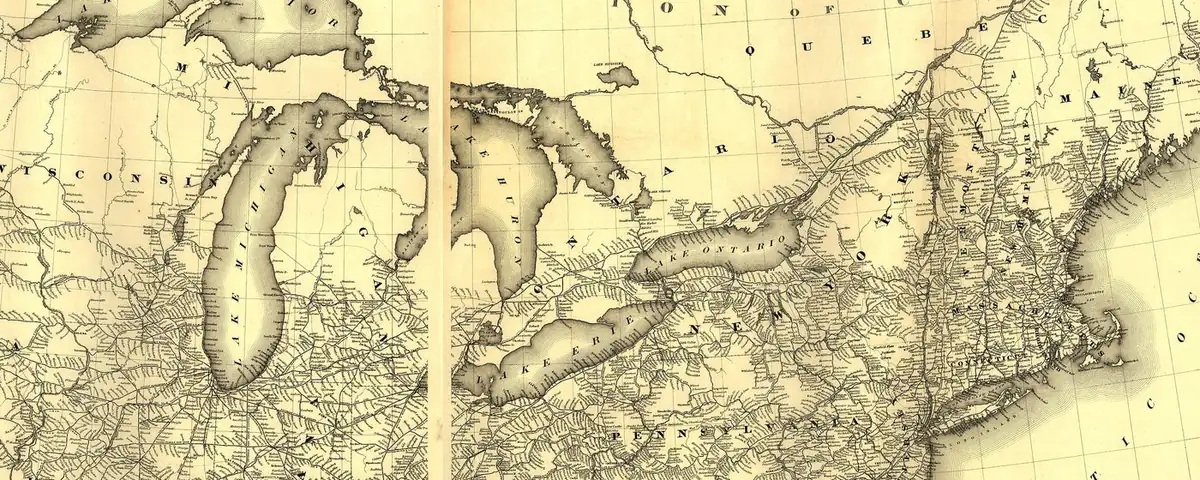
Wild West Towns: The Names Behind Cowtowns, Lawmen & Legends
Two towns on this page have been called the cowboy capital. Robert Wright, president of Dodge City’s town company, put it in the title of his 1913 book, and a Nebraska state marker gives the name to Ogallala. Kansas historians call Dodge the “Queen of the Cowtowns,” and the National Park Service’s own landmark paperwork calls the Tombstone shootout “America’s most famous gun battle.” That’s the West people still cross the country to see.
Most of the names are older than the legends, though, and they tell a different story. Wichita, Ogallala and Cheyenne carry the names of Native peoples. Dodge City and Fort Smith borrowed theirs from Army posts, while Cody honors Buffalo Bill and Laramie, by way of a river, a French-Canadian trapper. Tombstone and Deadwood got theirs from a grim warning to a prospector and a gulch full of dead trees. You’ll also find Spanish in El Paso, a Tewa name in Spanish form in Taos, French in Belle Fourche, a French-descended fur trader behind St. Joseph, and a founder’s daughter, nicknamed “Sed,” in Sedalia.
This page is for you if you’re planning a trip along the old cattle trails or to the places where the lawmen and outlaws made the papers, and you want to know what the sign at the city limits really means. The towns run in order of the story they’re known for, from Kit Carson’s Taos in the 1840s to Buffalo Bill’s Cody in the 1890s.
How we picked these. The town was a cattle-trail, cattle-shipping or open-range cattle-boom town, the scene of a documented episode of the frontier West, or the home base or founding project of a figure of the Old West, as an official, historical or encyclopedic source confirms. Each story below lists the source that confirms it.
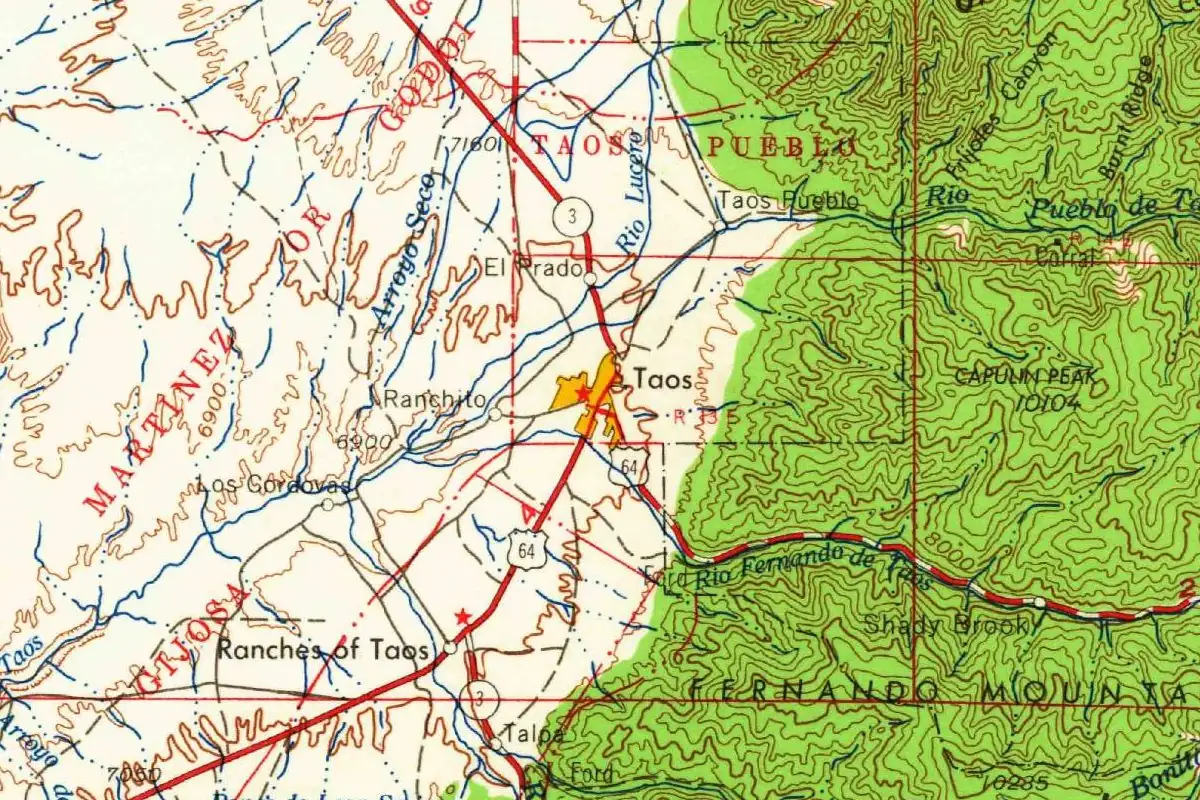 Taos County, NM
Taos, New Mexico, took its name from Taos Pueblo, 3 miles (5 km) away, and the pueblo's own name came to Spanish from what its Tewa neighbors called it.
DocumentedKit Carson bought a house here in 1843 when he married Josefa Jaramillo, and it stayed the family's home until both died in 1868. Source: Kit Carson House, National Register nomination (National Park Service)
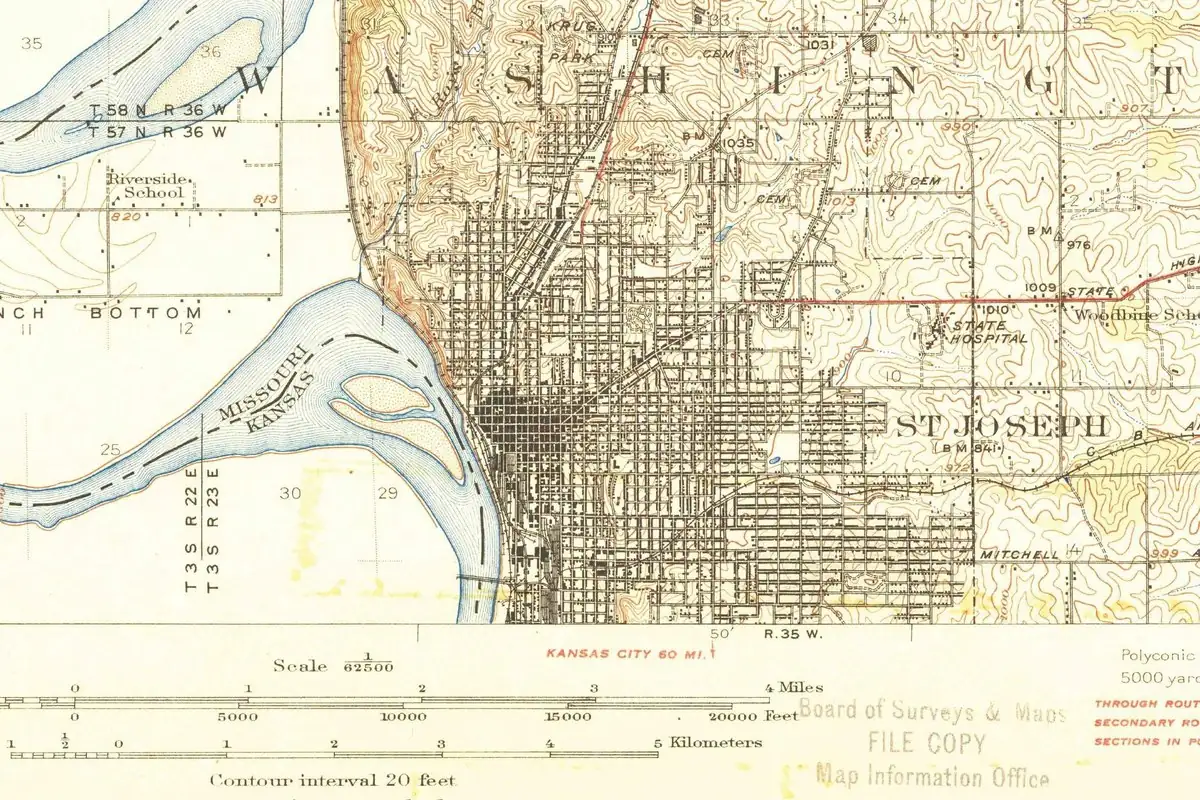 Buchanan County, MO
Fur trader Joseph Robidoux named St. Joseph, Missouri, in 1843. Local histories say he named it for himself; a 1911 encyclopedia says for his patron saint.
DisputedThe Pony Express started here on April 3, 1860, with a speech by the mayor at the Patee House. Source: Patee House, Pony Express National Historic Trail (National Park Service)
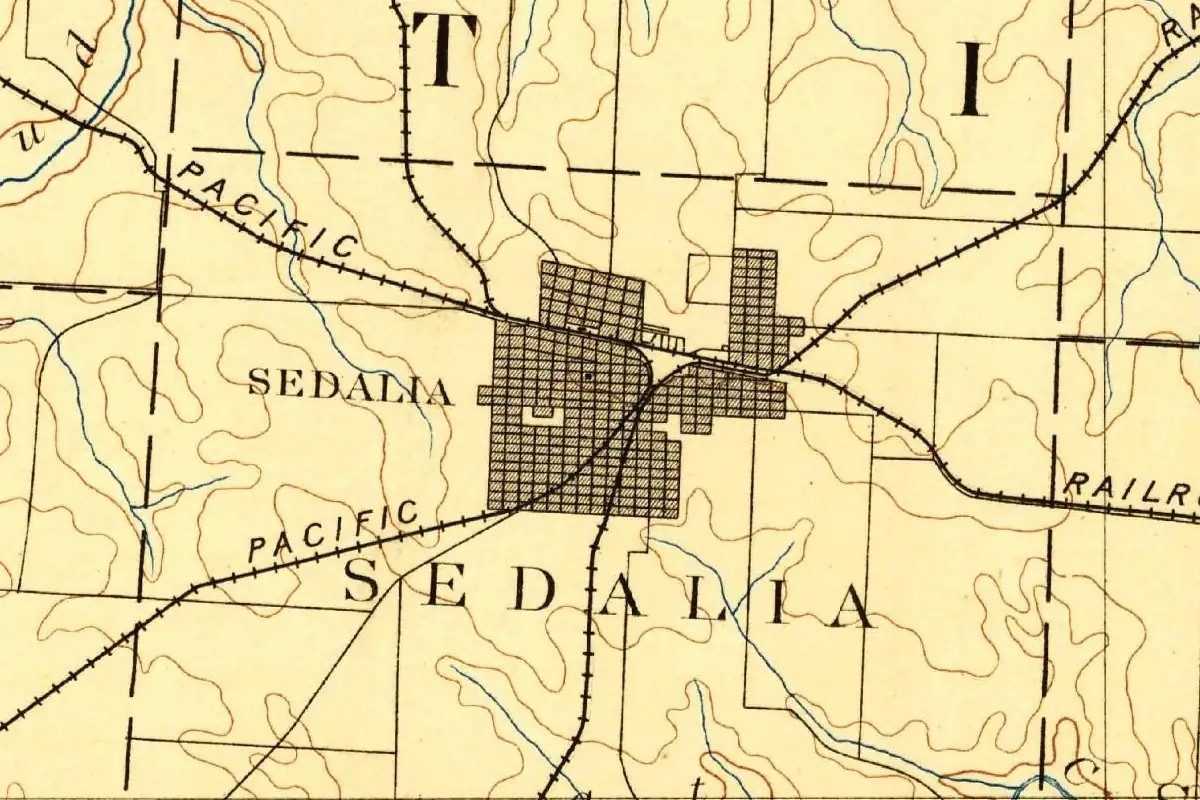 Pettis County, MO
Sedalia, Missouri, began on paper as Sedville, named for the founder's youngest daughter, Sarah, whose family called her "Sed."
DocumentedTexas drovers called their route north the Sedalia Trail, and one branch ended at this Missouri railroad town. Source: Shawnee Trail (Handbook of Texas, Texas State Historical Association)
 Sedgwick County, KS
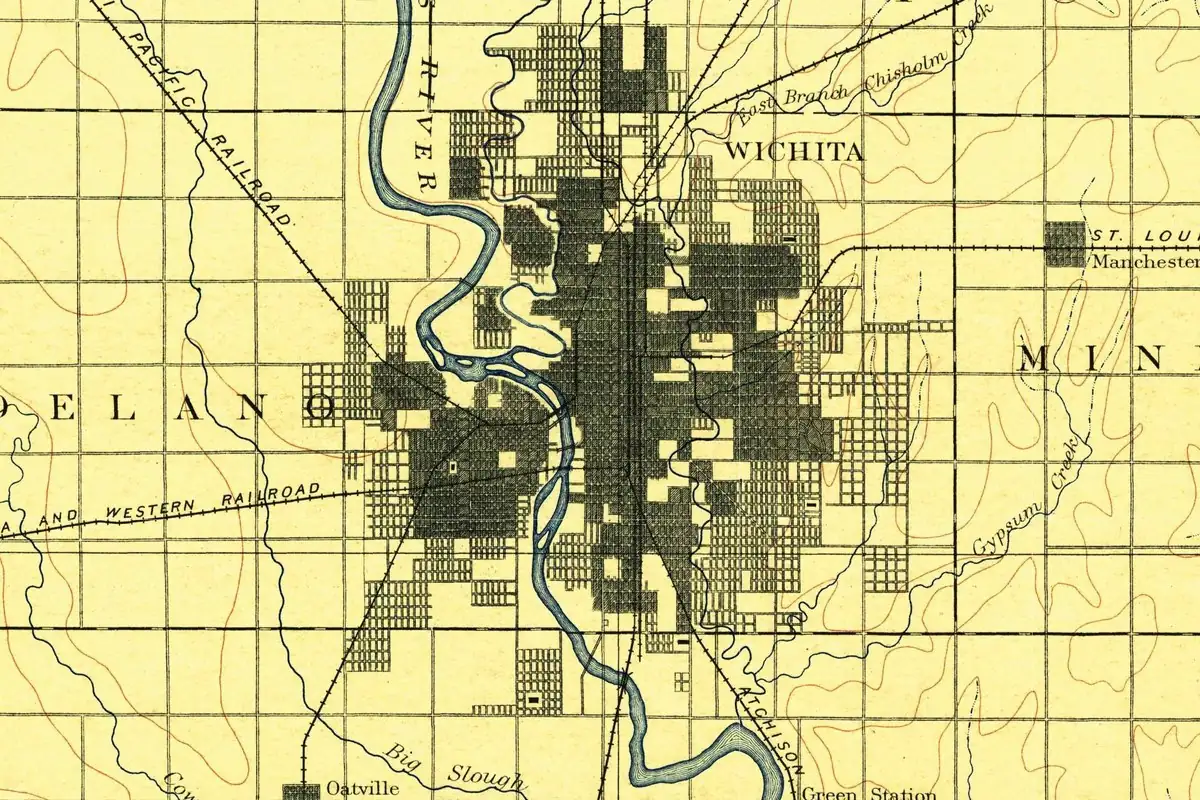
Wichita, Kansas, is named for the Wichita people, who camped on the Little Arkansas River during the Civil War. What the word means, nobody's pinned down.
DocumentedOnce the railroad arrived in 1872, Wichita became a Kansas cattle shipping point and a rival of Ellsworth. Source: Cowtowns (Kansapedia, Kansas Historical Society)
 Sebastian County, AR
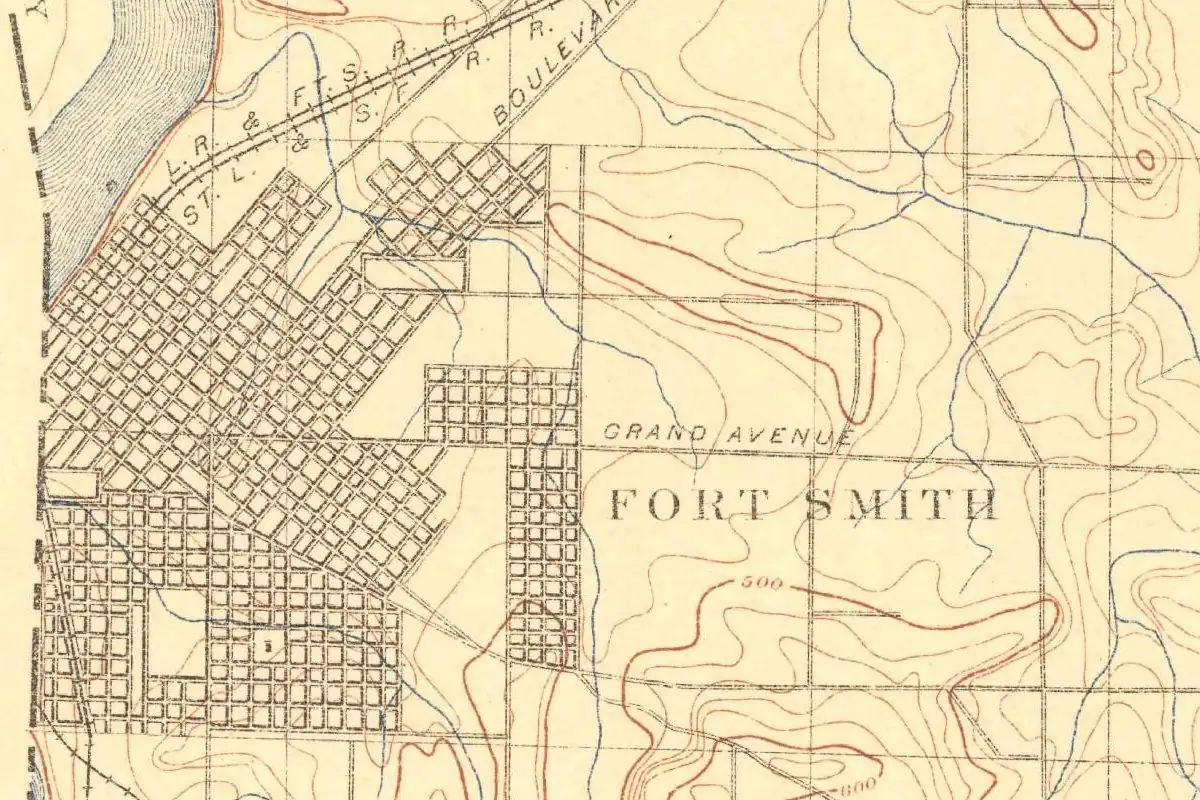
Fort Smith, Arkansas, grew up around an Army post named for Gen. Thomas A. Smith, but a 1905 federal list of place names credits a different General Smith.
DocumentedJudge Isaac C. Parker sat on the federal bench here for 21 years, with a court that once covered all of Indian Territory. Source: Isaac C Parker (National Park Service)
 Ford County, KS
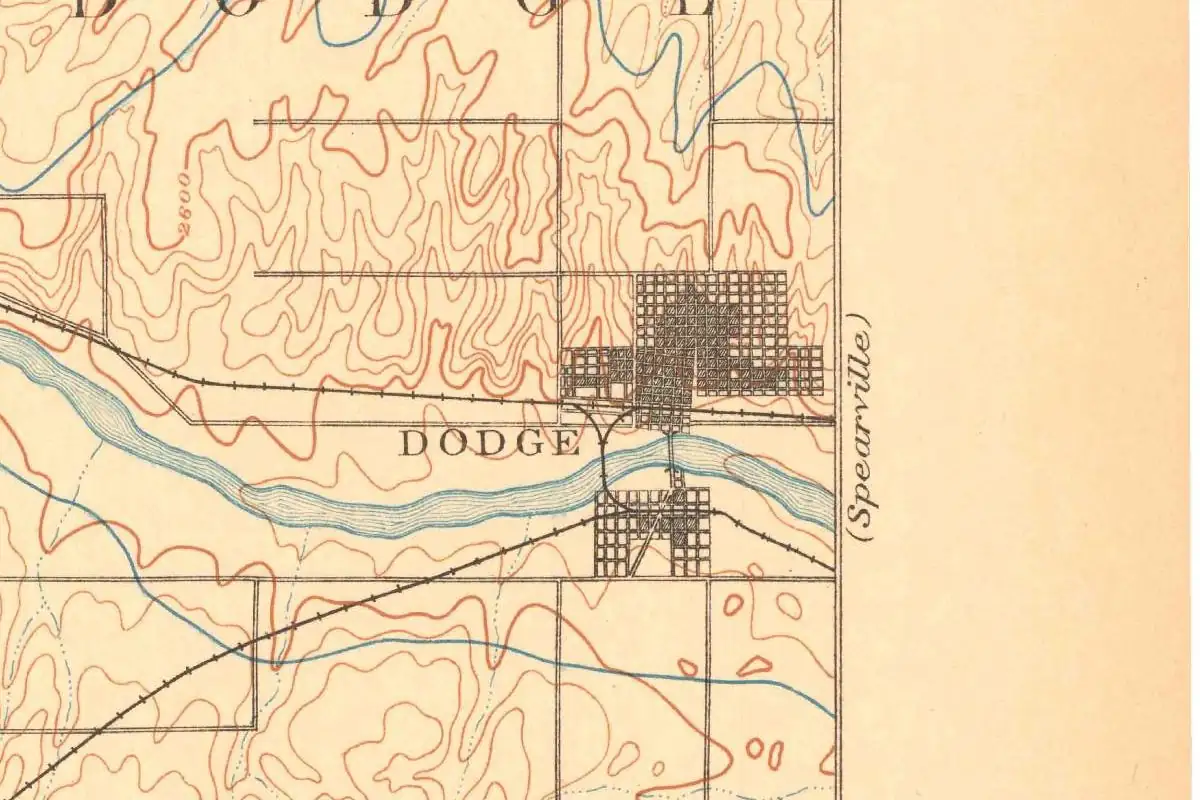
Everyone agrees Dodge City, Kansas, took its name from Fort Dodge. Which Dodge the fort was named for is another story, and the books give two answers.
DisputedThe principal Kansas cowtown from 1875 to 1885, called the "Queen of the Cowtowns" after Wichita closed to the trade. Source: Cowtowns (Kansapedia, Kansas Historical Society)
 Lawrence County, SD
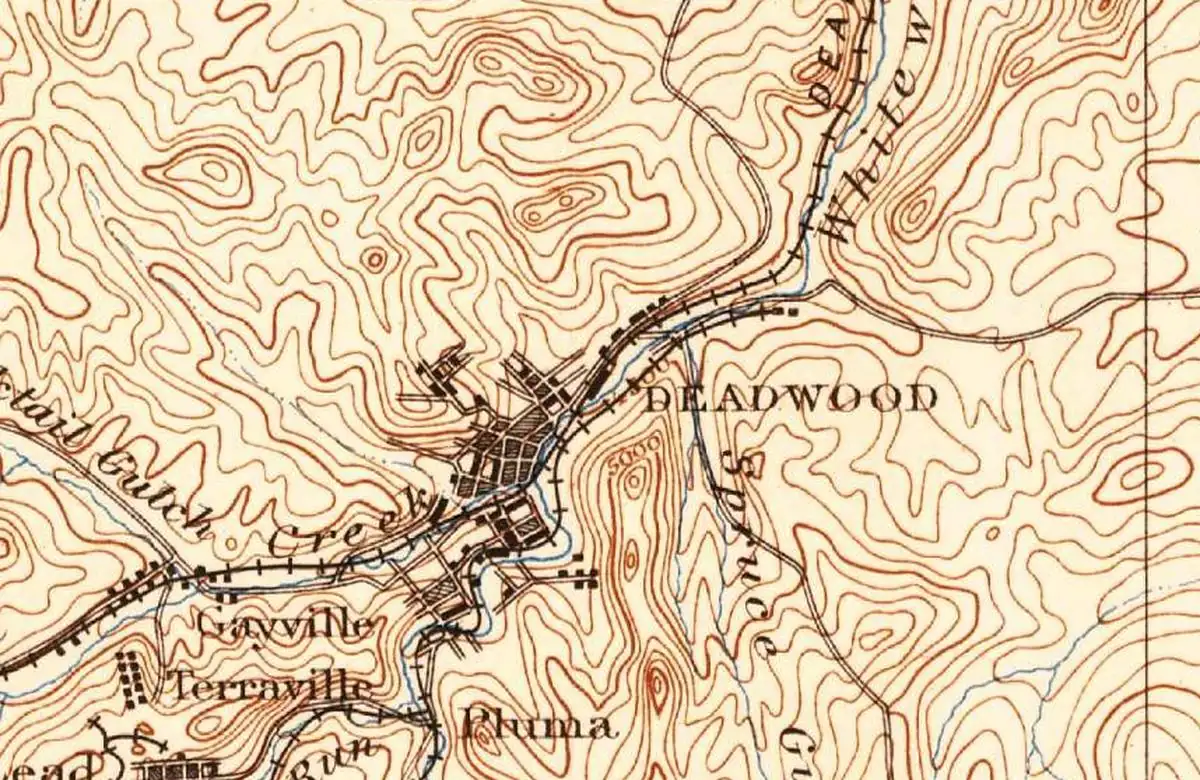
Deadwood, South Dakota, is named after the gulch it sits in, and the gulch got its name from the dead trees the first gold prospectors found there.
DocumentedWild Bill Hickok was killed here in 1876 by Jack McCall, and he and Calamity Jane are buried in Mount Moriah Cemetery. Source: Deadwood Historic District, National Register nomination (National Park Service)
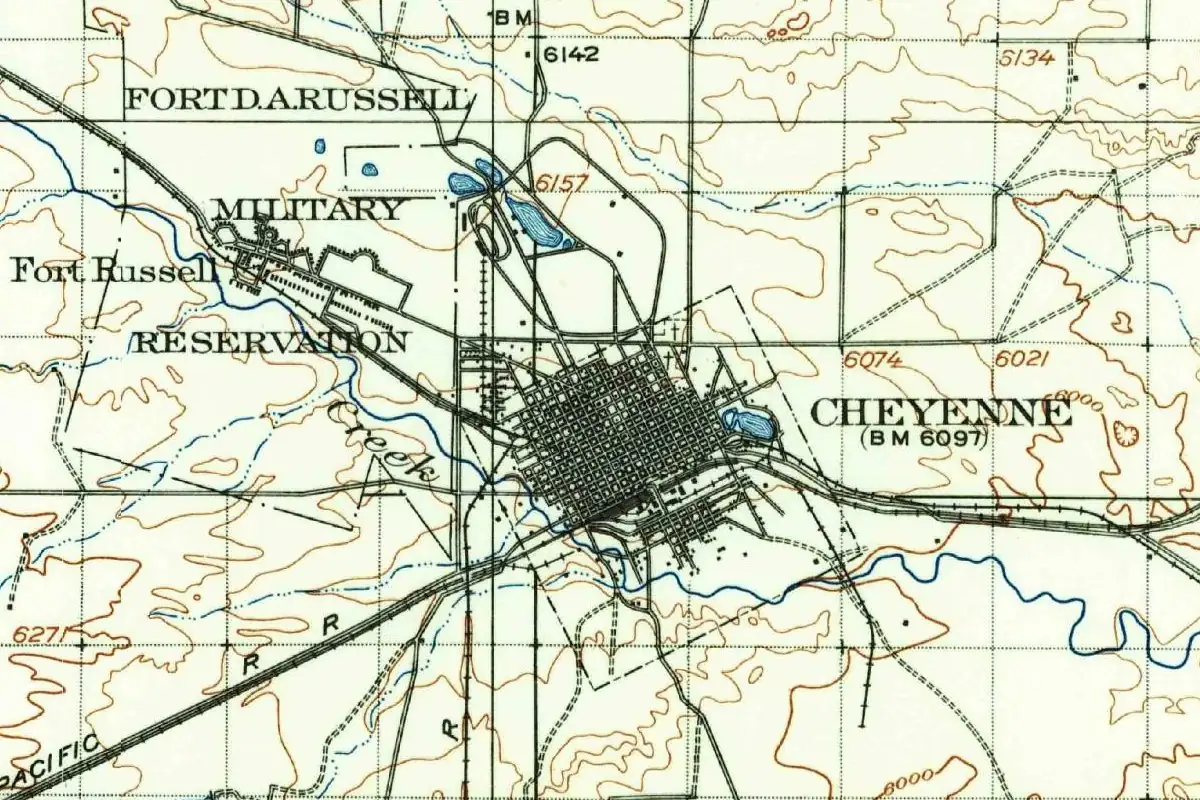 Laramie County, WY
Cheyenne, Wyoming, is named for the Cheyenne people, and the word has nothing to do with the French chien, or dog, despite an old guess that it did.
DocumentedCattle money built the Cheyenne Club, which opened in 1880, during Wyoming's open-range cattle boom. Source: The Wyoming Cattle Boom, 1868-1886 (WyoHistory.org)
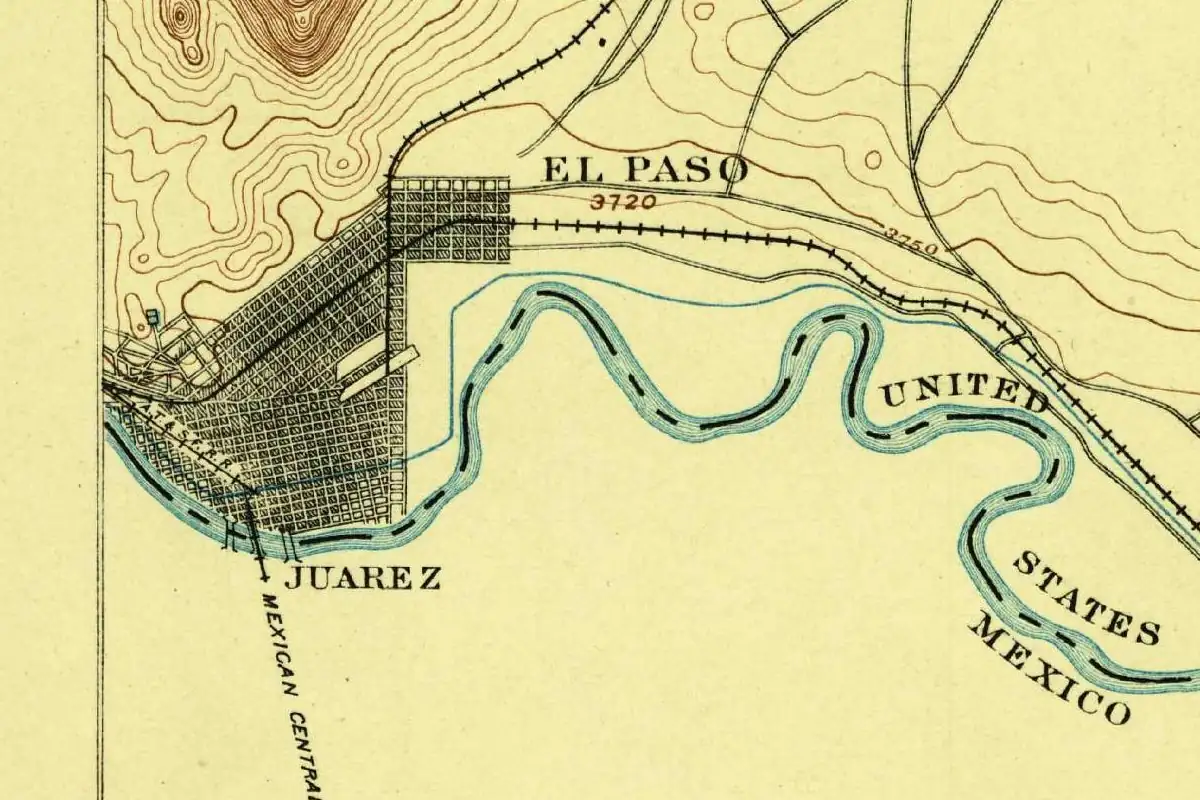 El Paso County, TX
When Anson Mills reached El Paso, Texas, in 1858, the American town was called Franklin, after a man who named the post office for himself.
DocumentedDallas Stoudenmire became town marshal in April 1881, and three days later came the "Four Dead in Five Seconds" gunfight. Source: Stoudenmire, Dallas (Handbook of Texas, Texas State Historical Association)
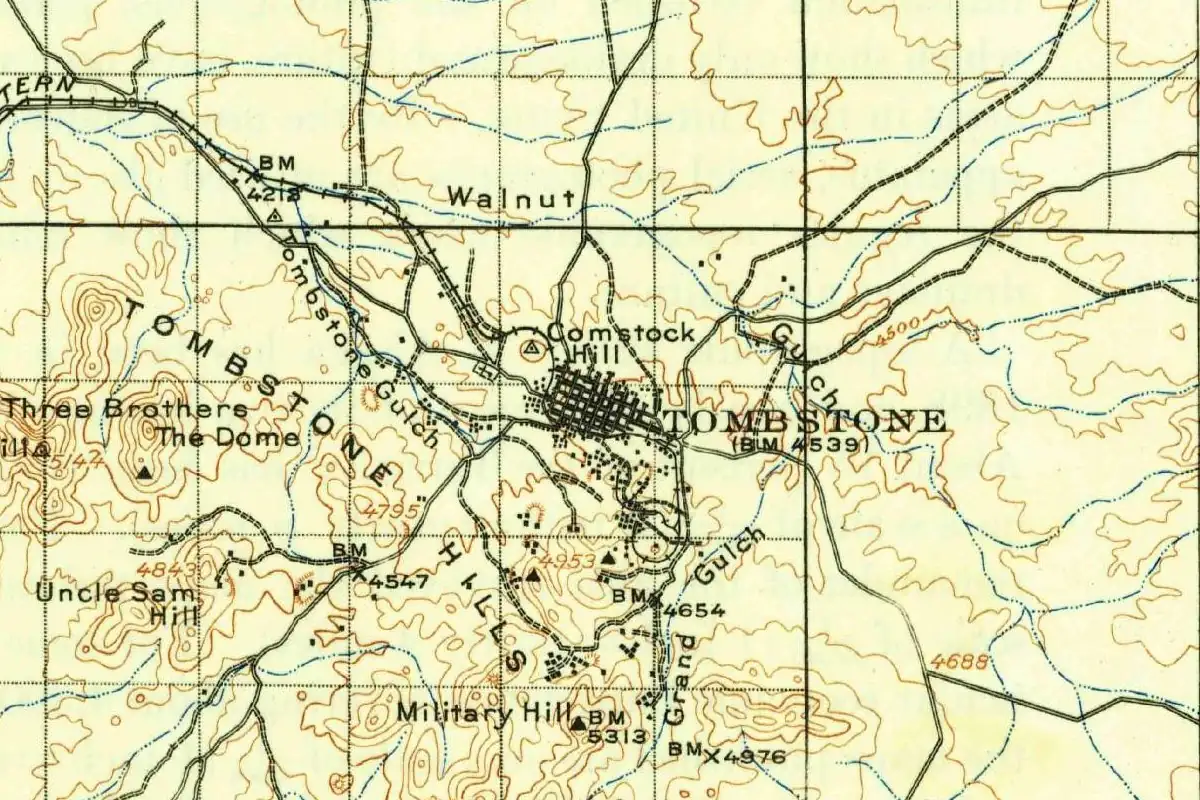 Cochise County, AZ
Ed Schieffelin was told the only stone he'd find in the hills of Tombstone, Arizona, would be his tombstone. He found silver and named his claim Tombstone.
DocumentedThe gunfight at the OK Corral happened here on October 26, 1881, with the Earps and Doc Holliday on one side. Source: Tombstone Historic District, National Register nomination (National Park Service)
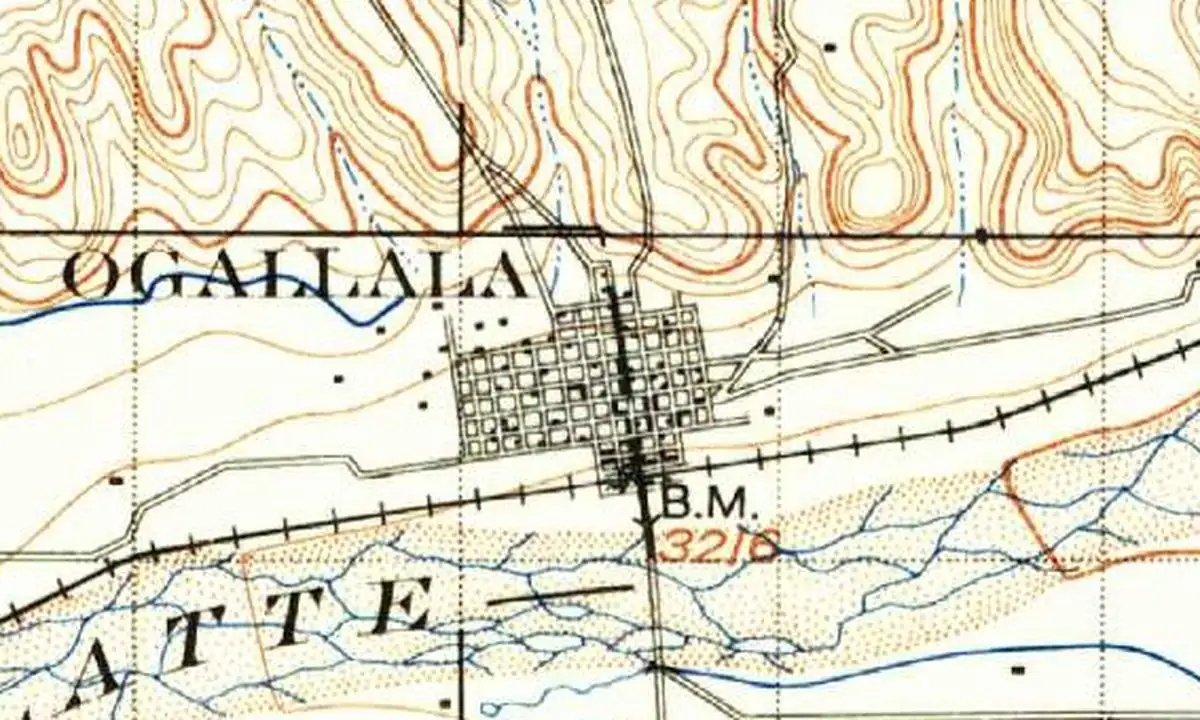 Keith County, NE
Ogallala, Nebraska, is named for the Oglala, one of the bands of the Lakota people. The town just spells it with a couple of extra letters.
DocumentedTexas herds came up the trail through Dodge City to be shipped or sold here, until trail driving was about over by 1884. Source: Nebraska's Cowboy Capital, state historical marker (History Nebraska)
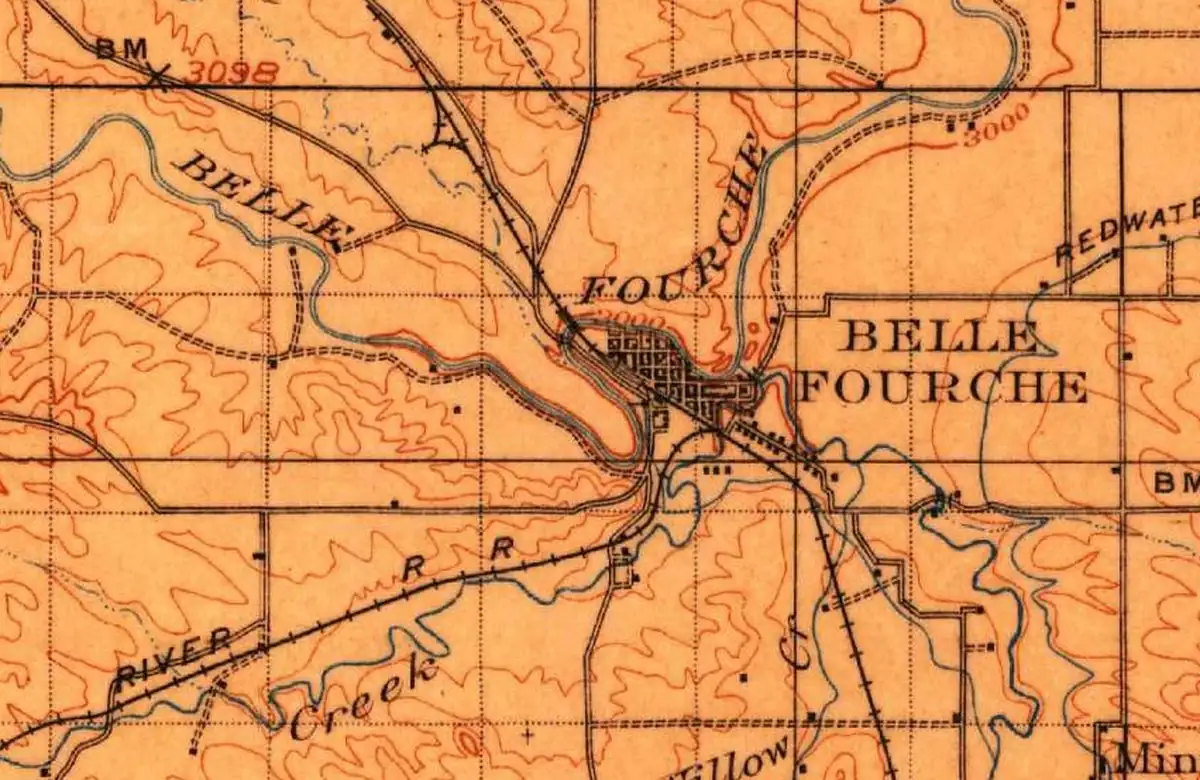 Butte County, SD
Belle Fourche, South Dakota, takes its name from the Belle Fourche River, which early French explorers called the "beautiful fork."
DocumentedDeadwood's Seth Bullock and Sol Star founded the town as the railroad came west, and it grew up serving the western cattle trade. Source: A Brief History of Belle Fourche, Images of the Past (South Dakota Public Broadcasting)
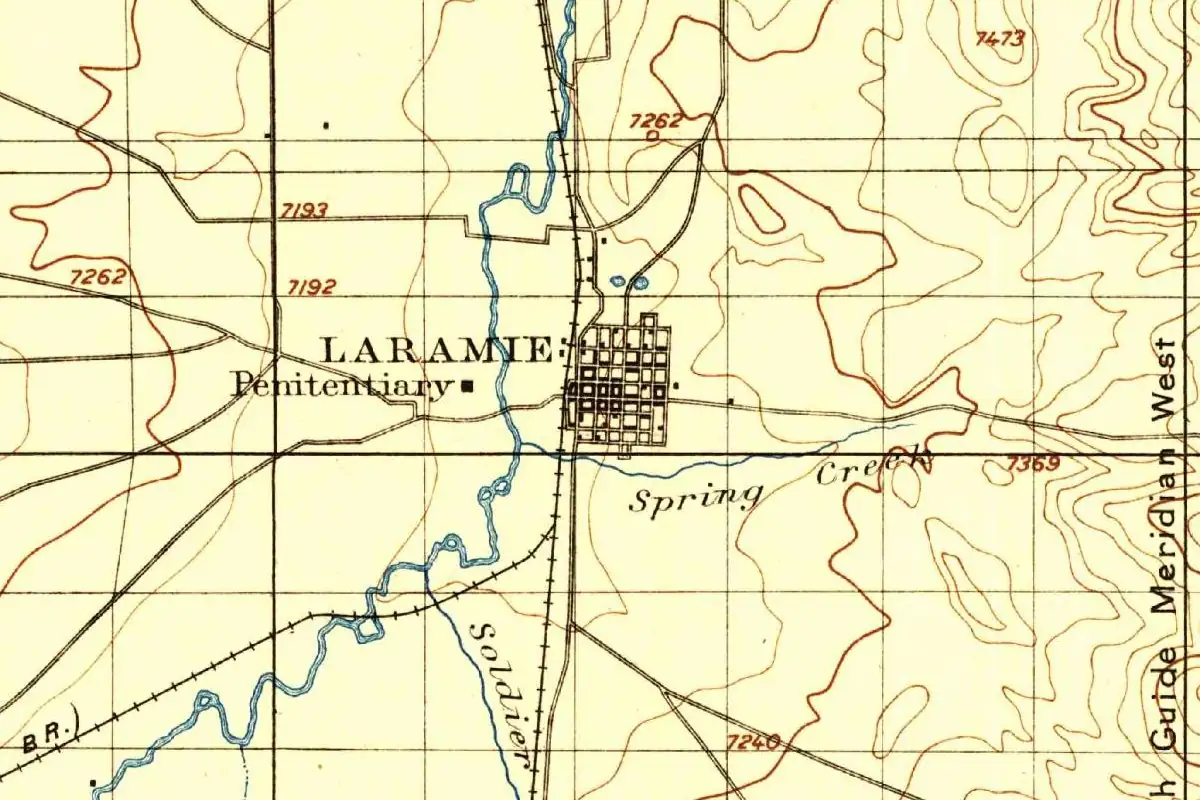 Albany County, WY
Laramie, Wyoming, takes its name from a river, and the river took it from a trapper who went up it alone and was found dead at his cabin.
DocumentedButch Cassidy, convict #187, served time at the territorial prison here for stealing horses, from 1894 to 1896. Source: Convicts' Stories, Wyoming Territorial Prison (Wyoming State Parks, Historic Sites & Trails)
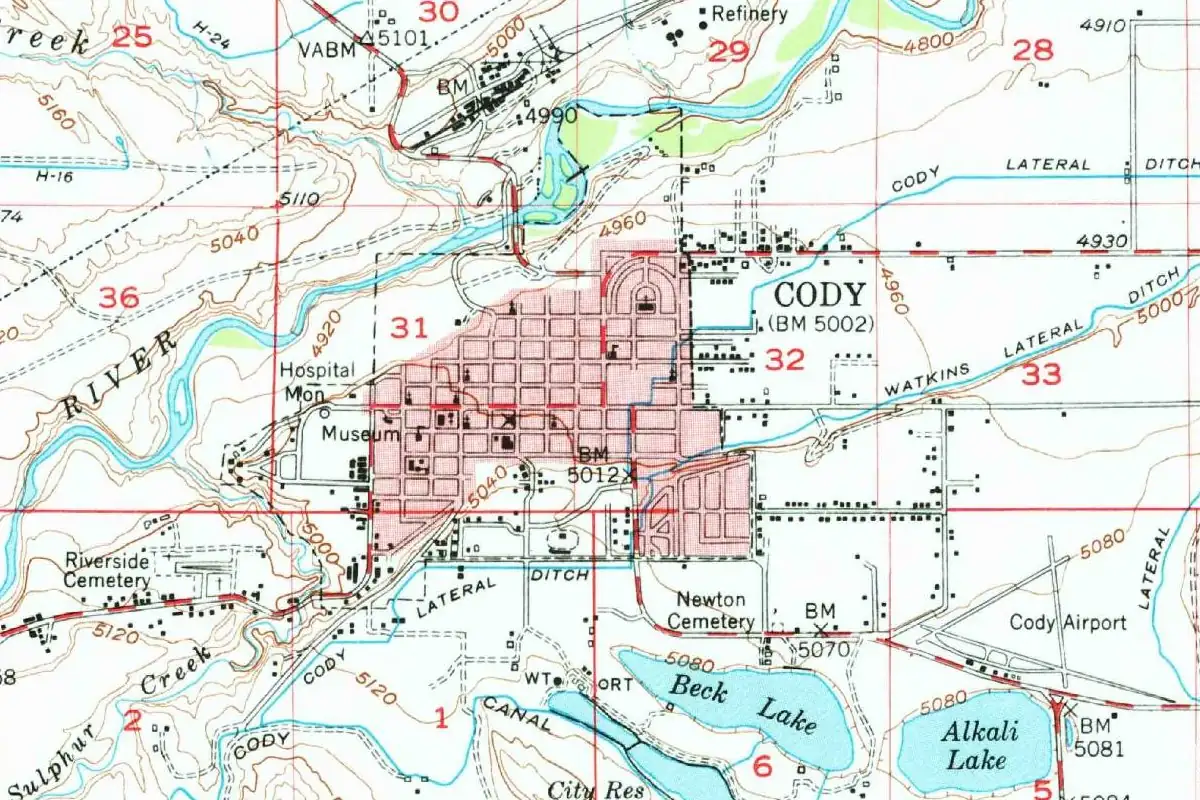 Park County, WY
Buffalo Bill didn't name Cody, Wyoming, after himself, at least by his own telling. His friends, he wrote, "insisted upon naming it Cody."
DocumentedBuffalo Bill and his partners in the Shoshone Land and Irrigation Company founded the town in the 1890s and he put money into it. Source: Cody, Wyoming (WyoHistory.org)
Sources for this page
- Cowtowns (Kansapedia, Kansas Historical Society) (accessed Oct 31, 2026)
- Tombstone Historic District, National Register nomination (National Park Service) (accessed Oct 31, 2026)