How Yankton, South Dakota Got Its Name
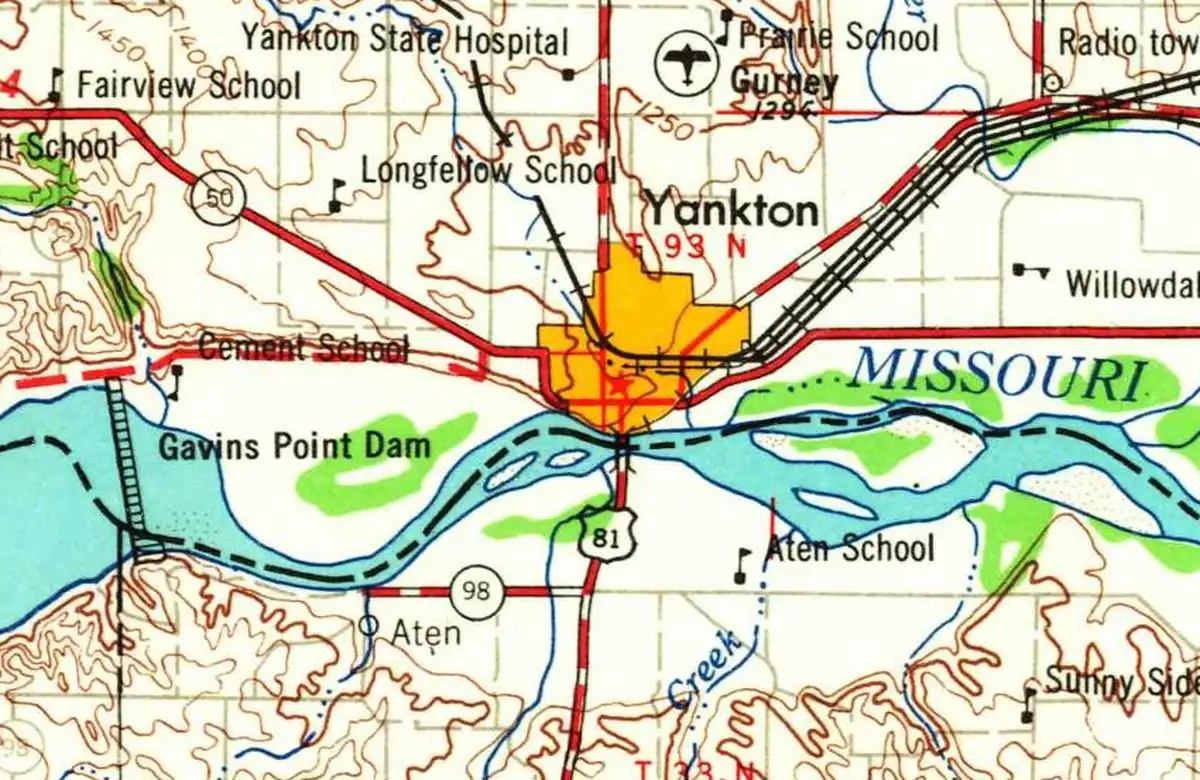
Yankton, South Dakota, is named for the Yankton people, the Ihanktonwan, whose name in their own language is usually translated as “End Village.” The town took the name of the nation that lived here, in an English spelling of a Dakota word.
Where the name comes from
“Yankton” is how English speakers ended up writing Ihanktonwan, the name of one of the divisions of the people outsiders called the Sioux. A 1908 railroad guide to place names calls the town’s name “a corruption of the Sioux Indian name I (or E) hank-ton-wan, meaning ‘the end village,’” and the U.S. Geological Survey’s place-name record cites the same book. Encyclopedia.com’s entry on the Nakota gives the same meaning, “end village,” for Ihanktunwan.
You’ll see it spelled several ways (Ihanktonwan, Ihanktunwan), but the meaning in these sources is consistent. We haven’t checked it against the tribe’s own published language materials, so treat “End Village” as the common translation rather than the last word.
Why “End Village”?
The 1908 guide says the name goes back to a time when the Yankton were camped at the end of Spirit Lake in the Minnesota woods, before being pushed out onto the prairies by the Ojibwe. That’s an explanation recorded by a railroad writer more than a century ago, not by the Yankton themselves, so take it as one telling of the story.
A treaty, then a town
The same 1908 guide connects the town to a treaty. It says that in 1858 the Yankton signed away their claims to the land in this area, and that the treaty brought a rush of settlers to what’s now southeastern South Dakota. The town that grew up on the north bank of the Missouri kept the people’s name.
The first capital
Yankton had a big run early on. It became the capital of the new Dakota Territory, and the USGS record puts its years as capital at 1861 to 1883. In 1883, according to South Dakota Public Broadcasting, the territorial capital moved to Bismarck, amid some controversy. Today the state capital is Pierre.
Sources & further reading
- W. H. Stennett, A History of the Origin of the Place Names Connected with the Chicago & North Western and Chicago, St. Paul, Minneapolis & Omaha Railways (1908). A public-domain railroad guide. Gives the “end village” meaning, the Spirit Lake explanation and the 1858 treaty.
- GNIS feature 1259091 (U.S. Geological Survey). The federal record for Yankton. Cites the 1908 guide on the name and adds that Yankton was capital of Dakota Territory from 1861 to 1883.
- Encyclopedia.com, “Sioux Nations: Nakota.” An independent reference for the “end village” meaning of Ihanktunwan.
- South Dakota Public Broadcasting, “Yankton: Capital of Dakota Territory” (2014). The capital’s move to Bismarck in 1883.
Spot something wrong? Corrections are noted here with their date, never made silently.