Cowan, Tennessee: Named for a Major Cowan, but Which One?
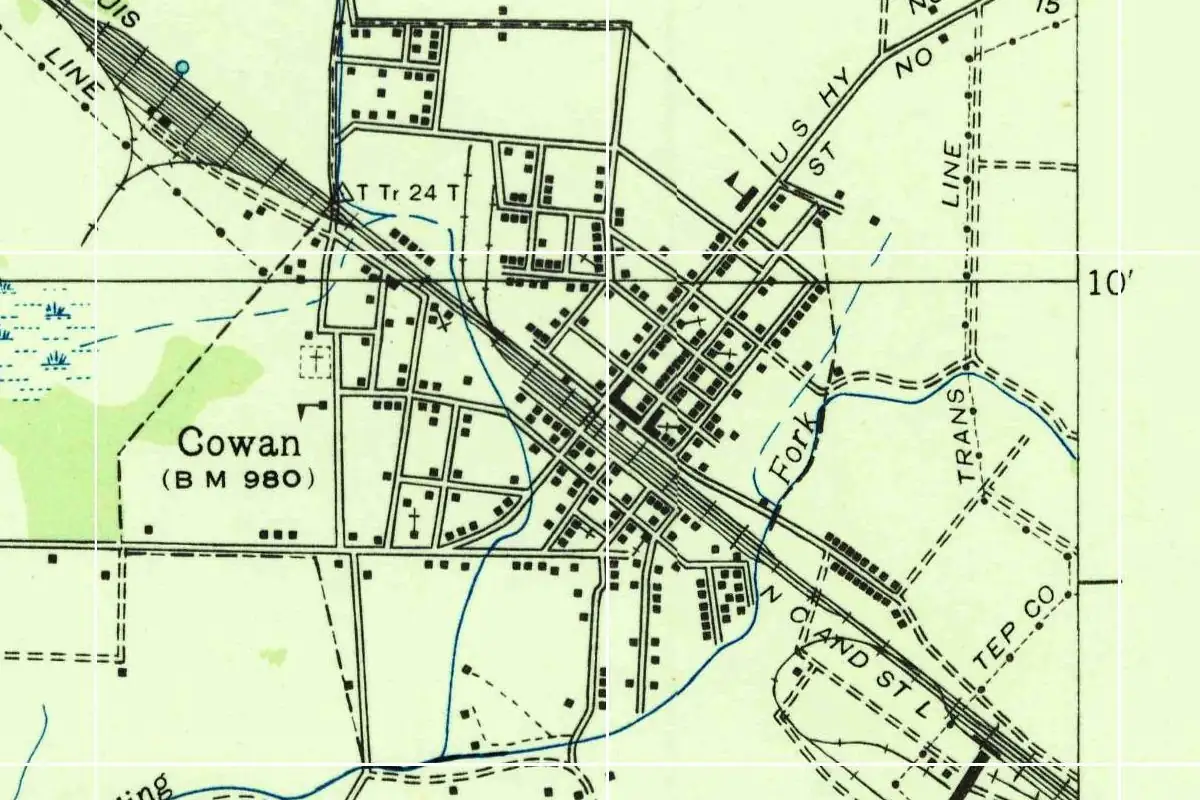
Cowan, Tennessee, is named for a Major Cowan, and that’s the problem: the local sources name two different men who both went by Major. One was a pioneer settler named John. The other was a surgeon on General Nathan Bedford Forrest’s staff in the Civil War.
Major John, the pioneer
A 1974 historical marker, as a Middle Tennessee photo blog transcribed it in 2013, opens with the simplest version: Cowan was “named in honor of Major John Cowan, early pioneer settler.” The marker then moves on to Major William Russell, who settled there in 1800, and to the railroad.
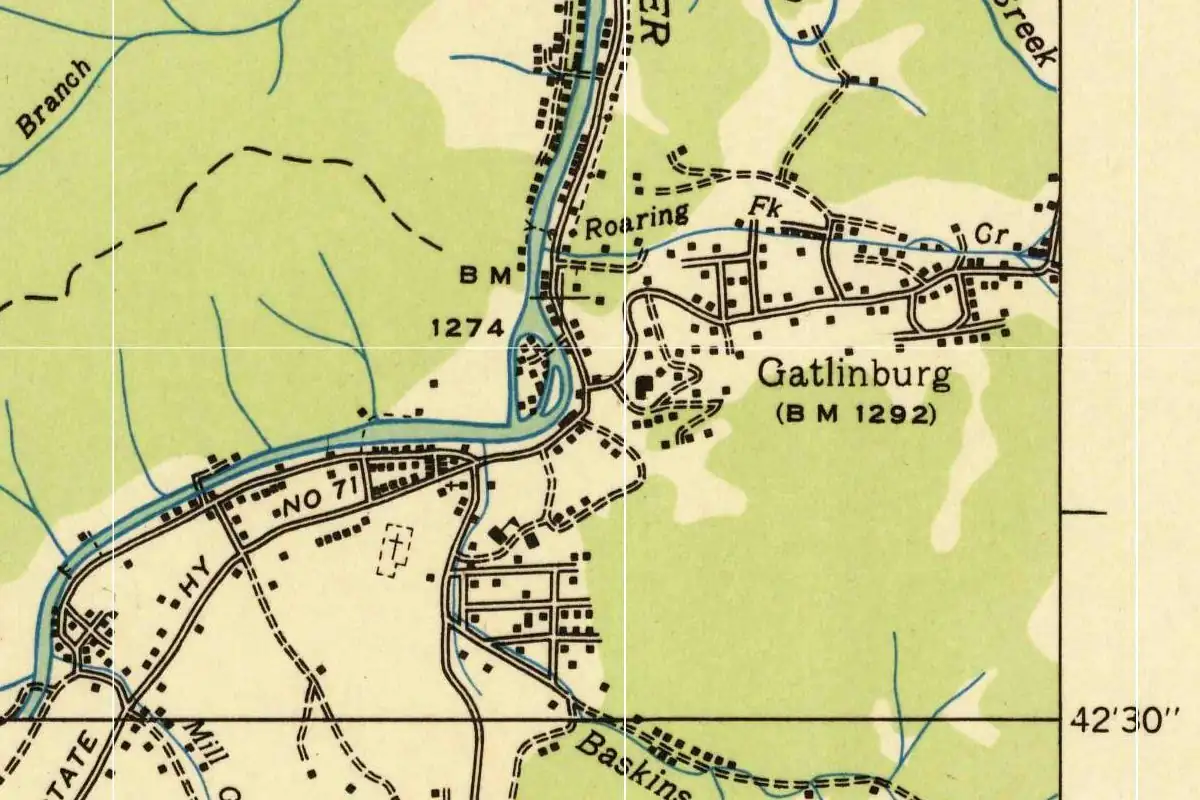
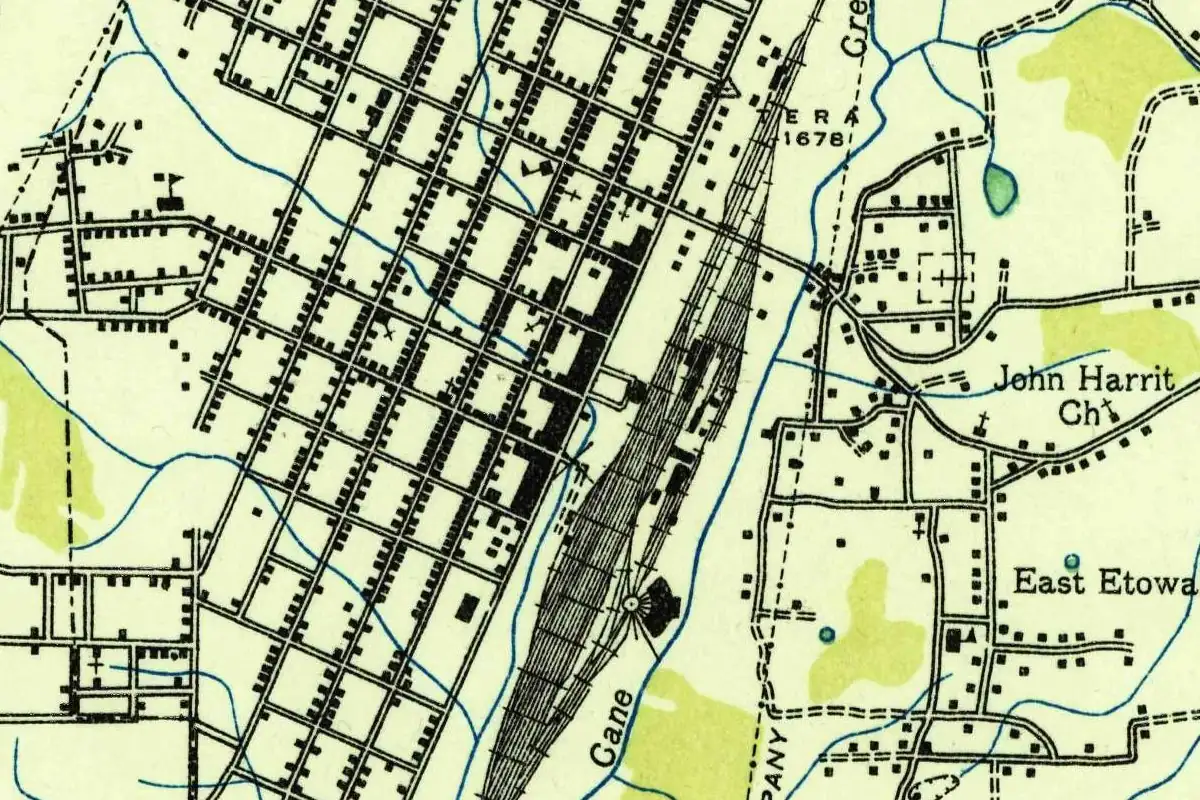
There really was a John Cowan on the land early. An 1886 county history from the Goodspeed company gives “a condensed list of a few early grants” in Franklin County, and in 1808 the state gave “John Cowan” 200 acres on the Boiling Fork, the creek you can follow through Cowan on the map above. The same book calls Cowan “an old town located in one of the earliest settlements made in the county.” What it doesn’t do is say whom the town honored, so you can’t tell from it whether that John Cowan is the marker’s Major.
Major J. B. Cowan, the surgeon
Andrew Rittenberry, the son of a Cowan family, wrote the town’s history as a senior at Sewanee Military Academy in 1960, and the Franklin County Historical Review printed it in 1970. He admits up front that “there have been many stories about the name of Cowan.” He then picks one: “The best substantiated story that exists is that the town was named for Dr. J. B. Cowan, an officer on General Forrest’s Medical Staff during the Civil War.”
Rittenberry says Dr. Cowan held the rank of Major and Chief Surgeon in Forrest’s regiment and was related to Forrest by marriage. He also says Dr. Cowan “is said to have granted a considerable area of land to the town,” and that people named the place for him because of that gift, “not because of Dr. Cowan’s record.” He dates the naming only roughly, “somewhere between the years 1852 – 1860,” and is sure it came before the Civil War.
He records one more story too. Some people said the town had been called “Hawkins,” after a man named Hawkins who gave land for the township. Rittenberry passes it along without backing it, and neither the marker nor the 1886 book mentions it.
A town built around a tunnel
Whichever Cowan it was, the railroad is what made the town matter. Rittenberry says the very first contract for a railroad from Nashville to Chattanooga, signed on August 1, 1848, was for a tunnel through the mountain from Cowan, which still had no name at the time. Goodspeed’s 1886 history says the Nashville & Chattanooga was completed through the county in 1851, with a station at Cowan and a tunnel 2,200 feet (671 m) long through the Cumberland Mountains. The Sewanee Mining Company’s railroad from Tracy City joined the main line at the foot of the mountain near Cowan.
Cowan didn’t even incorporate until 1921, Rittenberry says, when voters chose Ross Greene as its first mayor. So you’ve got a town the railroad made, with a name that nobody pinned down on paper. Two Majors, one possible earlier name, and no deed or record from the 1850s that settles it in anything we found.
Quick answers
Who is Cowan, Tennessee, named after?
The sources disagree. A 1974 historical marker, known to us from a 2013 blog transcription, says Major John Cowan, an early pioneer settler, while a 1970 local history says Dr. J. B. Cowan, a major and chief surgeon under General Forrest.
Was Cowan ever called Hawkins?
Maybe. Rittenberry’s 1970 history says “some citizens” claimed it, because a man named Hawkins gave land for the town, but he doesn’t back the story up.
When did Cowan get its name?
Nobody recorded the date. Rittenberry places it “somewhere between the years 1852 – 1860,” before the Civil War.
Key dates
- 1808The state grants John Cowan 200 acres on the Boiling Fork, one of the early grants in Franklin County.
- 1848The first contract for the Nashville to Chattanooga railroad, a tunnel through the mountain from Cowan, is signed on August 1.
- 1921Cowan is incorporated, with Ross Greene as its first mayor.
Getting there
Open Cowan in Google Maps
Opens in a new tab. The pin is the center of Cowan in the USGS place-name record.
The closest airports, Amtrak stations and intercity bus stops, measured in a straight line from the center of Cowan.
Airports
- Lovell Field (CHA) Chattanooga 46 mi 75 km
- Huntsville International-Carl T Jones Field (HSV) 57 mi 91 km
- Nashville International (BNA) 76 mi 123 km
Intercity buses
- Greyhound Manchester Shell 23 mi 38 km
- FlixBus Murfreesboro Bus Stop 52 mi 84 km
Distances are as the crow flies, not by road. We don't list schedules or fares because they change; check with the airline, Amtrak or the bus company before you go. Official data (FAA commercial service airports (2025), FAA airport locations, Amtrak stations and Intercity Bus Atlas) from the FAA and the U.S. Bureau of Transportation Statistics, checked Nov 6, 2026.
Sponsored
Staying in Cowan?
Compare hotels in Cowan, Tennessee, on Expedia.
See hotels in CowanWe may earn a commission if you buy through this link. It never changes what we write. Read our affiliate disclosure
Historical Sources & References
- Andrew Rittenberry, “Cowan: Its History and Heritage,” Franklin County Historical Review (December 1970). The Dr. J. B. Cowan story, the land grant, the “Hawkins” story, the 1852-1860 naming window, the 1848 tunnel contract and the 1921 incorporation. Hosted by the Cowan Railroad Museum.
- Cowan historical marker (1974), as transcribed by See Middle Tennessee (2013). “Named in honor of Major John Cowan, early pioneer settler.”
- History of Tennessee: Giles, Lincoln, Franklin and Moore Counties (Goodspeed, 1886), pp. 787-788 and 799. The 1808 grant of 200 acres on the Boiling Fork to John Cowan; the railroad and its 2,200-foot (671 m) tunnel; Cowan as “an old town.”
- GNIS feature 1306151 (U.S. Geological Survey). The Survey’s place-name record for Cowan, in Franklin County.
Spot something wrong, or know more? Tell us here. You can also email us or use our contact page. Corrections are noted here with their date, never made silently.