Anaheim, California: A German Home on the Santa Ana
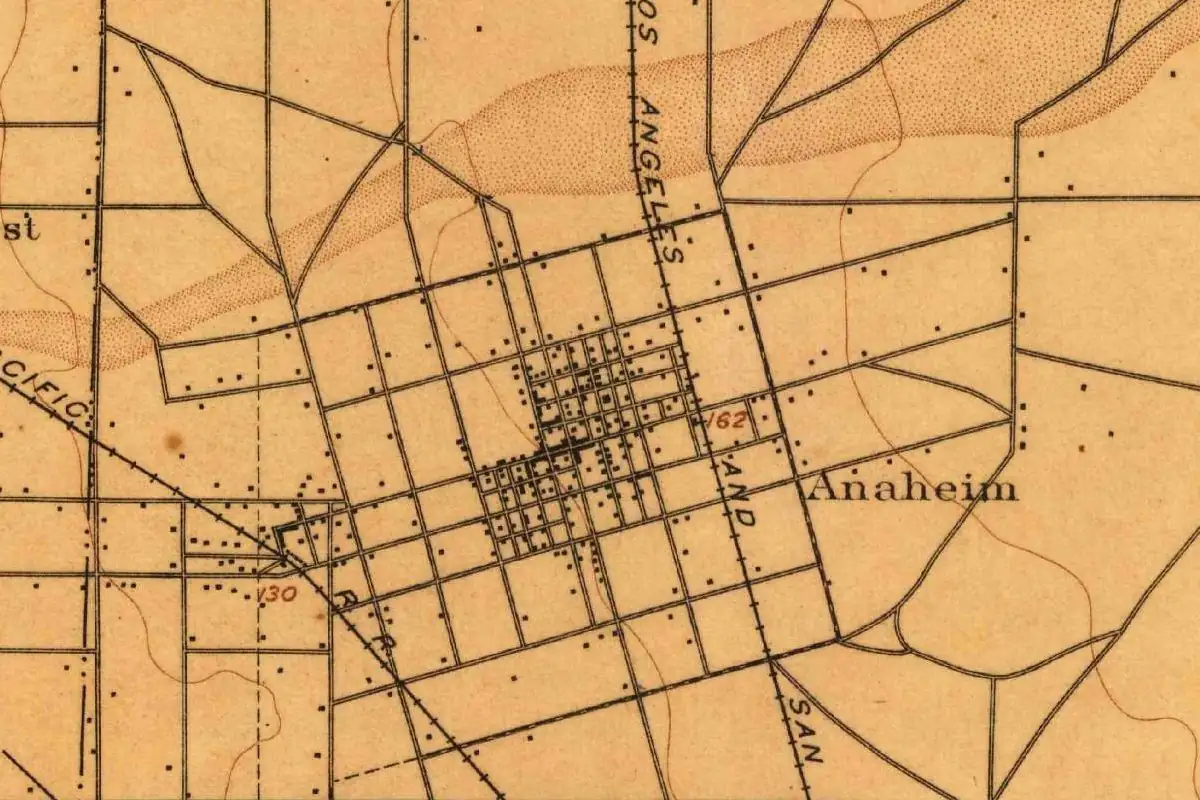
Anaheim, California, is a German “home” on the Santa Ana River, not a tribute to the baby named Anna that a 1905 government book gave the credit to. The colonists who founded it took Ana from the river, added heim, the German word for home, and voted the name in from San Francisco before most of them had ever lived there.
A vineyard home for San Francisco Germans
In 1857, several Germans living in San Francisco came up with a plan: buy land together, cut it into small farms, plant them all in grapes and let one manager run the place until the vines were bearing. That’s how Thompson & West’s 1880 History of Los Angeles County tells it. Fifty of them joined. They organized as the Los Angeles Vineyard Society (some papers of the day and later histories call it the Vineyard Company), and George Hansen, a surveyor from Los Angeles, picked and laid out the land: 1,165 acres about 28 miles (45 km) southeast of the city, at two dollars an acre.
The idea of a “home” was there from the start. In March 1857, H. D. Barrows wrote to the San Francisco Bulletin that a company made up mostly of Germans was talking about a big vineyard “either at Santa Ana or on the San Gabriel.” What they wanted, he said, was “a future vineyard home, to which, after a few years, they propose to retire and live permanently.” Work on the land started that September. It was one of the earliest farm colonies in California, and its members were mostly tradesmen: carpenters, blacksmiths, watchmakers, a brewer, a poet. Not one was a farmer.
The vote at Leutgen’s Hotel
The name was settled in San Francisco, not at the vineyard. On January 15, 1858, the San Francisco Alta reported that the stockholders of the Los Angeles Vineyard Society had met on the evening of January 13 at Leutgen’s Hotel on Montgomery Street. “They resolved to give the name of Anaheim to their vineyard in the Santa Ana valley, in Los Angeles county.” The land was still part of Los Angeles County then; Orange County came later.
Who came up with it? Lucile E. Dickson, who wrote up the colony’s founding for the Historical Society of Southern California in 1919, says the stockholders voted for Anaheim “following a suggestion by Mr. T. E. Schmidt,” because “they were to have a home near the Santa Ana.” Samuel Armor’s 1921 History of Orange County agrees in its biography of Theodore E. Schmidt, one of the company’s chief promoters: “the name of the embryo town was the suggestion of Mr. Schmidt.”
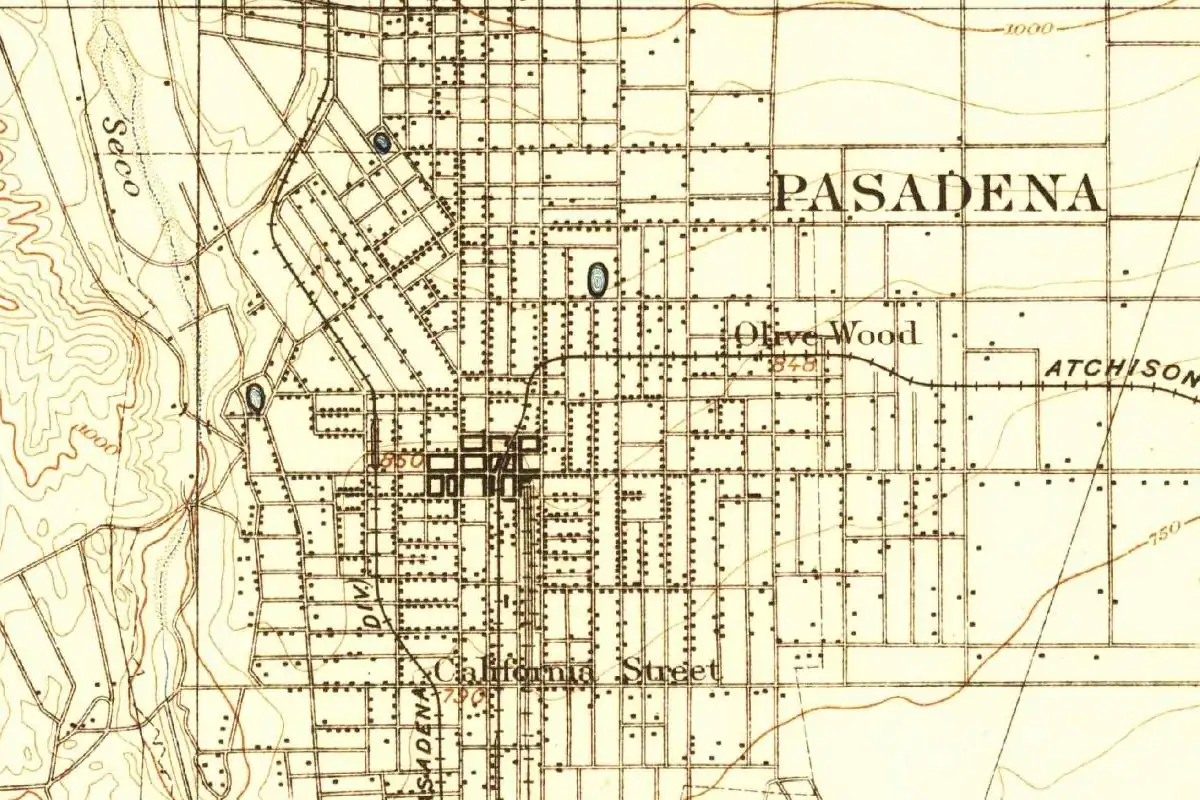
A couple of weeks after the meeting, Barrows was spelling it out for his readers. “A wide-awake town seems likely to spring up at Anaheim,” he wrote on January 31, 1858, “or Ana Home.” Armor put it the same way: heim from the German, Ana from the Spanish, “Home by the Santa Ana River.” Nearly two decades later, in 1875, the colonists at Pasadena would put their own colony’s name to a vote, too.
Was it really for Anna Fischer?
So where does the baby come in? Henry Gannett’s The Origin of Certain Place Names in the United States, published by the U.S. Geological Survey, says Anaheim was “Named for Anna Fischer, the first child born in the settlement, and heim, the German word for ‘home.’” That line first shows up in the 1905 edition. The 1902 edition doesn’t have an entry for Anaheim at all.
Dickson had heard the story, and she turned it around. “It has been claimed that it was so named in honor of a child of one of the stockholders who was called Anna,” she wrote in a footnote. But the river version was vouched for by Amelia Frohling, the last survivor of the original company, and Dickson found “a similar account” in the Anaheim Gazette of December 2, 1870. Then she added the twist: “It is true, however, that the first child born in Anaheim, the daughter of Mr. and Mrs. Fischer, was called Anna in honor of the town.”
The dates are worth a look. The name was chosen in San Francisco in January 1858, only four months after work on the land began, and Dickson has the first colonists landing at San Pedro in September 1859. None of these sources gives Anna Fischer’s birth date, though, so you can’t settle it with a birth certificate. What you can say is that the two earliest records, both from 1858, put the vineyard in the Santa Ana valley and call it “Ana Home,” with no word about a child.
Campo Aleman
Not everybody used the new name. Dickson says “the natives” called the colony “Campo Aleman,” and Armor makes that “the native Californians,” who knew it as the German camp. It wasn’t a bad description. Hansen fenced the whole tract with 40,000 willow poles, and Armor says the poles took root until the colony was “surrounded by a living willow wall.”
Some German settlers simply reused the name of a town they’d left behind; that’s how Minden, Nebraska got its name. The same year the Vineyard Society was organizing, another group of Germans headed out from Davenport, Iowa, to found Grand Island, Nebraska, and borrowed the name of an island in the Platte. The Anaheim group built something new instead, half Spanish and half German, out of a river they’d only just bought land near. The willow wall is long gone, and so are the vineyards, but the Santa Ana, about three miles (5 km) from the colony by Dickson’s count, is still there, and the name still points you right to it.
Quick answers
What does Anaheim mean?
Roughly “home by the Santa Ana.” The colonists joined Ana, from the Santa Ana River, to heim, German for home, and in January 1858 H. D. Barrows was already calling it “Ana Home.”
Was Anaheim named after Anna Fischer?
No, according to the colony’s own early accounts. Gannett’s 1905 book says it was, but Lucile Dickson wrote in 1919 that the Fischer baby was named Anna in honor of the town, and the 1858 newspaper reports reprinted in an 1880 county history say nothing about a child.
Who named Anaheim, and when?
The stockholders of the Los Angeles Vineyard Society, at a meeting in San Francisco on January 13, 1858. Dickson and Armor’s 1921 county history credit the suggestion to Theodore E. Schmidt.
Why was Anaheim called Campo Aleman?
Because it was the German colony. Campo Aleman means German camp, and Armor says that’s what “the native Californians” called it.
Key dates
- 1857San Francisco Germans form the Los Angeles Vineyard Society, and work on the land starts in September.
- 1858January 13: the stockholders meet at Leutgen's Hotel in San Francisco and resolve to call their vineyard Anaheim.
- 1859September: the first colonists land at San Pedro and head for their new home.
- 1905Gannett's place-name book says the town was named for Anna Fischer, the first child born there.
- 1919Lucile Dickson writes that it was the other way around: the Fischer baby was named Anna for the town.
Getting there
The closest airports, Amtrak stations and intercity bus stops, measured in a straight line from the center of Anaheim.
Airports
- John Wayne/Orange County (SNA) Santa Ana 11 mi 18 km
- Long Beach (Daugherty Field) (LGB) 14 mi 22 km
Amtrak trains
- Fullerton station (FUL) 2 mi 4 km
- Anaheim station (ANA) 3 mi 5 km
Intercity buses
- Rapid Connection Anaheim (Marketplace) 2 mi 3 km
- Amtrak Chartered Vehicle Amtrak Connecting Service · Fullerton Amtrak Station 2 mi 4 km
- Gold Runner Fullerton 2 mi 4 km
Distances are as the crow flies, not by road. We don't list schedules or fares because they change; check with the airline, Amtrak or the bus company before you go. Official data (FAA commercial service airports (2025), FAA airport locations, Amtrak stations and Intercity Bus Atlas) from the FAA and the U.S. Bureau of Transportation Statistics, checked Oct 31, 2026.
Historical Sources & References
- Thompson & West, History of Los Angeles County, California (1880), pp. 155-156. Reprints Barrows’s March 25, 1857, letter about a “future vineyard home”; the Alta report of January 15, 1858, on the January 13 meeting at Leutgen’s Hotel that gave the vineyard the name Anaheim; Barrows’s “Anaheim, or Ana Home” of January 31, 1858; and the founding of the Los Angeles Vineyard Society in 1857, with Hansen’s 1,165 acres at two dollars an acre. We read the printed page images.
- Lucile E. Dickson, “The Founding and Early History of Anaheim, California,” Annual Publication of the Historical Society of Southern California, vol. 11 (1919), pp. 26-37. The colony as the first successful one of its kind in the state apart from a Mormon colony at San Bernardino; Los Angeles County still including today’s Orange County; credits T. E. Schmidt with the suggestion and gives the “home near the Santa Ana” reason; the footnote on the Anna story and the Fischer baby named for the town; “Campo Aleman” as “the natives” called it; the colony about three miles from the Santa Ana; the first colonists’ arrival in September 1859; and Amelia Frohling as the last of the original company.
- Samuel Armor, History of Orange County, California (1921). “Home by the Santa Ana River,” the 40,000 willow poles and “Campo Aleman” (pp. 53-55); Theodore E. Schmidt’s biography and his suggestion of the name (p. 629, repeated on p. 789).
- Henry Gannett, The Origin of Certain Place Names in the United States, 2nd ed. (USGS Bulletin 258, 1905), p. 24. The Anna Fischer version. Also online: the 1902 first edition (USGS Bulletin 197), which has no entry for Anaheim.
- GNIS feature 1652663 (U.S. Geological Survey). The federal record and coordinates for Anaheim, in Orange County.
Spot something wrong, or know more? Tell us here. You can also email us or use our contact page. Corrections are noted here with their date, never made silently.