Los Angeles, California: What's Left of a Very Long Name
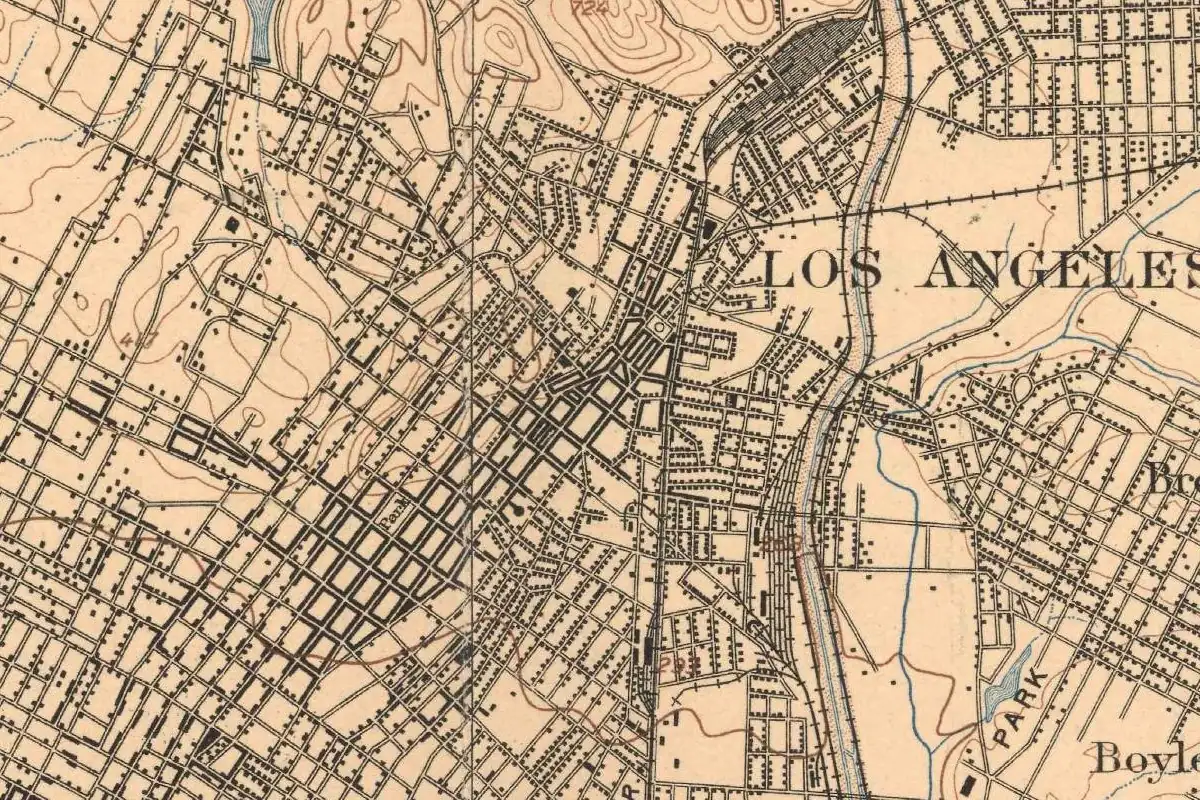
Los Angeles, California, is what’s left of a much longer Spanish name, one that honored the Virgin Mary as Our Lady, Queen of the Angels. Henry Gannett’s 1905 place-name book for the U.S. Geological Survey boils it down to “A Spanish name meaning ‘the angels,’” and that part nobody argues about. How long the original name really was, and whether it goes back to a river and a feast day twelve years before the town, are older arguments.
Crespí’s river, August 2, 1769
The first Spanish name here went on a river. A land expedition under Gaspar de Portolá left San Diego on July 14, 1769, headed for Monterey Bay, and one of its two Franciscans, Fray Juan Crespí, kept the diary. Fray Francisco Palóu, who copied the whole thing into his history of the missions, says Crespí wrote it at Father Junípero Serra’s request.
On August 1 the party stayed put in the San Gabriel Valley, east of the river. Crespí says it was a rest day, to scout the country “and above all” to gain the jubilee of “Nuestra Señora de los Angeles de Porciúncula,” Our Lady of the Angels of the Porciúncula. Both friars said Mass. The ground shook three times that day.
The next morning they went west through a gap between low hills and came into a wide valley full of cottonwoods and alders, with “un hermoso rio,” a beautiful river, running through it. A dry riverbed came in from the north-northeast. “We stopped not very far from the river, to which we gave the name of Porciuncula,” Crespí wrote, in the English that Guinn printed. Three more earthquakes hit that afternoon and night. He thought the plain was the best place they’d seen for a mission, with everything needed for “a large town.”
So what’s a Porciúncula? J. M. Guinn, a Los Angeles historian, explained that it’s a hamlet in Italy, near the little church of Our Lady of the Angels where St. Francis of Assisi was praying when that jubilee was granted to him. The Franciscans kept the feast on August 1, the day before the river got its name.
The expedition’s engineer, Miguel Costansó, tells it a little differently in his own diary: they stopped at a spot “which was named La Porciúncula,” and the next morning they forded the Río de la Porciúncula. Coming back the following January, Portolá wrote that they crossed “the river which is called the Porciúncula.” The name stuck to the river, the whole feast-day title and all: Palóu’s report on the missions at the end of 1773, as Bancroft sums it up, placed Mission San Gabriel “a league and a half east of the River Nuestra Señora de Los Angeles de Porciúncula.”
Queen of the Angels, 1781
Nobody built a town for another twelve years. Governor Felipe de Neve wanted farming pueblos to feed the soldiers. San José, the first pueblo in California, went up in the north in 1777, and a second was planned for the south, on the Porciúncula.
H. H. Bancroft, whose History of California came out in the 1880s, went through the planning papers. Neve’s regulation of 1779 called for another pueblo “on the Rio Porciúncula and called Nuestra Señora de los Angeles.” Instructions dated December 27, 1779, sent Fernando de Rivera y Moncada to recruit settlers in Sinaloa and Sonora “for the new pueblo on the Rio Porciúncula to be called Queen of the Angels.” On August 26, 1781, at Mission San Gabriel, Neve issued his instructions for founding “the pueblo of La Reina de los Angeles.”
Bancroft says the pueblo was founded on September 4, 1781, with twelve settler families, forty-six people in all. Guinn thinks one of the twelve never made it past Loreto, in Baja California. His account describes a Mass, a procession around the plaza, and women carrying a banner “with the image of our Lady the Queen of the Angels.”
The settlers weren’t the first people on that ground. Charles Dwight Willard’s 1901 history for the Los Angeles Herald calls it the spot “which the Indians called Yang-na,” and the Smithsonian’s Handbook of American Indians lists Yangna as a Gabrieleño village “formerly on the site of Los Angeles.” Neither source says what Yangna means, and we won’t guess.
Did the feast day name the town?
Here’s where the old histories split. Both sides agree the lady in the name is the Virgin Mary as Our Lady of the Angels. What they argue about is whether the town inherited its name from Crespí’s feast day or got it fresh in Neve’s plans.
The 1769 version
Willard says the spot was named in 1769 from the feast day, Nuestra Señora de los Angeles, and that when Neve founded a town there, “he prefixed the word ‘Pueblo’ to the title already on record.” Ora A. Lovejoy’s 1918 study of Southern California place names tells it the same way. Even Guinn, in his 1915 history, allowed that the old name of the area “may have influenced” Neve to put the pueblo there.
Guinn’s doubt
Writing for the Historical Society of Southern California around 1906, Guinn took the other side. “Most of the historians who have written on the subject claim that Portola’s expedition named the site upon which the pueblo of Los Angeles was founded,” he wrote. “This I doubt.” The feast was kept on August 1, nine or ten miles (14 to 16 km) from the future pueblo, and the expedition didn’t cross the site until August 3. Crespí’s own dates match that: a rest day on the 1st, camp near the river on the 2nd, a ford on the 3rd. Guinn’s idea was that Neve, having named San José for St. Joseph, named the second pueblo for Joseph’s wife, “Santa Maria, Queen of the Angels.”
You can see why it’s hard to settle. Costansó does say the 1769 campsite was named La Porciúncula, but the 1779 papers use Porciúncula for the river and a different title for the town. None of the sources we read has a document in which Neve explains the choice.
So how long was the name?
You’ll see a few different “official” names for early Los Angeles, and the records don’t pick one. Guinn gives the full name as El Pueblo de Nuestra Señora la Reina de los Angeles and says it “was seldom used. It was too long for everyday use.” He found the town in the records as El Pueblo de Nuestra Señora de los Angeles, El Pueblo de la Reina de los Angeles and El Pueblo de Santa María de los Angeles. Mostly people just called it El Pueblo, the town.
In his 1906 article Guinn put it another way: “In the early official documents it was always written El Pueblo Nuestra Señora de Los Angeles.” Willard, on the other hand, called El Pueblo de Nuestra Señora la Reina de los Angeles the full title, “used only on official documents.” By the years just before the American conquest, Guinn adds, legal papers had boiled it down to plain Angeles.
The longest versions turn up later. Lovejoy wrote in 1918 that the pueblo was to be known as “Nuestra Senora la Reina de los Angeles de Porciuncula.” John Steven McGroarty’s 1923 county history went further and gave the “original name” as “Pueblo del Rio de Nuestra Senora La Reina de Los Angeles de Porciuncula.” In the 1779-1781 papers Bancroft quotes, though, the Porciúncula is the river, not part of the town’s name.
The Villa Victoria that never was
In 1827 the town nearly got a new name. According to Bancroft, on July 13 California’s territorial assembly, the diputación, approved asking the government in Mexico City to rename the Pueblo de Los Angeles “in order to distinguish the latter from the city of Puebla de Los Angeles, capital of the state of Puebla.” The new name was to be Villa Victoria de la Reina de Los Angeles. The same proposal would’ve renamed the whole territory Moctezuma.
“So far as the records show,” Bancroft wrote, “no attention was paid to this proposition in Mexico.” Willard figured the point was to call the town Victoria in everyday use. It stayed Los Angeles.
A county promised “a life of Angels”
The river took longer to change. Guinn says it’s uncertain when the Río Porciúncula became the Río Los Angeles, and “the change no doubt was gradual.” In April 1850 a state Senate committee chaired by General M. G. Vallejo, the same man the city of Vallejo is named for, explained the names of California’s new counties, and it still put the city on the right bank of the “Porciuncula” river. The committee admitted it had worked “almost entirely upon recollection and upon oral information,” but it was clear on one point: Los Angeles County “derives its name from the City of Los Angeles.” The federal place-name record says the city itself was incorporated on April 4, 1850.
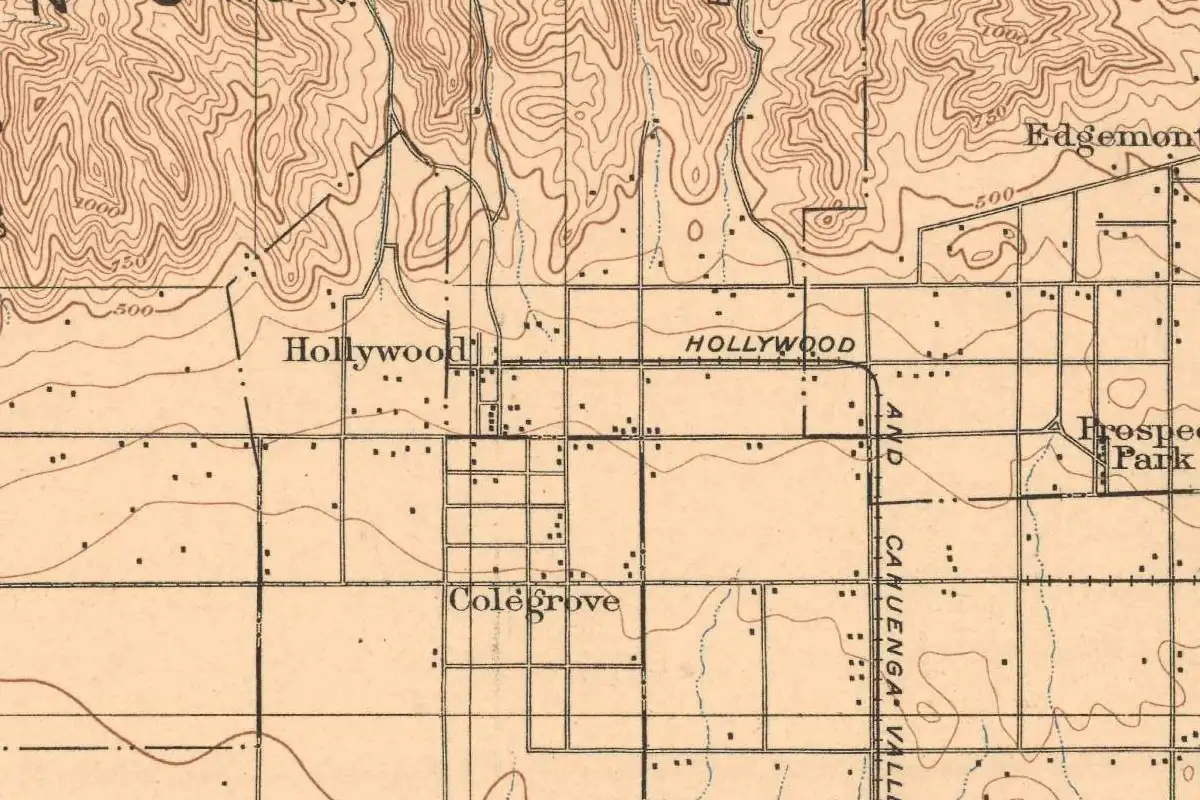
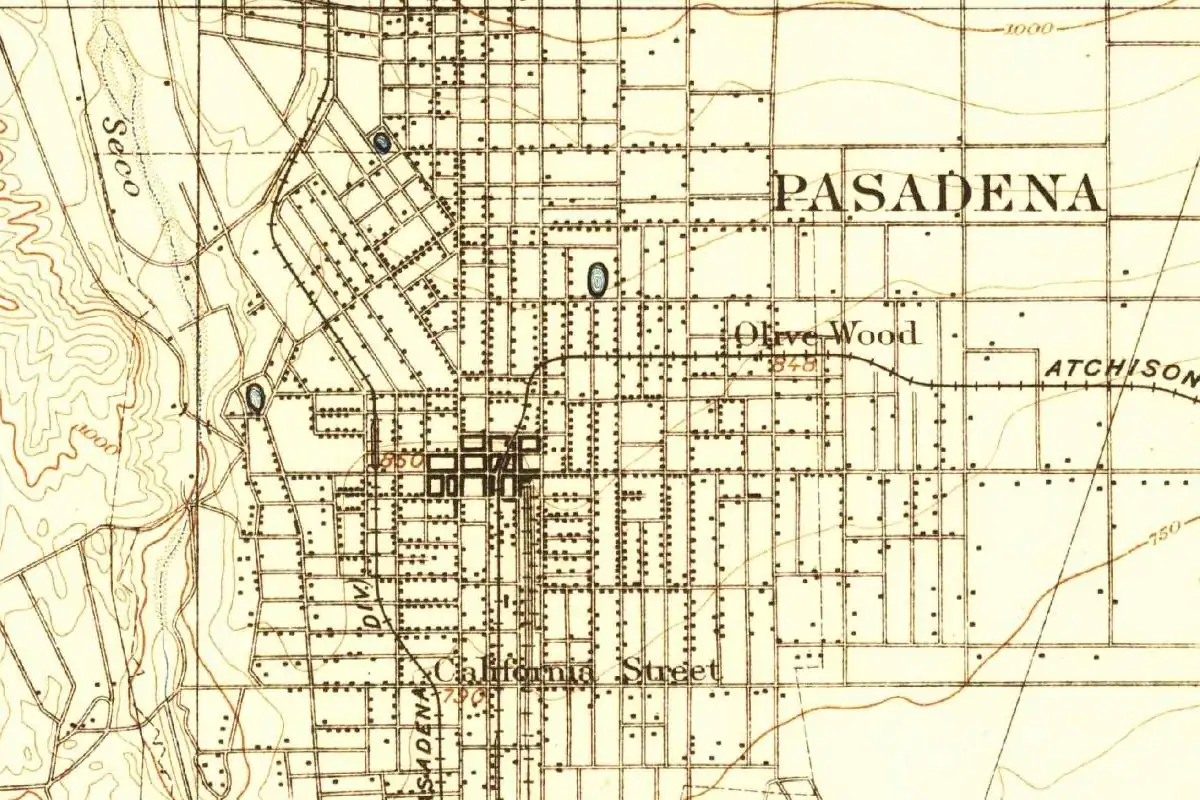
The county named for the city takes in other places with name stories of their own, like Pasadena and Hollywood. Hollywood was a separate city until 1910, when its voters chose 409 to 18 to join Los Angeles, Guinn reports. Vallejo’s report had a forecast for the county, too: many men of business, it said, would “retire there to enjoy a life of Angels.”
Guinn, for his part, wished the Americans had kept the habit of those last Mexican legal papers and dropped the “Los.” “It would have given its present inhabitants less name to murder in pronunciation,” he wrote.
Quick answers
What does Los Angeles mean in English?
“The angels.” That’s how Gannett’s 1905 place-name book translates it, and the angels come from the title of the Virgin Mary that the pueblo honored, Our Lady, Queen of the Angels.
What was the full original name of Los Angeles?
It depends on the document. Guinn gives El Pueblo de Nuestra Señora la Reina de los Angeles, but the early records also say Nuestra Señora de los Angeles, La Reina de los Angeles and Santa María de los Angeles. Versions ending in “de Porciúncula” show up in histories from 1918 and 1923, while the 1779 plans Bancroft quotes use Porciúncula for the river.
Did the Portolá expedition name Los Angeles?
Not exactly, and historians disagree on how much credit it gets. Crespí named the river Porciúncula on August 2, 1769, after the feast of Our Lady of the Angels of the Porciúncula, and Willard (1901) said the town’s name came from that feast day. Guinn doubted it and argued that Neve named the 1781 pueblo for the Queen of the Angels himself.
What is the Porciúncula?
A hamlet in Italy, near the little church of Our Lady of the Angels where St. Francis was praying when the jubilee was granted to him, Guinn explains. In 1769 Crespí gave its name to the river now called the Los Angeles River.
Key dates
- 1769August 2: the Portolá expedition camps near a river that Fray Juan Crespí names the Porciúncula.
- 1770January: on the way back, Portolá crosses "the river which is called the Porciúncula."
- 1779Neve's regulation plans a pueblo on the Río Porciúncula called Nuestra Señora de los Ángeles.
- 1781September 4: the pueblo is founded, nine days after Neve's instructions for La Reina de los Ángeles.
- 1827July 13: California's assembly asks Mexico to rename the town Villa Victoria de la Reina de los Ángeles.
- 1850April: a state Senate report says Los Angeles County takes its name from the city.
- 1906J. M. Guinn doubts that the 1769 expedition named the site of the town.
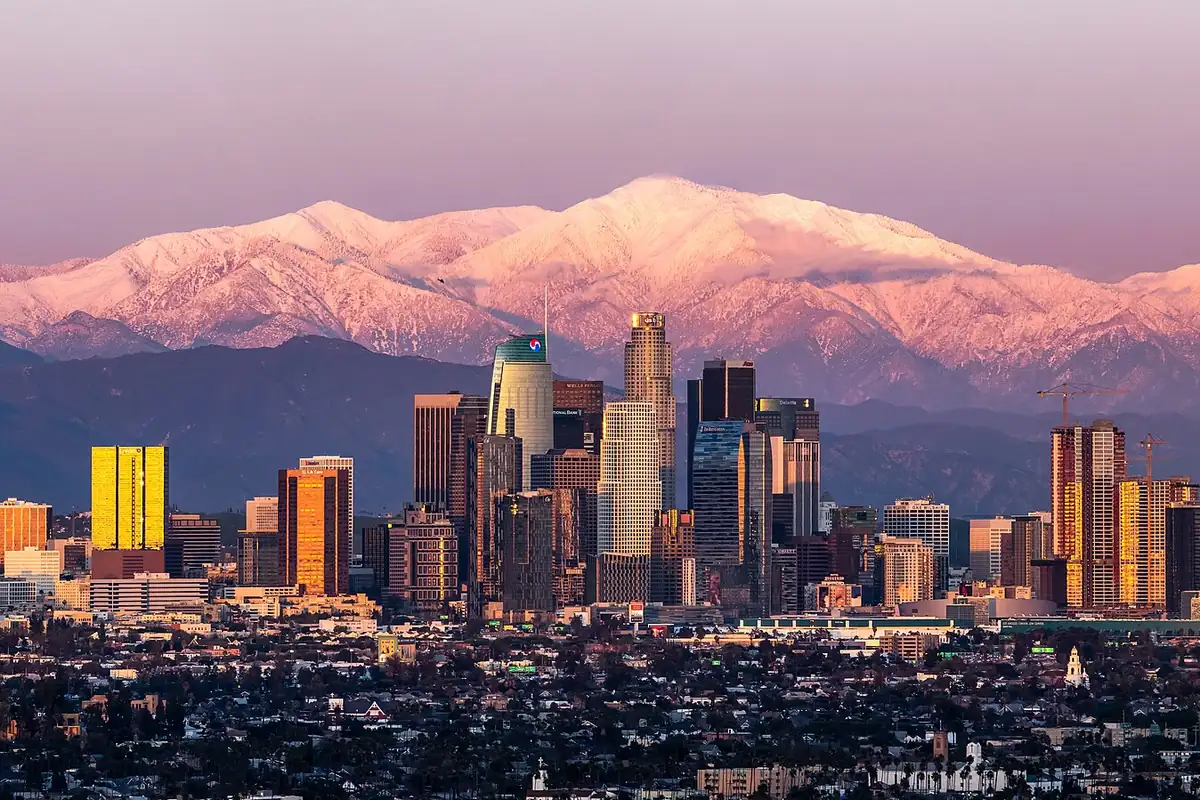
Getting there
The closest airports, Amtrak stations and intercity bus stops, measured in a straight line from the center of Los Angeles.
Airports
- Los Angeles International (LAX) 12 mi 19 km
- Hollywood Burbank (BUR) 12 mi 20 km
Amtrak trains
- Los Angeles station (LAX) under 1 mi 0.8 km
- Glendale station (GDL) 5 mi 8 km
Intercity buses
- Gold Runner Los Angeles under 1 mi 0.8 km
- Alvand Transportation Amtrak Connecting Service · Los Angeles under 1 mi 0.8 km
- Amtrak Chartered Vehicle Amtrak Connecting Service · Los Angeles under 1 mi 0.8 km
Distances are as the crow flies, not by road. We don't list schedules or fares because they change; check with the airline, Amtrak or the bus company before you go. Official data (FAA commercial service airports (2025), FAA airport locations, Amtrak stations and Intercity Bus Atlas) from the FAA and the U.S. Bureau of Transportation Statistics, checked Oct 31, 2026.
Historical Sources & References
- Francisco Palóu, Noticias de la Nueva California, vol. 2 (1874). The Spanish text of Fray Juan Crespí’s diary as Palóu copied it, with the July 14, 1769, departure from San Diego and Crespí as the diarist (pp. 97-100), and the entries for August 1-3, 1769: the jubilee of “Nuestra Señora de los Angeles de Porciúncula,” the river “que nombramos de Porciúncula,” the three earthquakes and the spot fit for “una grande poblacion” (pp. 122-124). The English quotations of Crespí come from Guinn’s 1915 translation or are our own.
- The Portolá Expedition of 1769-1770: Diary of Miguel Costansó (1911), pp. 20-21. The engineer’s version of August 2-3, in Spanish and English: the place “which was named La Porciúncula” and the ford of the Río de la Porciúncula.
- Diary of Gaspar de Portolá During the California Expedition of 1769-1770 (1909), pp. 48-49. Portolá crossing “the river which is called the Porciúncula” on the return trip in January 1770.
- H. H. Bancroft, History of California, vol. 1 (1884). The August 2 ford (p. 146); Palóu’s 1773 report naming the River Nuestra Señora de los Angeles de Porciúncula (p. 200); San José in 1777, “the first in California” (p. 312); the 1779 regulation (p. 335); the December 27, 1779, instructions for a pueblo “to be called Queen of the Angels” (p. 339); Neve’s instructions of August 26, 1781, and the founding on September 4 (pp. 344-345).
- H. H. Bancroft, History of California, vol. 3 (1886), p. 38. The assembly’s 1827 proposal for Villa Victoria de la Reina de Los Angeles and Moctezuma, and Mexico’s silence. Also online: vol. 2 (1886), pp. 563-564, which credits the idea to Juan Bandini.
- J. M. Guinn, A History of California and an Extended History of Los Angeles and Environs, vol. 1 (1915). San José in 1777 and the pueblo planned as “Reyna de Los Angeles” (pp. 73-74); the founding ceremony and the settler left at Loreto (p. 76); Crespí’s diary in English, the Porciúncula explained, the full name and its variants, and the river’s gradual change of name (p. 77); Hollywood’s 1910 vote (p. 364).
- J. M. Guinn, “Some California Place Names,” Annual Publication of the Historical Society of Southern California, vol. 7 (1906), pp. 39-41. “This I doubt”: Guinn’s case that the 1769 expedition didn’t name the site, plus “El Pueblo Nuestra Señora de Los Angeles” in early documents, plain “Angeles” before the conquest and the line about pronunciation.
- Charles Dwight Willard, The Herald’s History of Los Angeles City (1901). The feast-day version, Yang-na, and Neve adding “Pueblo” to the name on record (pp. 45-46), and the full title “used only on official documents” plus the 1827 Villa Victoria plan (pp. 168-169).
- Ora A. Lovejoy, “A Study of Southern California Place Names,” Annual Publication of the Historical Society of Southern California, vol. 11 (1918), p. 47. The feast-day version and a long name ending in “de Porciuncula.”
- John Steven McGroarty, ed., History of Los Angeles County, vol. 1 (1923), pp. 8-9. The longest version we found, “Pueblo del Rio de Nuestra Senora La Reina de Los Angeles de Porciuncula,” and a reprint of the 1850 county report.
- Report of M. G. Vallejo’s committee on the names of the counties (April 1850), Senate appendix, pp. 522-525. Signed “M. G. Vallejo, Chairman.” Los Angeles County named from the city on the “Porciuncula” river, and “a life of Angels.”
- Frederick Webb Hodge, ed., Handbook of American Indians North of Mexico, part 2 (1910), p. 988. Yangna, “A Gabrieleño rancheria formerly on the site of Los Angeles.” No meaning given for the name.
- Henry Gannett, The Origin of Certain Place Names in the United States (USGS, 1905), pp. 190, 308. “A Spanish name meaning ‘the angels.’” The same book has the city of Vallejo “named for Gen. Mariano G. Vallejo” (p. 308).
- GNIS feature 1662328 (U.S. Geological Survey). The federal record for Los Angeles, with its coordinates and the incorporation date, April 4, 1850.
Spot something wrong, or know more? Tell us here. You can also email us or use our contact page. Corrections are noted here with their date, never made silently.