Roseville, California: A Railroad Junction's Rosy Name
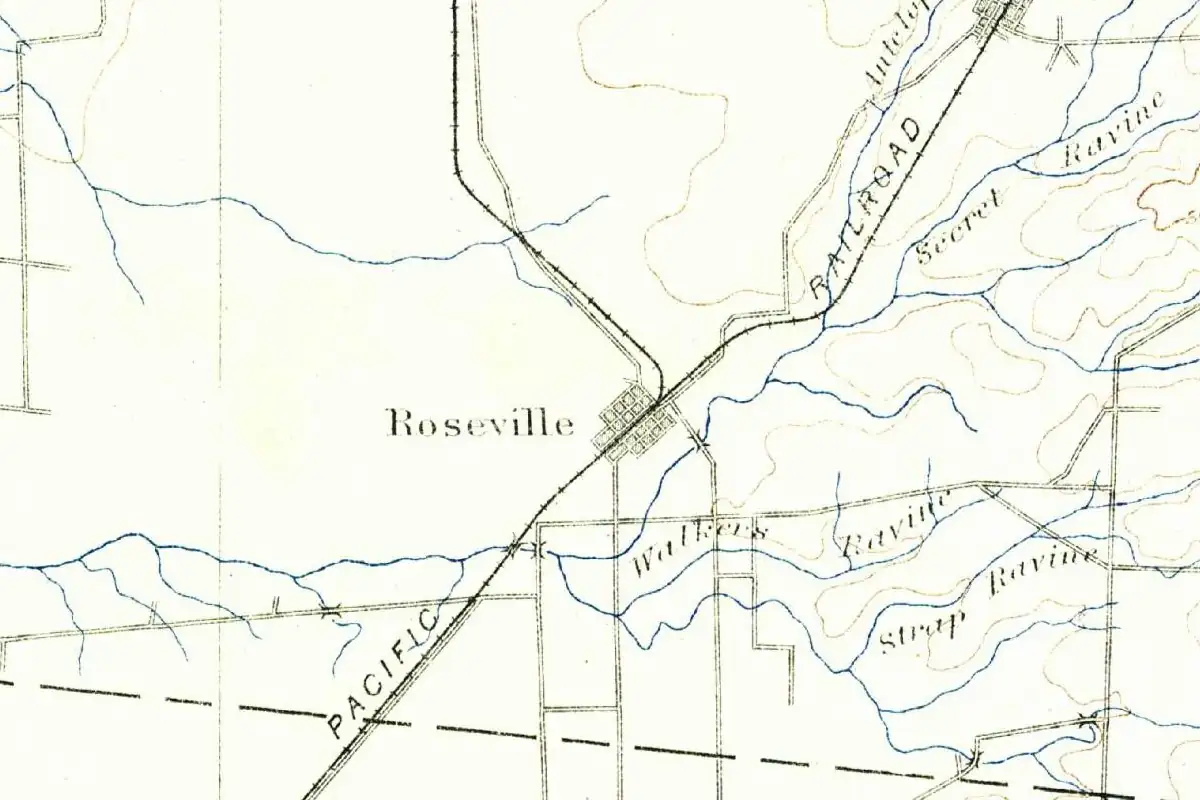
Roseville, California, started in 1864 as a spot the railroad simply called Junction, and nobody agrees on where the rose in its name came from. The city’s own historian lists five stories and picks the one about flowers.
A place called Junction
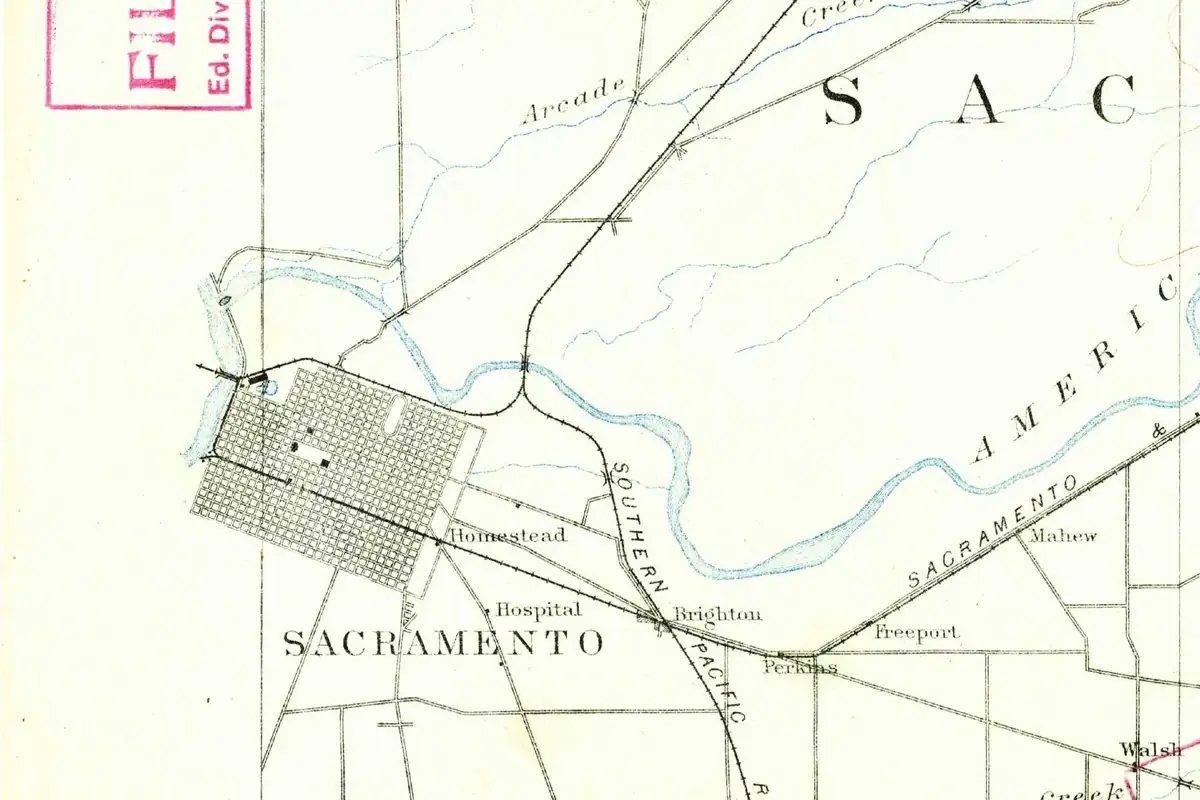
The Central Pacific, which would become the western part of the first transcontinental railroad, built its line out of Sacramento, and its first 18 miles (29 km) of track ended at Tobias Grider’s old ranch, where it crossed the California Central, a line running from Folsom toward Lincoln. The two railroads met on January 29, 1864, writes Leonard “Duke” Davis, a founder of the Roseville Historical Society, in the history the city publishes, and “the place where the two railroads crossed was then appropriately designated as ‘Junction’ on railroad maps.”
The first trip came on April 6, 1864, when the locomotive Governor Stanford carried passengers out to “Junction.” By April 26, trains ran there daily. On August 13, 1864, a Sacramento businessman named O. D. Lambard laid out a town on both sides of the tracks. It was, Davis says, “a new, but largely paper, city,” with no buildings at all at first.
Five stories about a rose
Davis gives every version he found. The town was named for nearby Rose Springs, or the ranch of that name. Or it honored a Rose Maberry, “who supposedly was born on the site.” Or railroad men argued over “the charms of a pretty waitress called Rose.” Or, by the account of the pioneer Walter F. Fiddyment, who “admittedly was not present,” people held a picnic to pick “a better name than Junction” and chose the most beautiful girl there, named Rose.
The fifth story is the one Davis likes best. Cassie Tomer Hill, one of the town’s earliest residents, said the name came from “the many wild roses which grew profusely in ravines in and around town.” Davis points to early newspapers that mention all the wild flowers around Roseville. You can take your pick, but notice that he calls it only “the most acceptable explanation,” not a proven one.
What’s certain is when the name shows up. The first newspaper mention of Roseville, Davis says, came in November 1864, when the people “of Roseville and vicinity” cast 29 votes for Abraham Lincoln and 17 for George McClellan.
Still “Junction” to the brakemen
The old name hung on. Thompson & West’s History of Placer County, published in 1882, says that in 1866 the California Central ran “from Roseville Junction to Lincoln.” Railroad men, Davis writes, had little use for “Roseville or ‘Roseville Junction,’ as they still called it,” and they weren’t impressed with the little depot. Brakemen wrote “JUNK shun” in their logbooks and leaned on the first syllable when they called out the stop, until orders came from San Francisco to quit it.
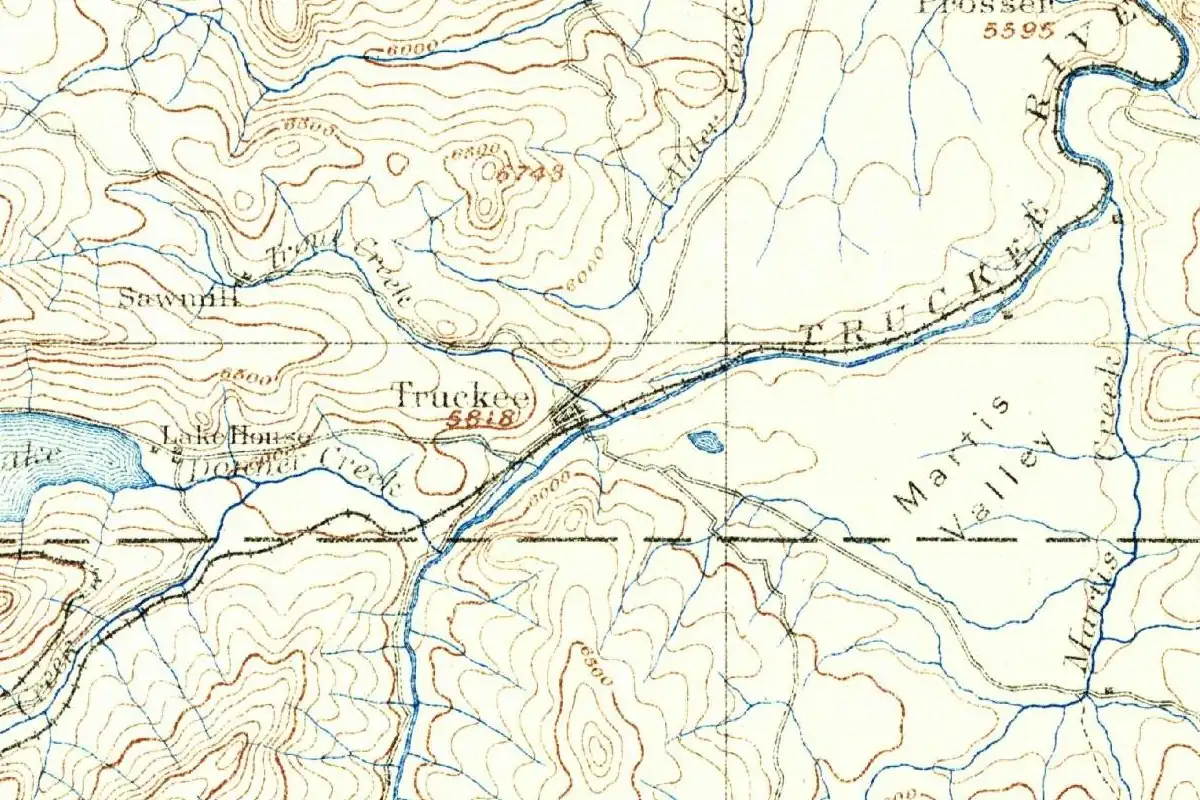
Roseville had to wait for the big railroad jobs. The Central Pacific put its roundhouse at Rocklin, a few miles up the line, where the climb into the Sierra Nevada begins. It wasn’t until 1906, Davis writes, that a two-year move of the terminal facilities from Rocklin to Roseville began. The town incorporated in April 1909. If you’re heading up that same line into the mountains, the next big railroad town is Truckee.
Quick answers
Why is it called Roseville, California?
Nobody knows for sure. The city’s historian, Leonard Davis, lists stories about Rose Springs, a Rose Maberry, a waitress named Rose and a picnic, and favors the wild roses that grew in the ravines around town.
What was Roseville’s first name?
Junction. The railroads marked the crossing of the Central Pacific and the California Central that way on their maps in 1864, and railroad men kept calling it Roseville Junction for years.
When was Roseville founded?
O. D. Lambard laid out the town on August 13, 1864, months after the two railroads met there. Roseville incorporated in April 1909.
Key dates
- 1864January 29: the Central Pacific meets the California Central at Grider's ranch, a spot marked "Junction" on railroad maps.
- 1864August 13: O. D. Lambard lays out a town at the junction.
- 1864November: Roseville appears by name in the newspapers, with its votes in the presidential election.
- 1906-1908The railroad moves its terminal facilities from Rocklin to Roseville.
- 1909April: Roseville incorporates.
Getting there
Open Roseville in Google Maps
Opens in a new tab. The pin is the center of Roseville in the USGS place-name record.
The closest airports, Amtrak stations and intercity bus stops, measured in a straight line from the center of Roseville.
Airports
- Sacramento International (SMF) 17 mi 27 km
- Stockton Metro (SCK) 59 mi 95 km
Amtrak trains
- Roseville station (RSV) under 1 mi 0.3 km
- Rocklin station (RLN) 4 mi 6 km
Intercity buses
- AVLN Amtrak Connecting Service · Roseville Amtrak under 1 mi 0.3 km
- Amtrak Chartered Vehicle Amtrak Connecting Service · Roseville Amtrak under 1 mi 0.3 km
- Greyhound Roseville Bus Stop under 1 mi 0.3 km
Distances are as the crow flies, not by road. We don't list schedules or fares because they change; check with the airline, Amtrak or the bus company before you go. Official data (FAA commercial service airports (2025), FAA airport locations, Amtrak stations and Intercity Bus Atlas) from the FAA and the U.S. Bureau of Transportation Statistics, checked Nov 6, 2026.
Sponsored
Staying in Roseville?
Compare hotels in Roseville, California, on Expedia.
See hotels in RosevilleWe may earn a commission if you buy through this link. It never changes what we write. Read our affiliate disclosure
Historical Sources & References
- Leonard “Duke” Davis, “History of Roseville” (City of Roseville). The junction of January 29, 1864, the first runs of April 1864, Lambard’s town of August 13, 1864, all five naming stories, the first newspaper mention in November 1864, the “JUNK shun” joke, the move from Rocklin starting in 1906 and incorporation in April 1909.
- Myron Angel, ed., History of Placer County, California (Thompson & West, 1882). The California Central running “from Roseville Junction to Lincoln” in 1866.
- GNIS feature 1659544 (U.S. Geological Survey). Roseville’s listing in the national gazetteer, which notes “Incorporated in 1909.”
Spot something wrong, or know more? Tell us here. You can also email us or use our contact page. Corrections are noted here with their date, never made silently.