Ames, Iowa: The Railroad Stop a Newspaper Wanted to Call Ditto
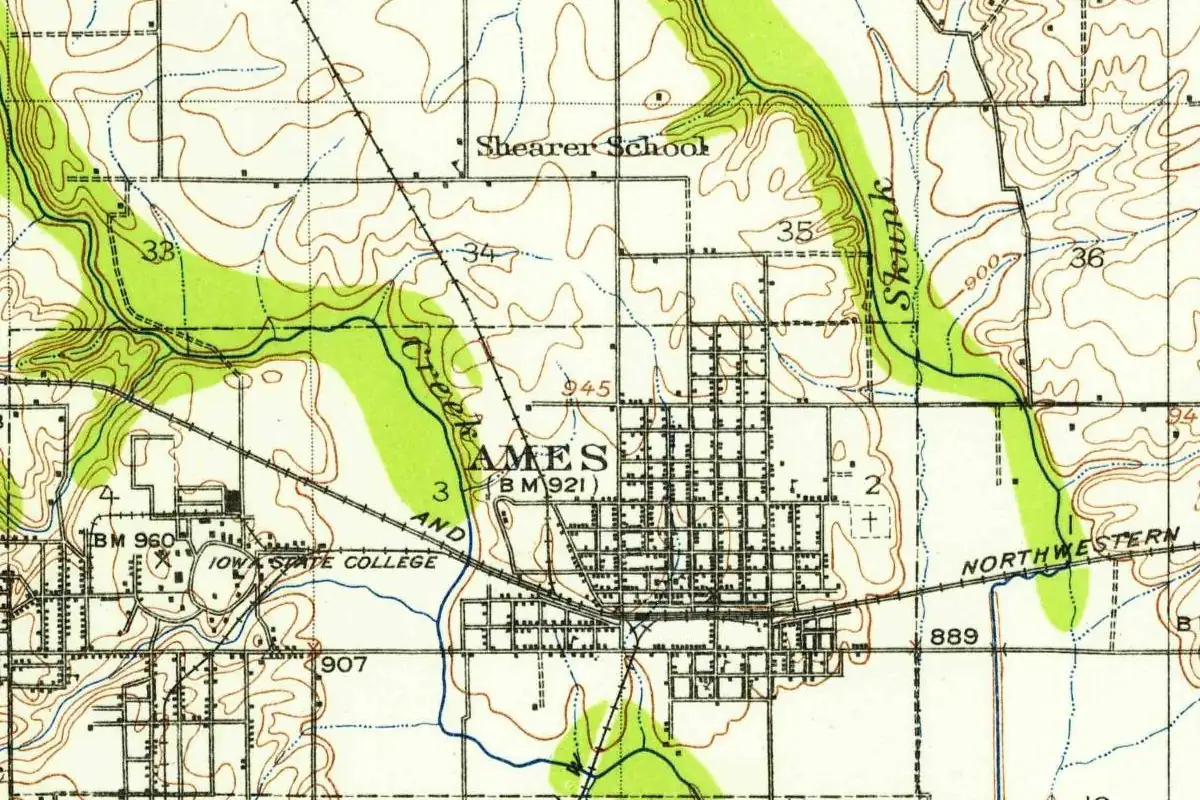
Before the railroad stop that became Ames, Iowa, had a name, a Story County paper joked that it should be called Ditto. The name it got instead honors Oakes Ames, a Massachusetts congressman who backed railroads in the West, and the man who picked it was his associate John I. Blair.
A depot near Sheriff Hoggatt’s farm
The railroad, later the Chicago & North Western, reached Nevada, the county seat, on July 4, 1864. W. O. Payne, who wrote the county’s history in 1911, says the next station west was “quite distinctly a little side enterprise of John I. Blair,” the railroad’s chief promoter. A woman named Mrs. Cynthia Duff showed up “with plenty of money” and bought a farm next to Sheriff Hoggatt’s, and the land ended up with people working for the railroad. Payne suspected the quiet was the point: with no hint of a town coming, land around there stayed cheap.
On October 19, 1864, the Ægis broke the news that the company would put its next depot on the Squaw Fork near the sheriff’s farm. “What name it will bear we have not learned,” the paper said, “but suggest the highly appropriate one of ‘Ditto,’ which has already the sanction of common usage in these parts.” Payne admitted, “The point of the joke about ‘Ditto’ is lost to us.” By November 30, the paper was writing about “Ames Station.”
A church bell from Massachusetts
William Stennett’s 1908 book on the North Western’s place names says Blair named the town for Oakes Ames “on account of his aid in the building of railroads in the West,” and that it was laid out in 1865. Henry Gannett’s 1905 list and the federal place-names record agree on Oakes Ames, in fewer words.
Payne knew of only one gift from Ames to the town that carried his name. When the Congregationalists put up the first church in 1865, he sent a bell. The congregation passed formal resolutions thanking “the Hon. Oakes Ames of Massachusetts” for “a first class church bell” and asked that a copy be sent to him. If you’ve ever wondered what a namesake owes a town, that’s one answer.
A pretty good man to name a town after
Ames’s name later landed in one of the big scandals of the century. Payne explains that he’d handed out stock in the Crédit Mobilier, the company building the Union Pacific, to public men, where, as Ames put it, “it would do the most good.” The House of Representatives censured him, and he died not long after.
Payne thought Ames got a raw deal and that he’d been made a scapegoat by politicians who were less frank than he was. You can make up your own mind on that, but the county historian’s verdict was short: “He was in fact a pretty good man to name a town after.”
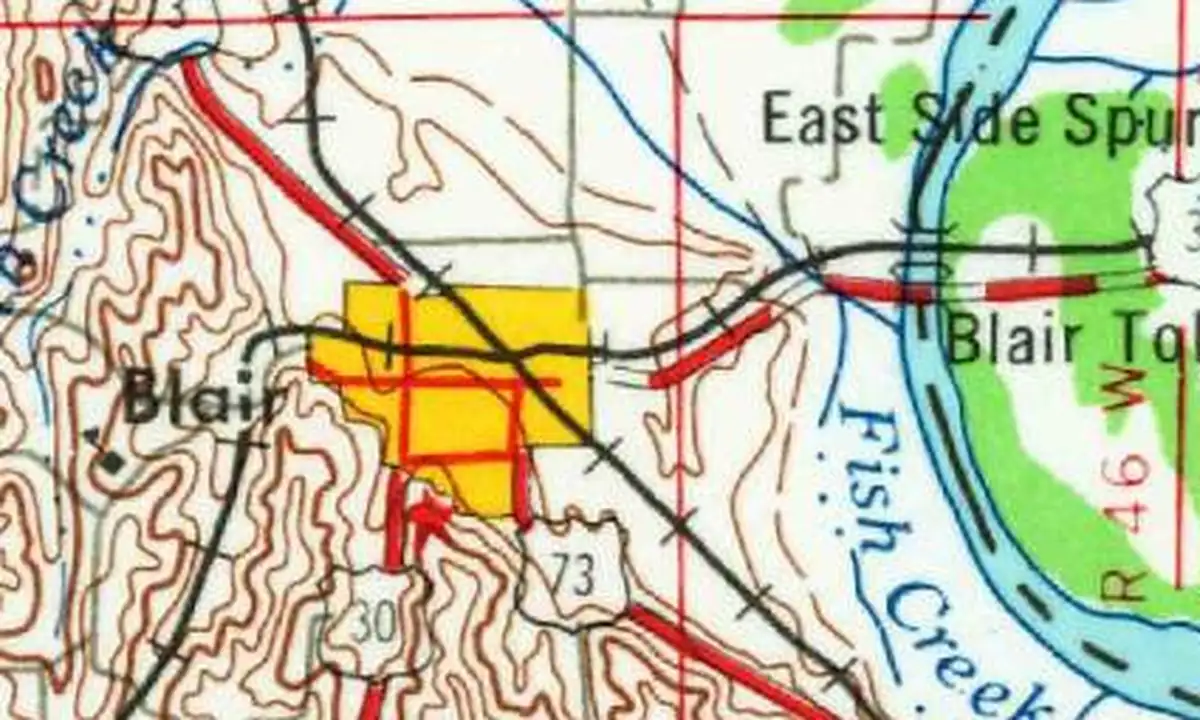
Blair, the New Jersey money man behind the railroad, got a town of his own, too: Blair, Nebraska.
Sources & further reading
- W. O. Payne, History of Story County, Iowa, vol. 1 (1911), pp. 267, 342-344. Blair as the New Jersey capitalist behind the line (p. 267); Blair’s “side enterprise,” Mrs. Duff’s land purchase, the Ægis items of October 19 and November 30, 1864, “Ditto,” the church bell and the resolutions, the Crédit Mobilier and Payne’s verdict.
- William H. Stennett, Place Names of the Chicago & North Western (1908), p. 37. Named by John I. Blair for Oakes Ames for his help building Western railroads; laid out in 1865.
- Henry Gannett, The Origin of Certain Place Names in the United States (USGS, 1905), p. 23. “Named for Oakes Ames.”
- GNIS feature 454167 (U.S. Geological Survey). Founded 1864, incorporated 1869, named for Massachusetts congressman Oakes Ames.
Spot something wrong, or know more? Tell us here. You can also email us or use our contact page. Corrections are noted here with their date, never made silently.