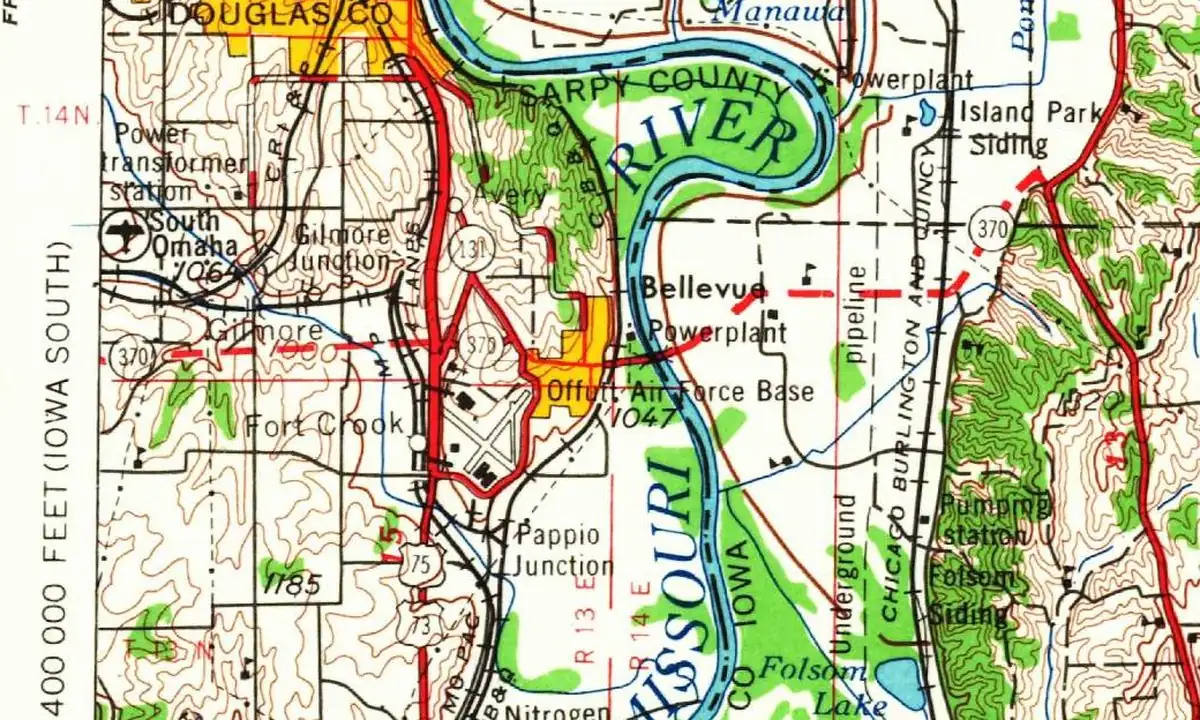
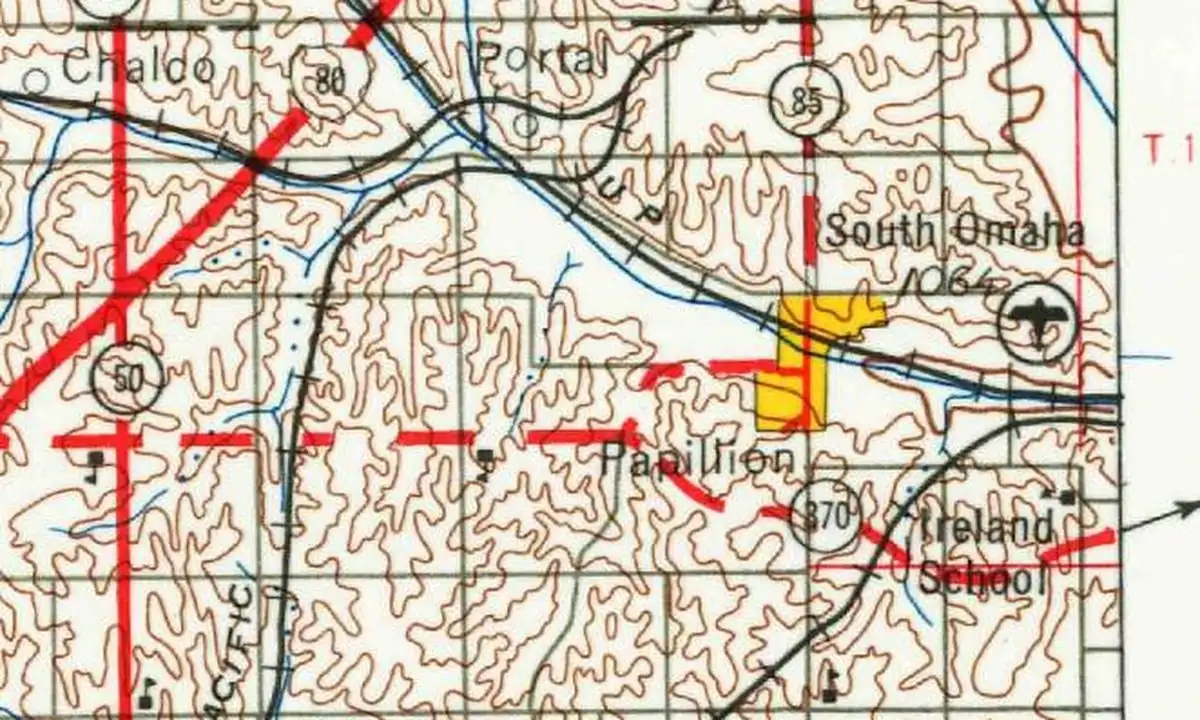
Council Bluffs, Iowa: A Name Found "Lying Around Loose"
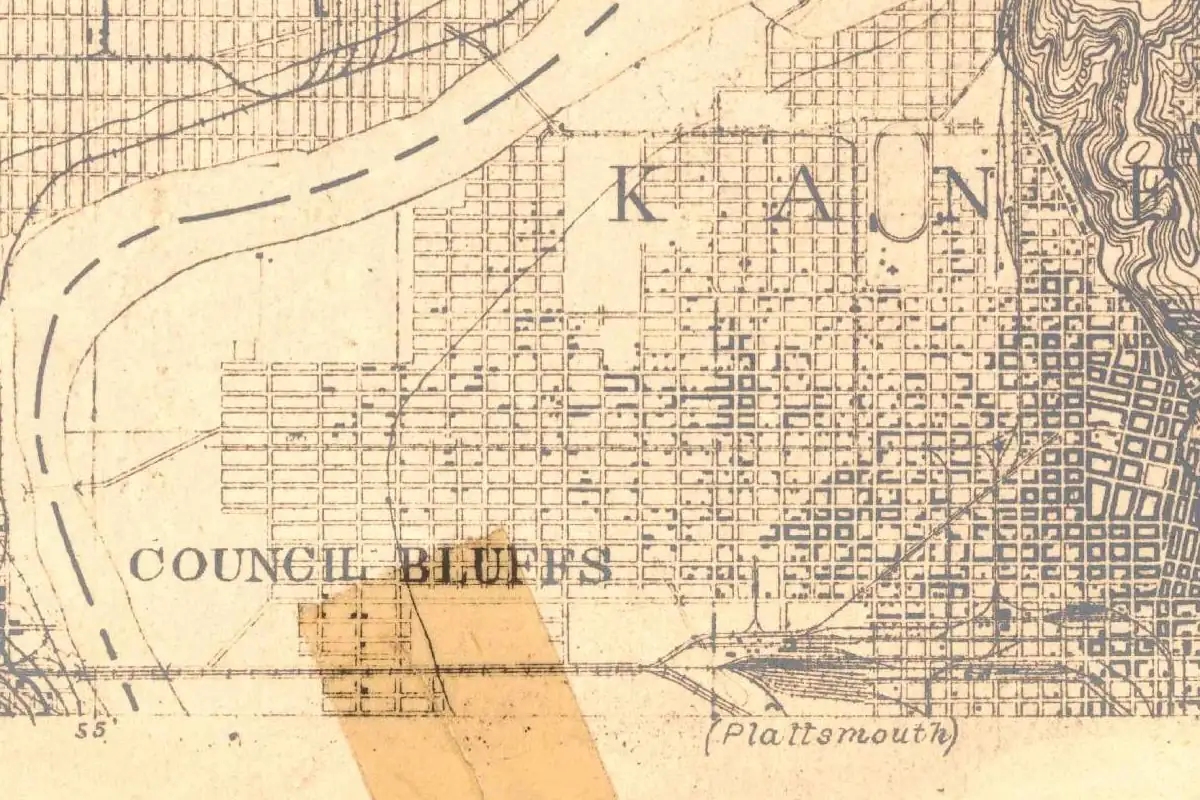
Council Bluffs, Iowa, borrowed its name in 1853 from a council Lewis and Clark held in 1804, and the bluffs where they held it may not be in Iowa at all. One of the city’s own historians shrugged that off: the first settlers, he wrote, “found the name lying around loose.”
A council with the Oto and Missouri
The name starts with the Lewis and Clark expedition on its way up the Missouri in the summer of 1804. Homer Field, writing the county’s history in 1907, quoted the journal of Patrick Gass, one of the men on the trip: “Captains Lewis and Clark held a council with them, who seemed well pleased with the change of government and what had been done for them. Six of them were made chiefs, three Otoes and three Missouris. This place we called Council Bluffs.”
Henry Gannett’s 1905 federal list of place names puts it simply: the city is “so called from a council held near there by Lewis and Clark with the Indians.” The trouble is that word “near.”
Which bluffs?
William Stennett, who wrote up the place names along the Chicago & North Western railroad in 1908, said the original Council Bluffs were “on the west bank of the Missouri River, in what is now Washington County, Nebraska, and many miles above the present city.” He quoted Thwaites, who put the spot “near the village now known as Fort Calhoun.” The Army later built a post on those bluffs, and Stennett notes the confusion over what to call it.
Field, writing a year before Stennett, didn’t buy the Nebraska claim. He admitted that “the exact spot is not positively known,” but argued for a spring at the north edge of town, where a big bluff comes almost down to the river. He pointed out that there aren’t bluffs at Fort Calhoun or at Traders Point, a rival claim to the south, and that the latitude in the journal fit his spot better. Then he gave up the fight in the best way possible: “At all events our first settlers found the name lying around loose and when granted our city charter we appropriated it, like it, and intend to hold it until some one with a bigger stick than ours takes it from us.”
Miller’s Hollow and Kanesville
Before 1853, the place had other names. The federal place-names record says it was first Miller’s Hollow and then Kanesville from 1848 to 1853. Kanesville was a Mormon settlement, a stopping place on the way west to Salt Lake.
John Keatley, who wrote the Council Bluffs chapters of an 1883 county history, says the Mormon leaders meant the name as a compliment to Thomas L. Kane of Philadelphia, who had written fair accounts of the violence against them at Nauvoo for Eastern newspapers. He was the brother of Elisha Kent Kane, the Arctic explorer, and that’s where things got mixed up. In the same book, a steamboat captain named La Barge insists the town “was not called Kanesville in honor of a Mormon Elder” but for “Dr. Kane, the celebrated Arctic explorer,” whom he said he’d brought upriver himself. La Barge also remembered the earlier name as Miller’s Hill. If you’re keeping score, most of the evidence in these books points to Thomas, not Elisha.
Trading Kanesville for a tradition
In early 1853 the post office switched from Kanesville to Council Bluffs, and the town followed. Keatley says there was a tradition, kept by the Indians and the fur company men, that Lewis and Clark had met Indians in council “near this spot,” and the town took the name “to materialize that tradition.” He dates the new name to January 19, 1853, and the act incorporating the city to February 24. Stennett adds a reason of his own: by then, he says, residents were uneasy with “the stigma that had become attached to the Mormon name.”
So you’ve got a city named for a meeting that may have happened many miles upriver, on the Nebraska side, and the historians who wrote its story couldn’t agree on that or on which Kane it had been named for before. The city kept the name anyway, just like Field said it would.
Sources & further reading
- Homer H. Field and Joseph R. Reed, History of Pottawattamie County, vol. 1 (1907). Gass’s journal entry and the council; the debate over Fort Calhoun, Traders Point and the bluff at the north edge of town; “lying around loose” (pp. 5-6); Kanesville named for “a brother of the Arctic explorer” (p. 8); the 1853 charter (pp. 15-16).
- History of Pottawattamie County (O. L. Baskin, 1883), with John H. Keatley’s history of Council Bluffs. Kanesville for Col. Kane of Pennsylvania (p. 20); La Barge’s version and Miller’s Hill (p. 33); Thomas L. Kane and Nauvoo (p. 86); the change to Council Bluffs, January 19 and February 24, 1853 (p. 98).
- William H. Stennett, Place Names of the Chicago & North Western (1908), pp. 59-60. The bluffs in Washington County, Nebraska; Thwaites on Fort Calhoun; the 1853 petition and the “stigma.”
- Henry Gannett, The Origin of Certain Place Names in the United States (USGS, 1905), p. 93. A council “near there” with Lewis and Clark.
- GNIS feature 455672 (U.S. Geological Survey). Miller’s Hollow, Kanesville from 1848 to 1853, and incorporation in 1853.
Spot something wrong, or know more? Tell us here. You can also email us or use our contact page. Corrections are noted here with their date, never made silently.