Hays, Kansas: A Town Named After a Fort and Its General
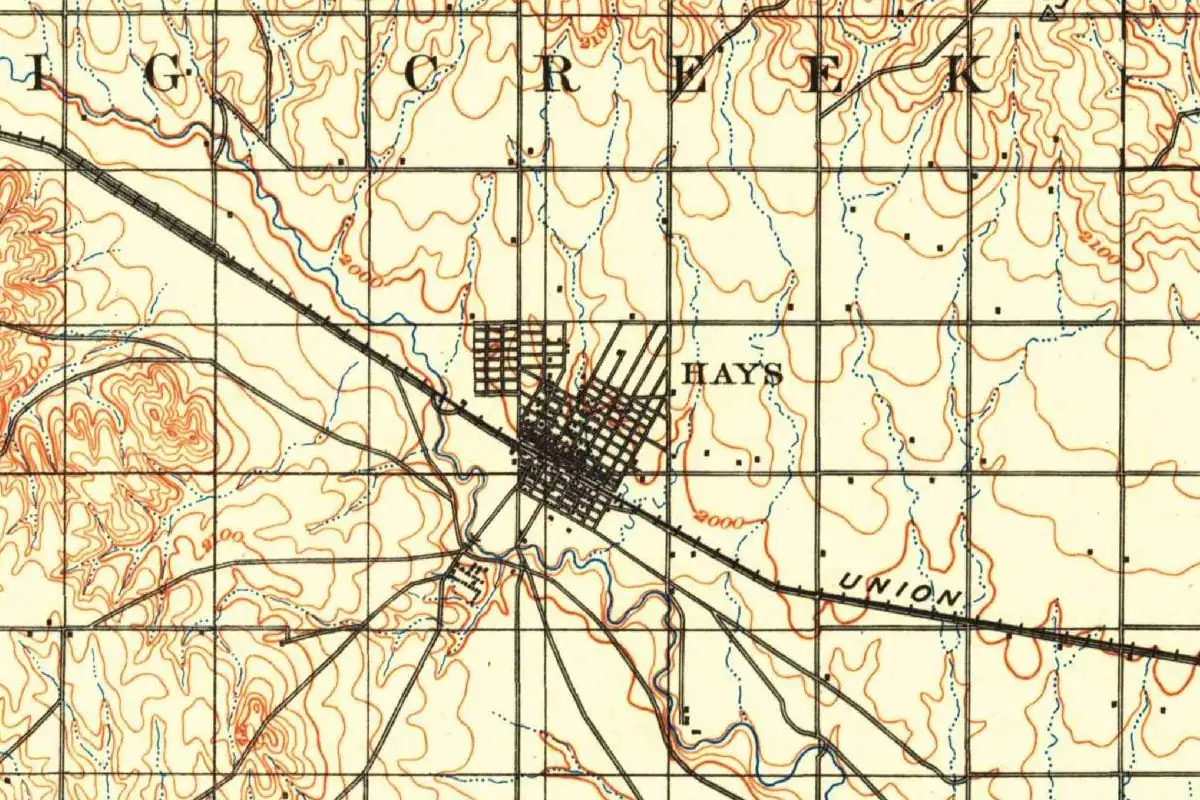
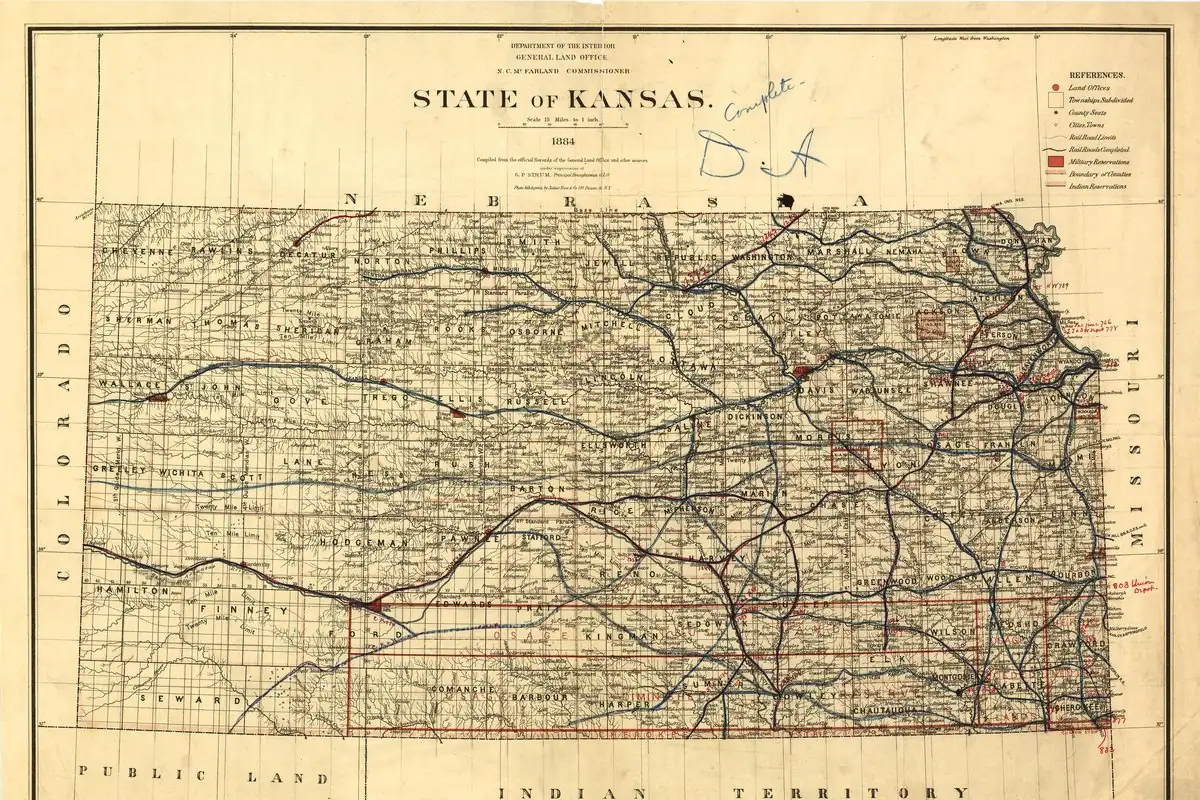
Hays, Kansas, took its name from an Army fort, and the fort’s namesake has been called William, Isaac and Alexander, depending on which book you open. Most of the trail runs through the fort: Blackmar’s 1912 cyclopedia says the town took its name from Fort Hays, and the fort was named for a Civil War general. Gannett, in 1905, skipped the fort and tied the city straight to the general.
Fort Fletcher becomes Fort Hays
The post started out under another name. The Kansas Historical Society says Fort Fletcher, named for Gov. Thomas C. Fletcher of Missouri, went into operation on October 11, 1865. Cutler puts it on Big Creek. It closed in May 1866 and reopened that October. Then, in the society’s words, “In November 1866 Fort Fletcher was renamed Fort Hays in honor of Brigadier General Alexander Hays, who was killed during the Civil War.”
A 1984 National Archives catalog of its military post records gives the exact day: “First called Fort Fletcher, the War Department renamed the installation Fort Hays on November 17, 1866, in honor of Brig. Gen. Alexander Hays.”
Big Creek didn’t treat the first site kindly. Cutler’s 1883 state history says the old post sat on low ground beside the creek, about fourteen miles (23 km) southeast of the later town, and “was utterly destroyed by the flood that occurred in the spring of 1867.” The society says the fort was moved in June 1867 to a new spot near the railroad being built across the state.
Three first names for one general
So which Hays was it? It depends on the book:
- The Kansas Historical Society and the National Archives both say Alexander Hays.
- Blackmar’s cyclopedia of 1912 has the same date, November 17, 1866, but calls him “Gen. Isaac G. Hays, who was killed at the battle of the Wilderness.”
- Henry Gannett, in a Geological Survey bulletin of 1905, wrote that the city was “named for Gen. William Hays, United States Army.”
We give the most weight to the two that come from archives and the state historical society, which agree with each other. But you should know the older reference books don’t.
Hays City and Rome
The town grew up next to the new fort. Cutler says a party from St. Louis, William E. Webb, W. J. Wells and a Judge Knight, picked out land near Fort Hays late in 1866, expecting the Kansas Pacific Railway to arrive soon. Meanwhile a few people had put up “rudely constructed buildings” south of the creek and called their place Rome. When Webb came back the next June, he had a town site surveyed and platted, “to which he gave the name of Hays City.”
Rome lost. The railroad reached Hays City soon after, and Cutler writes that it “totally eclipse[d] the town south of the creek, and Rome disappeared.” Hays City had more than 1,000 people before it was a year old, and at the first meeting of the county commissioners, he says, thirty-seven liquor licenses were granted in two days. Blackmar adds that the place “was known as Hays City” in early days and that the longer name was still used now and then in 1912.
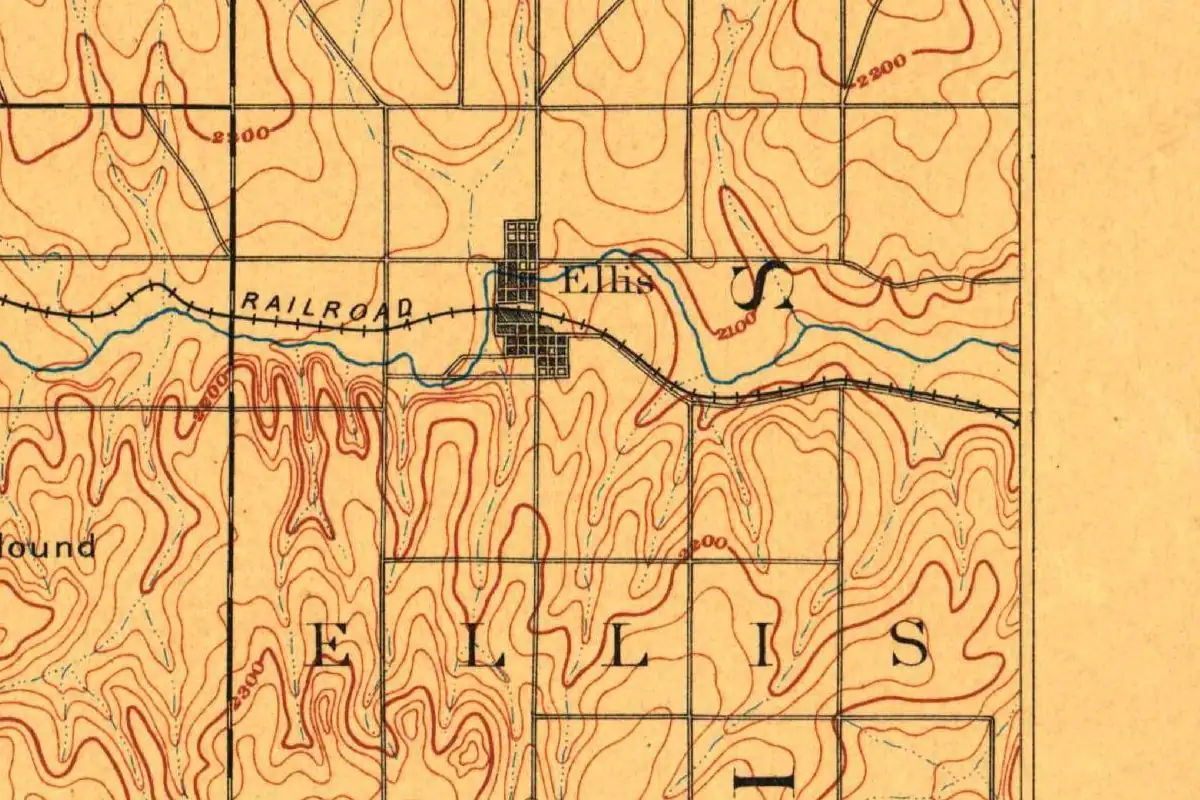
The town was incorporated in 1885, according to the U.S. Geological Survey, and the Army left in 1889. The town stayed: Cutler notes it was made the first county seat. Down the line to the west you can find Ellis, a railroad town named for a different soldier.
Quick answers
Is Hays, Kansas, named after a person or a fort?
Both, in a chain. The town took its name from Fort Hays (Blackmar, 1912), and the War Department named the fort for a Union general named Hays on November 17, 1866 (National Archives; Kansas Historical Society).
What was the general’s first name?
Alexander, according to the Kansas Historical Society and the National Archives. Blackmar’s cyclopedia (1912) says Isaac G., and Gannett (1905) says William.
Why was it called Hays City?
That was the name William E. Webb gave the town site when he had it platted in 1867 (Cutler, 1883). Blackmar wrote in 1912 that “Hays City” was the early name and still turned up sometimes.
Key dates
- 1865October: Fort Fletcher, named for Gov. Thomas C. Fletcher of Missouri, opens on Big Creek.
- 1866November 17: the War Department renames the post Fort Hays.
- 1867A spring flood ruins the old post, and Fort Hays moves close to the coming Kansas Pacific line.
- 1867William E. Webb plats a town site beside the new fort and names it Hays City.
- 1885Hays is incorporated, according to the U.S. Geological Survey.
- 1889The Army leaves Fort Hays.
Getting there
Open Hays in Google Maps
Opens in a new tab. The pin is the center of Hays in the USGS place-name record.
The closest airports, Amtrak stations and intercity bus stops, measured in a straight line from the center of Hays.
Airports
- Hays Regional (HYS) 4 mi 6 km
- Salina Regional (SLN) 90 mi 145 km
Amtrak trains
- Dodge City station (DDG) 86 mi 139 km
- Hutchinson station (HUT) 95 mi 152 km
Intercity buses
- Greyhound Hays Roth Avenue 2 mi 2 km
Distances are as the crow flies, not by road. We don't list schedules or fares because they change; check with the airline, Amtrak or the bus company before you go. Official data (FAA commercial service airports (2025), FAA airport locations, Amtrak stations and Intercity Bus Atlas) from the FAA and the U.S. Bureau of Transportation Statistics, checked Nov 6, 2026.
Sponsored
Staying in Hays?
Compare hotels in Hays, Kansas, on Expedia.
See hotels in HaysWe may earn a commission if you buy through this link. It never changes what we write. Read our affiliate disclosure
Historical Sources & References
- Kansas Historical Society, “Fort Hays” (Kansapedia). Fort Fletcher from 1865, the renaming in November 1866 for Brig. Gen. Alexander Hays, the move in June 1867 and the Army’s departure in 1889.
- National Archives, American Indians: A Select Catalog of National Archives Microfilm Publications (1984), p. 129. The War Department’s renaming on November 17, 1866, “in honor of Brig. Gen. Alexander Hays.”
- Frank W. Blackmar, ed., Kansas: A Cyclopedia of State History, vol. 1 (1912), pp. 661 and 832. The renaming for “Gen. Isaac G. Hays” (p. 661) and the early name Hays City (p. 832).
- William G. Cutler, History of the State of Kansas (1883), Ellis County, part 3. Webb, Wells and Knight, the rival settlement of Rome, the plat named Hays City and the thirty-seven liquor licenses. Part 2 covers Fort Fletcher and the flood of 1867.
- Henry Gannett, The Origin of Certain Place Names in the United States, 2nd ed. (1905), p. 153. The city “named for Gen. William Hays, United States Army.”
- GNIS feature 475182 (U.S. Geological Survey). The gazetteer page for Hays, with coordinates and its short history, “Founded in 1867 and incorporated in 1885.”
Spot something wrong, or know more? Tell us here. You can also email us or use our contact page. Corrections are noted here with their date, never made silently.