Why South Dakota's Highest Peak Isn't Harney Peak Anymore
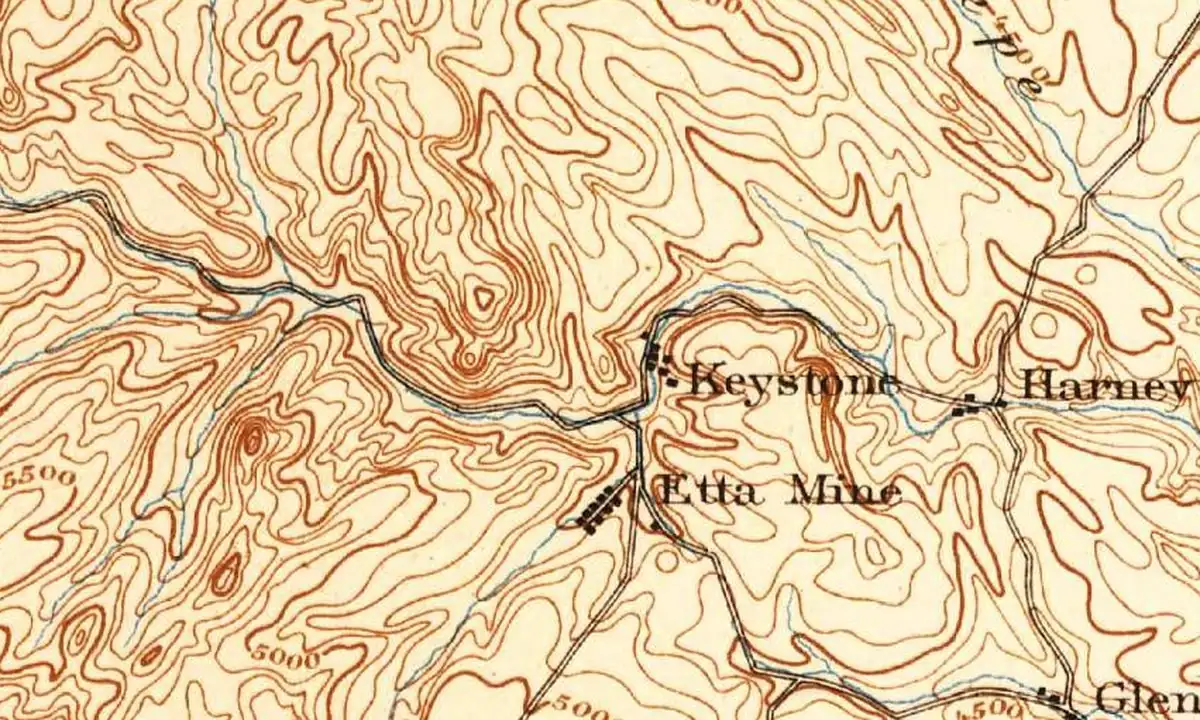
South Dakota’s highest point was Harney Peak, after an Army general, until 2016, when a federal board renamed it for the Lakota holy man Black Elk. The general’s name had been on the maps since the 1850s, and it took a Lakota elder’s request, nearly two years of debate and a 12 to 0 federal vote to take it off.
Basil Brave Heart’s request
In October 2014, Basil Brave Heart, an Oglala Lakota elder from the Pine Ridge Reservation, asked the U.S. Board on Geographic Names, the federal body that decides what goes on government maps, to change Harney Peak to Black Elk Peak. The board’s case file explains why he picked that name.
Black Elk, or Nicholas Black Elk (1863–1950), was “a revered Oglala Lakota holy man,” in the board’s words. His story reached a wide audience through Black Elk Speaks, John G. Neihardt’s English rendering of the stories Black Elk told him. In it, Black Elk says that when he was nine he was sick for twelve days and had a great vision, part of which took him to the top of this summit. The board quotes his description: “round about beneath me was the whole hoop of the world. And while I stood there I saw more than I can tell and I understood more than I saw.” Later in life, he hiked up the mountain with Neihardt.
The file also calls the summit “one of the most holy sites of the Lakota,” where every spring people gather for a ceremony of “welcoming back the thunders.” So the new name points to a man who’d stood on that peak in a vision, on a mountain that already mattered to his people.
Who was Harney?
William S. Harney was an Army general. The federal place-names record and a 1925 South Dakota encyclopedia both say the name came from Lieutenant Gouverneur K. Warren, an Army mapmaker, though Warren’s own report never says he chose it. In 1855 and 1856, Warren served on the staff of “Brevet Brigadier-General W. S. Harney, commanding the Sioux expedition,” in his words. His report, first printed in 1858, already describes “Harney’s Peak” among the granite heights of the Black Hills.
Brave Heart’s objection was to Harney’s record. The board’s file says he objected above all to Harney’s role at the Battle of Ash Hollow in September 1855, an attack in which Harney’s men were “reportedly brutal,” killing women and children. The same file notes that after the Civil War, Harney worked as a peace negotiator with the Plains tribes and urged the government to honor its treaties.
If you look up the peak in that federal record, you’ll read that Harney commanded the military in the Black Hills area “in the late 1870s.” That’s off by about twenty years. Warren puts Harney in command of the Sioux expedition in 1855 and 1856, and the board’s own case file says his frontier conflicts ran from 1818 to 1863.
A toast on the wrong summit
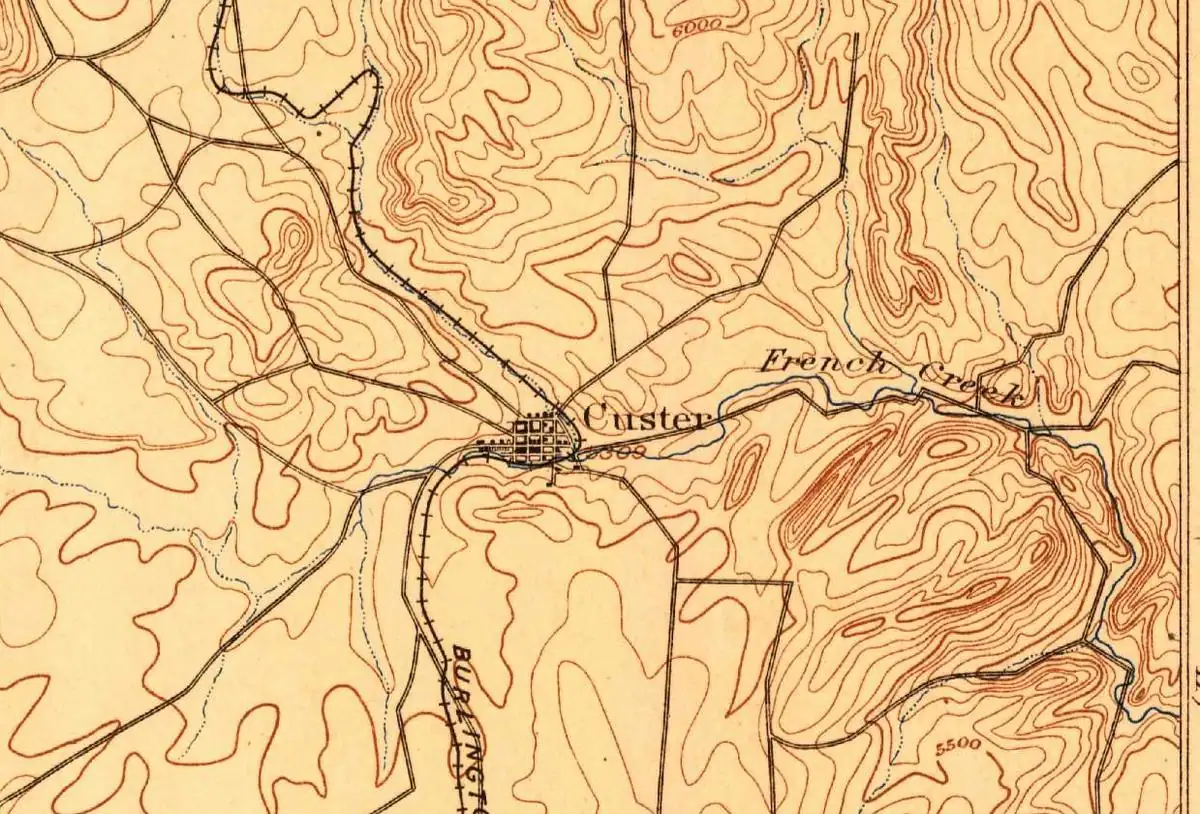
Doane Robinson’s 1925 encyclopedia gives the first climb to the 1874 Army expedition led by George A. Custer, the man Custer, South Dakota, is named for. On July 31, Captain William Ludlow, General Custer and a small party set out “to ascend Harney.” The expedition’s geologist, N. H. Winchell, wrote that after a hard scramble to the top, Custer “fired a salute of three shots from his rifle, we drank from our canteens to General Harney,” and then they spotted another peak to the northwest that rose higher. They’d toasted Harney on the wrong mountain.
The real summit beat them too. Ludlow found a block of granite “forty feet in height, with perpendicular sides” that couldn’t be climbed “without the aid of ropes and ladders.” Before heading back in the dark, the party left their names in a copper cartridge case driven into a crack in the rock.
Two no’s before a yes
The 2014 request wasn’t the first. In 1970, two Californians asked the board to rename the peak for Black Elk. The board declined, saying “Harney Peak is a name of historical significance and is a former Board decision,” since it had approved the spelling Harney Peak back in 1906. Another proposal in 1973 got the same answer.
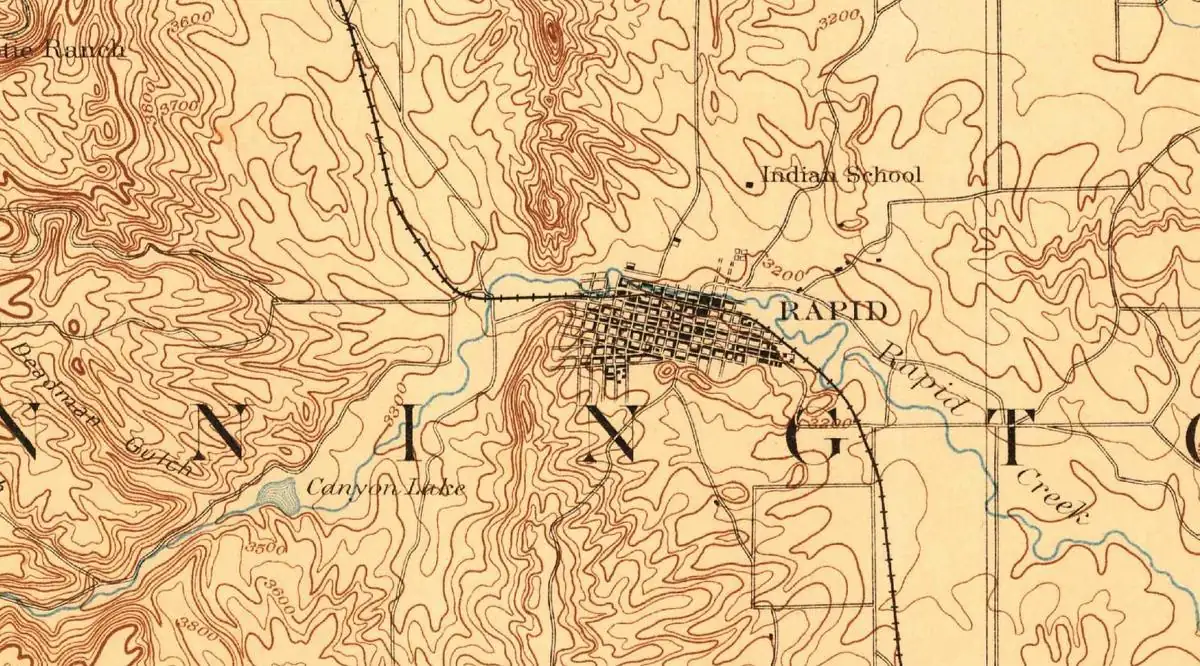
This time it turned into a real fight. The South Dakota Board on Geographic Names held public hearings and voted in June 2015 to keep Harney Peak, writing that it found “no public consensus as to any single replacement name.” The Pennington County commissioners also asked to keep the old name. A Rapid City resident proposed Thunder Peak instead, and a 2014 petition backed the Lakota name Hinhan Kaga Paha, which the board’s file translates as “Great Owls Nest.” On the other side, the Crow Creek Sioux Tribe passed a resolution for Black Elk Peak, and a great-great-grandson of Black Elk and a distant cousin of General Harney both asked the board to make the change.
The federal board took up the case in April 2016 and put off a decision. On August 11, 2016, it voted 12 in favor, none against and one abstention, to approve Black Elk Peak. One member said the old name was “painful and distressing” to Native people. The Forest Service, which manages the land, stayed neutral on the new name but said the old one should go.
A name with a story behind it
You can read how the Lakota got their name, which is really the same word as Dakota, on our South Dakota page. Black Elk Peak sits on the same map as plenty of names left by the Army and the gold rush. This one’s different. The man it honors described standing on its summit, first in a vision and later in person, and if you climb it today, that’s whose name you’ll find on the map.
Historical Sources & References
- U.S. Board on Geographic Names, Domestic Names Committee, minutes of the 785th meeting (August 11, 2016). The vote of 12 to 0 with one abstention and the “painful and distressing” remark (pp. 7–8). The attached docket (pp. 15–19) has Brave Heart’s October 2014 proposal, the Black Elk quotation, the 1906, 1970 and 1973 actions, the state board’s June 2015 vote, the Thunder Peak counter-proposal and the tribal letters.
- U.S. Board on Geographic Names, Domestic Names Committee, minutes of the 781st meeting (April 14, 2016). The first debate and the vote to defer a decision.
- U.S. Board on Geographic Names, Quarterly Review List 419 (2015). The public notice of the proposal, with the proponent, the summit’s description and the old names found on maps since 1858 (pp. 37–40).
- G. K. Warren, Preliminary Report of Explorations in Nebraska and Dakota, in the Years 1855-’56-’57 (1858, reprinted 1875). Warren on Harney’s staff during the Sioux expedition of 1855–56 (pp. 13–14) and his mention of “Harney’s Peak” (p. 30).
- William Ludlow, Report of a Reconnaissance of the Black Hills of Dakota, Made in the Summer of 1874 (1875). Ludlow’s account of the July 31 climb (p. 18) and N. H. Winchell’s report in the same volume, with the toast to General Harney (p. 46) and the cartridge case (p. 48).
- Doane Robinson’s Encyclopedia of South Dakota (1925). Entry “Black Hills, The,” pp. 73–75, on Warren’s 1857 route past the peak and Custer’s 1874 climb. It says Warren named the peak “in 1855,” which doesn’t match Warren’s own report.
- GNIS feature 1261770, Black Elk Peak (U.S. Geological Survey). The federal record: official name by Board decision of August 11, 2016, the highest summit in South Dakota, and variant names including Harney Peak, Harney’s Peak, Mount Harney and Hinhan Kaga Paha. Its note dating Harney’s command to “the late 1870s” is contradicted by the sources above.
Spot something wrong, or know more? Tell us here. You can also email us or use our contact page. Corrections are noted here with their date, never made silently.