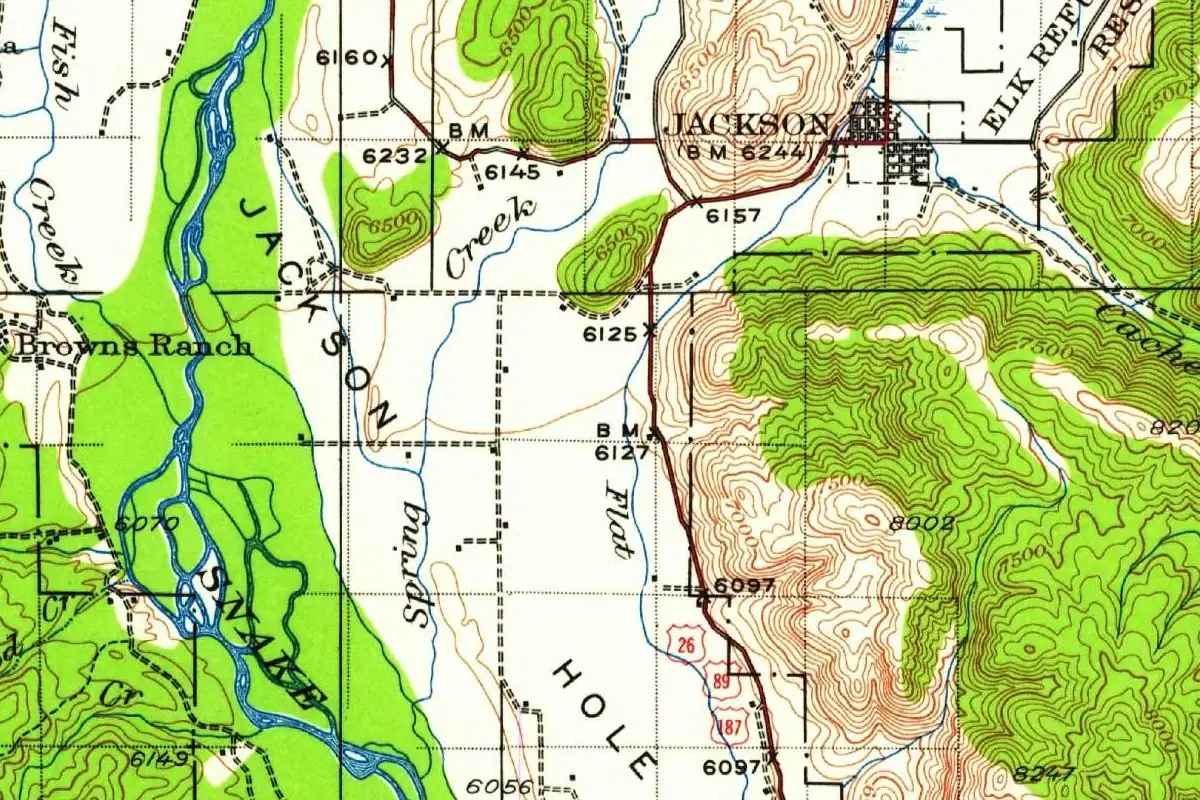
Yellowstone: The River, the Yellow Rocks and a Riddle
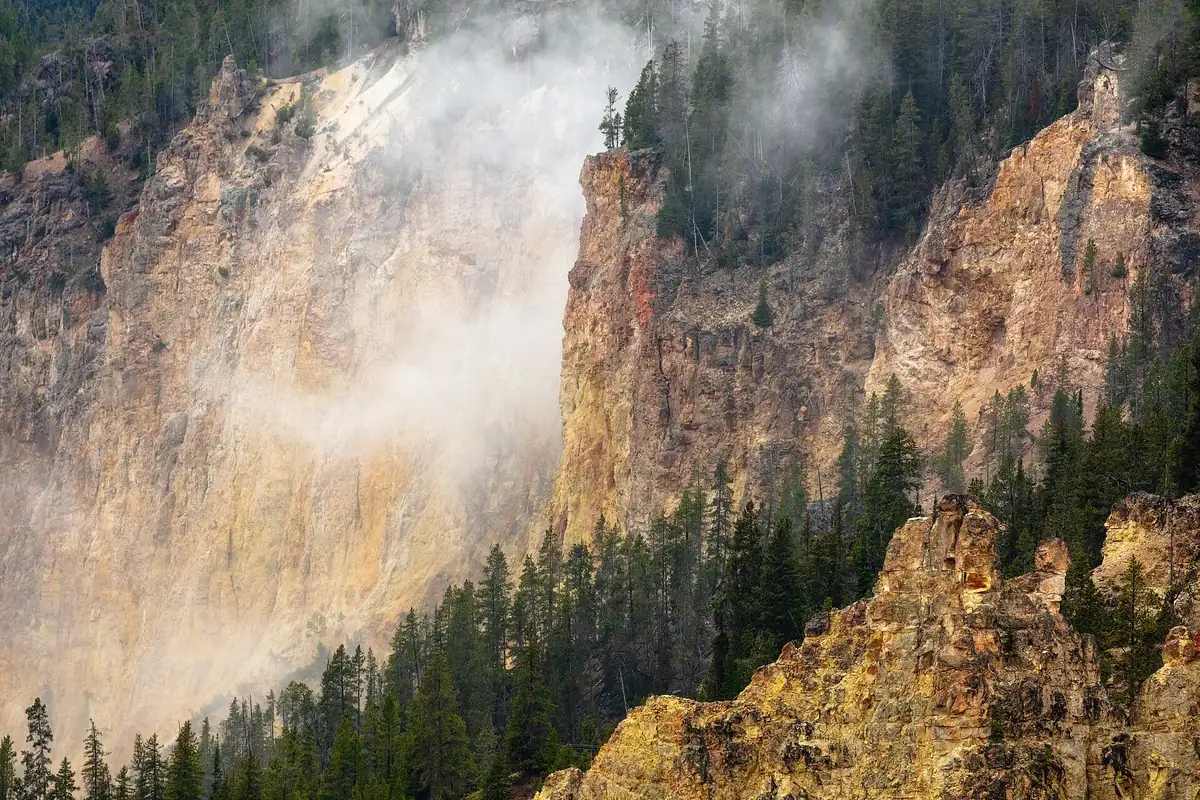
The yellow rocks that gave Yellowstone its name may not be inside the park at all, and the name itself was translated twice on its way into English. It started as a Hidatsa name for the Yellowstone River, which French-speaking traders turned into Roche Jaune and Americans turned into Yellow Stone.
A river first, a park later
If you’ve ever wondered why it’s called Yellowstone, start with the river, not the geysers. The National Park Service’s own answer is short: “Yellowstone National Park is named after the Yellowstone River, the major river running through the park.” Henry Gannett’s 1905 place-name book for the U.S. Geological Survey says the same about the park and about Yellowstone Lake: “Named from the river.”
And it’s a long river. The federal place-names database gives it 692 miles (1,114 km), from the forks where it begins in Wyoming, north through Yellowstone Lake, into Montana, and east-northeast until it joins the Missouri about 2 miles (3 km) south of Buford, North Dakota. Most of that length is far from the park, which matters later in this story.
Mi tsi a da zi: rock, yellow, river
The name goes back to the Hidatsa, a people Washington Matthews, an Army surgeon who lived among them, described in 1877 as living at Fort Berthold, on the Missouri in Dakota Territory, and hunting “on the waters of the Upper Missouri and Yellowstone Rivers.” He also gave their names as Mhinetaree and Grosventre, and other writers of the time called them Minnetarees.
Matthews put together a Hidatsa dictionary, and his list of local place names has this entry: “mi tsi a da zi,” “the Yellowstone River,” which he says probably comes from mi, tsi or tsidi, and azi. His own English-Hidatsa word list fills in the pieces: rock is mi, yellow is tsi or tsidi, and river is azi. Put them in order and you get rock, yellow, river. The Park Service spells it “Mi tse a-da-zi” and says it “literally translates as ‘Rock Yellow River.’” Notice Matthews’s “probably,” though. He listed what each word means without hedging, but he was only “probably” sure the river’s name was built from them.
The Hidatsa weren’t the only ones with a name for it. Hiram Chittenden, an Army engineer captain who published a history of the park in 1895, noted that the Crow called it “Elk River.” The federal database also lists Cheyenne and other Native names for the river, without translating them.
Roche Jaune, then Yellow Stone
French-speaking traders working the upper Missouri translated the Hidatsa name as Roche Jaune or Pierre Jaune, both meaning yellow rock or stone. Who used it first, Chittenden wrote, “it is impossible to determine at this late day.” He was sure of one thing: the traders heard it from Native people long before any of them saw the river themselves.
The English version shows up in the notes of David Thompson, an explorer and geographer for the British fur trade, who stayed among the Mandans from December 29, 1797, to January 10, 1798, and wrote down “Yellow Stone” while estimating where the river began. Lewis and Clark, wintering among the Mandans, used the same words in the report and map they sent President Jefferson in the spring of 1805. By Chittenden’s count, that was the first time “Yellow Stone” appeared in an official document.
When Meriwether Lewis reached the mouth of the river on April 26, 1805, the expedition’s published history recorded that “this river which had been known to the French as the Roche jaune, or as we have called it the Yellowstone, rises according to Indian information in the Rocky mountains.” The French name didn’t go quietly. Chittenden counted the expedition’s own tries at spelling it, “Rejone,” “Rochejone” and “Rochejhone” among them, and found it still turning up in new English books as late as 1817.
Which yellow rocks?
Here’s where you’ll find two very different answers. Everyone agrees the name means yellow rock. Nobody who was there wrote down which rocks.
The canyon version
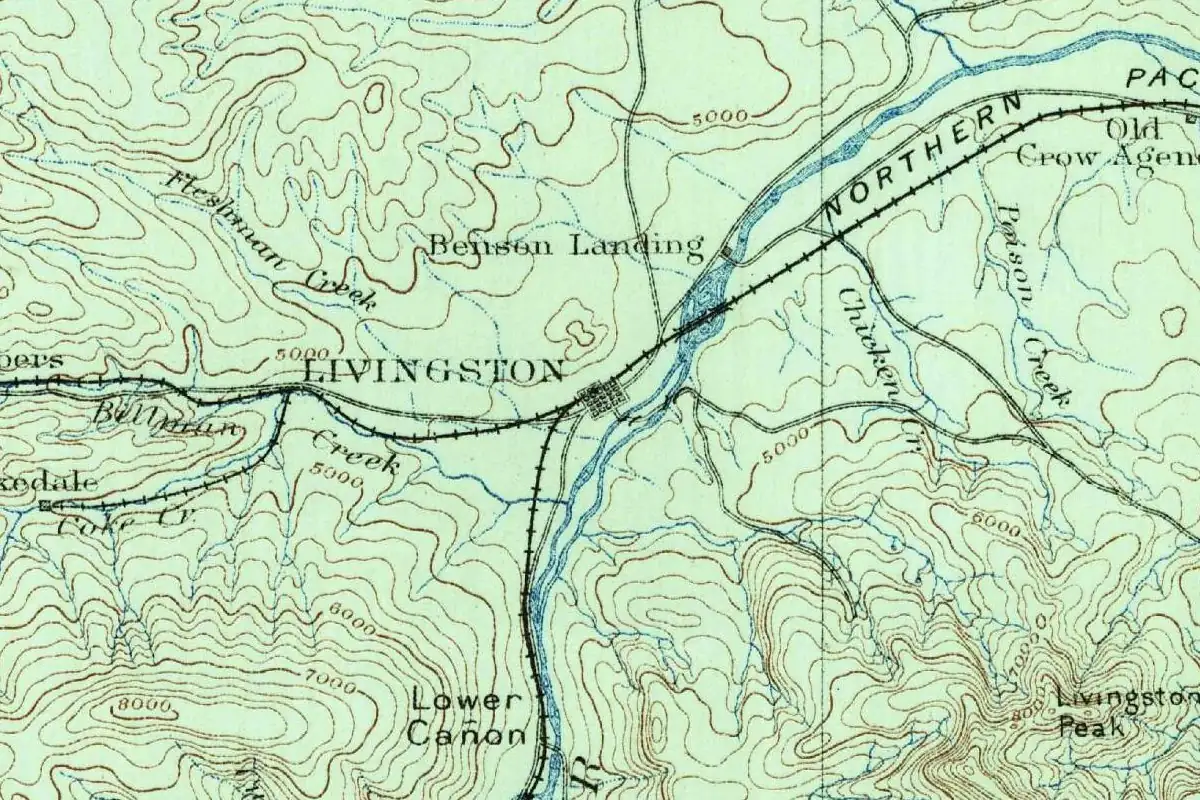
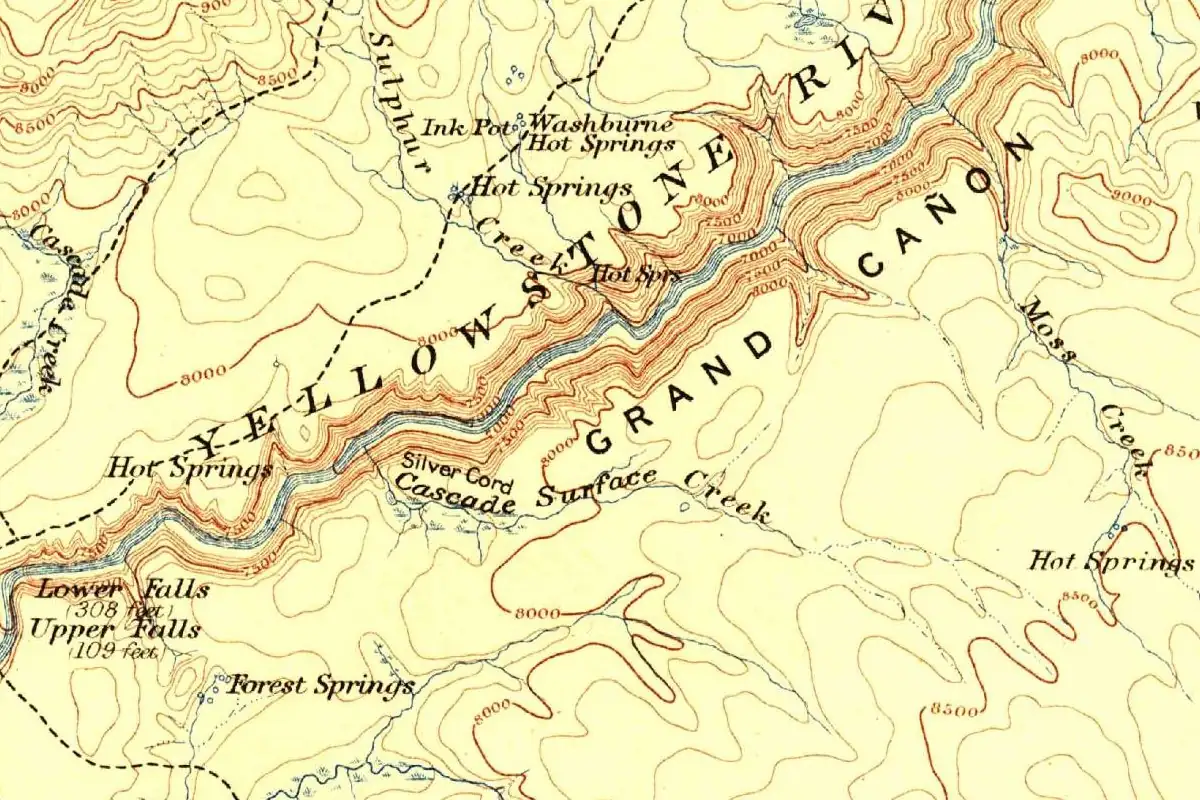
Chittenden’s 1895 book made the case that the USGS now calls the popular belief. He admitted that along the lower river “the flood plain is bordered by high bluffs of yellow sandstone,” as one description he quoted put it, with yellow rock all the way up to the Great Bend at Livingston. But he thought no single spot was striking enough, so he went looking for “a locality about which there can be no doubt.” He picked the Grand Canyon of the Yellowstone, inside the park, where every shade of yellow, he wrote, “greets the eye in bewildering profusion.”
By the 1918 edition of his book, the sandstone bluffs were gone from the argument. That version goes straight from the translations to the canyon, and still says that what led Native people to the name “is easily discoverable.”
The sandstone version
The U.S. Geological Survey’s Yellowstone Volcano Observatory sees it the other way around. In an August 2026 column, it said the Hidatsa “were referring to yellow sandstones along the banks of the Yellowstone River in eastern Montana,” “several hundred miles downstream and northeast of the park.” The column adds that this is “contrary to popular belief” that the name came from the yellow rocks of the canyon.
That version fits what Matthews wrote about where the Hidatsa hunted: on the upper Missouri and the Yellowstone, in northwestern Dakota and eastern Montana. Still, neither Chittenden nor the observatory quotes a Hidatsa speaker explaining the choice, so the “which rocks” question comes down to which argument you find stronger. What the name means isn’t in doubt.
One name, many places
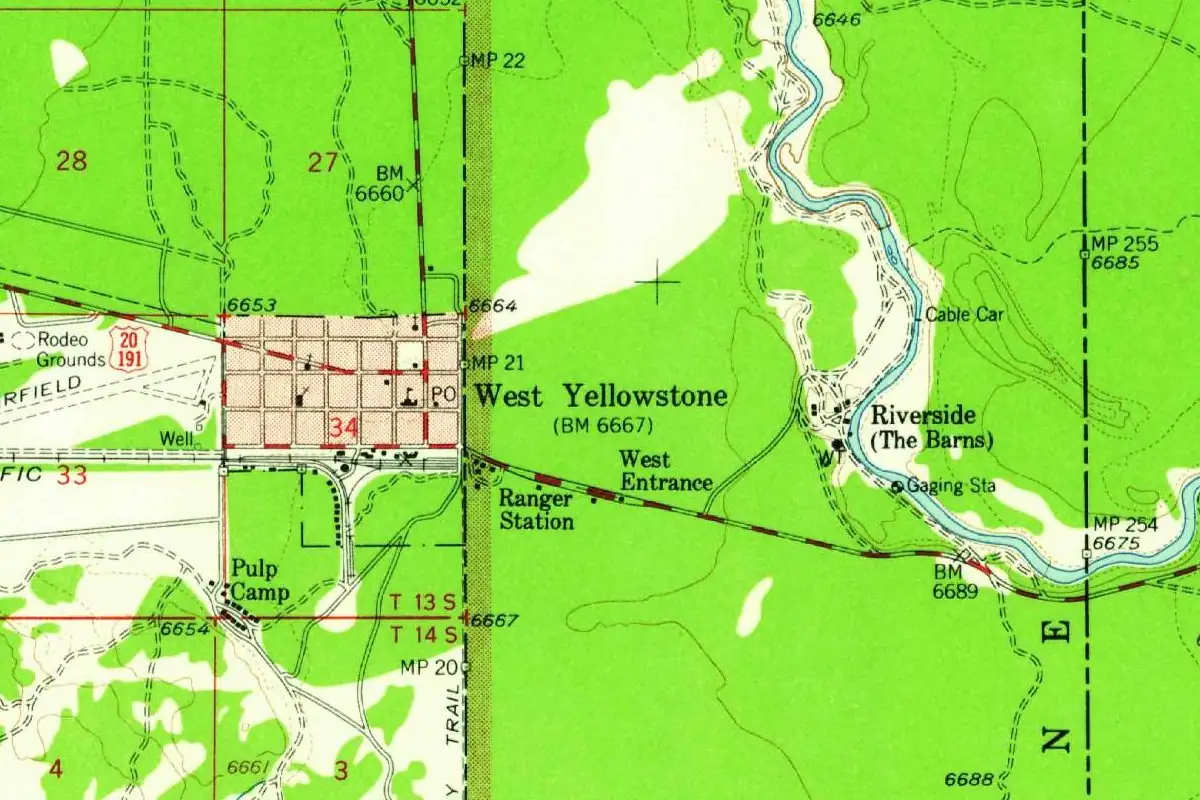
Once the river had its name, it spread. Gannett’s 1905 book lists a Yellowstone county in Montana right alongside the river, and says the lake, 7,788 feet (2,374 m) up, and the national park were both named from the river. In January 2026 the federal database added the Yellowstone Caldera as an official name, citing a USGS study of the volcanic field. The town of West Yellowstone, at the park’s west gate, took its name from the park.
So a word Hidatsa hunters used for a river on the plains of eastern Montana now names a caldera, a lake high in the Rockies and a national park. If the observatory is right, the rocks that started it all sit hundreds of miles from the geysers.
Quick answers
Why is it called Yellowstone?
Because of the river. The National Park Service says the park is named after the Yellowstone River, whose name comes from a Hidatsa (Minnetaree) name that translates as “Rock Yellow River,” put into French as Roche Jaune and into English as Yellow Stone.
Is Yellowstone named after the Grand Canyon of the Yellowstone?
Not necessarily. Hiram Chittenden argued in 1895 that the canyon’s yellow walls inspired the name, but the USGS says the Hidatsa were referring to yellow sandstone along the river in eastern Montana, several hundred miles downstream, and calls the canyon idea a popular belief.
What did the Hidatsa call the Yellowstone River?
Mi tsi a da zi, in Washington Matthews’s 1877 Hidatsa dictionary, which he says probably comes from the words for rock, yellow and river. The National Park Service spells it “Mi tse a-da-zi.”
Who first wrote down the name “Yellow Stone”?
Probably fur-trade explorer David Thompson, in notes he made among the Mandans in 1797 and 1798. Chittenden’s history calls that “perhaps” the first use of the English form. Lewis and Clark used the same words in their 1805 report to President Jefferson.
Key dates
- 1797-1798Fur trader David Thompson, among the Mandans, writes "Yellow Stone" in his notes, per Hiram Chittenden.
- 1805Lewis and Clark's report to President Jefferson uses "Yellow Stone"; on April 26 Lewis reaches the river's mouth.
- 1872Yellowstone National Park is set aside, named after the river.
- 1877Washington Matthews's Hidatsa dictionary lists mi tsi a da zi, the Yellowstone River.
- 1895Hiram Chittenden argues the name came from the yellow walls of the Grand Canyon of the Yellowstone.
- 2026The USGS says the name came from yellow sandstone in eastern Montana, "contrary to popular belief."
Historical Sources & References
- National Park Service, Yellowstone National Park, “Frequently Asked Questions” (last updated June 4, 2026). The park’s answer to “How did Yellowstone get its name?”: named after the Yellowstone River; the Minnetaree name “Mi tse a-da-zi,” “Rock Yellow River”; French “Roche Jaune” or “Pierre Jaune”; Thompson’s “Yellow Stone” in 1797.
- Yellowstone Volcano Observatory (Shaul Hurwitz, USGS), “Yellowstone, Redstone, Greenstone, Blueschist: what makes rocks so colorful?” (August 31, 2026). The sandstone version: yellow sandstones in eastern Montana, “several hundred miles downstream and northeast of the park,” “contrary to popular belief.”
- Washington Matthews, Ethnography and Philology of the Hidatsa Indians (1877). Where the Hidatsa lived and hunted (§ 1); the place-name entry “mi tsi a da zi,” “the Yellowstone River,” “prob.” from mi, tsi or tsidi, and azi; and the word list: rock mi, yellow tsi, tsidi, river azi.
- Hiram Martin Chittenden, The Yellowstone National Park (1895), chapter I. Thompson’s 1797-98 notes, Lewis and Clark’s 1805 report, the expedition’s spellings of the French name, the Crow “Elk River,” the lower river’s sandstone bluffs and the case for the Grand Canyon; later in the book, the park’s creation on March 1, 1872; “Mi tsi a-da-zi, Rock Yellow River.” Also online: the 1918 edition, which drops the sandstone discussion.
- History of the Expedition under the Command of Captains Lewis and Clark, vol. 1 (1814), p. 196. April 26, 1805, at the river’s mouth: “known to the French as the Roche jaune, or as we have called it the Yellowstone.”
- Henry Gannett, The Origin of Certain Place Names in the United States, 2nd ed. (USGS, 1905), p. 332. The county, river, park and lake entries; the park and lake “Named from the river.” Also online: the 1902 first edition, p. 279, with the river entry alone.
- GNIS feature 1035255, Yellowstone River (U.S. Geological Survey). Official name, length (692 miles, or 1,114 km), course from Wyoming to the Missouri near Buford, North Dakota, and variant names including Roche Jaune, Pierre Jaune, Mi tse a-da-zi and names in Cheyenne and other Native languages.
- GNIS feature 2833031, Yellowstone Caldera (U.S. Geological Survey). The caldera’s official name, entered January 15, 2026, citing Robert L. Christiansen’s USGS Professional Paper 729-G.
Spot something wrong, or know more? Tell us here. You can also email us or use our contact page. Corrections are noted here with their date, never made silently.