Moose, Wyoming: The Ferry Crossing a Post Office Renamed
Moose, Wyoming, used to be Menor’s Ferry, and it took its new name from a post office that opened in a homesteader’s store in 1923. None of the histories that tell the story says why the name was “Moose.” What they do show is how a ferry landing on the Snake River ended up named for its mailbox.
Bill Menor’s crossing
Before there was a Moose, there was Bill Menor. He came to Jackson Hole in 1894 and took up a homestead beside the Snake River, and there he built a ferryboat, the National Park Service says, that “became a vital crossing” for the valley’s early settlers. For more than ten years he was alone on the west side of the river.
The Snake split the valley in two. In dry months you could ford it in several places, but in high water even the best fords were out, and after 1894 Menor’s ferry became the main crossing in the middle of Jackson Hole. He charged 50 cents for a wagon and team and 25 cents for a rider and horse, and people on foot rode free if a wagon was going across. Because his was the only holding on that bank, the Jackson Hole Historical Society says, the area was “generally known as Menor’s Ferry.”
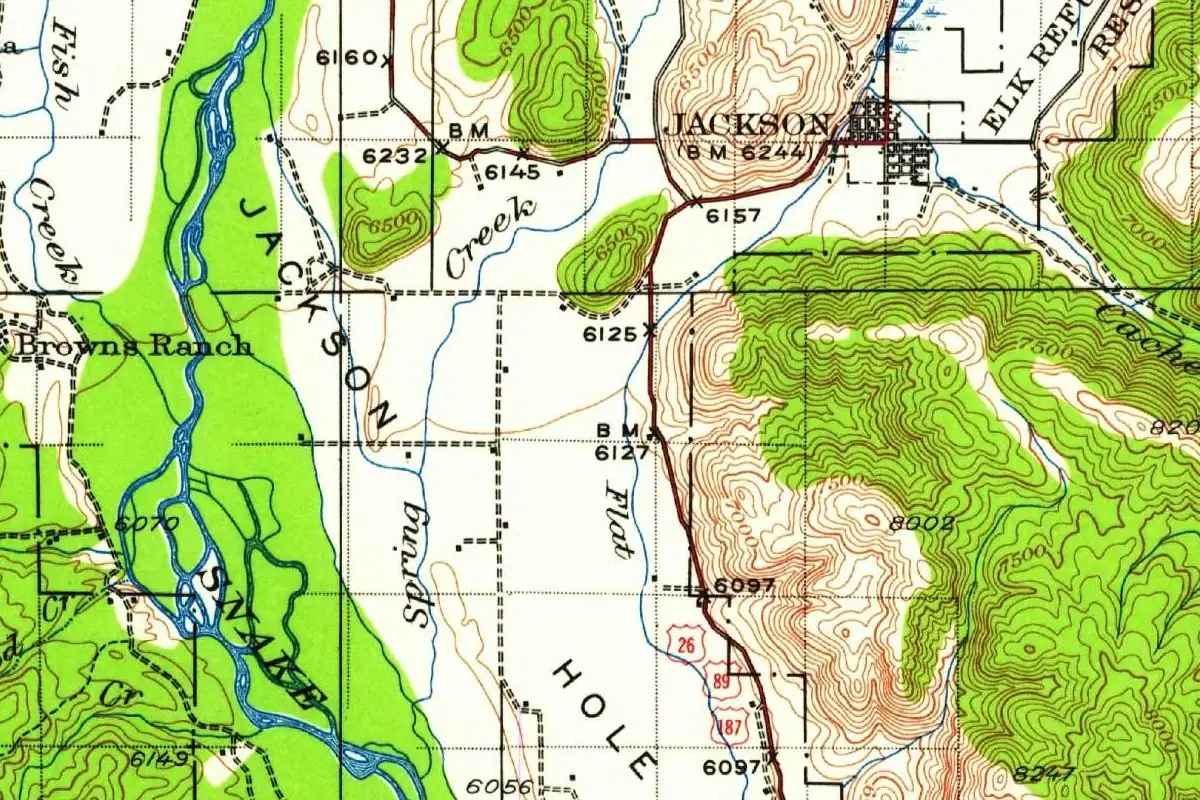
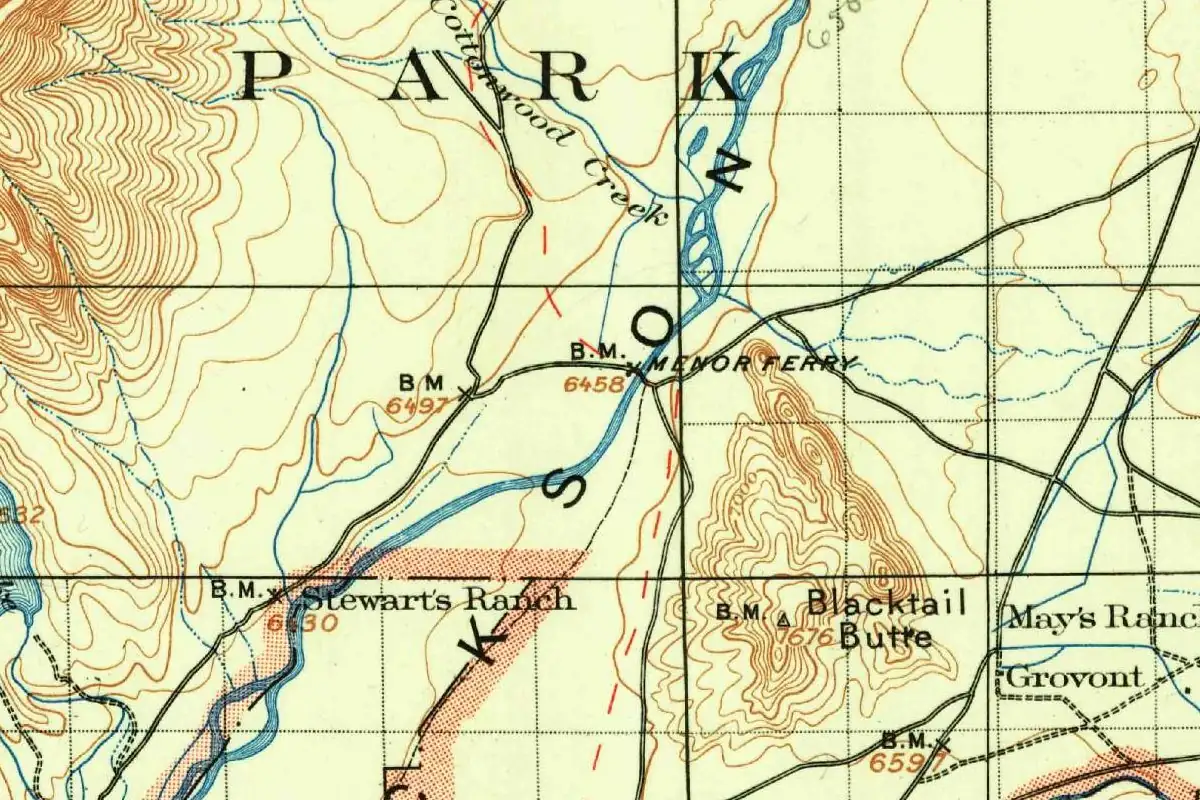
The government’s mapmakers called it that too. On the U.S. Geological Survey sheet dated 1899, at the top of this page, the crossing is simply MENOR FERRY. Just to the southeast you can see Grovont, another of the valley’s little post-office communities.
A post office in William Grant’s store
The neighbors came after 1900. Homesteaders filled in the strip between the Snake and the foot of the Teton Range, and in 1914 William Grant took up 160 acres below the Sawmill Ponds, on land that, as the Park Service’s historic resource study for Grand Teton National Park puts it, “later became the first Moose Post Office.”
The study, A Place Called Jackson Hole, gives the key facts in two sentences. “The Postal Service established the Moose Post Office in April 1923 at William Grant’s store, situated in the Huckleberry Springs area along the Moose Wilson Road.” Then: “The post office was moved to the local school near Menor’s Ferry in 1929. At that time, Menor’s Ferry became known as Moose.” The Jackson Hole Historical Society adds who chose it. Grant “named the post office ‘Moose,’” it says, and became its first postmaster.
So the name arrived as a postal address down the Moose-Wilson Road, south of the crossing, and only later moved to the ferry landing. By then the ferry itself was finished. Menor had sold out to Maud Noble and her partners in 1918, and in 1927 a steel truss bridge went up just south of the crossing, making the ferry obsolete.
So why “Moose”?
That’s the part the record leaves blank. None of the sources read for this story says what Grant was thinking, and none of them quotes a letter or postal application that explains it.
Two things in the sources come close, but neither one tells you why. The same Park Service study, writing about nearby Grovont, notes that the Postal Service “liked post office names to be one word and easy to spell,” but it says that about Grovont, not about Moose. And the National Park Service’s page on the Moose Post Office says today that the name also suits the area’s frequent visitor, the moose, since the nearby Snake River and Sawmill Ponds make good habitat for them. That’s a fair description of the place. It isn’t a record of why Grant chose the word.
From ferry landing to park headquarters
Moose is still tiny, about 12 miles (20 km) north of Jackson as the crow flies, but it’s where Grand Teton National Park keeps its headquarters, and the post office is still there. The historical society says the spot became park headquarters in the 1960s.
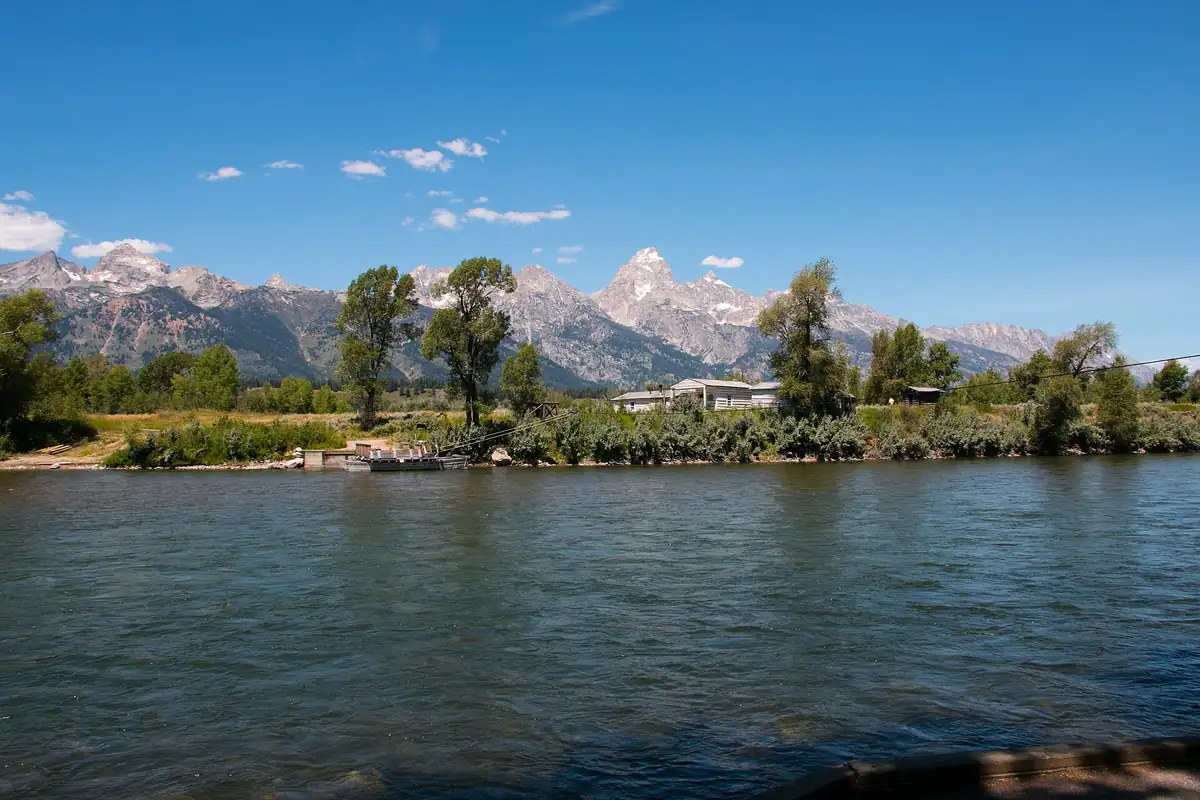
The old name didn’t vanish, either. The federal place-names database lists Moose as a populated place and, a short way northeast, Menors Ferry as a crossing, two separate records in Wyoming for the same stretch of riverbank. A replica of his ferry sits on the riverbank in the Park Service’s Menors Ferry Historic District, so you can still see the crossing that was Menor’s Ferry long before anyone called it Moose.
Quick answers
Why is it called Moose, Wyoming?
Because of its post office. The Moose Post Office opened in April 1923 in William Grant’s store, and after it moved near Menor’s Ferry in 1929, the area became known as Moose. None of the sources says why Grant picked that name.
What was Moose, Wyoming, called before?
Menor’s Ferry, after Bill Menor, who homesteaded beside the Snake River in 1894 and ran a ferry there. A U.S. Geological Survey map dated 1899 labels the spot “Menor Ferry.”
Who named Moose, Wyoming?
William Grant, according to the Jackson Hole Historical Society, which says he named the post office “Moose” and became its first postmaster.
When did Menor’s Ferry become Moose?
In 1929, when the post office moved to the school near the ferry, according to the Park Service’s historic resource study for Grand Teton National Park. The post office itself dates from 1923.
Key dates
- 1894Bill Menor takes up a homestead beside the Snake River and builds the ferry that gives the crossing its name.
- 1899A U.S. Geological Survey map labels the crossing Menor Ferry.
- 1914William Grant takes up 160 acres below the Sawmill Ponds, the later site of the first Moose Post Office.
- 1918Menor sells out to Maud Noble and her partners.
- 1923April: the Moose Post Office opens in William Grant's store.
- 1927A steel truss bridge goes up just south of the ferry.
- 1929The post office moves to the school near Menor's Ferry, and the area becomes known as Moose.
Getting there
The closest airports, Amtrak stations and intercity bus stops, measured in a straight line from the center of Moose.
Airports
- Jackson Hole (JAC) 3 mi 6 km
- Idaho Falls Regional (IDA) 68 mi 110 km
Intercity buses
- Salt Lake Express Jackson (Airport) 4 mi 6 km
Distances are as the crow flies, not by road. We don't list schedules or fares because they change; check with the airline, Amtrak or the bus company before you go. Official data (FAA commercial service airports (2025), FAA airport locations, Amtrak stations and Intercity Bus Atlas) from the FAA and the U.S. Bureau of Transportation Statistics, checked Nov 1, 2026.
Historical Sources & References
- John Daugherty, A Place Called Jackson Hole (NPS, 1999), chapter 13. The Moose Post Office established in April 1923 at William Grant’s store and moved near Menor’s Ferry in 1929, “At that time, Menor’s Ferry became known as Moose”; the Postal Service’s taste for one-word names, said of Grovont.
- John Daugherty, A Place Called Jackson Hole (NPS, 1999), chapter 8. William Grant’s 160 acres below the Sawmill Ponds in 1914, which “later became the first Moose Post Office.” Also online: chapter 9, on Grant’s 1914 homestead entry.
- Jackson Hole Historical Society and Museum, “Moose, Wyoming”. The area “generally known as Menor’s Ferry,” the 1923 post office in Grant’s store, and Grant naming it “Moose.”
- Jackson Hole Historical Society and Museum, “Menor’s Ferry”. “William Grant named it Moose and became the first postmaster,” and park headquarters at Moose from the 1960s.
- National Park Service, “Menors Ferry Historic District”. Bill Menor’s 1894 homestead, his ferry and fares, more than ten years alone on the west bank, the sale to Maude Noble in 1918 and the 1927 bridge.
- National Park Service, “Moose Post Office”. Menor’s Ferry “became known Moose” in 1929, and the name as a fit for the area’s frequent visitor, the moose.
- GNIS feature 1591745, Moose (U.S. Geological Survey). The federal record and coordinates for Moose, in Teton County.
- GNIS feature 1591471, Menors Ferry (U.S. Geological Survey). The old crossing, still listed separately in the federal database.
Spot something wrong, or know more? Tell us here. You can also email us or use our contact page. Corrections are noted here with their date, never made silently.