Grand Teton, Wyoming: The Trappers' "Three Breasts"
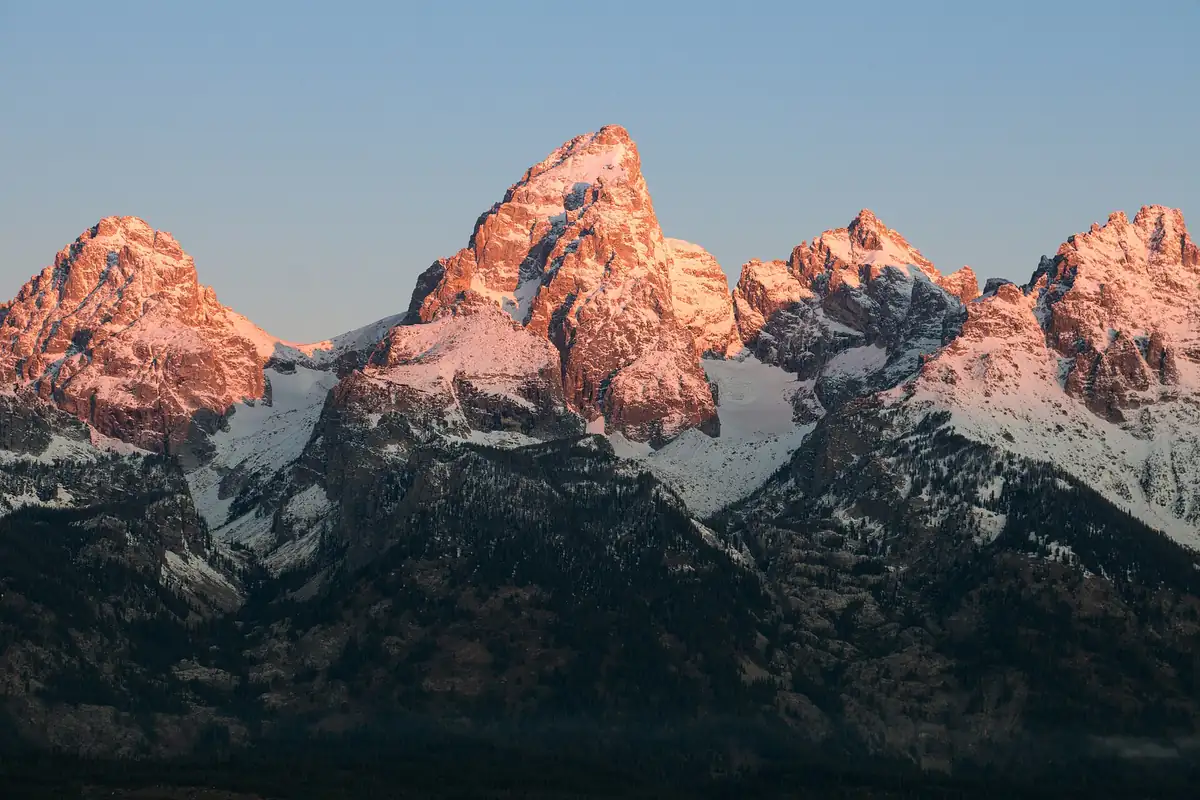
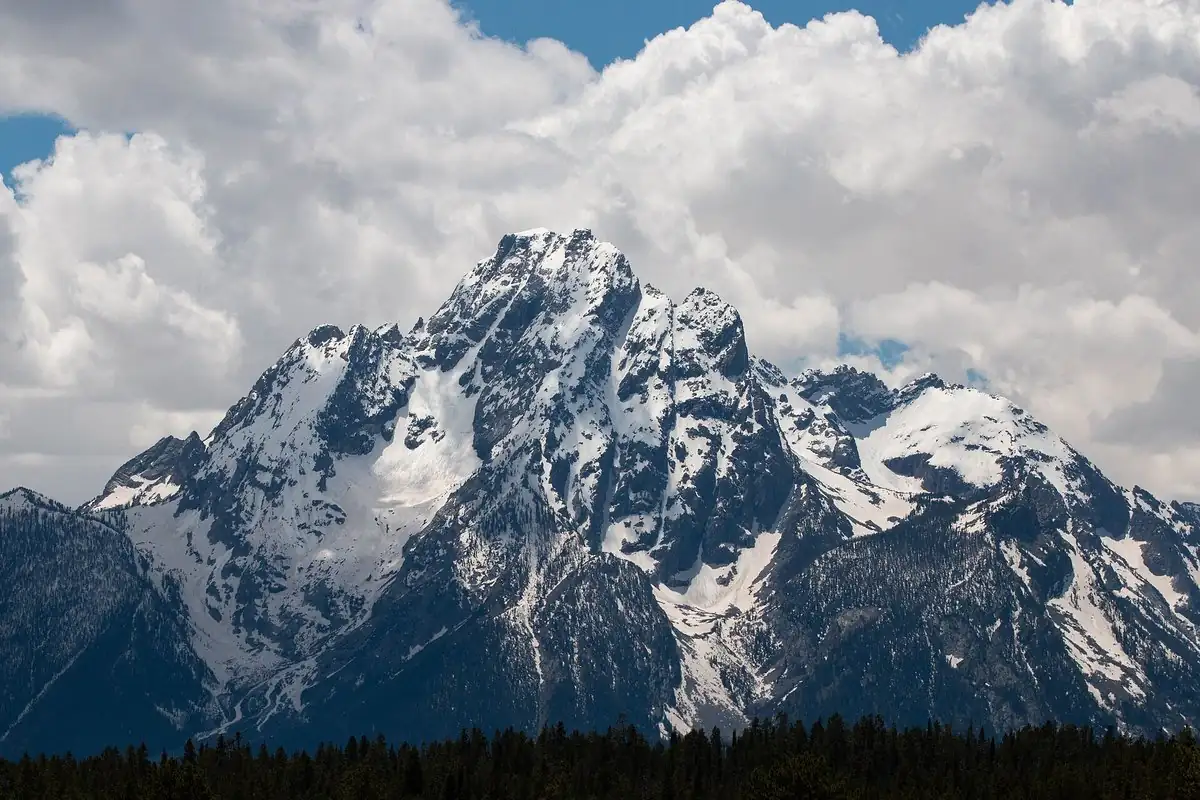
Grand Teton carries the name French-speaking fur trappers gave the three highest peaks of its range, Les Trois Tetons, which means “the three breasts.” That’s how the National Park Service tells it, and a trapper who saw the peaks in the 1830s wrote it down the same way. A government place-name book from 1902 gave a different answer, though, and it’s still floating around.
Three peaks a trapper could steer by
For the fur trappers, the Grand Teton was something to steer by. The National Park Service’s historic resource study of the park, A Place Called Jackson Hole, calls the Grand, Middle and South Tetons “among the most significant landmarks in the fur trade era.” If you were crossing this country on horseback in the 1820s, three tall peaks you could see from days away told you where you were.
The first written description comes from the Astor expedition. In September 1811, Wilson Price Hunt’s party was crossing the mountains west of the Wind River when one of their guides pointed out “three mountain peaks glistening with snow.” Washington Irving, who told the expedition’s story in Astoria, says the travelers greeted them the way sailors hail a beacon on the shore after a long, dangerous voyage.
Hunt’s name: Pilot Knobs
A few lines later, Irving gives the peaks two names at once. “These remarkable peaks are known to some travellers as the Tetons,” he wrote, but “as they had been guiding points for many days, to Mr. Hunt, he gave them the name of the Pilot Knobs.” The park’s own page on the mountain says the same: Hunt called them Pilot Knobs in 1811 because he’d used them to find his way over Union Pass.
Hunt’s name didn’t last, and you can watch it fade in print. Alexander Ross, who traded furs in the Oregon country, wrote in his 1855 book that “the hunters very aptly designate them the Pilot Knobs.” Then he added a footnote: “They are now generally known as the Three Paps, or ‘Tetons.’”
“The French name of Tetons or Teats”
So where did “Tetons” come from? The trappers’ version is the one with the most support.
The trappers’ version
A Place Called Jackson Hole says that by the 1820s the peaks were known as the “Trois Tetons,” the Three Paps or the Three Tetons, and that Iroquois or French Canadian trappers from the Pacific Northwest “may have been responsible for the new name.” The study doesn’t name a person or a year. Another chapter of the same book, on climbing, translates “Trois Tetons” as “roughly translated, three breasts.”
The best evidence comes from someone who was there. Osborne Russell trapped in the Rockies from 1834 to 1843, and his journal describes the view from Pierre’s Hole, on the Idaho side: a range “capped with three spiral peaks which pierce the clouds. These peaks bear the French name of Tetons or Teats.” In the next sentence he adds that “the Snake Indians called them the hoary headed Fathers.” He doesn’t give the words in their own language, so that’s as far as anyone can take it from his book.
The Sioux version
In 1902, Henry Gannett, who signed his work as the U.S. Geological Survey’s geographer, published a book on the origins of American place names. His entry for “Teton” lumps the Wyoming range together with a county, a river and a mountain in Montana and a town in Idaho, all “named for an Indian tribe whose name was variously written Teton, Titon, or Titowan.” His 1905 edition spells it out as “a division of the Sioux tribe” and adds a translation of that name, “prairie dwellers.”
Gannett’s entry doesn’t say where he got any of it, and none of the older accounts read for this article tie the peaks to the Sioux. It’s worth noticing that Irving’s Astoria uses the word both ways: it talks about “the Sioux Tetons” along the Missouri and, chapters later, the snowy “Tetons” on the horizon, without ever connecting the two. The Wyoming State Library’s place-name database still prints Gannett’s explanation under “Teton Range,” while its “Grand Teton” entry credits French trappers.
Which one holds up
The trappers’ version weighs more. Russell was trapping in those mountains when he wrote it down, decades before Gannett, and called it a French name in plain words. Ross’s “Three Paps,” the park’s historians and the park’s own page all point the same way. The Sioux explanation rests on a single reference book with no source behind it. Still, it came from a federal geographer in an official government book, so it isn’t a rumor you can wave off, and it’s why this story is marked as disputed.
Mount Hayden, a name that didn’t stick
The peak picked up a second name in 1872. That summer, the government survey led by Ferdinand V. Hayden mapped “the range of the Three Tetons,” and Hayden reported that two of his men, Stevenson and Langford, reached the top. His own letter in the survey’s report calls the peak “the Grand Teton,” but members of his party renamed it Mount Hayden in honor of their mentor, and a later section of the same report calls it “Mount Hayden, or the Great Téton.”
Not everyone went along. Captain William A. Jones of the Corps of Engineers, who explored northwestern Wyoming in 1873, wrote that “the culminating point of the Tetons has for a very long time been called the Grand Teton. It is a good name, and I see no reason for changing it.” He praised Hayden himself, then suggested that some other peak among the “thousand peaks worthy of a name” Hayden had described could have carried it instead.
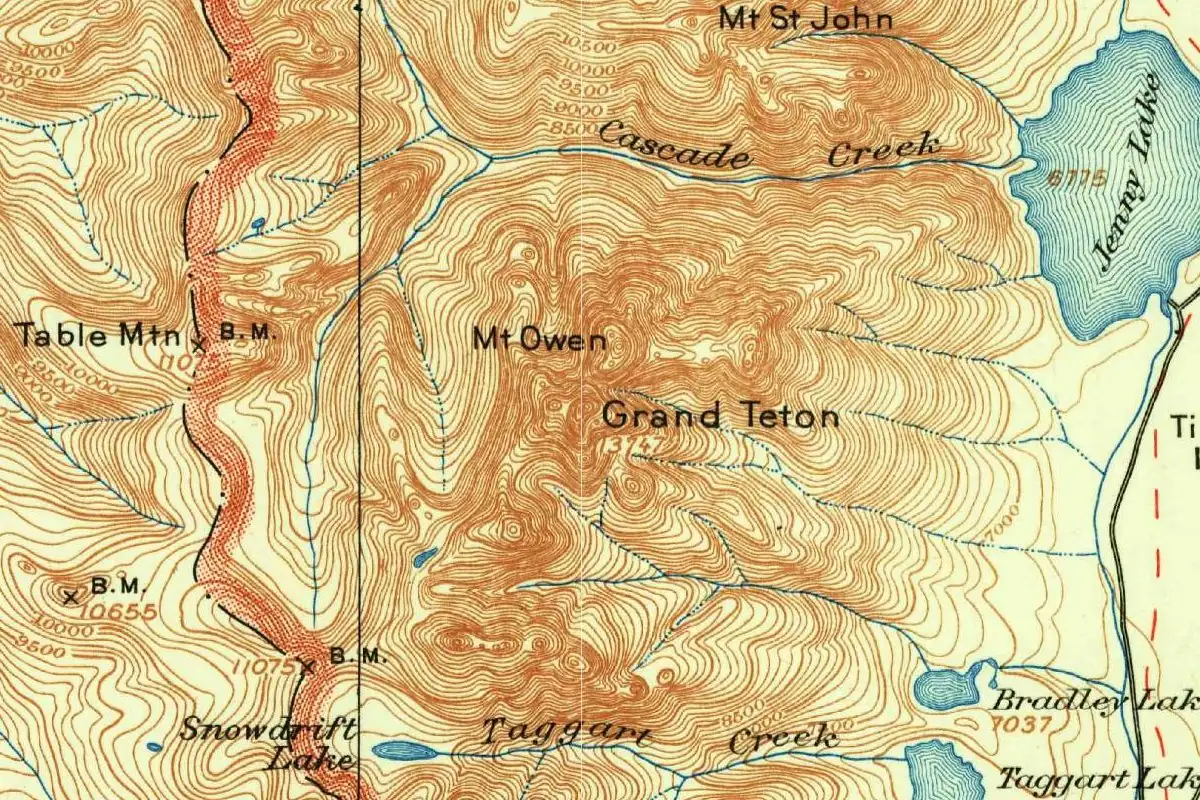
The park’s study sums it up: the Hayden survey renamed the Grand Teton for its leader, “but it failed to stick.” By 1899, the U.S. Geological Survey’s own map of the area printed “Grand Teton” across the peak, as you can see on the map at the bottom of this page. Today the federal place-names database lists Grand Teton as the official name and keeps Mount Hayden only as a variant. One wrinkle: its notes say the Doane expedition of 1870 already used “Mount Hayden,” citing a later book on Wyoming place names, while Jones and the park’s study tie the name to the 1872 survey.
From three peaks to a park
Today the name covers far more than three peaks. The Teton Range, Teton Pass and Teton Basin on the Idaho side, the old Pierre’s Hole, all carry it now. When President Calvin Coolidge signed the bill on February 26, 1929, it created Grand Teton National Park, a 96,000-acre park that took in the range and the lakes at its foot.
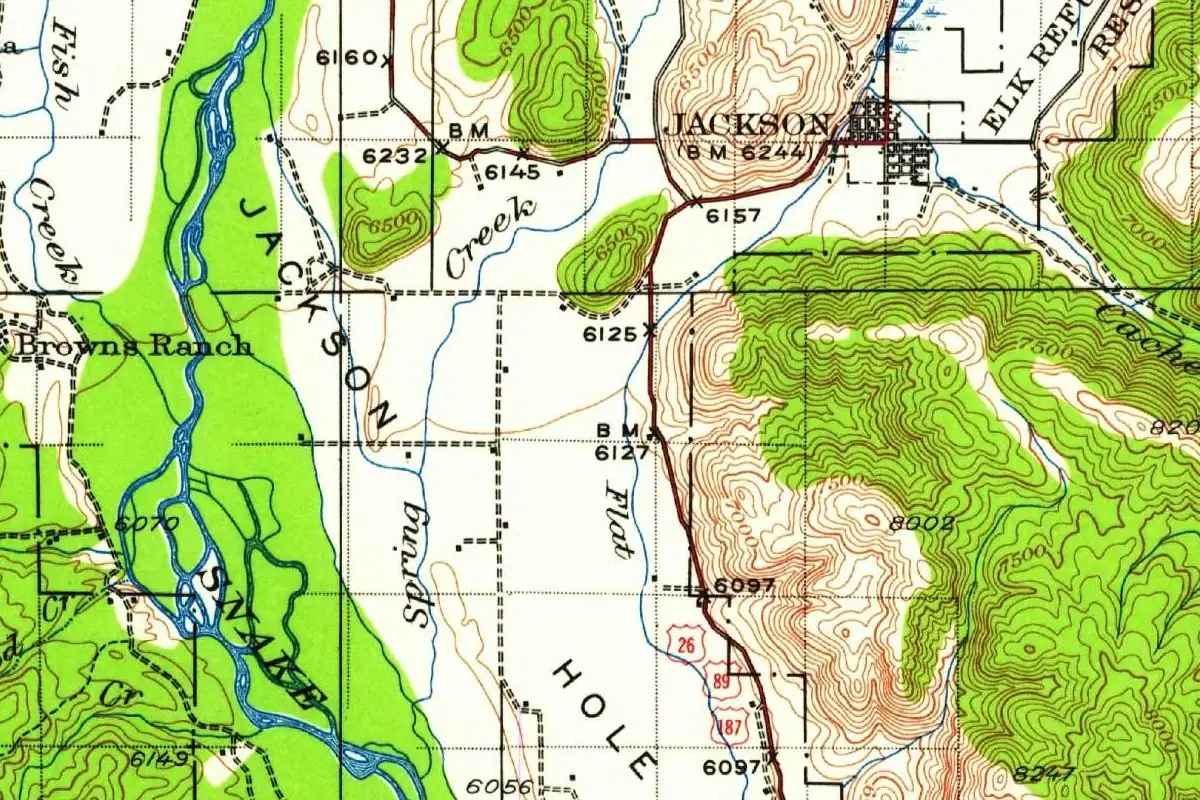
That park sits beside Jackson, the town in Jackson Hole, a valley trappers named for one of their own in the same fur-trade years. Both names are part of the fur-trade layer of Wyoming and the Rocky Mountains. Hunt’s Pilot Knobs had the more practical name. The trappers’ French one, blunt as it is, is the one that stuck.
Quick answers
What does Teton mean in Grand Teton?
Breast, in the version most sources give. The National Park Service says French fur trappers called the range Les Trois Tetons, “the three breasts,” and the trapper Osborne Russell wrote that the peaks “bear the French name of Tetons or Teats.” Henry Gannett’s 1905 USGS book tied the name to a division of the Sioux instead, a name he said “means ‘prairie dwellers.’”
Are the Tetons named after the Teton Sioux?
The sources don’t agree. Henry Gannett’s USGS place-name books said the range was named for a tribe called Teton, which his 1905 edition calls a division of the Sioux, but he gave no source. The National Park Service, the park’s historians and the trapper Osborne Russell all point to a French name instead.
What else have the Tetons been called?
Pilot Knobs, for one. Washington Irving’s Astoria says Wilson Price Hunt gave them that name in 1811 because they’d guided his party for days, though Irving adds that some travelers knew them as the Tetons. Alexander Ross wrote in 1855 that they were by then “generally known as the Three Paps, or ‘Tetons.’”
Was Grand Teton ever called Mount Hayden?
Yes, briefly. Members of the 1872 Hayden survey renamed it for their leader, but Army engineer William A. Jones objected in his report, and the park’s historic resource study says the new name “failed to stick.”
Key dates
- 1811September: Wilson Price Hunt's party sees three snowy peaks from the mountains, and Hunt calls them the Pilot Knobs.
- 1855Alexander Ross's book says the peaks are "now generally known as the Three Paps, or 'Tetons.'"
- 1872Members of the Hayden survey rename the highest peak Mount Hayden.
- 1875Army engineer William A. Jones's report defends the old name: "It is a good name."
- 1899The USGS Grand Teton map sheet labels the peak Grand Teton.
- 1902Henry Gannett's USGS place-name book says the range is named for an Indian tribe called Teton, Titon or Titowan.
- 1929February 26: President Coolidge signs the bill creating Grand Teton National Park.
Historical Sources & References
- National Park Service, “Grand Teton” (place page, last updated March 8, 2021). The park’s own “Name Origin” note: French fur trappers called the range “Les Trois Tetons, meaning the three breasts,” and Wilson Price Hunt called the peaks “Pilot Knobs” in 1811 after using them to cross Union Pass.
- John Daugherty, A Place Called Jackson Hole: A Historic Resource Study of Grand Teton National Park (NPS, 1999), chapter 3. The Tetons as fur-trade landmarks; “Trois Tetons,” Three Paps or Three Tetons by the 1820s; Iroquois or French Canadian trappers “may have been responsible for the new name”; Irving’s and Ross’s Pilot Knobs passages.
- Reynold G. Jackson, “Park of the Matterhorns,” chapter 16 of A Place Called Jackson Hole (NPS, 1999). The Grand, Middle and South Tetons as the “Trois Tetons,” “roughly translated, three breasts.”
- John Daugherty, A Place Called Jackson Hole (NPS, 1999), chapter 4. The 1872 Hayden survey renamed the Grand Teton “Mount Hayden,” “but it failed to stick.” Also online: chapter 17, on the bill signed February 26, 1929, creating the 96,000-acre park.
- Washington Irving, Astoria, revised edition (1849), chapter XXIX, p. 261. Hunt’s guide points to “three mountain peaks glistening with snow”; “known to some travellers as the Tetons,” Hunt “gave them the name of the Pilot Knobs.” The same book’s “Sioux Tetons” on the Missouri.
- Alexander Ross, The Fur Hunters of the Far West, vol. 1 (1855), p. 267. “The hunters very aptly designate them the Pilot Knobs,” with the footnote “They are now generally known as the Three Paps, or ‘Tetons.’”
- Osborne Russell, Journal of a Trapper (1914), p. 14. A trapper’s own words from Pierre’s Hole: “These peaks bear the French name of Tetons or Teats. The Snake Indians called them the hoary headed Fathers.”
- F. V. Hayden, Sixth Annual Report of the U.S. Geological Survey of the Territories (1873). Hayden’s letter (p. 2) on mapping “the range of the Three Tetons” and the climb of “the Grand Teton” by Stevenson and Langford; the elevation table (p. 815) listing “Mount Hayden, or the Great Téton.”
- William A. Jones, Report upon the Reconnaissance of Northwestern Wyoming (1875), pp. 42-43. “The culminating point of the Tetons has for a very long time been called the Grand Teton. It is a good name, and I see no reason for changing it.”
- Henry Gannett, The Origin of Certain Place Names in the United States, 2nd ed. (USGS, 1905), p. 299. Entry “Teton”: the Wyoming range “named for a division of the Sioux tribe, whose name was variously written Teton, Titon, or Titowan, and means ‘prairie dwellers.’” Also online: the 1902 first edition, p. 252, which says “an Indian tribe.”
- Wyoming State Library, Wyoming Places database, “Grand Teton”. A WPA-era note crediting French trappers and calling Mount Hayden a name that “never gained any local standing.” Also online: its “Teton Range” entry, which repeats Gannett’s Sioux explanation.
- GNIS feature 1609199, Grand Teton (U.S. Geological Survey). The official name and coordinates in Teton County, with Mount Hayden, Grand Teton Peak and Grand Teton Mountain as variants, and a note dating “Mount Hayden” to the Doane expedition of 1870.
- GNIS feature 1930553, Teton Range (U.S. Geological Survey). The range’s official name, with Grand Tetons, Grand Teton Mountains, Teton Mountains and Teton Mountain Range as variants.
Spot something wrong, or know more? Tell us here. You can also email us or use our contact page. Corrections are noted here with their date, never made silently.