Livingston, Montana: The Town That Started as Clark City
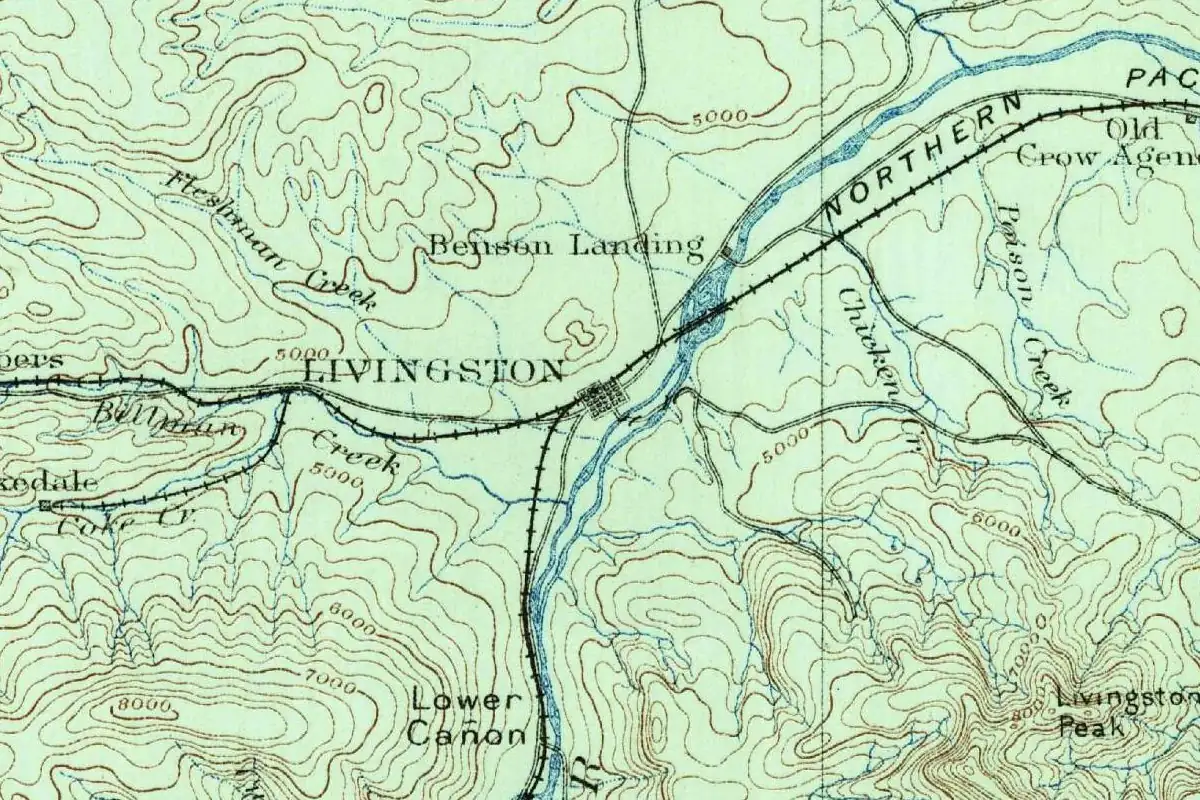
Livingston, Montana, started out in 1882 as Clark City, and its people didn’t know the railroad had already put another name on its maps. The Northern Pacific had picked Livingston, after Crawford Livingston of St. Paul, one of its directors. Once the railroad laid out its own town, Clark City didn’t stand a chance.
A store in a tent
The town grew out of the railroad’s construction camps. An Illustrated History of the Yellowstone Valley (1907) explains how it worked: as the Northern Pacific pushed west, contractors set up supply stores for the work crews, and wherever a store went, a camp would “spring into existence as if by magic.”
In July 1882, a contractor’s agent showed up on the Yellowstone to pick a spot for one of those stores. On the night of July 16, he and George H. Carver pitched a tent on the site, the first place anyone lived in the future town. The store opened in tents on August 1. The book says that was the first business in “the town of Clark City (named in honor of Captain William Clark).”
Thirty saloons
Clark City grew fast. Within ten days, the whole camp had moved up from Benson’s Landing, downriver. By the November election, the town cast 348 votes. When the first construction train pulled in on December 1, the 1907 history counts six general stores, two drugstores, two hotels and “thirty saloons.” You’ll notice the saloons outnumbered everything else put together. The book shrugs that off, saying anyone who knew early railroad camps wouldn’t think thirty was out of proportion.
The name on the railroad’s map
Here’s the catch. Clark City was a full 100 miles from the end of the track, and the people living there were “practically out of communication with the outside world.” What they didn’t know, the 1907 history says, was “that the officials of the Northern Pacific had marked on their maps a town at this place called Livingston, in honor of Crawford Livingston, of St. Paul, a director of the Northern Pacific corporation.”
The federal government’s own place-name expert, Henry Gannett, agrees on the man in his 1905 book. It calls Crawford Livingston “one of the proprietors of the town site.”
In November 1882, Robert J. Perry surveyed the townsite for the railroad, and on December 21 the plat was recorded by T. F. Oakes, the company’s vice president. The new town sat a bit farther north, near the tracks. The 1907 history calls it “the death knell of the town of Clark City.” The businesses started moving right away, and by late the next summer the last of them had packed up. If you’d gone looking for Clark City in 1907, you wouldn’t have found it on its own: by then, the book says, both sites were inside the city of Livingston.
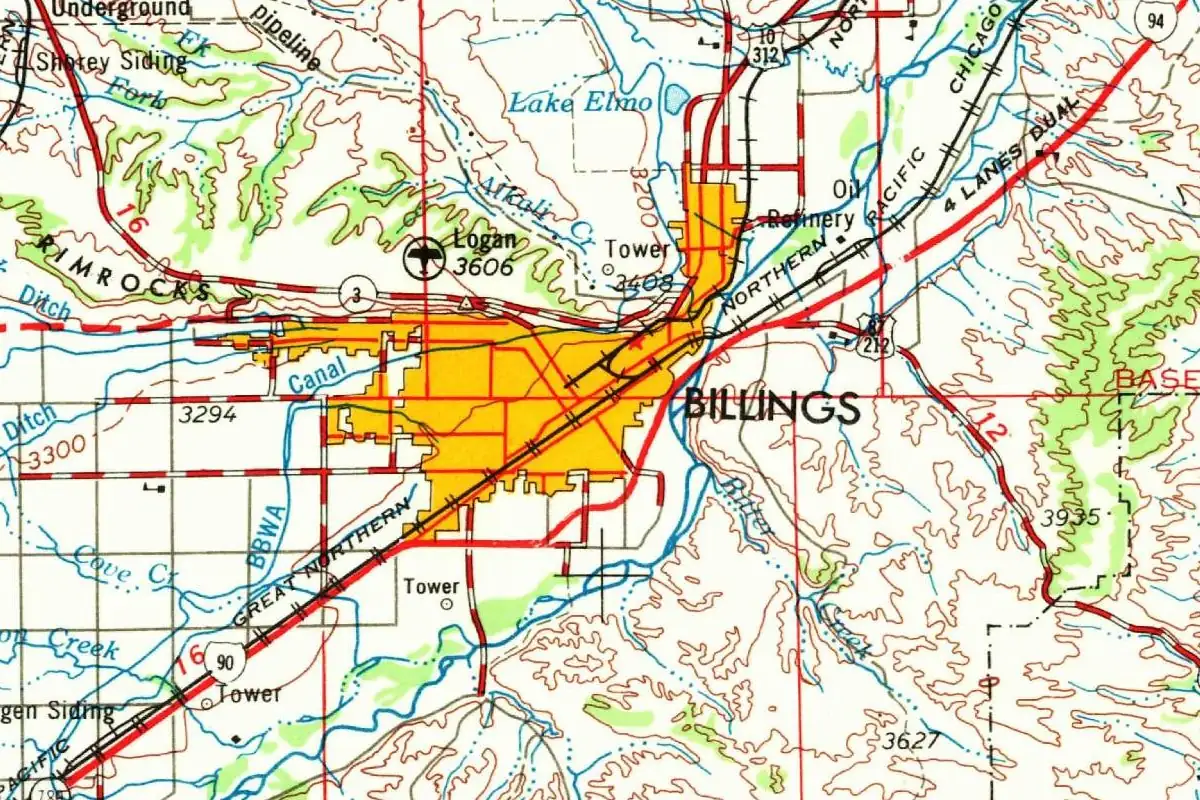
Billings, farther down the Yellowstone, came out of the same railroad push the same year and was also named for a Northern Pacific man.
Sources & further reading
- An Illustrated History of the Yellowstone Valley (1907), pp. 150–151. The supply-store camps, the tent of July 16, 1882, Clark City and Captain William Clark, Benson’s Landing, the thirty saloons, the Northern Pacific’s map name, Crawford Livingston, and the plat of December 21, 1882.
- Henry Gannett, The Origin of Certain Place Names in the United States (USGS, 1905), p. 188. “Named for Crawford Livingston, one of the proprietors of the town site.”
- GNIS feature 773511 (U.S. Geological Survey). The federal record for the city of Livingston.
Spot something wrong, or know more? Tell us here. You can also email us or use our contact page. Corrections are noted here with their date, never made silently.