How Manhattan, Kansas Got Its Name From a Steamboat Colony
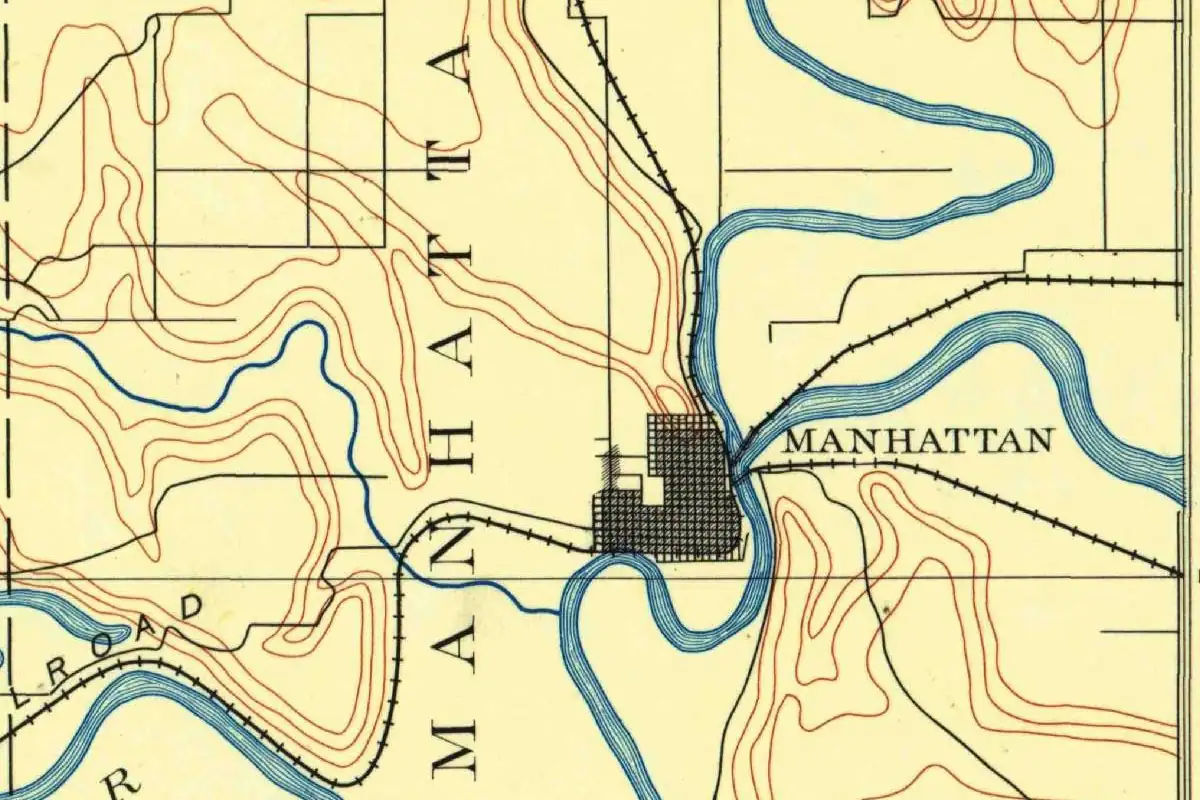
Manhattan, Kansas, got its name from Ohio settlers who hoped their town might someday bear “some comparison to New York.” When they showed up in 1855, the place already had a name. It was Boston.
Three towns on one spot
By the spring of 1855, at least three groups had staked a claim where the Big Blue River runs into the Kansas. The 1883 History of the State of Kansas, published by A. T. Andreas, lays it out. In the fall of 1854, Col. George S. Park of Parkville, Missouri, laid out a town called Poleska. Later that season, five men from Illinois, Ohio, Iowa, Maine and Rhode Island laid out another one at the mouth of the Big Blue and called it Canton.
Then a committee from a New England company arrived in March 1855 and decided to merge everybody into “one good town.” On April 4, the combined group organized as the Boston Association and named the town Boston.
The Hartford comes up the river
Meanwhile, a colony had left Cincinnati on April 27, 1855, aboard the steamboat Hartford. Andreas says they had already settled on a name: “The name of Manhattan had been fixed upon as the prospective town, as it was thought there would be room for a town that might bear some comparison to New York.”
Getting there was rough. Authorities at St. Louis held the boat for days because they took it for “an abolition boat.” The colony hired a pilot for $750. Cholera broke out on board, and several people died. Low water stalled them at Kansas City for a week, and the boat ran aground near Lecompton. On June 1, it grounded for good about half a mile past the mouth of the Big Blue, and 75 people came ashore with ten houses ready to put up.
Here’s the odd part. Three of the Ohio men hired a wagon, drove to what is now Junction City, and laid out a town of Manhattan there. While they were gone, John Pipher met with the Boston Association, and the association voted to give the Ohio company half the town site if they would settle there and help build up the town. They took it, and “Boston became Manhattan.”
Frank Blackmar’s state cyclopedia, published in 1912, tells it much the same way. The Cincinnati party had come “for the purpose of establishing a town the name of which should be Manhattan,” got half of Boston’s town site as an inducement, “and the name was changed to Manhattan.”
A compromise, or a trade?
You’ll also run into a shorter version. In 1902, the Kansas State Historical Society’s list of city names, made for the U.S. Geological Survey, called the name “A compromise between persons who advocated the name New Boston and those who wished to name it New Cincinnati,” citing a source it identifies only as Fairchild.
The two accounts don’t really clash, since neither hometown ended up on the map. But the fuller histories make clear that the name wasn’t invented on the spot. The Ohio colony brought it with them on the boat. The Bostonians offered half their town site to get the newcomers to stay, and the new name came with the deal.
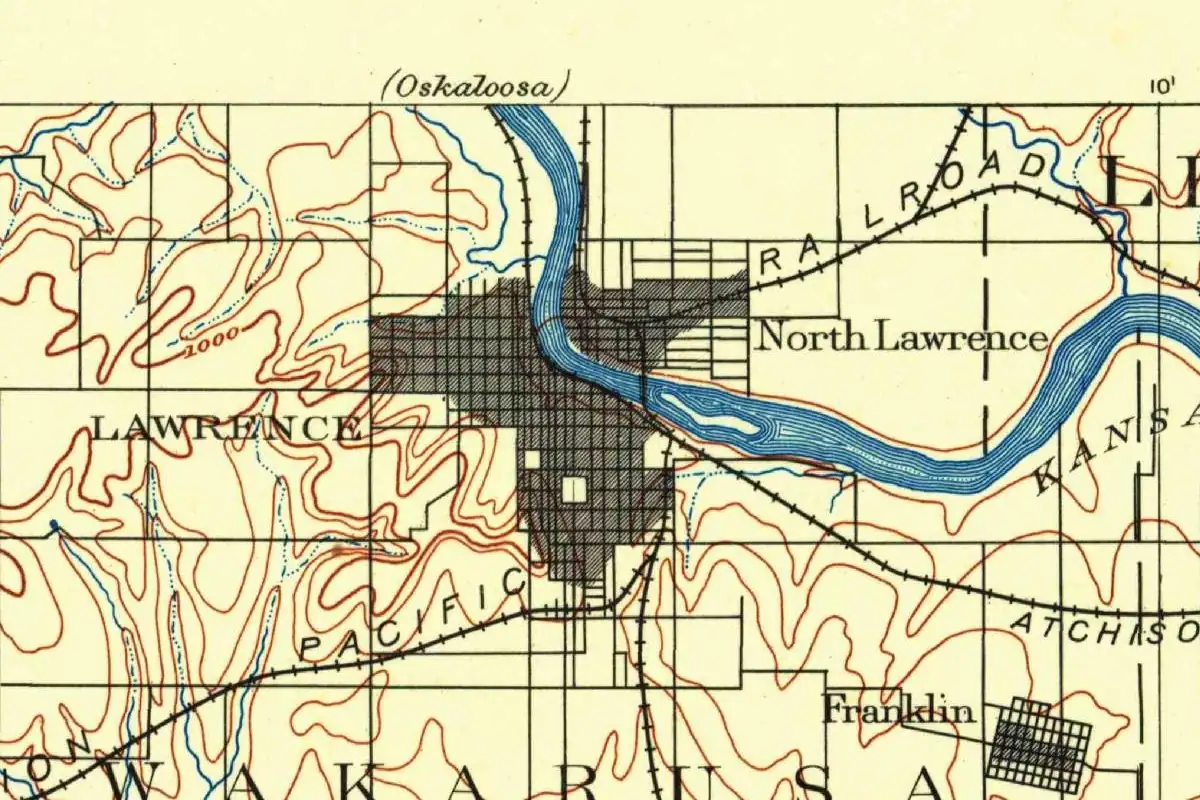
Boston was on more than one settler’s mind in those years. If you go back to the fall of 1854, you’ll find that Lawrence was also called New Boston for a while before it got its permanent name.
Sources & further reading
- A. T. Andreas, History of the State of Kansas (1883), Riley County, p. 1306. Poleska, Canton and Boston, the voyage of the Hartford, “some comparison to New York,” the Junction City detour, and the deal that turned Boston into Manhattan.
- Frank W. Blackmar, ed., Kansas: A Cyclopedia of State History, vol. 2 (1912), p. 213. The Cincinnati company’s plan for a town named Manhattan and the half share of the Boston town site.
- Kansas State Historical Society, “Origin of City Names,” Collections, vol. 7 (1902), p. 481. The “compromise” between New Boston and New Cincinnati.
- GNIS feature 476378 (U.S. Geological Survey). The federal record: founded in 1855, incorporated as a city in 1857.
Spot something wrong, or know more? Tell us here. You can also email us or use our contact page. Corrections are noted here with their date, never made silently.