Lawrence, Kansas: Before It Was Lawrence, It Was Yankee Town
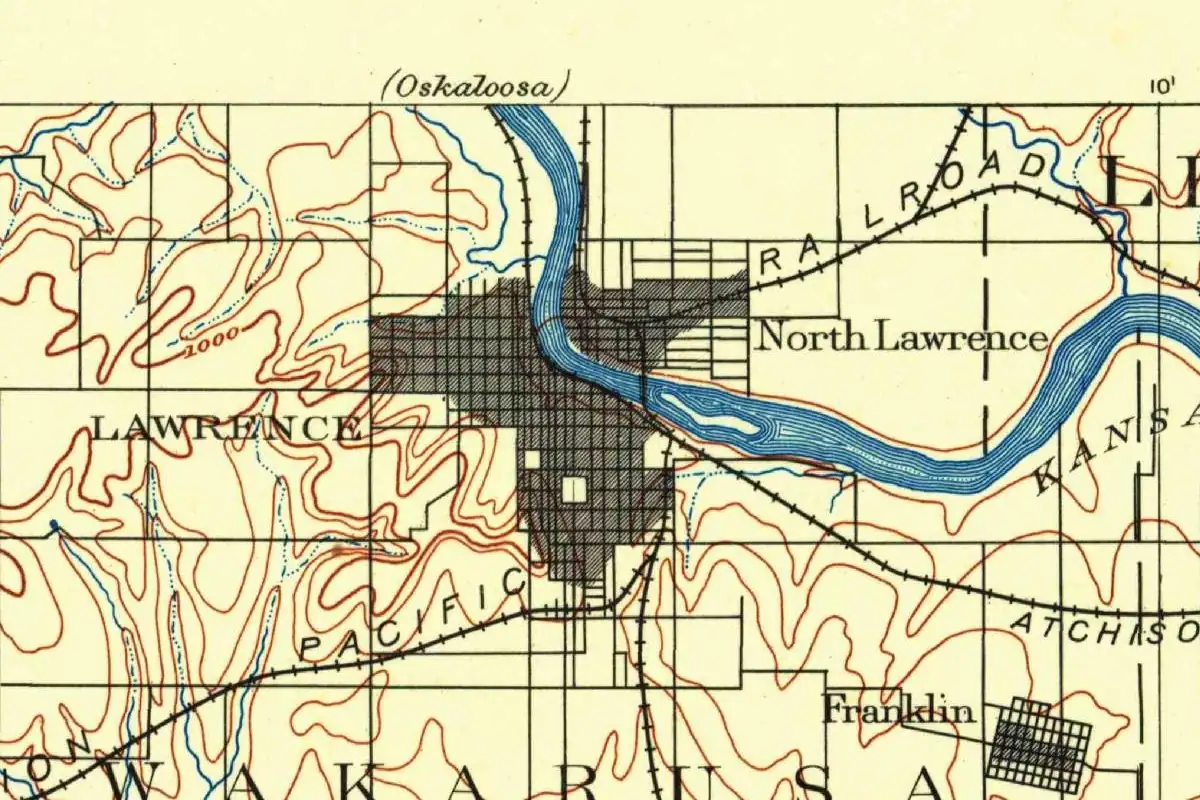
Before it was Lawrence, Kansas, the 1854 free-state camp went by Wakarusa, New Boston and Yankee Town. In the fall of that year, the settlers’ town association renamed it for Amos A. Lawrence, a Boston merchant and the treasurer of the company that sent them west.
Tents on Mount Oread
The town started as a project of the New England Emigrant Aid Society, which wanted Kansas settled by people opposed to slavery. Frank Blackmar’s Kansas: A Cyclopedia of State History, a 1912 reference work, tells it this way. The society sent Dr. Charles Robinson and Charles H. Branscomb out to pick a site in June 1854, and the spot they finally chose was one Robinson had passed years earlier on his way to California. The first party got there on July 31 and pitched 25 tents on the north end of Mount Oread. If you’ve visited the University of Kansas, you’ve been on that hill: Blackmar notes the state university stands there.
A second party of 114 arrived on September 9. The town association organized that month, and surveying began on the 25th. By then the camp had already been called three different things.
Two reasons for the name
A. T. Andreas’s History of the State of Kansas (1883) gives the reasons the settlers stated at the meeting where they made it official. The town that “had been called Wakarusa, New Boston and Yankee Town” was “regularly christened” Lawrence City:
“first to honor Amos A. Lawrence, of Boston, both as an individual and officer of the company, and second, because the name sounded well, and had no bad odor attached to it in any part of the Union.”
In plain terms, it wouldn’t offend anybody, North or South. That worry was real enough. A few months later, the founders of Topeka went looking for a name partly because, as one of them wrote, pro-slavery people liked to tag Yankee settlements with insulting nicknames.
Who Amos Lawrence was
Blackmar’s entry on him fills in the rest. Amos Adams Lawrence was born in Boston in 1814, graduated from Harvard in 1835, and went into the cotton business his father had run. He worked with Eli Thayer on the Kansas colonization effort and was treasurer of the Emigrant Aid company. The Kansas State Historical Society, in a 1902 roundup prepared for the U.S. Geological Survey, and Henry Gannett’s 1905 federal list give the same one-line answer: the city is named for Amos Lawrence, of Boston.
His money stayed in the story, too. Blackmar says he gave nearly $12,000 toward a free-state college in Kansas, and after “a series of changes” that money went to the University of Kansas. If you’ve heard of Lawrence University in Appleton, Wisconsin, that’s his name as well: he gave $10,000 in 1846 to start what was then the Lawrence Institute.
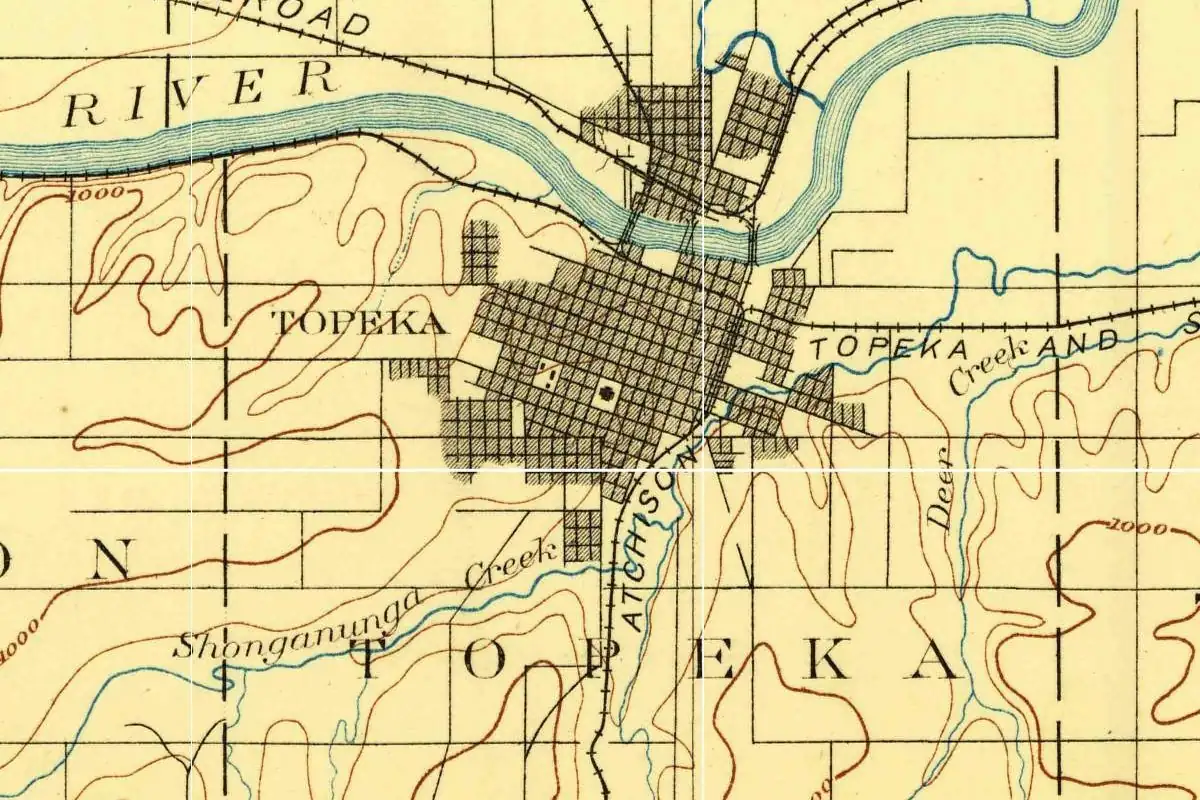
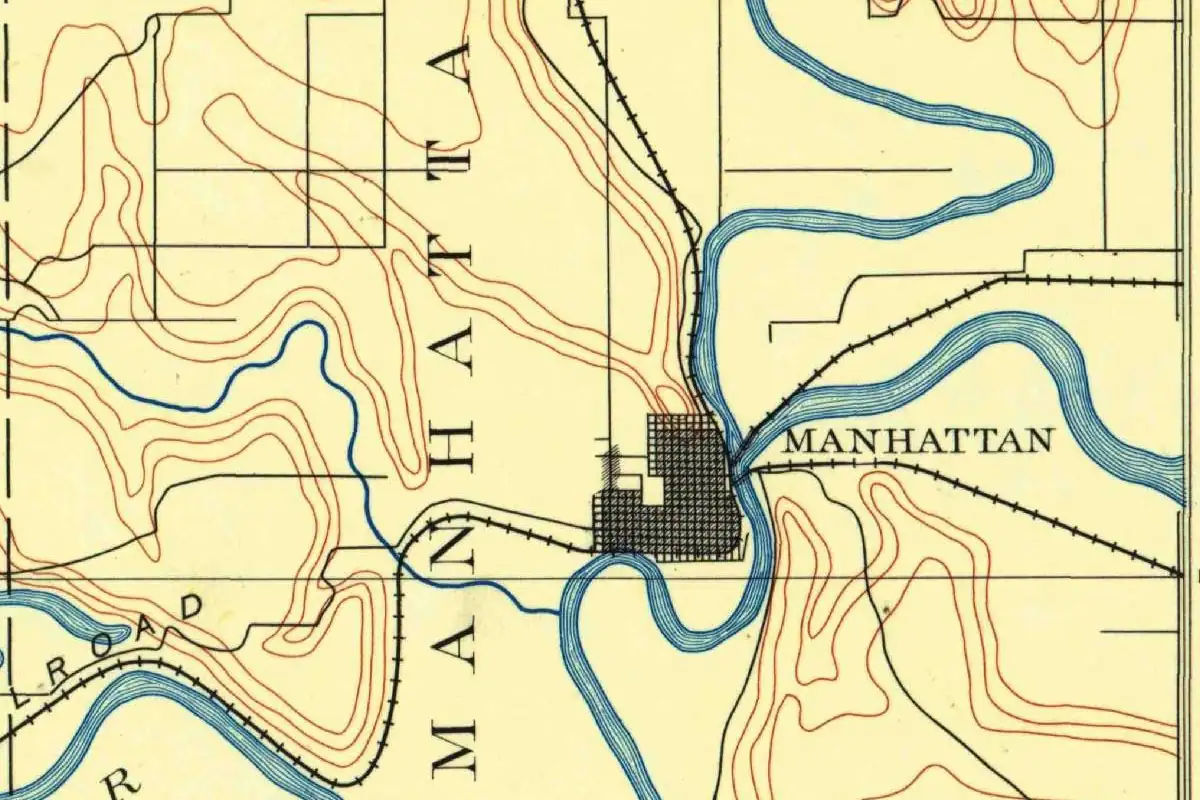
The settlers who went on to found Topeka a few months later stopped in Lawrence first, and Manhattan began with another New England company the next spring.
Sources & further reading
- A. T. Andreas, History of the State of Kansas (1883), Douglas County, pp. 313–314. The earlier names Wakarusa, New Boston and Yankee Town, and the two reasons given for choosing Lawrence.
- Frank W. Blackmar, ed., Kansas: A Cyclopedia of State History, vol. 2 (1912), pp. 112–113 and 116. Robinson and Branscomb, the tents on Mount Oread, the dates of 1854, and the biography of Amos Adams Lawrence.
- Kansas State Historical Society, “Origin of City Names,” Collections, vol. 7 (1902), p. 480. “For Amos A. Lawrence, of Boston, Mass.”
- Henry Gannett, The Origin of Certain Place Names in the United States, 2nd ed. (USGS, 1905), p. 183. “Named for Amos Lawrence, of Boston.”
- F. W. Giles, Thirty Years in Topeka (1886), p. 51. Why Topeka’s founders worried about pro-slavery nicknames.
- GNIS feature 479145 (U.S. Geological Survey). The federal record: founded in 1854, incorporated in 1858, named for Amos Lawrence.
Spot something wrong, or know more? Tell us here. You can also email us or use our contact page. Corrections are noted here with their date, never made silently.