Mount Rainier Is Named for an Admiral Who Never Saw It
Mount Rainier is named for a British admiral who never saw it: in May 1792, George Vancouver gave the peak his friend Peter Rainier’s name. The Native names are much older, and for well over a century people have been trying to put one of them back on the map.
“After my friend Rear Admiral Rainier”
Captain George Vancouver of the British Navy spent the spring of 1792 exploring the inland waters he named Puget Sound, handing out English names as he went. On Tuesday, May 8, the weather was “serene and pleasant,” and he took compass bearings on the snowy range to the east. One clause in his journal did the naming: the big round peak at the south end of the range, he wrote, was the one “which, after my friend Rear Admiral Rainier, I distinguished by the name of MOUNT RAINIER.”
That’s the whole ceremony. Edmond Meany, the University of Washington historian who reprinted the passage in 1916, took it from the second edition of Vancouver’s Voyage of Discovery, volume II, page 79. In his 1923 book on the state’s place names, Meany identifies the honoree as Rear Admiral Peter Rainier of the British Navy.
Here’s the odd part: Rainier himself never laid eyes on it. The National Park Service says he “never saw the mountain named for him in person,” and the Puyallup Tribe and its Lushootseed language consultant, Zalmai Zahir, say the same. The Tribe adds that he fought against the American colonies in the Revolutionary War, and the old Dictionary of National Biography backs that up: in July 1778, commanding the British sloop Ostrich, Rainier captured “a large American privateer” and was severely wounded doing it. He spent much of his career in the East Indies, and he wasn’t even an admiral yet in 1792; the same biography says he made rear admiral on June 1, 1795. So if you’ve ever wondered why Washington’s tallest mountain carries a name with no local tie at all, that’s why.
Winthrop’s “somebody or nobody”
The first famous complaint came from Theodore Winthrop, a young writer from New Haven, Connecticut, who visited Puget Sound in 1853. His book The Canoe and the Saddle came out in 1862, after he’d been killed in the Civil War. Looking at the peak, he wrote that “Mount Regnier Christians have dubbed it, in stupid nomenclature perpetuating the name of somebody or nobody.”
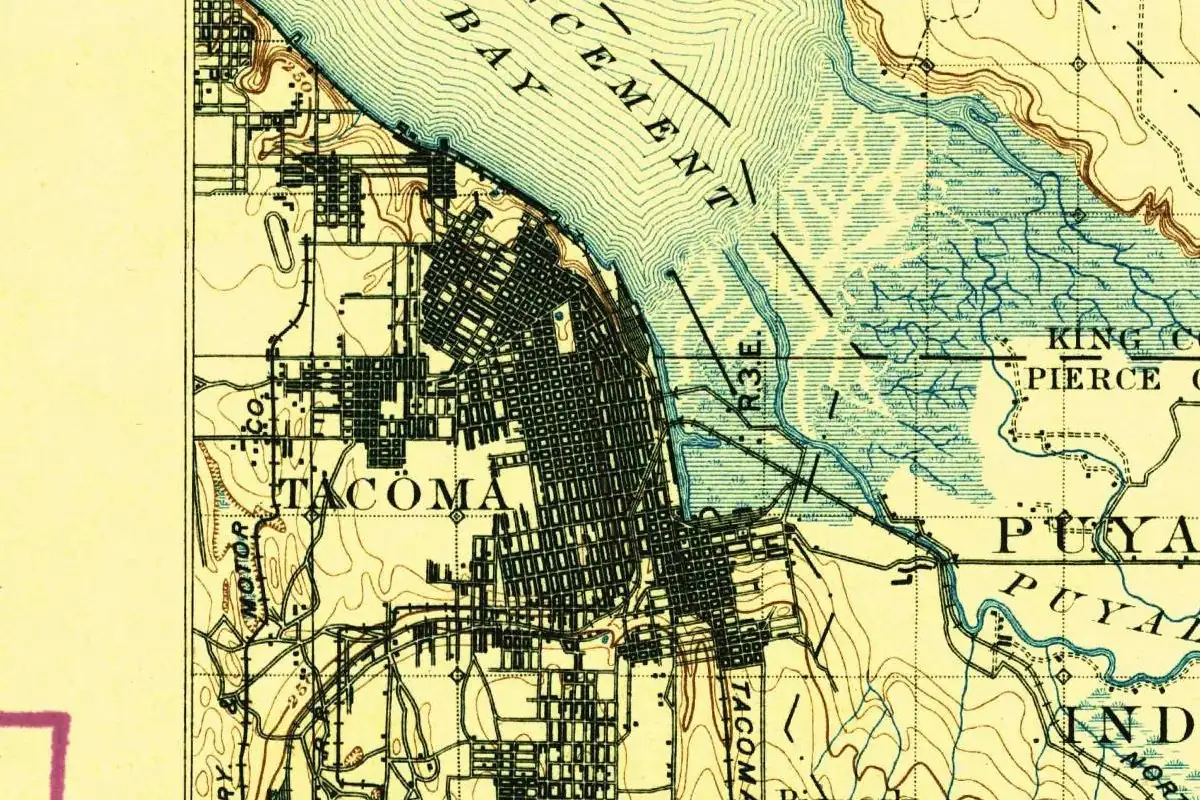
He called it Tacoma instead, “a generic term also applied to all snow peaks,” and he even nicknamed Mount Adams “Tacoma the second.” Meany knew of no earlier place where that name for the mountain had appeared in print. Six years later, a new town on Commencement Bay picked it up, and that’s how Tacoma got its name.
A mountain with twenty names
Winthrop’s Tacoma was only one of many. When the name fight reached the federal board in 1917, the evidence included a diary entry by Dr. William Fraser Tolmie of the Hudson’s Bay Company, who wrote on May 31, 1833, that the Indians called the mountain “Puskehouse.” Peter C. Stanup, son of a Puyallup sub-chief, gave the name as “Tiswauk,” and the missionary Father Boulet gave “Lu-ah-ku,” according to Meany’s summary of that record.
The most complete study is recent. In his 2025 paper, Zahir counted 20 attested names in seven languages around the mountain. He traces 14 of them back to a Proto-Salish form, *taqʷuʔman’, which he translates as “a unique, abundant source to get, fetch or carry water,” and four more to a word he gives as “(sky) wiper.” He also notes that Lushootseed speakers used təqʷubəʔ for “any snowcapped mountain,” which lines up with what Winthrop heard. The Tribe adds that the familiar “Tahoma” comes from the Yakama name tax̌úma, itself borrowed from the Salishan word.
Rainier vs. Tacoma at the federal board
The U.S. Board on Geographic Names sided with Rainier from the start. Its first report, printed in 1892, lists “Rainier, Mt.” as the adopted name and “Tacoma, Mt.” as a rejected form. The federal place-names database dates that Board decision to December 31, 1890.
The city of Tacoma didn’t let it go. Meany says the fight ran “for many years with much spirit and some bitterness,” and that the push went so far as proposing “Tacoma” as the name of the state of Washington when it joined the Union in 1889. The board ruled a second time in 1917, after a public hearing, and again chose Rainier. Its 1921 report puts it in one line: “Mount Rainier; Peak, Cascade Range, Pierce County, Wash. (Not Ranier nor Takoma.)”
Other ideas kept popping up. Back in 1849, J. Quinn Thornton had wanted to name the peak for President William Henry Harrison. And in July 1920, while Meany was writing his book, Civil War veterans of the Grand Army of the Republic were organizing a campaign to call it “Mount Lincoln.”
Still Rainier
You can check the current status yourself in the federal place-names file published in September 2026: the official name is still Mount Rainier, with Tahoma, Mount Tacoma, Ta-co-be and several other spellings kept as variant names.
Zahir opens his paper by noting the “frequent attempts to rename Mount Rainier to its indigenous name,” and he doesn’t pretend the answer is simple. Renaming it, he writes, “is a cultural, social, and political issue,” and he suggests that communities agree on a name that reflects all that variety. So the mountain still wears the name of a man who never saw it, and which of the older names should replace it, if any, is a question Zahir leaves to the communities that gave them.
Historical Sources & References
- Edmond S. Meany, ed., Mount Rainier: A Record of Exploration (1916). Chapter I reprints Vancouver’s journal for May 8, 1792, from the 1801 second edition of his Voyage, vol. II, p. 79. Chapter IV says Winthrop’s book is the first known place “Tacoma” appeared in print for the mountain. The place-names chapter: “Named for Admiral Peter Rainier of the British Navy by Captain George Vancouver in 1792.”
- Edmond S. Meany, Origin of Washington Geographic Names (1923). Entry “Mount Rainier,” pp. 177–178: Vancouver and Rear Admiral Peter Rainier, Thornton’s Harrison proposal (1849), Winthrop’s “Tacoma,” the Board decisions of 1890 and 1917, the 1889 “Tacoma” state-name idea, the Tolmie, Stanup and Boulet names, and the “Mount Lincoln” campaign of July 1920.
- Theodore Winthrop, The Canoe and the Saddle (1862). Pp. 44–45: “stupid nomenclature perpetuating the name of somebody or nobody” and Tacoma as “a generic term also applied to all snow peaks.” P. 46: “Tacoma the second, which Yankees call Mt. Adams.”
- First Report of the United States Board on Geographic Names, 1890–1891 (1892). “Rainier, Mt.” as an adopted name (p. 35) and “Tacoma, Mt.” as a rejected form pointing to Rainier (p. 39).
- Fifth Report of the United States Geographic Board, 1890 to 1920 (1921). P. 223: “Mount Rainier; Peak, Cascade Range, Pierce County, Wash. (Not Ranier nor Takoma.)”
- Zalmai ʔəswəli Zahir, “An Analysis of the Names for Mount Rainier,” Living Languages (2025). The 20 Native names in seven languages, the Proto-Salish forms and their translations, təqʷubəʔ as “any snowcapped mountain,” Rainier never having been to the region, and the renaming question (pp. 126–154).
- Puyallup Tribe of Indians, press release (February 21, 2025). The Tribe’s summary of the study: Tahoma from the Yakama tax̌úma, and Peter Rainier “fought against the colonies in the American Revolutionary War and never saw the mountain named for him.”
- GNIS feature 1533614, Mount Rainier (U.S. Geological Survey). The federal record (file of September 2026): official name by Board decision of December 31, 1890. The national AllNames file lists the variant names Tahoma, Tacoma, Mount Tacoma, Rainier Mountain, Puak-coke, Ta-co-pe, Tu-ah-ku and Ta-co-be.
- National Park Service, “Mount Rainier History”. The park’s own history page: Vancouver named the mountain for his friend Peter Rainier, and “Rear Admiral Rainier never saw the mountain named for him in person.”
- John Knox Laughton, “Rainier, Peter,” Dictionary of National Biography, vol. 47 (1896). Rainier’s naval career: the capture of “a large American privateer” in the Ostrich on July 8, 1778, his years in the East Indies, and his promotion to rear admiral on June 1, 1795.
Spot something wrong, or know more? Tell us here. You can also email us or use our contact page. Corrections are noted here with their date, never made silently.