Zion Canyon: The Pioneer Name That Beat "Mukuntuweap"
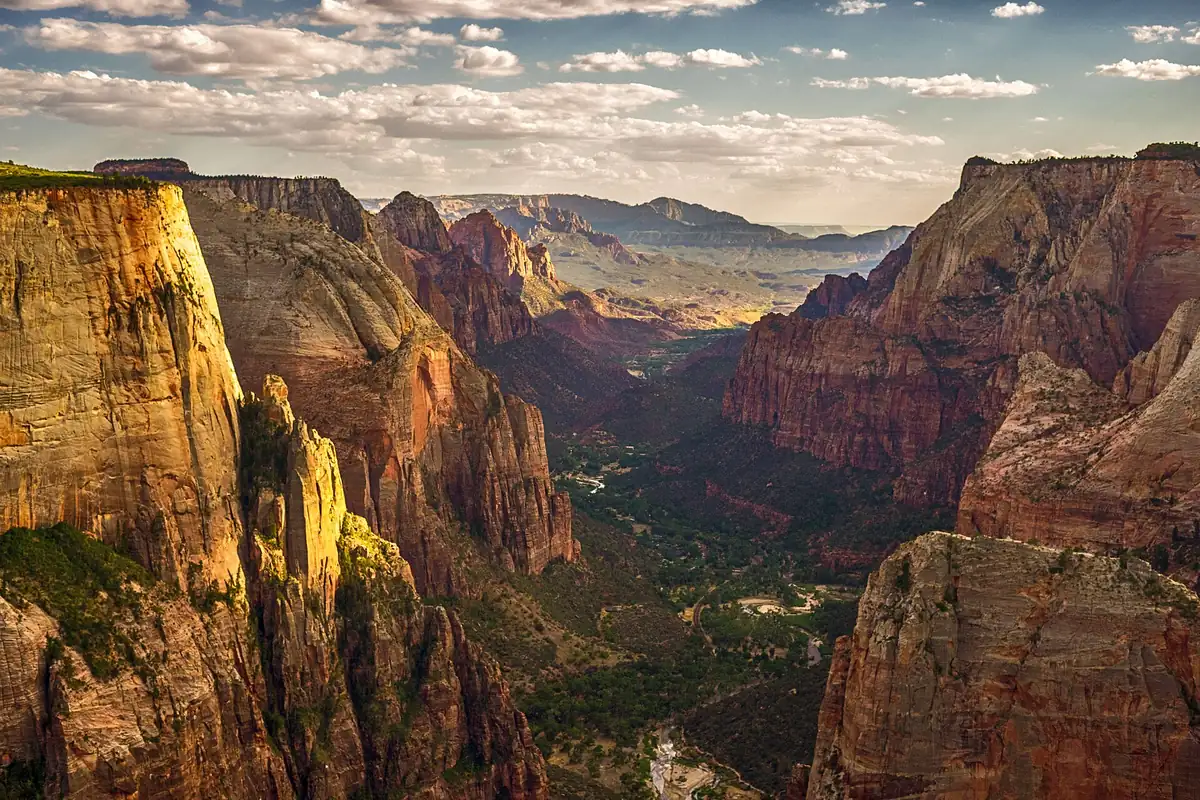
Zion Canyon carries a Bible name that Mormon settlers gave it in the 1860s, and it outlasted a Paiute name the federal government had put on its maps. For nine years it was officially Mukuntuweap National Monument, until a 1918 proclamation said the canyon should bear “the generally accepted name ‘Zion.’”
Isaac Behunin’s “Little Zion”
The first settlers in this stretch of the Virgin River were Mormon farmers, sent south by Brigham Young to grow cotton. The National Park Service says the first homestead in the canyon went up in 1863, built by Isaac Behunin near where Zion Lodge stands today. Before that, a young settler named Joseph Black had ridden up the canyon and come back raving about it, and people in the village below, according to Angus M. Woodbury’s 1937 history, dubbed the place “Joseph’s Glory,” half making fun of him.
The name that stuck came from Behunin, or so the story goes. Woodbury wrote that Behunin “used to sit in his yard of an evening” and look up at the cliffs, and that he’d say, “Here we have natural temples. We can worship as we please.” Up north, in Salt Lake City, the church was building a temple in a place its people usually called Zion. Behunin, Woodbury says, decided his canyon was “as much Zion as Salt Lake” and called it “Little Zion.”
Woodbury introduces all of that with “It is related,” and you should read it that way. Nobody wrote down Behunin’s words at the time. A. Karl Larson, writing for the Utah Historical Quarterly in 1969, put it carefully: Behunin “is thought to have named the canyon.” Still, the basic fact is older than any of these histories. When the government geologist Clarence Dutton described “Little Zion Valley” in a report printed in 1882, he added: “No wonder the fierce Mormon zealot, who named it, was reminded of the Great Zion.” Dutton didn’t give the zealot a name, but he knew a settler had picked it.
What “Zion” means
So what does Zion mean? In the Bible, it’s a place before it’s an idea. M. G. Easton’s 1893 Illustrated Bible Dictionary calls Zion “one of the eminences on which Jerusalem was built,” the hill King David took from the Jebusites, where he built a citadel and a palace. Later books of the Old Testament use the name for Jerusalem as a whole, and sometimes for God’s chosen people. In the New Testament, Easton says, it can mean the church or “the heavenly city.”
The word itself is harder to pin down. Easton’s dictionary translates it as “sunny; height.” The National Park Service’s history page says Zion “is ancient Hebrew for ‘sanctuary’ or ‘refuge.’” The Jewish Encyclopedia doesn’t try to translate it at all. It only notes that the name seems to have belonged to part of Jerusalem already when David took the city, in the Second Book of Samuel. So if you’ve seen different answers online, that’s why.
For the settlers, the word had a meaning of its own. The 1941 WPA guide to Utah explains that Joseph Smith, the church’s founder, had named a place in Missouri as Zion, “a place of gathering for the faithful.” In Behunin’s day, Woodbury says, Salt Lake City was the place people usually meant. Calling a side canyon “Little Zion” put it in that company.
Brigham Young’s “Not Zion”
The best-known story about the name is a put-down. Woodbury tells it like this: a few years after Behunin moved in, Brigham Young came to Springdale to look at some land, heard about the canyon, and asked who lived up there. Told it was just three rough old settlers, Young said, “No, it’s not Zion. Zion is the place where the pure in heart dwell,” and didn’t go. After that, people called the canyon “Not Zion” for a while.
The details move around depending on who’s telling it. Wayne Hinton’s 2000 history in the Utah Historical Quarterly dates Young’s visit to 1870. A 2016 University of Nevada, Las Vegas thesis by Sara Black says that in some versions it was a group of church bishops, that they spotted tobacco growing in Behunin’s fields, and that a Springdale history credits the remark to a Bishop Hunter instead of Young. It’s a local legend with several tellers, and it’s fun because it ended up not mattering. The canyon kept the name.
A refuge from attack?
The 1918 proclamation that made the name official gives a different reason for it. It says Mormon settlers named the canyon Zion “because it was regarded as a safe refuge in the event of Indian attacks on neighboring settlements.” Woodbury’s history doesn’t back that up. When “Indian troubles” developed in the region around 1865, he says, the settlers of Springdale and Shunesburg moved down to Rockville, and “there is no evidence to indicate that any of them went up into Zion Canyon for protection.” The government’s reason is the one in the official record, but it’s not the one the local histories tell.
Powell’s Mukuntuweap
The federal government had its own name for the canyon, and it came from John Wesley Powell. Woodbury says Powell heard about the canyon during his second trip down the Colorado through the Grand Canyon, in 1872, and went over to see it. Larson dates his day in Zion Canyon to the same year. In the report Powell published in 1875, he wrote: “The Indians call the cañon, through which it runs, Mu-koon’-tu-weap, or Straight Cañon.” The Park Service still gives that meaning, “straight canyon,” and says it was the Southern Paiute name.
Woodbury, writing in 1937, wasn’t so sure. He called the origin of the name “in doubt” and passed along two legends about it, one tying it to an Indian man the settlers called Muggins and his farm, the other to the Great Spirit. He also said the Paiutes’ own name for the canyon was something else entirely. Black’s thesis points out that tourism writers later turned Mukuntuweap into “The Home of God” or “Home of the Spirits,” translations she puts down to “a lack of knowledge or the desire for sensationalism.” Powell’s “Straight Cañon” is the only one with a source from the time.
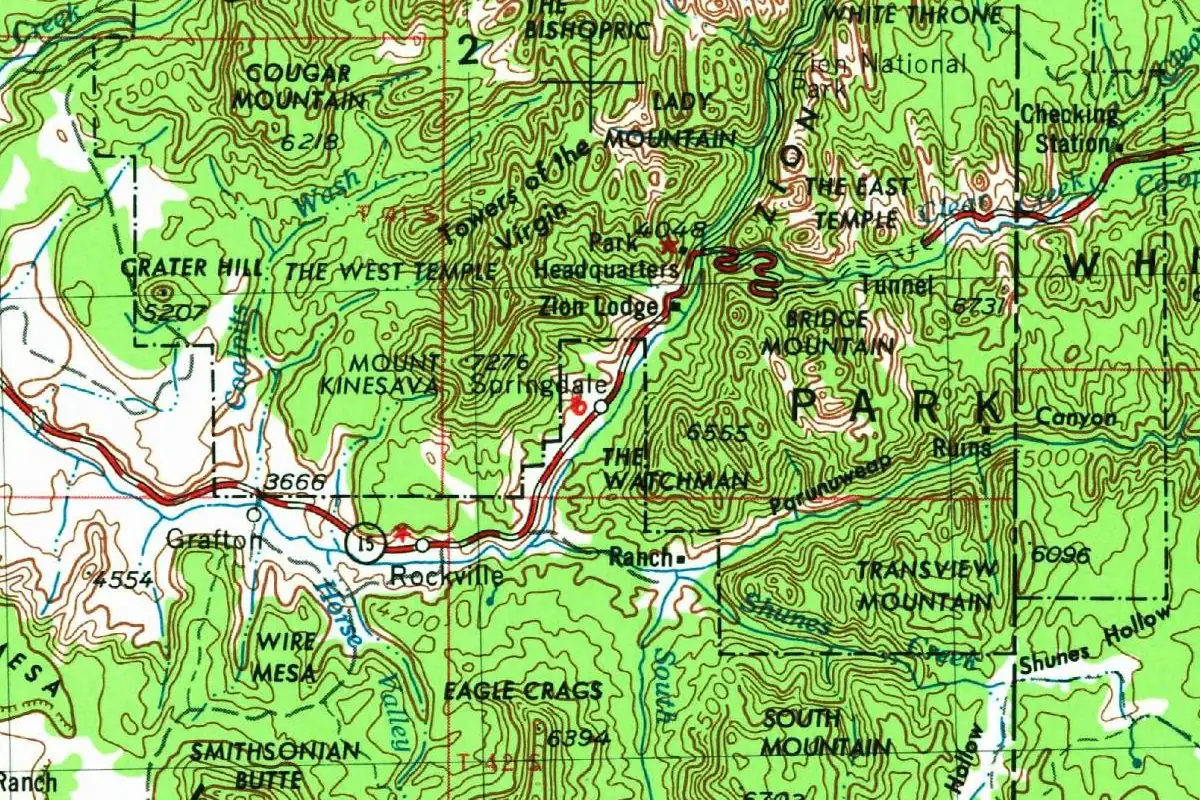
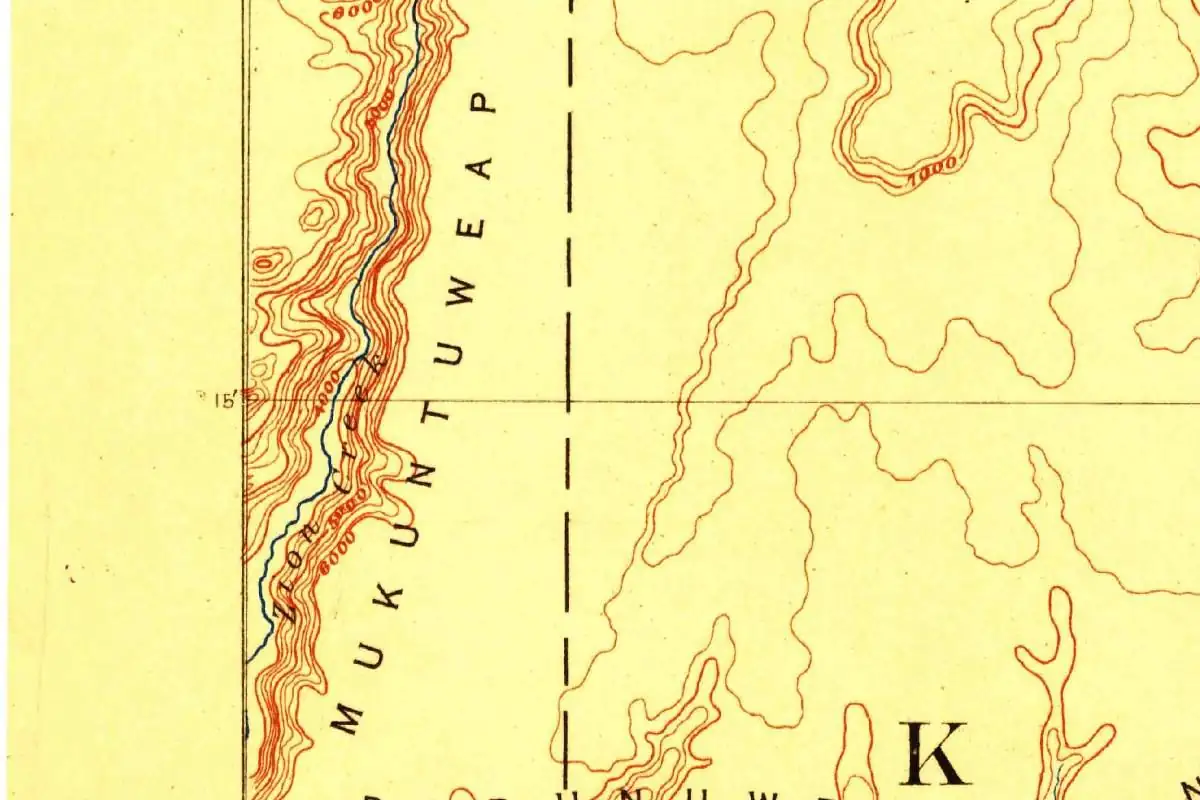
Powell’s name went onto the government’s maps. Dutton’s 1882 monograph calls the stream “the Mukuntuweap, or Little Zion Fork” and the canyon “the Mukuntuweap or Little Zion Valley,” using both names side by side. On the U.S. Geological Survey’s 1886 map at the bottom of this page, you can see the split in one picture: MUKUNTUWEAP in big letters beside the canyon, and Zion Creek in small ones inside it.
From Mukuntuweap National Monument to Zion
On July 31, 1909, President William Howard Taft set the canyon aside as Mukuntuweap National Monument. Even his proclamation couldn’t avoid the other name, though: it describes “the Mukuntuweap canyon” of “the North Fork of the Rio Virgin, or Zion River.”
The Paiute name never caught on with the people who lived there. Woodbury says it was “scarcely known except on certain maps.” By February 1918, according to Hinton, the Park Service was asking President Woodrow Wilson to enlarge the monument, and Robert Sterling Yard, a railroad officer and member of the American Civic Association, wanted the name changed in the same stroke, to Zion Canyon National Monument. He argued that the local people all called the canyon Zion and that railroad promoters were impatient with “Mukuntuweep.” Horace Albright, the Park Service’s assistant director, drew up the proclamation, and Wilson signed it on March 18, 1918. It enlarged the monument and renamed it, since “the name ‘Zion’ is still applied to this region to the exclusion of the name ‘Mukuntuweap.’”
Congress finished the job with a law approved November 19, 1919, declaring the monument a national park “under the name of the Zion National Park.” Older books don’t always get those dates right, by the way. Woodbury’s 1937 history says Congress changed the name in 1919, and the 1941 WPA guide puts the park in 1929. The proclamation and the law are the ones to trust.
The name on the canyon today
The federal place-names database lists Zion Canyon as the official name, with a Board on Geographic Names decision in 1923, and keeps Mukuntuweap, Mu-Koon’-Tu-Weap, Straight Cañon and Little Zion as variants. Its note on the name is short: “Name given Zion Canyon by mormon settlers in the region in the 1800’s.” The river did the same thing. The North Fork of the Virgin River still lists Little Zion River, Mukuntuweap River and Zion Creek among its old names.
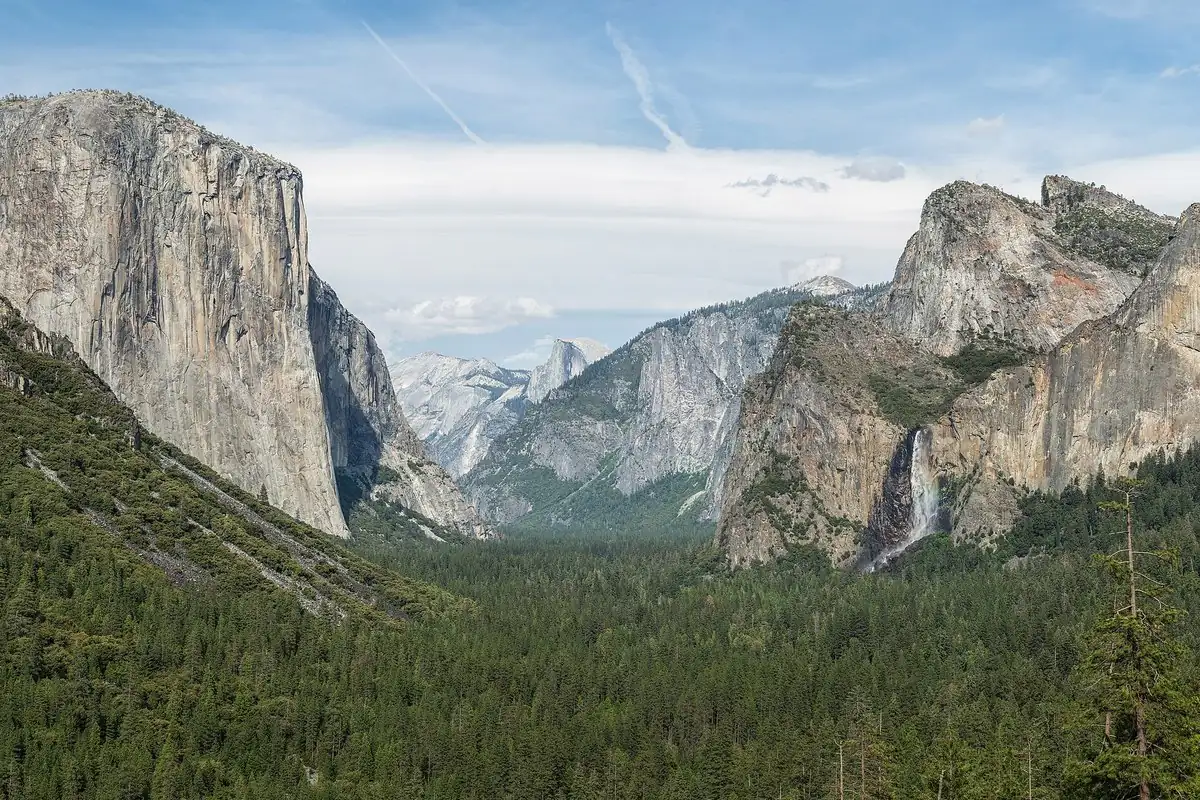
If you drive in today, you’ll come through Springdale, the Utah town at the canyon’s mouth where Behunin’s neighbors lived. Dutton thought the valley was “about equal to Yo Semite” in size and that Yosemite couldn’t touch it for beauty. Behunin just saw a Zion, and in the end, the settlers’ name is the one on the map.
Quick answers
What does Zion mean?
It’s the Bible’s name for a hill of Jerusalem, later used for the whole city and for God’s people. Easton’s 1893 Bible dictionary translates the word as “sunny; height,” while the National Park Service says it’s ancient Hebrew for “sanctuary” or “refuge.” To the Mormon settlers who named the canyon, Zion was their church’s gathering place, which by then meant Salt Lake City.
Who named Zion Canyon?
Mormon settlers did, by the federal place-names database and a 1918 presidential proclamation. Local tradition credits Isaac Behunin, who farmed in the canyon from about 1863 and called it “Little Zion,” though a 1969 history says only that he “is thought to have named” it.
What was Zion National Park originally called?
Mukuntuweap National Monument. John Wesley Powell recorded Mu-koon’-tu-weap as the Indian name for the canyon, translating it as “Straight Cañon,” and President Taft used it when he protected the canyon on July 31, 1909.
Why did they change the name from Mukuntuweap to Zion?
Because almost nobody used Mukuntuweap. President Wilson’s March 18, 1918, proclamation says the name Zion “is still applied to this region to the exclusion of the name ‘Mukuntuweap,’” and a 1918 memo to the Park Service, cited by historian Wayne Hinton, says locals all called it Zion and railroad promoters were impatient with the old name.
Key dates
- 1863Isaac Behunin builds the first homestead in the canyon, near today's Zion Lodge, according to the National Park Service.
- 1872John Wesley Powell visits the canyon. His 1875 report calls it Mu-koon'-tu-weap, or Straight Cañon.
- 1882Clarence Dutton's USGS monograph calls it "the Mukuntuweap or Little Zion Valley."
- 1886A USGS map labels the canyon MUKUNTUWEAP and the stream inside it Zion Creek.
- 1909July 31: President Taft sets the canyon aside as Mukuntuweap National Monument.
- 1918March 18: President Wilson enlarges the monument and renames it Zion National Monument.
- 1919November 19: Congress makes it Zion National Park.
- 1923The federal Board on Geographic Names rules on Zion Canyon, per the federal place-names database.
Historical Sources & References
- National Park Service, Zion National Park, “History & Culture”. The Southern Paiute called the place Mukuntuweap, “which means ‘straight canyon’”; Mormon pioneers “named the area Zion, which is ancient Hebrew for ‘sanctuary’ or ‘refuge’”; the 1909 monument and the 1918 and 1919 name changes.
- National Park Service, Zion National Park, “People”. The first homestead “constructed in 1863 by Issac Behunin near the present-day location of the Zion Lodge,” and Congress’s park act of November 19, 1919.
- A. M. Woodbury, “History of Zion” (1937). The settlers’ “Joseph’s Glory”; Behunin’s “natural temples” and “we’ll call this Little Zion,” introduced as “It is related”; Brigham Young’s “not Zion”; Powell’s Mukuntuweap and the legends about the word; “no evidence” that settlers fled into the canyon.
- A. Karl Larson, “Zion National Park With Some Reminiscences Fifty Years Later,” Utah Historical Quarterly (1969). Behunin “is thought to have named the canyon and village ‘Zion’”; “Not Zion” and “Little Zion”; Powell’s 1872 visit; Wilson’s 1918 proclamation.
- Wayne K. Hinton, “Getting Along,” Utah Historical Quarterly (2000). Behunin’s “Little Zion Canyon”; Brigham Young’s 1870 “not Zion”; Robert Sterling Yard’s February 1918 request to drop “Mukuntuweep”; Albright’s draft proclamation.
- Sara Suzanne Black, Homeland, Homestead, and Haven (UNLV thesis, 2016). The bishops-and-tobacco version of “Not Zion,” the Bishop Hunter variant, and tourist writers’ “Home of God” translations of Mukuntuweap.
- J. W. Powell, Exploration of the Colorado River of the West (1875), p. 111. “The Indians call the cañon, through which it runs, Mu-koon’-tu-weap, or Straight Cañon.”
- Clarence E. Dutton, Tertiary History of the Grand Cañon District (USGS, 1882), pp. 48-49, 59-60. “The Mukuntuweap, or Little Zion Fork”; “Little Zion Valley”; “No wonder the fierce Mormon zealot, who named it, was reminded of the Great Zion”; the comparison with Yosemite.
- William Howard Taft, Proclamation 877 (July 31, 1909). Creates Mukuntuweap National Monument in “the Mukuntuweap canyon” of “the North Fork of the Rio Virgin, or Zion River.”
- Woodrow Wilson, Proclamation 1435 (March 18, 1918). Renames the monument Zion: settlers named it “because it was regarded as a safe refuge in the event of Indian attacks,” and “the name ‘Zion’ is still applied to this region to the exclusion of the name ‘Mukuntuweap.’”
- Act of November 19, 1919 (41 Stat. 356), in Laws Relating to the National Park Service (1933), p. 217. Declares the monument a national park “under the name of the Zion National Park.”
- M. G. Easton, Illustrated Bible Dictionary (1893), p. 707. “Zion, sunny; height, one of the eminences on which Jerusalem was built,” and its later uses for Jerusalem, God’s people, the church and “the heavenly city.”
- Jewish Encyclopedia, “Jerusalem” (redirected from “Zion”). The “Meẓudat Ẓiyyon” of II Samuel 5:7, a sign the name “Zion” was already attached to part of the city, and David’s renaming of the place “City of David.”
- Utah Writers’ Project, Utah: A Guide to the State (1941). Joseph Smith’s Zion in Missouri, “a place of gathering for the faithful” (p. 60), and the settlers’ “Little Zion” and “Not Zion” (p. 522).
- GNIS feature 1434527, Zion Canyon (U.S. Geological Survey). The official name, a Board decision of 1923, the variants Mukuntuweap, Mu-Koon’-Tu-Weap, Straight Cañon and Little Zion, and the note “Name given Zion Canyon by mormon settlers in the region in the 1800’s.”
Spot something wrong, or know more? Tell us here. You can also email us or use our contact page. Corrections are noted here with their date, never made silently.