How Chadron, Nebraska Got Its Name (A Fur Trader's Name, Said the French Way)
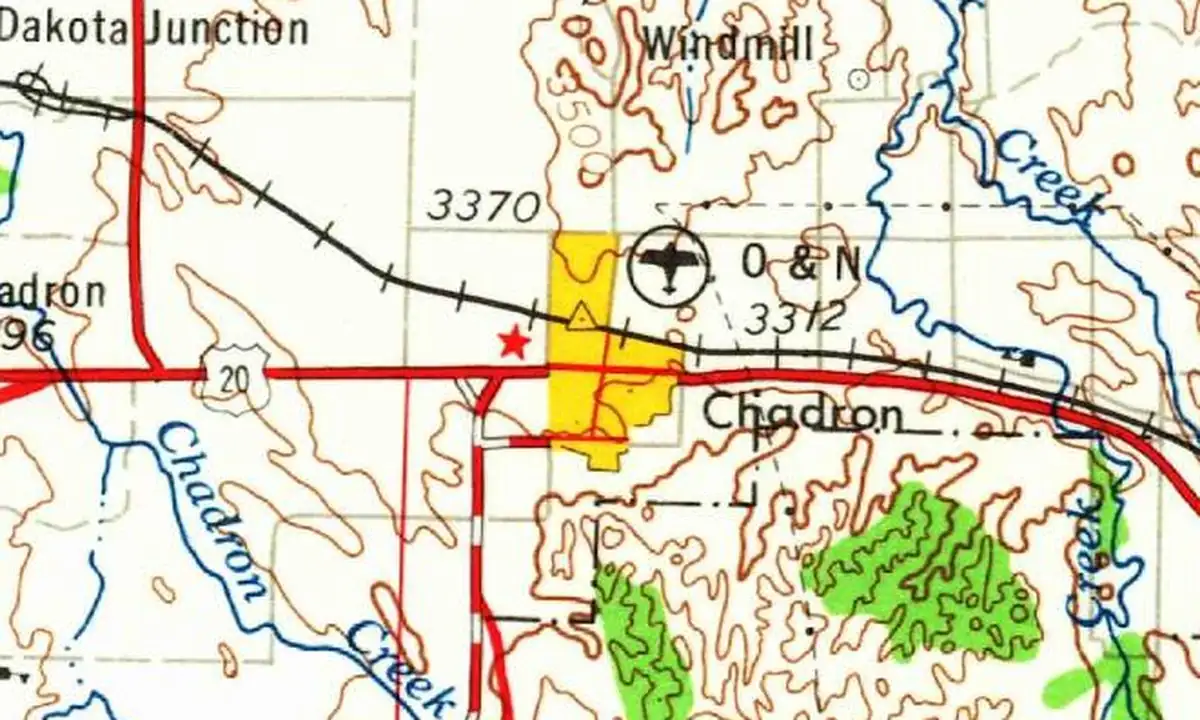
Chadron, Nebraska, carries the name of a fur trader who ran a post on a nearby creek in the 1840s. The city spells him Chartran; a 1925 study calls him Pierre Chadron. The town before it was called O’Linn.
Where the name comes from
The City of Chadron traces the name to Louis Chartran, who managed a trading post built in 1841 by Lancaster P. Lupton. The post sat on the creek that early maps label “Chartran’s Creek.” The city says French settlers pronounced the name something like “Shattron,” and over time that turned into Chadron.
A historical marker on the state’s MyNE History site tells it much the same way: Lupton’s men built the post near the creek in 1841, and Louis B. Chartran ran it from 1842 until at least 1845. A biography from the Louis Riel Institute, published by the Métis Museum, describes Louis Baptiste Chartran as a Métis trader, born around 1795, who was killed near Fort Laramie in 1854. It dates his trading here to 1843–44, a little later than the other sources.
A different first name in 1925
A 1925 study of Nebraska place names agrees the town was named for a trapper and trader, but calls him “Pierre Chadron.” It describes him as a trapper of mixed French and Native ancestry (what today would be called Métis) who “lived and trapped on a river in the vicinity” and who once traded for the American Fur Company near Fort Pierre.
So the sources agree on the man’s job and the place, but not on his first name or how to spell his last. The city and the newer sources say Louis Chartran, so we go with that and note the 1925 version.
The town that moved
Chadron wasn’t the first town here. Wikipedia and the city say the earlier settlement was O’Linn, named for Fannie O’Linn, a homesteader who encouraged businesses to set up on her claim where Chadron Creek meets the White River. When the railroad was built a few miles away, the townspeople moved their buildings to the new site. Discover Northwest Nebraska, the regional tourism office, says the buildings were moved five miles in one day.
The 1925 study says the new town was platted in 1885. The U.S. Geological Survey’s record says it was founded in 1884 and incorporated in 1885. Chadron is the county seat of Dawes County.
Sources & further reading
- City of Chadron, “History.” Louis Chartran, Lupton’s 1841 post, “Chartran’s Creek,” the French pronunciation and Fannie O’Linn.
- MyNE History, “Chadron Creek Trading Post.” The 1841 post and Chartran as its manager from 1842 until at least 1845.
- Louis Riel Institute, “Louis Baptiste Chartran” (Métis Museum). His life, his post on what became Chadron Creek and his death near Fort Laramie in 1854.
- Lilian Linder Fitzpatrick, Nebraska Place-Names (University of Nebraska, 1925). A public-domain study of the state’s place names, county by county. “Pierre Chadron” and the 1885 platting.
- Discover Northwest Nebraska, “National Register of Historic Places.” The buildings moved five miles in one day.
- Wikipedia, “Chadron, Nebraska.” O’Linn and the move to the railroad.
- GNIS feature 835519 (U.S. Geological Survey). The federal record for Chadron. Founded 1884; incorporated 1885.
Spot something wrong? Corrections are noted here with their date, never made silently.