How Gering, Nebraska Got Its Name (A Civil War Veteran and the First Store)
Gering, Nebraska, is named for Martin Gering, a Civil War veteran who opened the town’s first store with Oscar Gardner when the town began in 1887. A 1940 state directory says the founders tried Vendome first.
Where the name comes from
A 1925 study of Nebraska place names says the town “was named in honor of Martin Gering, a Civil War veteran, banker, and member of the original town-site company formed in 1887.” It adds that Gering and Oscar W. Gardner, under the firm name Gering and Gardner, “established the pioneer store of the town,” and that Gardner was the first postmaster.
The City of Gering’s history page, quoting a local historian, says the town came into existence on March 7, 1887.
First try: Vendome
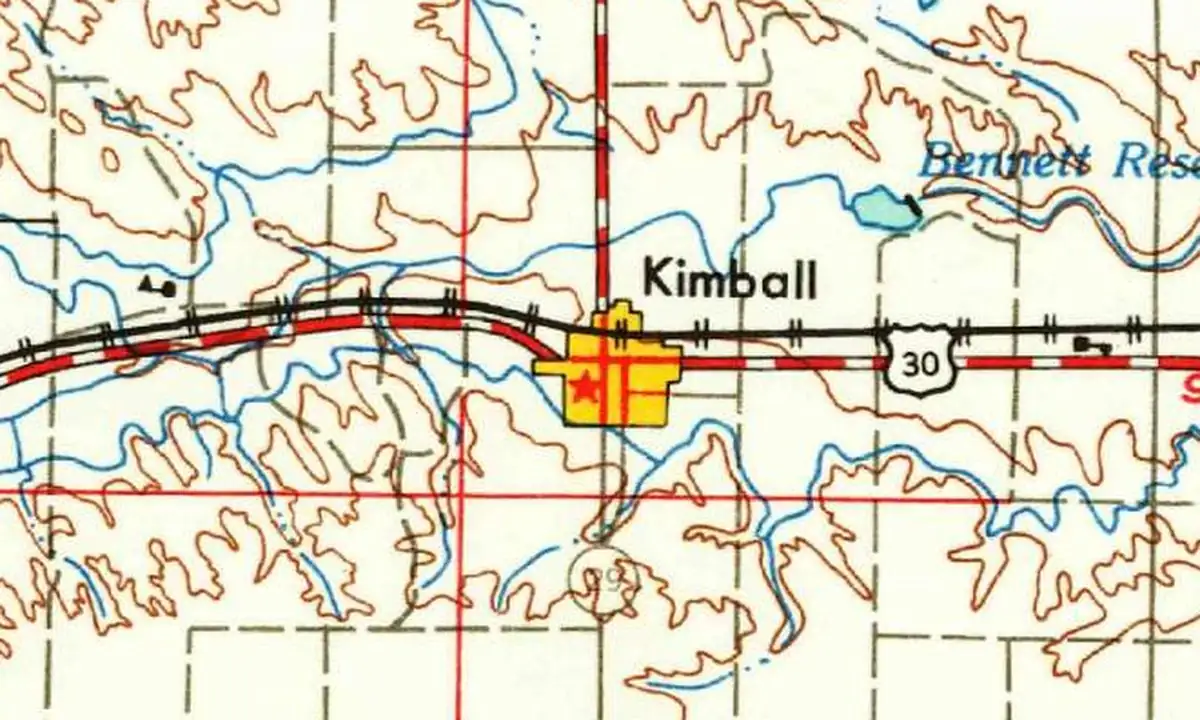
Gering wasn’t the first choice. A state directory published in 1940, Who’s Who in Nebraska, says Gardner first proposed the name “Vendome,” but postal officials turned it down because it could be confused with another post office in the state. That’s one source, so take the detail with a grain of salt. It wouldn’t be the only Nebraska town where the post office had the last word: see Norfolk and Kimball.
The county seat by the bluff
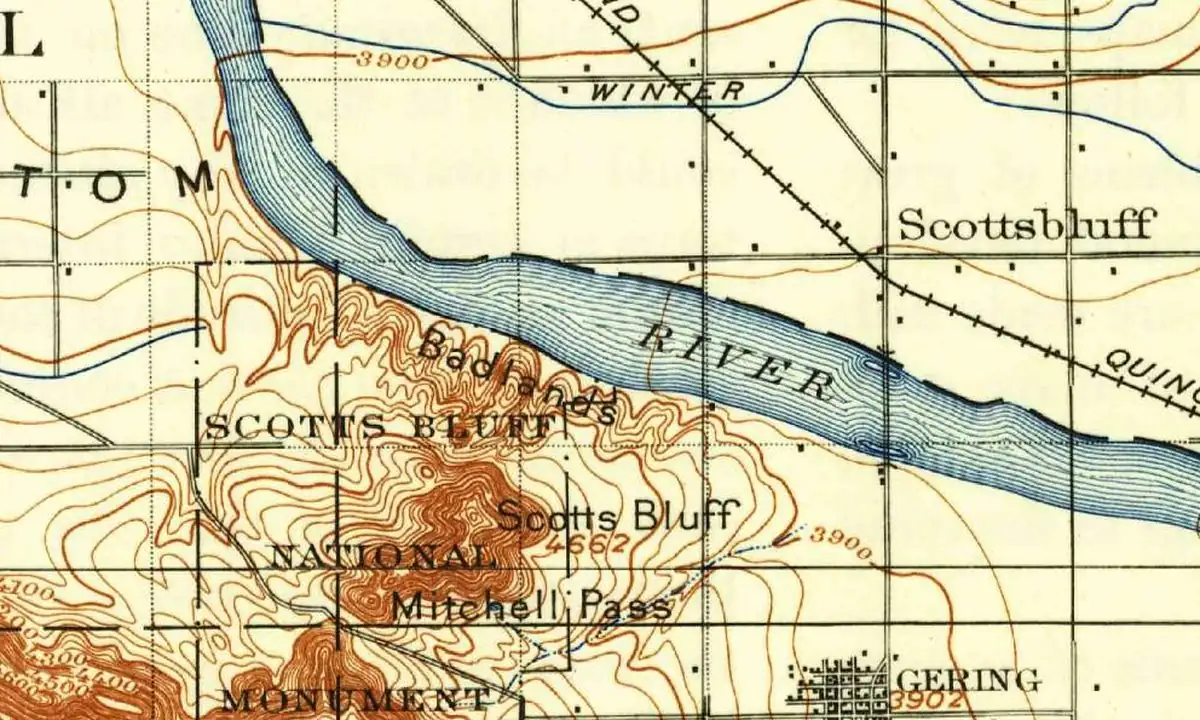
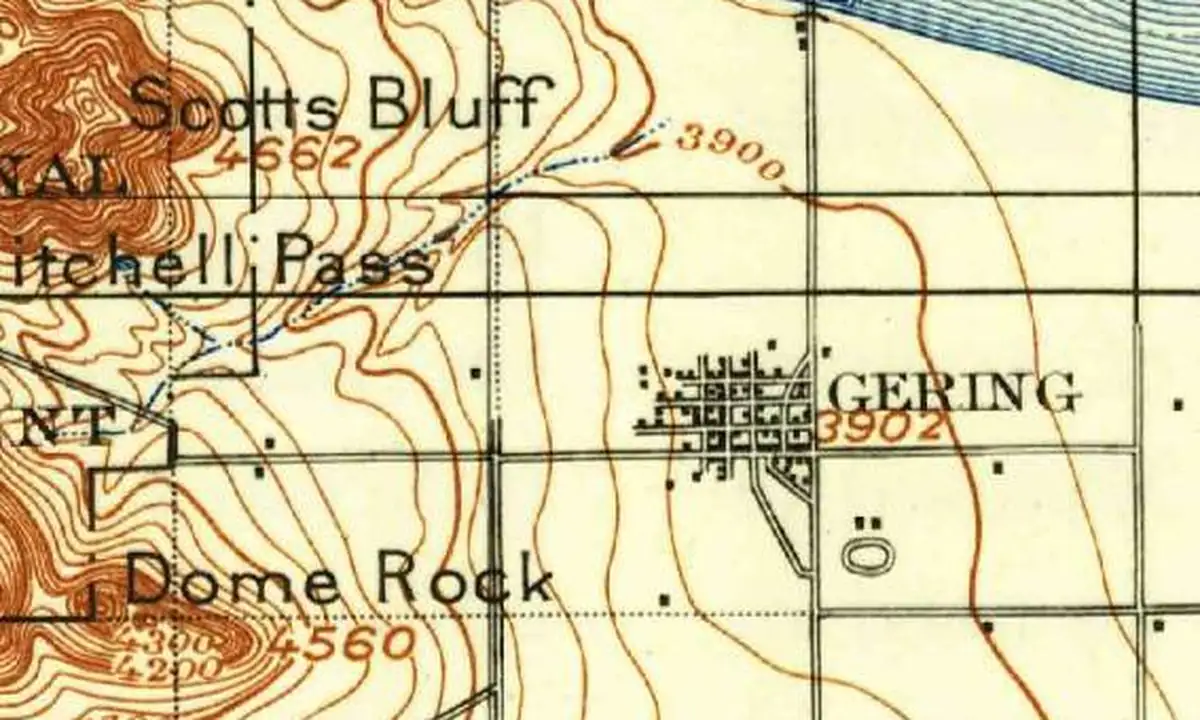
Gering sits just south of the North Platte River, across from Scottsbluff and close to the landmark bluff. The 1925 study says Scotts Bluff County was formed from Cheyenne County by a vote on November 6, 1888, and that Gering is its county seat. The U.S. Geological Survey’s record says Gering was founded in 1887 and incorporated in 1890.
Sources & further reading
- Lilian Linder Fitzpatrick, Nebraska Place-Names (University of Nebraska, 1925). A public-domain study of the state’s place names, county by county. Martin Gering, the 1887 town-site company, the Gering and Gardner store and the new county in 1888.
- City of Gering, “History of Gering.” The town comes into existence on March 7, 1887.
- Who’s Who in Nebraska (1940), Scotts Bluff County (NEGenWeb). Gardner’s first choice, “Vendome,” and why the post office said no.
- GNIS feature 829493 (U.S. Geological Survey). The federal record for Gering. Founded 1887; incorporated 1890.
Spot something wrong? Corrections are noted here with their date, never made silently.