How Kimball, Nebraska Got Its Name (Goodbye, Antelopeville)
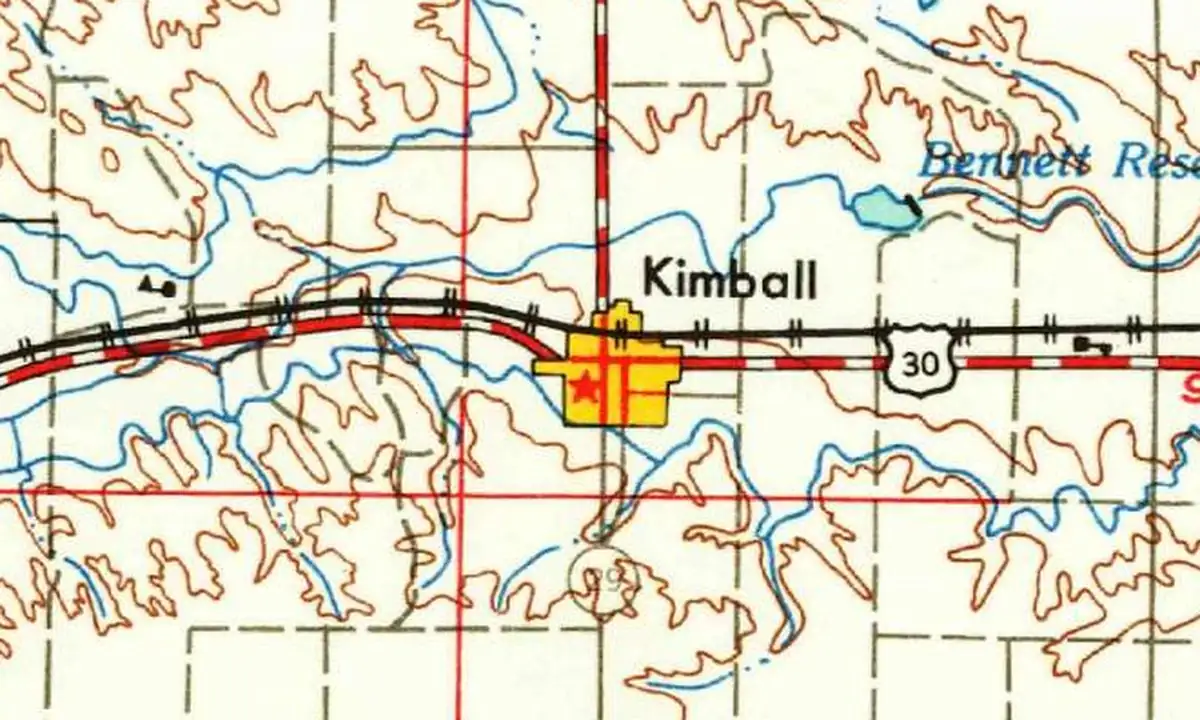
Kimball, Nebraska, started out as Antelopeville, for the antelope that roamed nearby. In 1885 it was renamed for Thomas L. Kimball, a top Union Pacific official.
The first name: Antelopeville
A 1925 study of Nebraska place names says “the original name of this place was Antelopeville, so named because of the prevalence of antelope in the vicinity.” In other words, there were a lot of them around.
The old name didn’t vanish completely. The same study notes that, at least in 1925, “the precinct is still called Antelope.”
Why it changed
The 1925 study gives a practical reason: “As there was a post office in the state called Antelope the name was changed in 1885 to Kimball.” Two post offices with names that close would have been easy to mix up.
The local paper, the Western Nebraska Observer, notes in a history piece that the town was still Antelopeville when the paper started in May 1885. The U.S. Geological Survey’s record also says the current name was adopted in 1885.
Who Kimball was
The new name honored Thomas L. Kimball, whom the 1925 study calls “vice president and general manager of the Union Pacific railroad.”
He got a county too. Kimball County was carved out of Cheyenne County by a vote on November 6, 1888, and the 1925 study says it’s also named for Thomas L. Kimball. The study even corrects an older national book of place names by Henry Gannett, which “erroneously gives the honor to John P. Kimball.” The town of Kimball is the county seat.
Sources & further reading
- Lilian Linder Fitzpatrick, Nebraska Place-Names (University of Nebraska, 1925). A public-domain study of the state’s place names, county by county. Antelopeville and the antelope, the other “Antelope” post office, the 1885 change, the precinct name and the county named for the same man.
- Western Nebraska Observer, “A page in history: the building of Kimball.” The town was still Antelopeville when the paper started in May 1885.
- GNIS feature 830504 (U.S. Geological Survey). The federal record for Kimball. Founded 1867; current name adopted 1885; incorporated 1888.
Spot something wrong? Corrections are noted here with their date, never made silently.