How Sidney, Nebraska Got Its Name (and a Mix-Up Between Two Dillons)
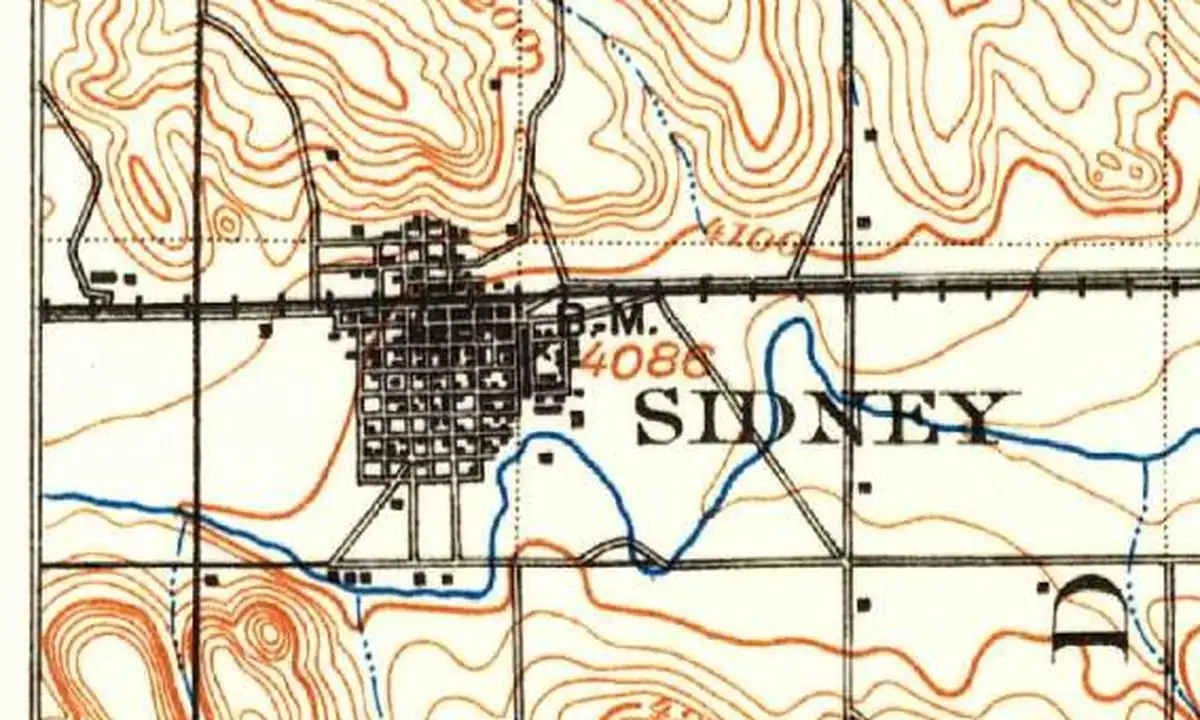
Sidney, Nebraska, is named for Sidney Dillon, a Union Pacific builder who later ran the railroad. A 1925 study seems to have mixed him up with a different Dillon, a famous lawyer, and that mistake still turns up today.
Where the name comes from
Encyclopaedia Britannica says the Union Pacific Railroad founded Sidney in 1867 as a construction camp and named it for Sidney Dillon. Every source we checked agrees on the namesake. Note that it’s his first name on the map, not his last.
Dillon was one of the main contractors who built the Union Pacific, and later a big name in railroad finance. He was the railroad’s president from 1874 to 1884 and again from 1890 to 1892, according to a list of Union Pacific presidents on UtahRails.net and the Sidney Sun-Telegraph. So when the camp got his name in 1867, he wasn’t the president yet, even though some sources call him that.
The wrong Dillon
A 1925 study of Nebraska place names describes him very differently. It calls him “a New York attorney, who was general solicitor in New York for the Union Pacific Railroad Company,” and says he was “the author of Dillon’s Municipal Law.”
That sounds like a different man. The famous law book on city governments, first published in 1872, was written by John Forrest Dillon, a judge from Iowa. He moved to New York in 1879 to teach and practice law, and a University of Iowa biography says he was counsel to the Union Pacific, among other big companies. That fits the 1925 description much better. Sidney Dillon was a builder and a money man, not a lawyer. It looks like the 1925 study blended the two Dillons into one person, and some modern write-ups, including the City of Sidney’s own history page, still call its namesake a railroad attorney.
A fort and a trail
The Army also put a post here to guard the railroad crews. It started out as Sidney Barracks and was later renamed Fort Sidney. Sources don’t agree on when that happened: FortWiki gives December 30, 1878, while the City of Sidney puts it in 1870. The fort closed in 1894.
The 1925 study adds that Sidney mattered because it was “the railroad terminus of the route to the Black Hills,” the trail north to the gold fields. History Nebraska says the Sidney–Black Hills Trail was a major link between the railroad and the mines from 1876 to 1880. The U.S. Geological Survey’s record says Sidney was founded in 1867 and incorporated as a city in 1870.
Sources & further reading
- Encyclopaedia Britannica, “Sidney.” Founded in 1867 by the Union Pacific as a construction camp; named for Sidney Dillon.
- Lilian Linder Fitzpatrick, Nebraska Place-Names (University of Nebraska, 1925). A public-domain study of the state’s place names, county by county. Named for Sidney Dillon, described there as a New York attorney and author of a law book; the route to the Black Hills.
- Sidney Sun-Telegraph, “A colorful past leading to a prosperous future.” Dillon as Union Pacific president from 1874 to 1884, and a financier who helped build railroads.
- UtahRails.net, “Presidents and CEOs of Union Pacific Railroad.” Dillon’s two terms: March 1874 to June 1884 and November 1890 to April 1892.
- Wikipedia, “Sidney Dillon.” One of the main contractors on the Union Pacific.
- Wikipedia, “John Forrest Dillon.” The Iowa judge who wrote the well-known 1872 treatise on city governments.
- The Biographical Dictionary of Iowa, “Dillon, John Forrest.” His move to New York in 1879 and his work as counsel to the Union Pacific and other companies.
- History Nebraska, “Marker Monday: Camp Clarke Bridge and Sidney Black Hills Trail.” The trail from the railroad at Sidney to the gold fields, 1876–1880.
- City of Sidney, “History of Sidney.” The post renamed Fort Sidney in 1870; like the 1925 study, it calls Dillon a railroad attorney.
- FortWiki, “Fort Sidney.” Sidney Barracks, the renaming and the 1894 closing.
- GNIS feature 833422 (U.S. Geological Survey). The federal record for Sidney. Founded 1867; incorporated as a city in 1870.
Spot something wrong? Corrections are noted here with their date, never made silently.