Bennington, Vermont: Named for a Governor's First Name
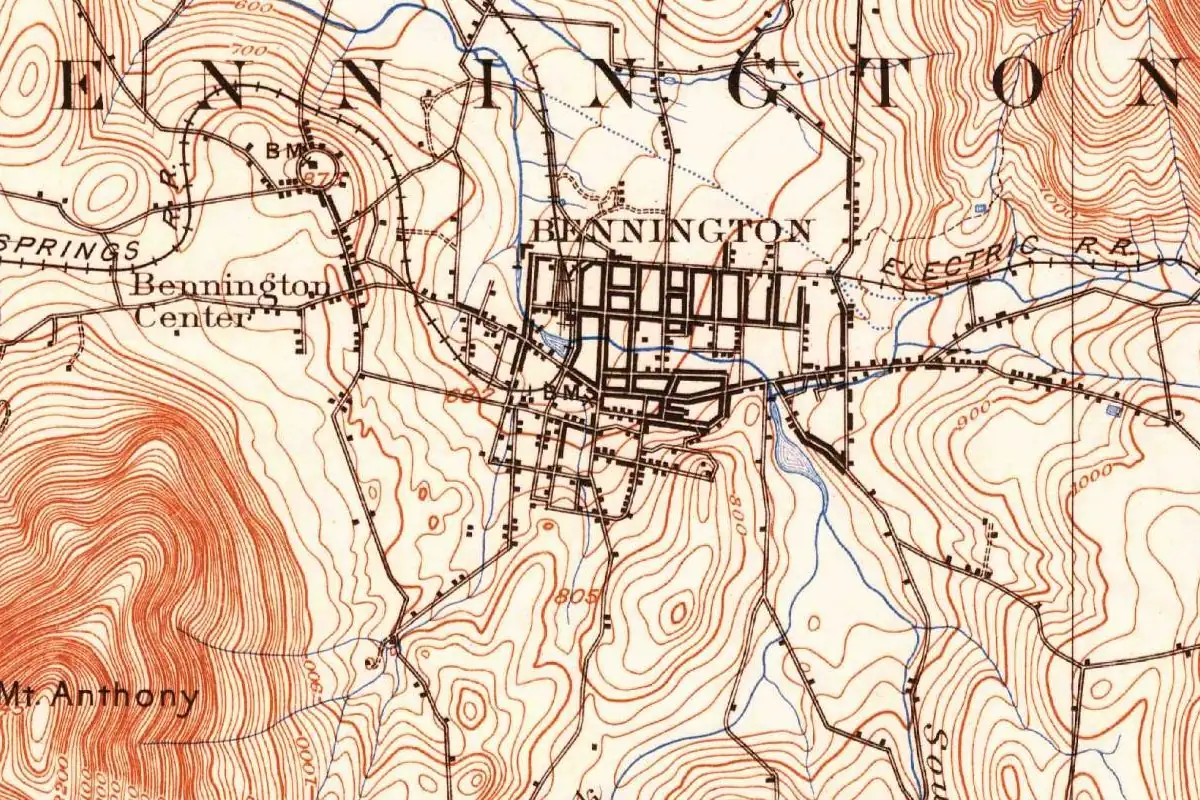
Bennington, Vermont, is named for a governor’s first name. Benning Wentworth of New Hampshire granted the town in 1749 and had it called after himself. It was the first township granted in what’s now Vermont.
Benning, plus a “ton”
The 1867 first volume of Abby Hemenway’s Vermont Historical Gazetteer spells it out. The grant was made by “Benning Wentworth, his majesty’s governor of New Hampshire,” on the advice of his council, on January 3, 1749. The township was “to be called Bennington, after the baptismal name of the Governor.”
Baptismal name means his first name. Zadock Thompson’s 1842 gazetteer says the same thing more briefly: the township “was called Bennington in allusion to his name.” Henry Gannett, writing for the U.S. Geological Survey in 1905, simply lists it as “named for Governor Benning Wentworth, of New Hampshire.”
The governor’s last name went elsewhere. Gannett lists a town of Wentworth in Grafton County, New Hampshire, “named for Benning Wentworth, former governor of the State.” So if you’re keeping score, you can find Wentworth’s first name in Vermont and his last name in New Hampshire.
The first grant, and two shares for himself
Thompson calls Bennington “the first township granted within the present limits of Vermont.” Hemenway’s volume puts it a little differently: Bennington was the first town settled west of the Green Mountains, “and its charter is the oldest in the state.”
It was six miles square, six miles north of the Massachusetts line, and split into 64 shares. Two were for public use, one for schools and one for the first settled minister. Hemenway adds a detail you might not expect: “Benning Wentworth was named as the grantee of two shares.” The other sixty went to sixty different people, most of them living in Portsmouth, New Hampshire.
As far as anyone could tell, those owners never moved to the place that carried their governor’s name. “It is believed none of the grantees of the town ever removed to Bennington,” Thompson writes. The people who actually settled it, starting in 1761, bought land from the original owners.
New York had other ideas
The grant also started a long fight. New Hampshire was handing out land that New York claimed, and in 1773, Thompson says, New York’s assembly published a statement saying the Bennington grantees had tried to take possession in 1753 and were stopped by a proclamation from New York’s governor. Hemenway’s writer prints the charter’s survey line by line to answer a claim in a New York narrative, also published in 1773, about where the town’s western edge was supposed to be.
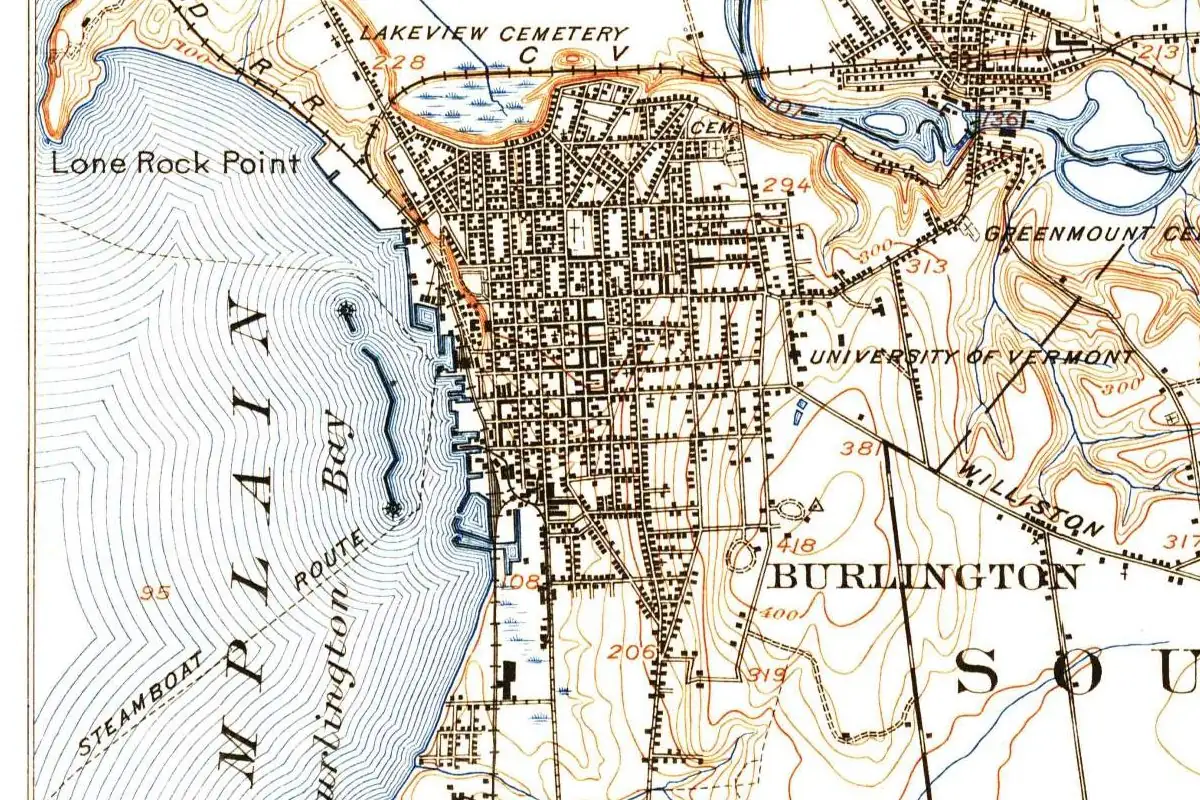
Wentworth went on to charter other towns, among them Burlington in 1763, according to Hamilton Child’s 1882 county gazetteer. The one he named for himself came first, and it got there before Vermont did.
Sources & further reading
- Abby Maria Hemenway, ed., The Vermont Historical Gazetteer, vol. 1 (1867), “Bennington, Prior to the Revolution,” p. 144. The first town settled west of the Green Mountains, “and its charter is the oldest in the state”; the grant of January 3, 1749, “to be called Bennington, after the baptismal name of the Governor”; 64 shares, two for Wentworth; proprietors meeting at Portsmouth; the dispute with the 1773 New York narrative.
- Zadock Thompson, History of Vermont, Natural, Civil, and Statistical (1842), part 3, pp. 13-14. “Called Bennington in allusion to his name”; “the first township granted within the present limits of Vermont”; grantees living mainly in Portsmouth; settlement begun in 1761; none of the grantees believed to have moved there; the 1773 New York statement.
- Henry Gannett, The Origin of Certain Place Names in the United States (USGS, 1905). Bennington “named for Governor Benning Wentworth, of New Hampshire” (p. 43); Wentworth, N.H., named for him too (p. 320).
- Hamilton Child, Gazetteer and Business Directory of Chittenden County, Vermont, for 1882-83 (1882), p. 94. Burlington granted by Benning Wentworth on June 7, 1763.
- GNIS feature 1460600 (U.S. Geological Survey). The federal record and coordinates for Bennington.
Spot something wrong, or know more? Tell us here. You can also email us or use our contact page. Corrections are noted here with their date, never made silently.