Winooski, Vermont: Onion Land or Beautiful River?
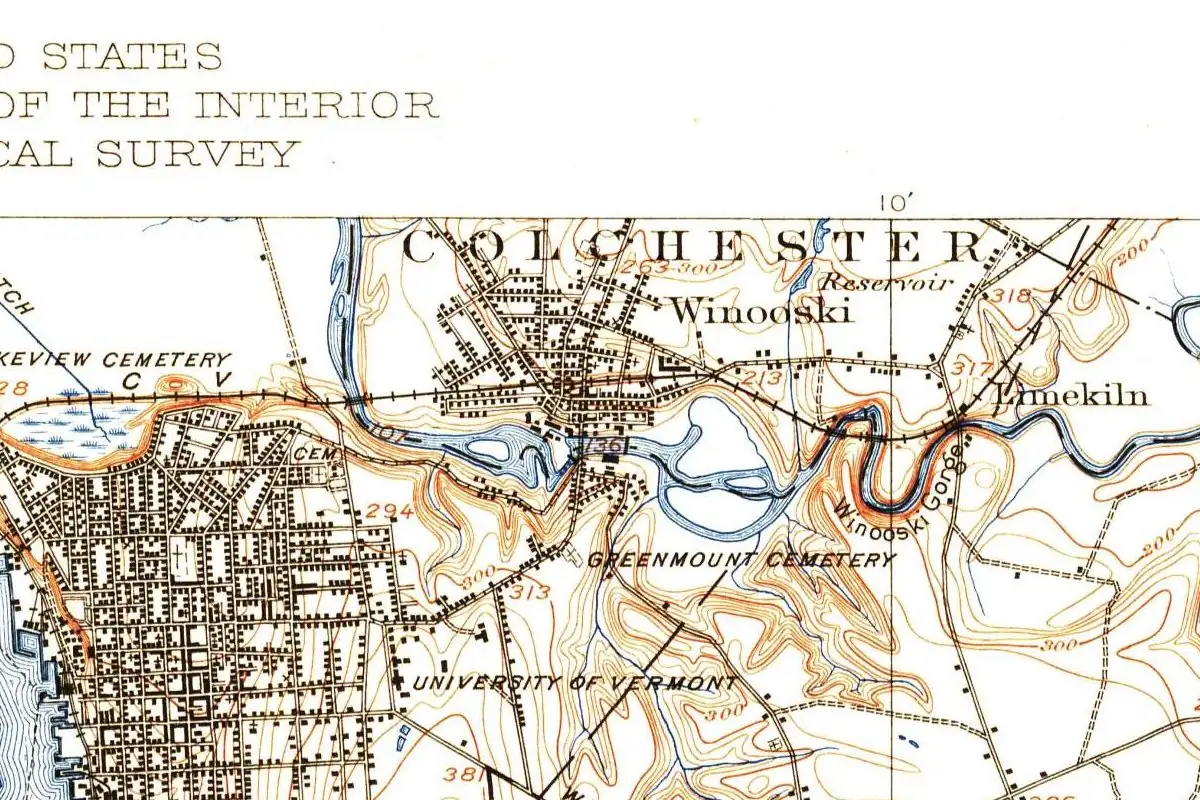
Winooski, Vermont, takes its name from the river at its falls, and an Abenaki chief writing in 1884 said the word means “onion land.” Not everyone agreed, and for a while English speakers just called it the Onion River.
The village at the falls
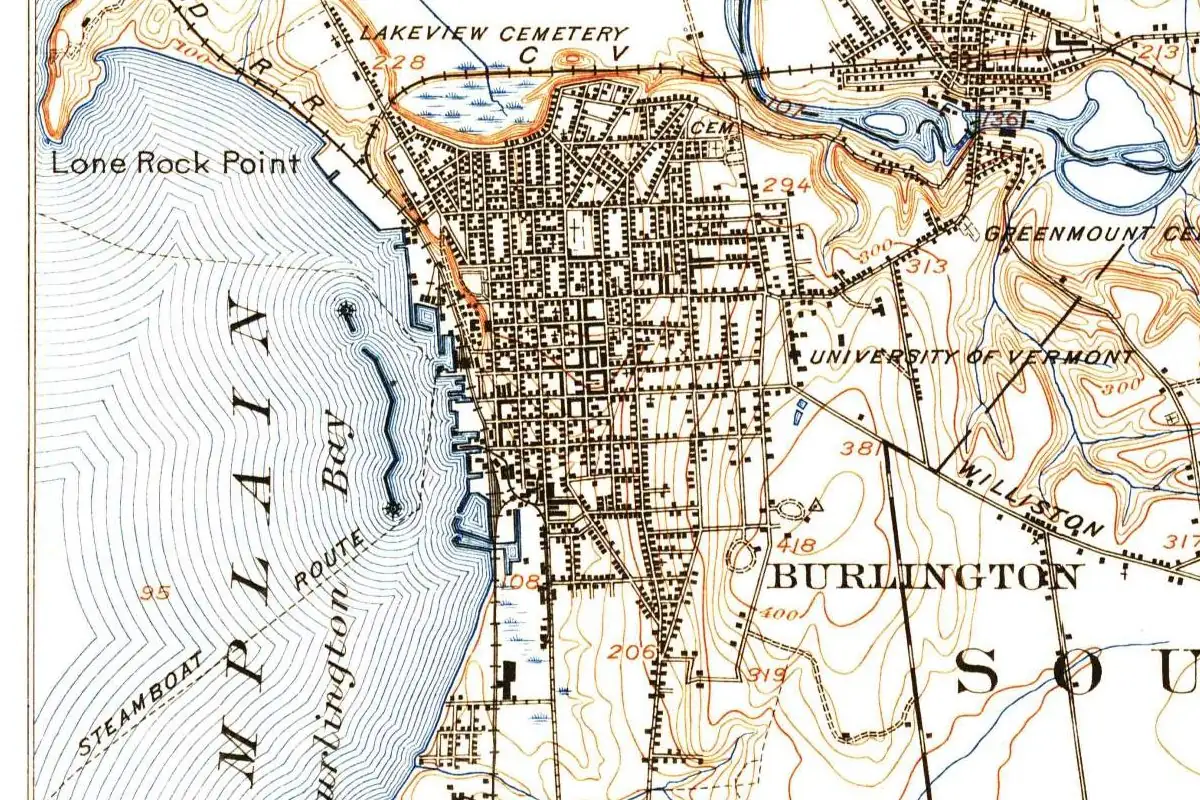
The town started with the water power. Hamilton Child’s 1882 gazetteer of Chittenden County says Ira Allen built mills at the falls as early as 1787, and a settlement grew up that was “for a long time” called Allen’s Settlement. Later it was known as Winooski Falls. In 1866 the legislature incorporated it as “plain Winooski village,” in Child’s words.
Zadock Thompson’s History of Vermont, from 1842, puts the village at the Winooski lower falls, partly in Colchester and partly in Burlington, with a covered bridge joining the two sides. Whatever the settlement was called, it sat on the river and took its name from it.
What the Abenaki word means
The best answer comes from someone who spoke the language. Joseph Laurent, who signed himself “Abenakis Chief,” published a guide to the Abenaki language in Quebec in 1884, with a section on the meaning of Indian place names. His entry reads: “Winooski, (Abenakis), from winos, onion, and, ki, land: Winoski, onion land.” The vocabulary in the same book lists winos as “An onion.”
D. P. Thompson, writing the history of Montpelier in 1860, gives the same breakdown, “winoos, onions, and ki, land.” He says early explorers found “great quantities of leeks, or wild onions” growing along the banks.
Henry Gannett, compiling place names for the U.S. Geological Survey in 1905, gave a different meaning: “An Indian word meaning ‘beautiful river.’” He doesn’t say where he got it. Laurent’s version comes from a speaker of the language and spells out each part of the word, so it carries more weight. You’ll still find both translations around, and now you know where each one comes from.
The Onion River and its legend
For a long time, the English version got plenty of use. Zadock Thompson’s book calls it the Winooski River, “called also Onion river,” and D. P. Thompson says the old charters of the towns along it call it the “French or Onion river.” Child, in 1882, thought the stream deserved “a more euphonious cognomen than the antiscorbutic Onion,” and dropped it from his book.
Child also passed along a legend from John A. Graham’s letters, published in London in 1797. In 1761, the story goes, a hunter named Peleg Sunderland got lost on the river and was close to starving when a party of Indians found him and shared their food. “Their whole store consisted of onions,” and Sunderland named the stream Onion River. It’s a nice story, but it rests on one man’s telling in a book of letters.
Child said “a controversy has long existed” over where the name Winooski came from. He counted at least six spellings used by different writers, and he cited a French map of 1732 that already used a version of the name. D. P. Thompson added one more wrinkle: the French, he said, pronounced it “Wenooskee.”
Sources & further reading
- Joseph Laurent, New Familiar Abenakis and English Dialogues (Quebec, 1884). By an Abenaki chief. “Winooski, (Abenakis), from winos, onion, and, ki, land: Winoski, onion land” (in the section on the etymology of Indian names, pp. 205-222); “Winos. An onion” in the vocabulary.
- Henry Gannett, The Origin of Certain Place Names in the United States (USGS, 1905), p. 328. “An Indian word meaning ‘beautiful river.’” No source given.
- Hamilton Child, Gazetteer and Business Directory of Chittenden County, Vermont, for 1882-83 (1882). The controversy over the name, the “land of onions” theory, the 1732 French map, the six spellings and Graham’s 1797 story of Peleg Sunderland (pp. 37-38); Ira Allen’s mills in 1787, Allen’s Settlement, Winooski Falls and incorporation as Winooski village in 1866 (p. 181).
- D. P. Thompson, History of the Town of Montpelier (1860), pp. 10-11. “French or Onion river” in the old charters; wild onions on the banks; “winoos, onions, and ki, land”; the French pronunciation “Wenooskee.”
- Zadock Thompson, History of Vermont (1842), part 3. Winooski village at the lower falls, partly in Colchester and partly in Burlington (p. 57); the Winooski River, “called also Onion river” (p. 197).
- GNIS feature 1460302 (U.S. Geological Survey). The federal record and coordinates for Winooski.
Spot something wrong, or know more? Tell us here. You can also email us or use our contact page. Corrections are noted here with their date, never made silently.