Montpelier, Vermont: A Name Picked So No Town Would Share It
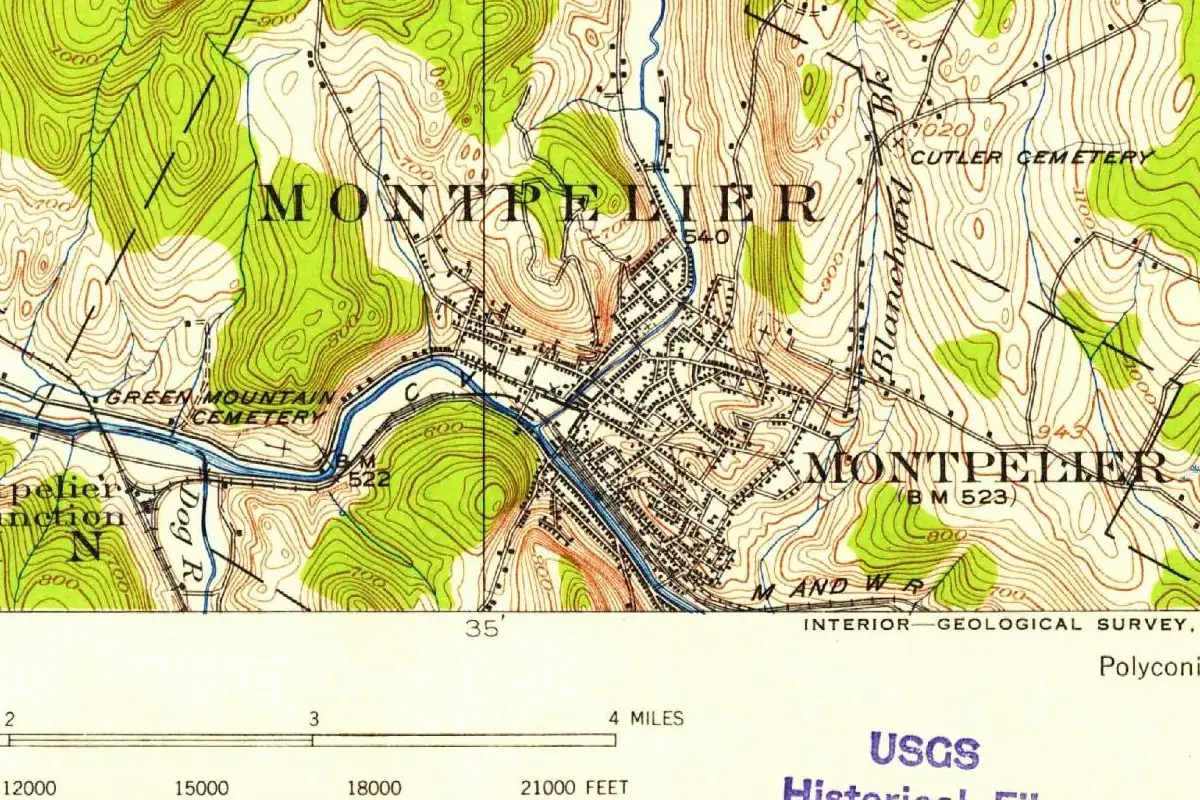
Col. Jacob Davis named Montpelier, Vermont, after a city in France because he was tired of new towns copying old ones and wanted a name nobody else had. The capital of Vermont got its French name from that one man’s pet peeve.
A colonel who didn’t want a copy
D. P. Thompson wrote a history of the town in 1860, after the March town meeting of 1859 voted to have one written, and he knew readers would wonder about “a name so peculiar.” So he answered it up front. The name, he says, “was bestowed by Colonel Jacob Davis, a leading proprietor, and the first permanent settler of the town.”
Davis had a habit of going his own way, in Thompson’s description. He “had noticed, with dislike,” how the proprietors of most townships in the new state handed out “the names of the towns in the old States where they resided.” He wanted something that couldn’t be accused of that kind of copying.
He had a practical reason too. Davis worried about “the inconvenience and confusion that he foresaw must some day arise in consequence of having so many places of the same name in one confederacy.” In other words, too many towns with the same name would be a mess for everyone.
Why a French city
While “casting about” for a name, Davis “thought of the city of France bearing the name of Montpelier.” Thompson says the first part of the word, mont, a hill or mountain, made it seem a good fit for a town in the mountains. Davis proposed it to the other petitioners, they took it, and it went into the petition to the legislature.
Henry Gannett’s 1905 list of place names for the U.S. Geological Survey agrees in one line: Montpelier was “named from the city in France.”
How do we know what Davis was thinking? Thompson tells you in a footnote. His source was George Worthington, who married Davis’s youngest daughter, Clarissa. Worthington remembered being with the colonel, among others, when someone asked him how the town got its name, and Davis gave the answer Thompson repeats.
From a wild township to the capital
Later in the same book, in a sketch of Davis’s life, Thompson says the colonel came from Charlton, Massachusetts, and was among the most active in getting the township granted. The sketch calls it the township “which he caused to be named Montpelier,” at the October 1780 session of the legislature. The charter itself wasn’t issued until the following August, because collecting the fees from all the proprietors took a while. Zadock Thompson, a different Thompson, gives the grant date as October 21, 1780, in his 1842 gazetteer.
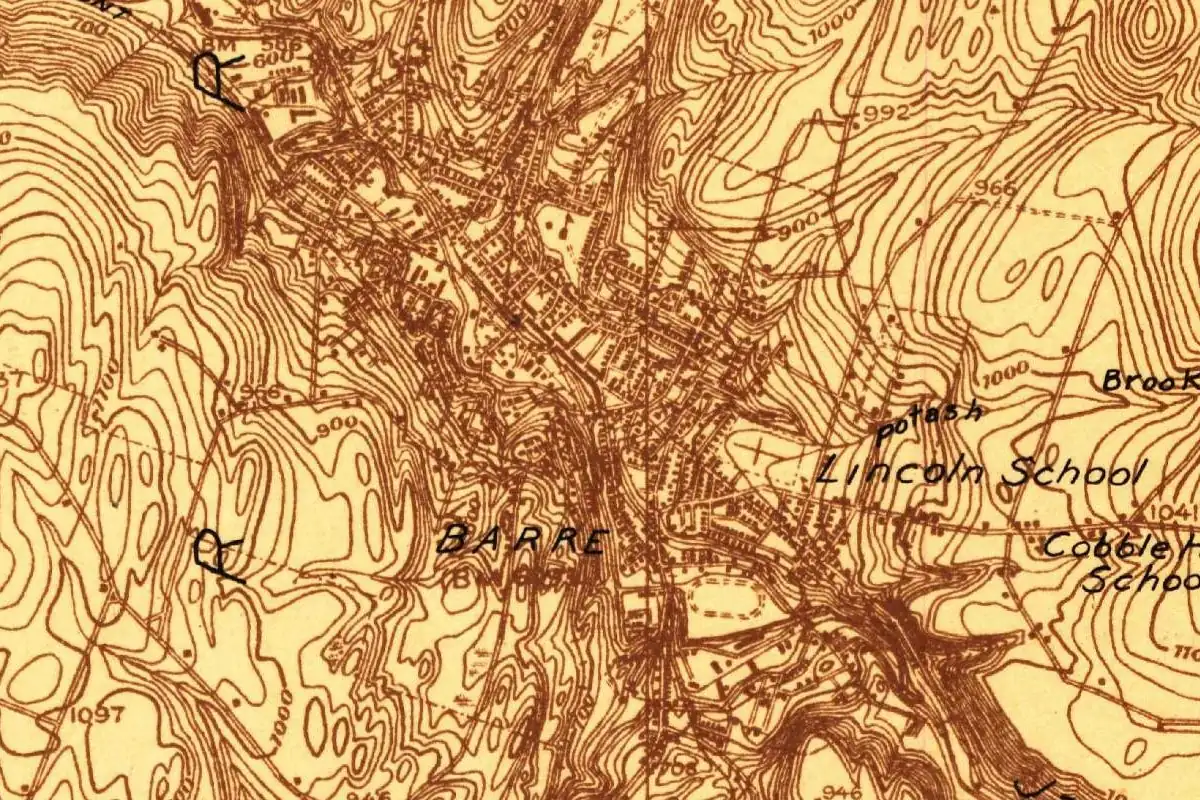
Zadock Thompson’s gazetteer also notes that a law passed on November 8, 1805, made Montpelier the permanent seat of state government. Its neighbor to the south, Barre, got its name in a much rowdier way.
So much for being one of a kind
Davis’s plan didn’t quite hold up. If you search the federal place-names database today, you’ll find 15 other populated places called Montpelier, spread across 14 other states, from Idaho and Ohio to Virginia, which has two. The database doesn’t say where those names came from. But the confusion Davis wanted to avoid caught up with his own choice anyway.
Sources & further reading
- D. P. Thompson, History of the Town of Montpelier (Montpelier, 1860), pp. 9-10, 170-171. Written “in accordance with a vote of the town in March meeting 1859.” The name “bestowed by Colonel Jacob Davis, a leading proprietor, and the first permanent settler”; his dislike of copying old-state names and worry about “so many places of the same name in one confederacy”; “the city of France bearing the name of Montpelier”; the footnote crediting George Worthington, Davis’s son-in-law (pp. 9-10). Davis from Charlton, Mass.; the township “which he caused to be named Montpelier, at the October session of the Legislature” of 1780, with the charter issued the following August (pp. 170-171).
- Henry Gannett, The Origin of Certain Place Names in the United States (USGS, 1905), p. 213. Montpelier “named from the city in France.”
- Zadock Thompson, History of Vermont (1842), part 3, pp. 119-120. Granted October 21, 1780; made the permanent seat of government by an act of November 8, 1805.
- GNIS (U.S. Geological Survey), populated places file. Feature 1461834 for Montpelier, Vermont, and 15 other populated places named Montpelier in 14 other states.
Spot something wrong, or know more? Tell us here. You can also email us or use our contact page. Corrections are noted here with their date, never made silently.