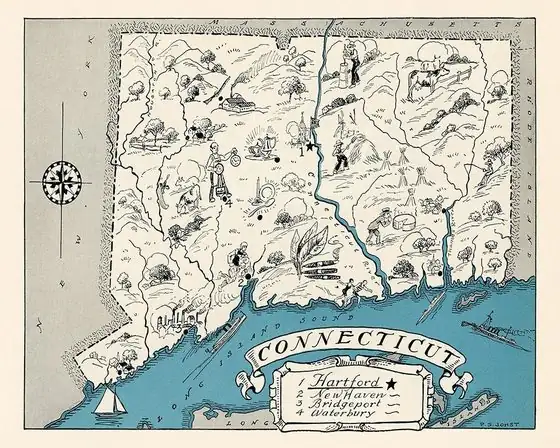
Bridgeport, Connecticut: The Lottery Bridge Behind the Name
Bridgeport got its name around 1800, when the harbor village of Newfield was incorporated as the Borough of Bridgeport. In the 1790s a drawbridge, paid for by a state-approved lottery, had been built across Newfield harbor. Henry Gannett wrote in 1905 that Bridgeports are usually named for a nearby bridge. No early record says who picked it.
From Newfield to Bridgeport
A harbor village called Newfield became the Borough of Bridgeport in 1800, a few years after a lottery paid for a drawbridge across its harbor. The name says what the place had: a bridge and a port. What the old records don’t say is who actually picked it.
Samuel Orcutt, who wrote the big two-volume history of Stratford and Bridgeport in 1886, puts the change in one plain line: “The name of the landing was called Newfield until about the year 1800, when it was changed to Bridgeport.” Henry Gannett’s 1905 roundup of place-name origins for the Geological Survey gives the reason in general terms. Bridgeport, Connecticut, and “numerous other places” with the name were “usually so called from a bridge in or near the place.”
That’s the short version. The longer one runs through four earlier names and a lottery.
Pequonnock, Stratfield, Newfield
Before there was a Bridgeport, the land along the Pequonnock River sat on the line between two older towns, Stratford and Fairfield. George C. Waldo Jr.’s History of Bridgeport and Vicinity (1917) says the settlement called Pequonnock was renamed Fairfield Village in May 1694, when it got permission to form its own parish. In May 1701 the name changed again, to Stratfield. Orcutt explains that one: it was “a name formed from the first part of the words Stratford and the last part of Fairfield.” So the place already had a name built out of two others a century before it got the one it has now.
Newfield came later and was smaller. Orcutt says that during the Revolution a trading point grew up on the west side of the harbor and “then or soon after, was called Newfield.” The name first turns up in the records in 1777, “in an accidental way, as though familiarly used.” Newfield was the landing; Stratfield was the wider parish around it. The two weren’t the same thing, and neither one was a town on its own.
A bridge paid for with lottery tickets
The trouble was the water. Travelers going between Stratford and Fairfield had to cross the harbor, and for a while that meant a ferry. In May 1791 the Stratford town meeting voted to build a bridge across the Pequonnock, and Robert Walker and others asked the legislature for permission to raise the money by lottery. Their petition, reprinted by Waldo, makes the case in miles. The road between the two towns through a village called Old Mill was “about nine miles” (about 14 km) and rough, while the road through Newfield was “three miles shorter” (about 5 km) but for “an arm of the sea” that needed a bridge.
In October 1791 the legislature said yes. Here’s the heart of the resolution, as Waldo prints it on page 282:
“…the moneys so to be raised shall be appropriated to the purpose of building said bridge; which said bridge shall contain therein a draw or drawbridge over the most convenient place in the channel, of twenty-four feet in width, and shall be completed in every respect and commodious for the public…”
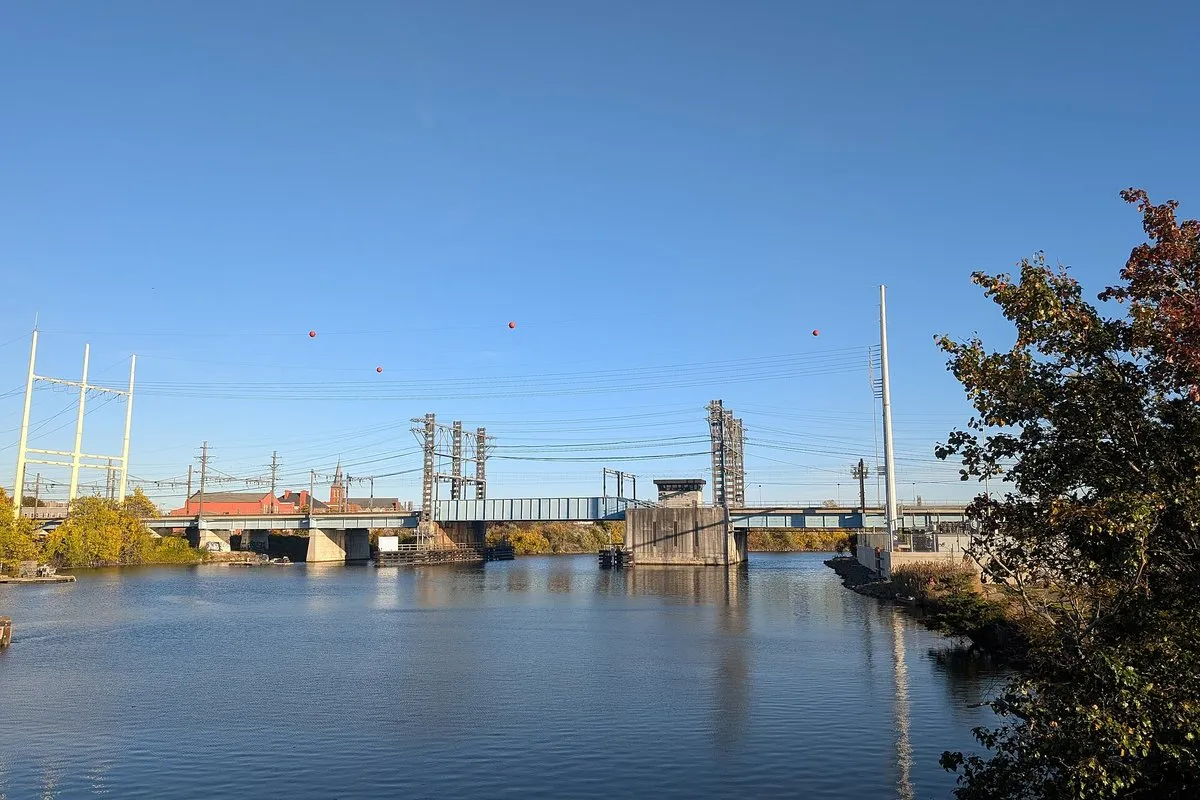
The lottery could raise £1,500, and the bridge was supposed to be finished by December 1, 1793. Waldo adds that it “had a draw, parting in the middle and raised by pulleys on each side,” and that it wasn’t built very well. People called it Lottery Bridge. Orcutt says Stratford was allowed to put a toll gate on it in 1799, and in another chapter he dates “the first drawbridge across the harbor” to 1797-98. The dates don’t line up neatly, but either way the bridge was there before the new name.
The borough gets its name
By 1800 Newfield wanted to run its own affairs. Waldo says the center of town government was “a good three miles away” (about 5 km) in the village of Stratford, and the Stratford authorities “took little interest in Newfield.” The answer was a borough, a kind of self-governing village that Connecticut hadn’t tried before.
In October 1800 the legislature made part of Stratford “one body corporate and politic” under the name “The Warden, Burgesses and Freemen of the Borough of Bridgeport.” Orcutt prints that wording on page 587, along with a letter from Joseph Backus, an early Bridgeport lawyer, who said in 1822 that he had come up with the borough idea himself and drafted the charter. Waldo dates the incorporation to October 28 and quotes Backus, as the last village clerk, noting that “hereafter no business will be done except in the name of the warden, burgesses and freeman of the Borough of Bridgeport.”
Backus claimed the charter. Neither book says he, or anyone else, chose the word Bridgeport. You can see why someone would, though: a new bridge across the harbor, and a harbor whose trade ran to Boston, New York and the West Indies, as Orcutt puts it.
Borough, town, city
The name stuck as the government around it grew. Waldo says the May 1821 session of the legislature set off the western part of Stratford as its own town, which held its first town meeting on June 11, 1821. He also dates the city’s incorporation to 1836. If you’re digging through old deeds, keep those layers in mind: a document from before 1800 will say Newfield or Stratfield, and the land west of today’s Park Avenue stayed in Fairfield for decades after 1821.
Orcutt says that with the 1800 charter, “as a commercial and manufacturing community, Bridgeport commenced her career of enterprise and progress.” The name it took that year is still on the map of Connecticut.
Quick answers
Why is Bridgeport, Connecticut, called Bridgeport?
The harbor village of Newfield took the name around 1800, a few years after a lottery-funded drawbridge was built across its harbor. Gannett’s Bridgeport entry of 1905 says Bridgeports are “usually so called from a bridge in or near the place.” No early record says who chose it.
What was Bridgeport called before?
The landing was Newfield until about 1800, according to Orcutt’s 1886 history. The wider area was called Pequonnock, then Fairfield Village from 1694 and Stratfield from 1701.
When did Bridgeport get its name?
In October 1800, when the Connecticut legislature incorporated “The Warden, Burgesses and Freemen of the Borough of Bridgeport.” It became a separate town in 1821 and a city in 1836.
What does Stratfield mean?
It’s a blend of the two neighboring towns. Orcutt says the name was formed “from the first part of the words Stratford and the last part of Fairfield.”
Key dates
- 1701May: the General Assembly renames Fairfield Village as Stratfield, from the first part of Stratford and the last part of Fairfield.
- 1777The name Newfield first shows up in the records, for a trading landing on the west side of the harbor.
- 1791The legislature approves a lottery to pay for a bridge with a drawbridge across Newfield harbor, to be done by December 1, 1793.
- 1800October: the legislature incorporates the Borough of Bridgeport, the first borough in Connecticut.
- 1821The western part of Stratford is set off as a separate town; its first town meeting is held June 11.
- 1836Bridgeport is incorporated as a city.
Getting there
Open Bridgeport in Google Maps
Opens in a new tab. The pin is the center of Bridgeport in the USGS place-name record.
The closest airports, Amtrak stations and intercity bus stops, measured in a straight line from the center of Bridgeport.
Airports
- Tweed/New Haven (HVN) 18 mi 29 km
- Long Island MacArthur (ISP) Islip 26 mi 42 km
- Laguardia (LGA) New York 44 mi 71 km
Amtrak trains
- Bridgeport station (BRP) 1 mi 2 km
- New Haven station (NHV) 17 mi 27 km
Intercity buses
- Greyhound Bridgeport Bus Stop 1 mi 2 km
- OurBus Fairfield, CT (I-95 Fairfield North Bound Service Plaza) 3 mi 5 km
- Peter Pan (BZ) Peter Pan Bus Lines · New Haven 17 mi 27 km
Distances are as the crow flies, not by road. We don't list schedules or fares because they change; check with the airline, Amtrak or the bus company before you go. Official data (FAA commercial service airports (2025), FAA airport locations, Amtrak stations and Intercity Bus Atlas) from the FAA and the U.S. Bureau of Transportation Statistics, checked Nov 13, 2026.
Sponsored
Staying in Bridgeport?
Compare hotels in Bridgeport, Connecticut, on Expedia.
See hotels in BridgeportWe may earn a commission if you buy through this link. It never changes what we write. Read our affiliate disclosure
Historical Sources & References
- Samuel Orcutt, A History of the Old Town of Stratford and the City of Bridgeport, vol. 1 (1886). Stratfield in 1701 and the meaning of the name (p. 476); Boston, New York, the Southern Atlantic States and the West Indies as the harbor’s markets (p. 493); the first drawbridge in 1797-98, the borough of 1800 and its “career of enterprise and progress” (p. 495); Newfield recorded in 1777, the 1791 bridge vote and lottery (pp. 585-586); the toll gate at Lottery Bridge, the October 1800 act and Joseph Backus’s letter (pp. 587-588); “The name of the landing was called Newfield until about the year 1800” (p. 589, also online).
- George C. Waldo Jr., History of Bridgeport and Vicinity, vol. 1 (1917). Pequonnock, Fairfield Village and Stratfield (p. 36); the borough of October 28, 1800, Backus’s record and “a good three miles away” (p. 45, also online); the town of 1821 (p. 63) and the city of 1836 (pp. 38, 87); the 1791 petition and the lottery resolution quoted above, with the description of the draw (pp. 281-282).
- Henry Gannett, The Origin of Certain Place Names in the United States (USGS, 1905), p. 56. “Usually so called from a bridge in or near the place.”
- GNIS feature 205720 (U.S. Geological Survey). Feature 205720, filed today under the Greater Bridgeport planning region.
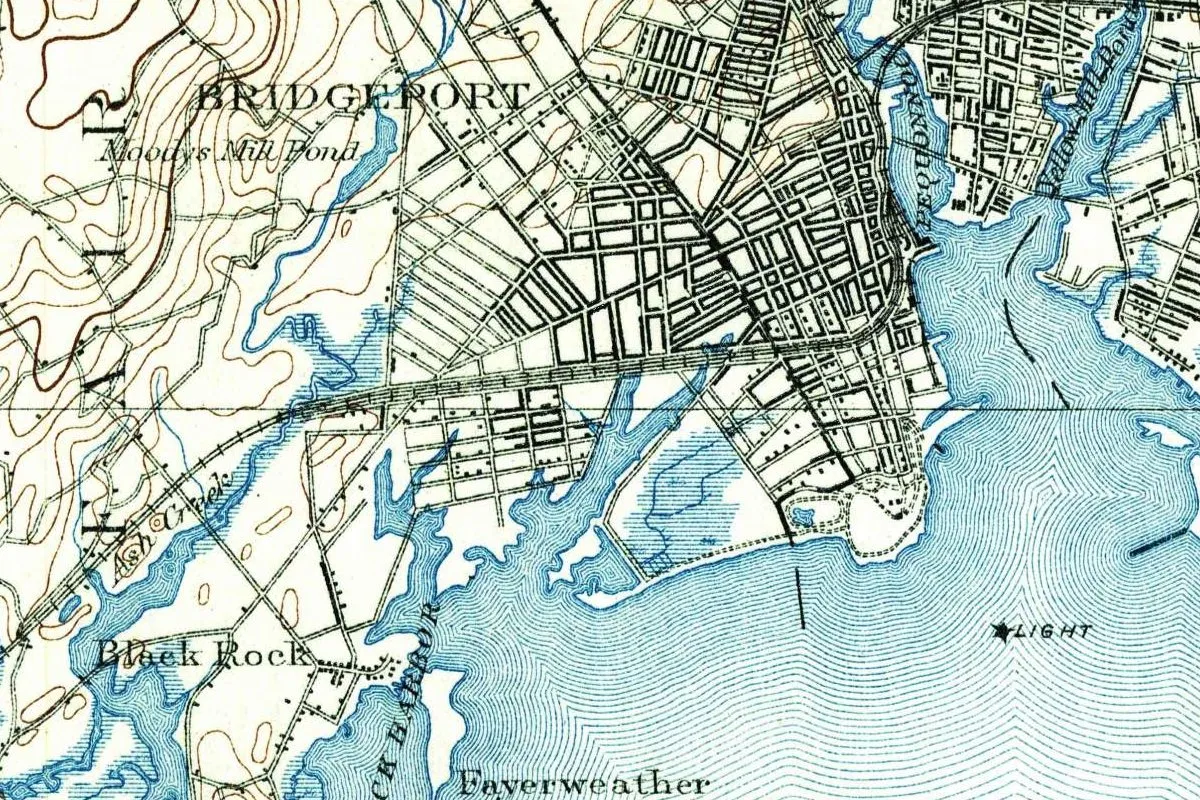
- U.S. Geological Survey, Bridgeport sheet (1891). The 1891 sheet that the map image is cut from.
Spot something wrong, or know more? Tell us here. You can also email us or use our contact page. Corrections are noted here with their date, never made silently.