Why Is It Called Lake Ozark? A Postmaster and a New Lake
Lake Ozark takes its name from the reservoir beside it, the Lake of the Ozarks, which filled behind Bagnell Dam in 1931. Frank Andrews, picked by a vote of residents as the first postmaster, favored the name over rivals like South Bagnell and New Bagnell, and in 1932 the new post office took that name.
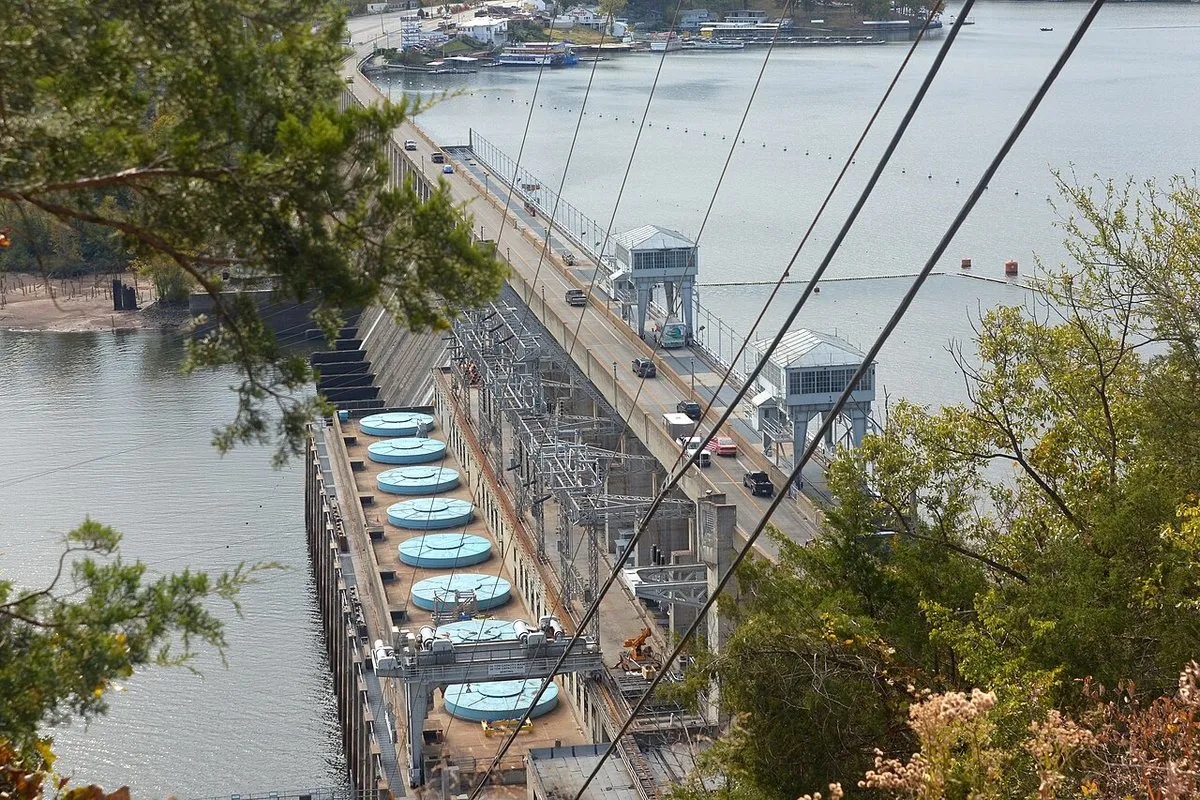
Lake Ozark, Missouri, was named in 1932 by its first postmaster, Frank Andrews, for the brand-new Lake of the Ozarks beside it. The town is younger than the lake, which had begun filling only the year before, and it grew up on the southwest side of Bagnell Dam.
Why is it called Lake Ozark?
The most direct answer comes from a 1938 master’s thesis on Miller County place names by Frank Weber; the state historical society now publishes its entries online. His entry describes “A post office established in 1932 on the southwest side of the Osage Dam, named by Frank Andrews, the first postmaster, for the lake which it is near.”
The local story, told by lake historian Dwight Weaver and published by the Miller County Museum, shows it wasn’t that simple. Naming the new village “became a divisive issue,” he writes. One group called it South Bagnell and even gave itself a chamber of commerce under that name; another wanted New Bagnell; Lako and Lake Ozark were suggested too. Bagnell was the older town nearby; Weber notes it was the closest railroad point and gave the dam its common name. Until then residents picked up their mail in Eldon or in Zebra, which became Osage Beach in 1935.
What settled it was the post office. Residents petitioned for one and voted Frank Andrews in as postmaster, Weaver says, and Andrews liked Lake Ozark, as did the postal service. He dates the official name to “by August 1, 1932.” Another Miller County Museum note gives October 1, 1932, as the day the post office opened.
Before that, by Weber’s count, the place was “Also known as Lakeside for a time (1929-31).” Weaver uses Lakeside for the land around the dam that Union Electric’s land company incorporated, where it built a hotel and a boat dock.
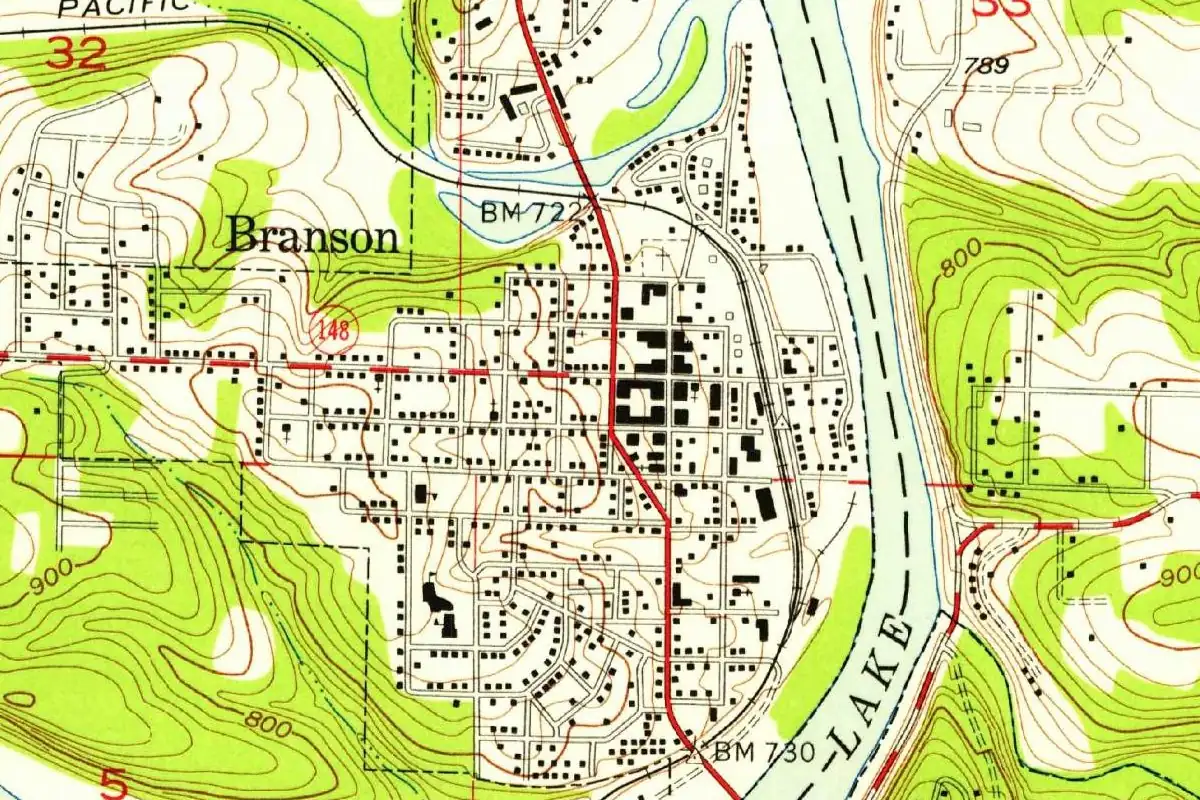
Another Ozarks town owes its name to a postmaster too. Branson carries the surname of Reuben S. Branson, a Taney County storekeeper appointed in 1882 as the first to run its post office.
How did the Lake of the Ozarks get its name?
The lake had its own naming fight. The City of Lake Ozark says that while the dam was going up, between August 6, 1929, and April 1931, people called the reservoir the Osage Reservoir or Lake Osage. Weaver gives the construction as August 1929 to June 1931.
The state then picked a name of its own. Weber says the Missouri General Assembly named it Lake Benton, for Senator Thomas Hart Benton, and that newspaper editor J. W. Vincent of Linn Creek pushed for Lake McClurg, after a former governor. Neither stuck. “The name designated by the builders, ‘The Lake of the Ozarks’ has come into popular use,” Weber wrote, adding that it sits among the Ozark foothills, the mountains “for which it is named.”
The city’s figures for the result: 55,000 acres (22,000 ha) of water and more than 1,150 miles (1,850 km) of shoreline, reaching into Miller, Morgan, Camden and Benton counties.
Lake Ozark is one of several towns named for a lake. Lake Geneva, Wisconsin, is called after a lake that surveyor John Brink named in 1835 for Geneva, New York. In California, Big Bear Lake sits on a reservoir made by an 1884 dam, though its name goes back to grizzlies seen in the valley in 1845.
What does Ozark mean?
So the mountains named the lake, and the lake named the town. The word Ozark is older and harder to pin down. Both readings below start from French aux arcs; where they part is over what the arcs were.
Toward Arkansas Post
The Oklahoma Historical Society’s online encyclopedia says Ozark comes from a corrupted French “aux-arcs,” a shortened term “probably meaning ‘to [or toward] Arkansas Post,’” the early French post near the Arkansas River delta, or to the country around it, home to the Arkansas, or Quapaw, people.
The bends of the White River
Henry Gannett, explaining American place names in a 1905 Geological Survey publication, offered another idea: the aux arcs “were said to refer to the bends in the White River,” so that the name meant “the mountains at the bends of the river.” His “were said to” is a hedge, and so is the encyclopedia’s “probably.”
Lake Ozark history: Damsite, the Strip and 1966
Weaver says the dam was the biggest tourist draw in the Midwest while it was being built, during the Great Depression. Workers lived at a camp called Damsite, below the dam, which lasted only as long as the job and had a reputation for bootleg liquor and gambling.
Union Electric also put up a lodge by the dam in 1930 as a place for dam workers to relax; in 1945 the company sold it to St. Louis developer Cyrus Crane Willmore, whose name it still carries, says the chamber of commerce that now works out of it.
Once the lake filled, businesses lined up along the highway leading away from the dam. That stretch, now Bagnell Dam Boulevard, became the Bagnell Dam Strip, which the Bagnell Dam Strip Association says opened in 1931. Highway 54 crossed the dam itself, so every car heading west came down the Strip, Weaver writes, and the county line between Miller and Camden zigzags along it, leaving the town in two counties.
It took 35 years for Lake Ozark to become a city. The city’s history says the county court incorporated it on August 12, 1966, after a special election on August 9 went 145 to 13, and that a census taken that July counted 379 people.
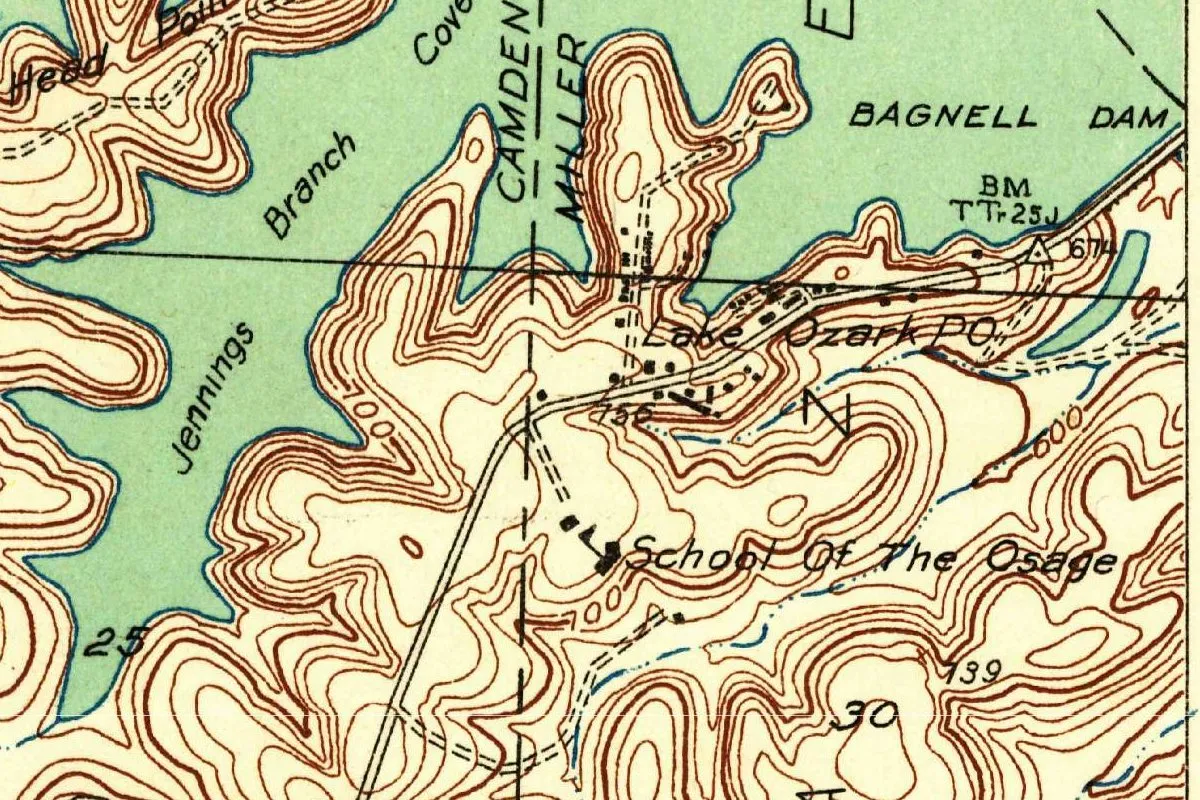
Lake Ozark on the 1934 map
Above is a piece of the Lake Ozark quadrangle, Missouri, a 1:24,000 sheet stamped “Advance sheet. Subject to correction.” The Missouri Geological Survey and Water Resources produced it in cooperation with the federal Geological Survey, from surveys in 1932 and 1934.
In the crop, “Lake Ozark P.O.” sits on a ridge among a handful of buildings, with BAGNELL DAM lettered over the water off to the northeast and the School of the Osage a little to the south. A dashed line marked Camden and Miller runs through the scene, the county boundary the town still straddles.
Quick answers
Who named Lake Ozark?
Frank Andrews, its first postmaster, according to Frank Weber’s 1938 thesis and the Miller County Museum. Residents had elected him to the job by vote.
What was Lake Ozark called before?
Lakeside, from 1929 to 1931, according to Weber. South Bagnell, New Bagnell and Lako were also proposed for the village before the post office settled on Lake Ozark.
When did Lake Ozark become a city?
On August 12, 1966, after voters approved incorporation 145 to 13 three days earlier.
Key dates
- 1929Work on Bagnell Dam across the Osage River begins in August.
- 1931The dam is finished and the Lake of the Ozarks fills behind it; the Bagnell Dam Strip opens.
- 1932The Lake Ozark post office opens, with Frank Andrews as postmaster.
- 1934Lake Ozark P.O. appears on an advance topographic sheet drawn from surveys of 1932 and 1934.
- 1945Union Electric sells its lodge by the dam to Cyrus Crane Willmore.
- 1966Voters approve incorporation 145 to 13 on August 9, and the county court incorporates the city on August 12.
Things to do in Lake Ozark, Missouri
Willmore Lodge
A lodge that Union Electric built by the dam in 1930 for its workers to unwind in, later the home of developer Cyrus Crane Willmore. Today the area's chamber of commerce has its offices there, alongside a museum about the building of Bagnell Dam, with photos, documents, videos and equipment from the job.
Bagnell Dam Strip
The town's historic downtown on Bagnell Dam Boulevard, open since 1931, where the Bagnell Dam Strip Association runs parades and festivals among the restaurants and shops.
Lake of the Ozarks State Park
A state park on the lake with a pair of beaches for swimming, boats to rent, paved ramps, and trails for hikers, riders and cyclists through woodlands and glades to views from the bluffs.
Ha Ha Tonka State Park
A park of sinkholes, caves, a natural bridge and Missouri's 12th-largest spring, overlooked by the ruins of a stone castle from around 1900, with trails and boardwalks between them.
Getting there
Open Lake Ozark in Google Maps
Opens in a new tab. The pin is the center of Lake Ozark in the USGS place-name record.
The closest airports, Amtrak stations and intercity bus stops, measured in a straight line from the center of Lake Ozark.
Airports
- Waynesville-St Robert Regional Forney Field (TBN) Fort Leonard Wood (U.S. Army) 42 mi 67 km
- Columbia Regional (COU) 48 mi 78 km
- St Louis Lambert International (STL) St. Louis 128 mi 207 km
Amtrak trains
- Jefferson City station (JEF) 37 mi 59 km
- Sedalia station (SED) 48 mi 77 km
Intercity buses
- Greyhound Jefferson City Conoco 36 mi 58 km
- Jefferson Lines Collins 58 mi 93 km
Distances are as the crow flies, not by road. We don't list schedules or fares because they change; check with the airline, Amtrak or the bus company before you go. Official data (FAA commercial service airports (2025), FAA airport locations, Amtrak stations and Intercity Bus Atlas) from the FAA and the U.S. Bureau of Transportation Statistics, checked Nov 18, 2026.
Sponsored
Staying in Lake Ozark?
Compare hotels in Lake Ozark, Missouri, on Expedia.
See hotels in Lake OzarkWe may earn a commission if you buy through this link. It never changes what we write. Read our affiliate disclosure
Historical Sources & References
- Frank Weber’s 1938 Miller County place names, State Historical Society of Missouri. Frank Andrews, Lakeside, Lake Benton, Lake McClurg and “the builders.”
- Miller County Museum, December 7, 2009, with Dwight Weaver’s history, and August 31, 2009. The naming fight, the post office dates, Damsite and the Strip.
- City of Lake Ozark, “History” and “About Us”. The 1966 incorporation, the dam dates and the lake’s early names and size.
- Encyclopedia of Oklahoma History and Culture, “Ozark Plateau” and Gannett, 1905, p. 235. The two readings of aux arcs.
- Lake Area Chamber of Commerce on Willmore Lodge, the Bagnell Dam Strip Association and Missouri State Parks. The details in the things-to-do list.
- U.S. Geological Survey, GNIS feature 729529. Lake Ozark in Miller County.
- Lake Ozark quadrangle, Missouri, 1934. The sheet the map at the top was cropped from.
Spot something wrong, or know more? Tell us here. You can also email us or use our contact page. Corrections are noted here with their date, never made silently.