Pembroke Pines, Florida: A British MP, a Road and the Pines
Pembroke Road and the pine trees that grew near it gave Pembroke Pines, Florida, its name. The city says its first mayor, Dr. Seth Kipnis, suggested the name at incorporation, and traces the road's name to Sir Edward Reed, a British member of Parliament for Pembroke who bought land in South Florida in the 1880s.
A road across a Pembroke MP’s land
Pembroke Pines, Florida, takes half its name from a road through land owned by a British naval architect who sat in Parliament for Pembroke. The second half is simpler: pine trees. That’s the city’s own explanation, and each link in it has a little more history behind it than you’d expect.
The City of Pembroke Pines puts it in a short history called “Pembroke Pines – A Look Back.” It traces the name to Sir Edward Reed, “a Member of Britain’s Parliament for the County of Pembroke in 1874,” who then “purchased and farmed land in the 1880s” in what’s now the nearby city of Dania Beach. “The road put through his land came to be known as Pembroke Road,” the city writes. When the town incorporated, its first mayor, Dr. Seth Kipnis, “suggested the name Pembroke Pines because of the pine trees growing near Pembroke Road.”
Who Sir Edward Reed was
Reed was no ordinary land buyer. The Dictionary of National Biography of 1912 calls him a former “chief constructor of the navy,” who designed armored warships for Britain in the 1860s and later for Turkey, Japan, Germany, Chile and Brazil. In 1874, it says, he “was returned as member for the Pembroke boroughs,” and from 1880 he sat for Cardiff instead. So the city’s “County of Pembroke” is a little off. It was the boroughs. And Florida’s Pembroke took a longer road than older American ones: Henry Gannett’s 1905 USGS bulletin on place names says the Pembroke in Massachusetts was “named from the town in England” and the one in New Hampshire was “probably named for the Earl of Pembroke.”
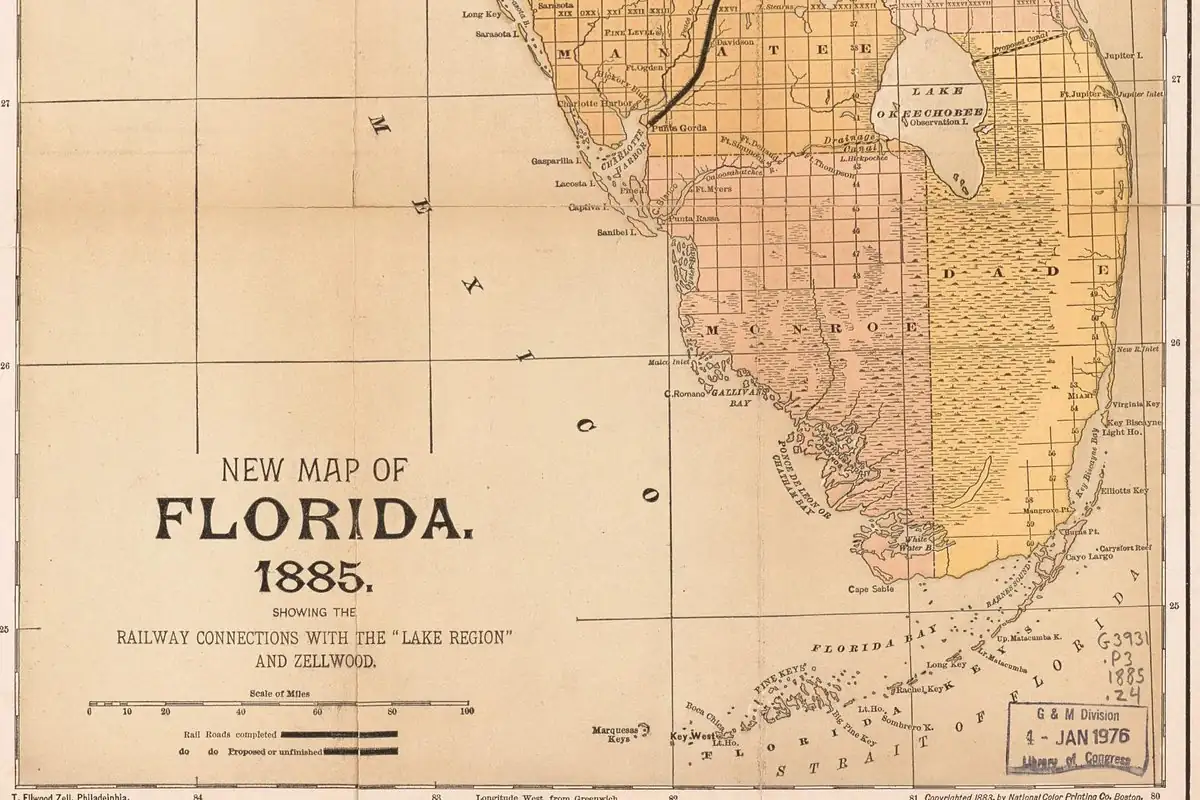
His Florida connection shows up in print in 1881. Hamilton Disston, the investor who’d just bought millions of acres of central Florida, sold half of that purchase to a syndicate Reed formed with Dr. Jacobus Wertheim of Amsterdam and other Dutch capitalists. A DeLand farm paper reported the deal that December:
“…the syndicate controlled by Sir Edward Reed. He and his friends started immediately for Florida, where they will at once organize a land company whose headquarters will be in England.”
Two million acres changed hands. Allendale, the lakeside trading post that became Kissimmee, sat inside that same Disston purchase. The 1881 paper doesn’t mention Dania or any road, and the sources here don’t name the exact tract where Pembroke Road was cut. For that link, you’re relying on the city’s account.
Pines, a dairy farm and an airfield
The “Pines” half was real enough. The city says the Florida Turnpike, built through the area in 1957, “worked its way through open pastures and pine forests on the eastern edge of Pembroke Pines.”
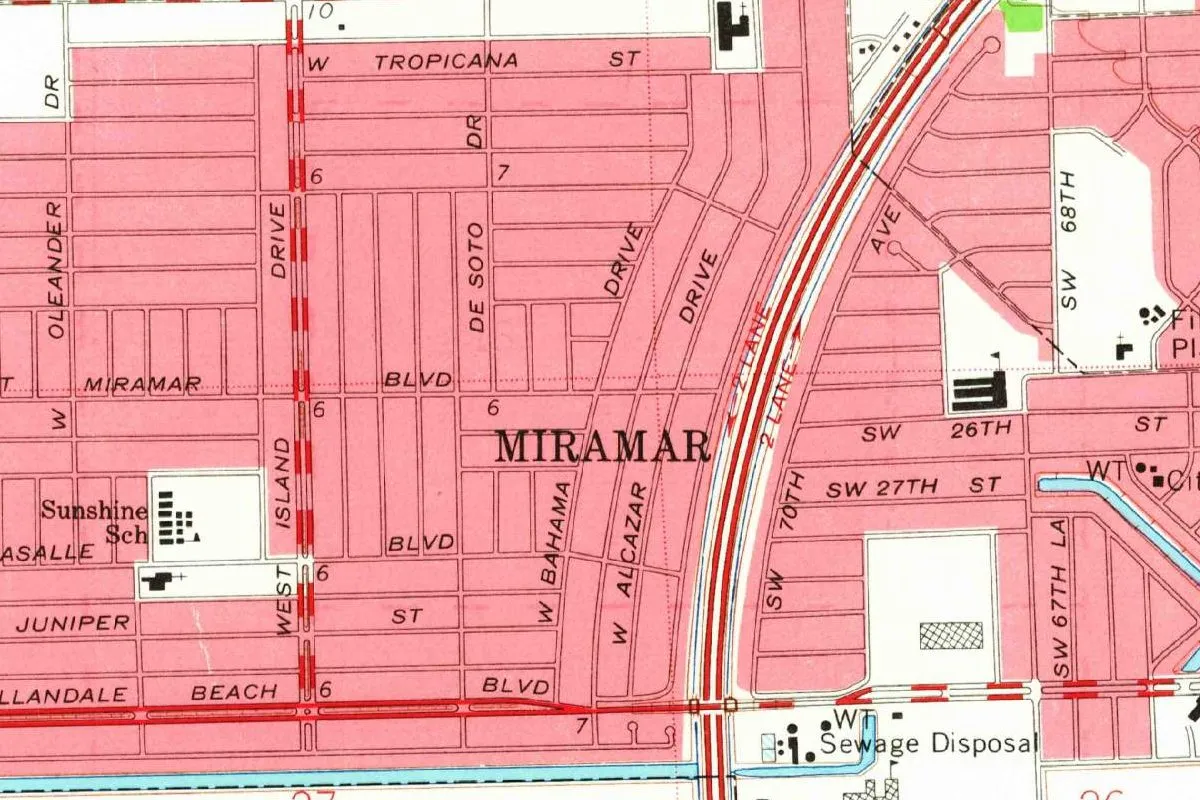
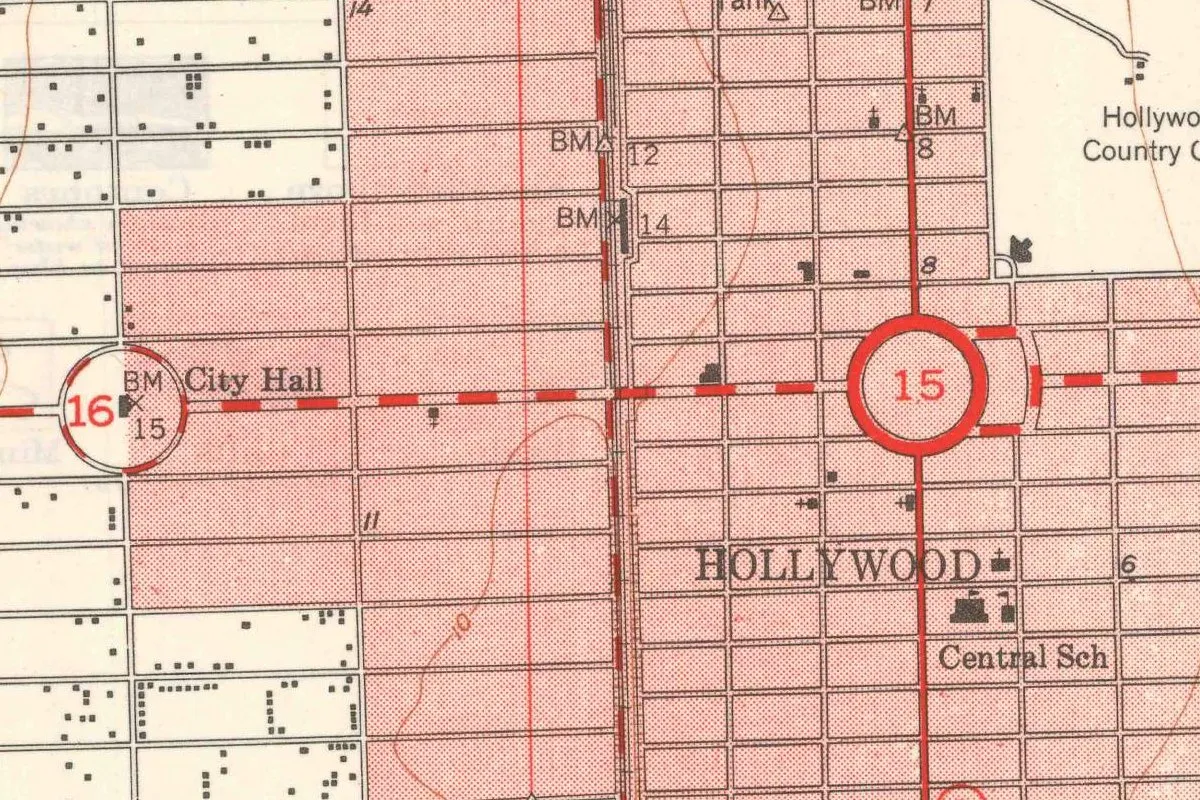
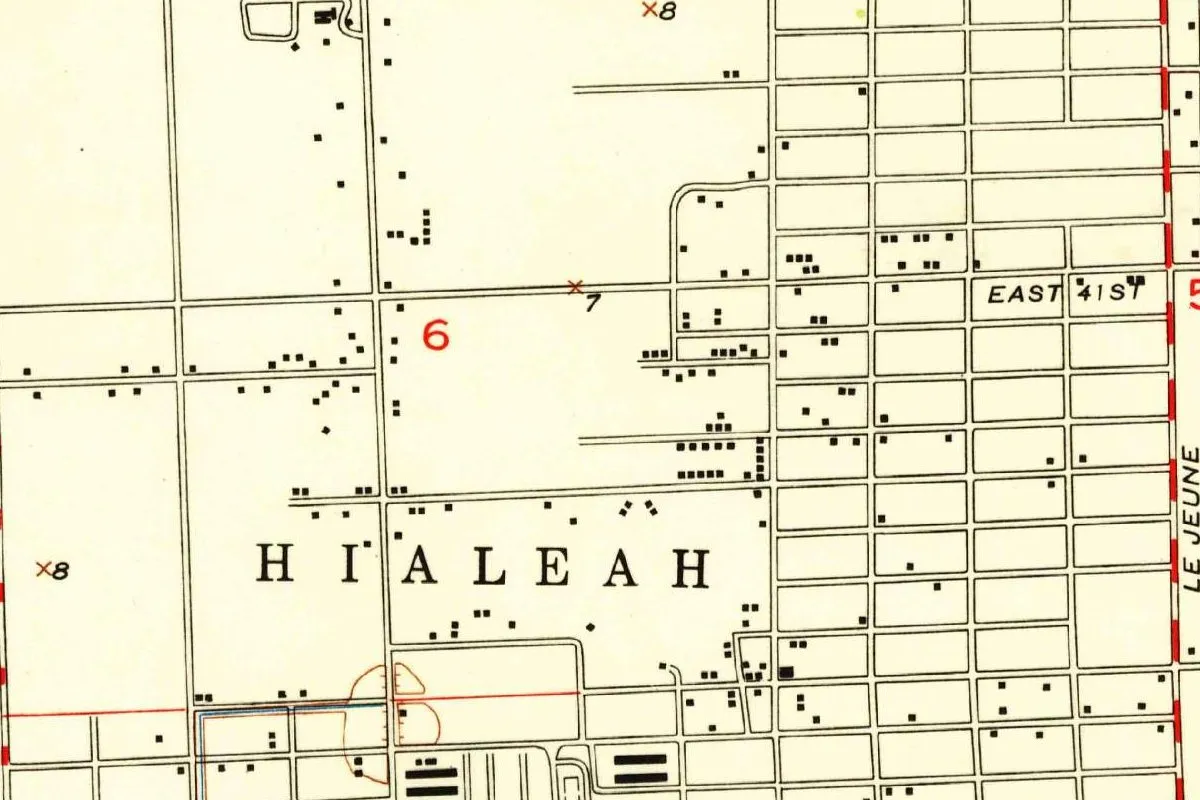
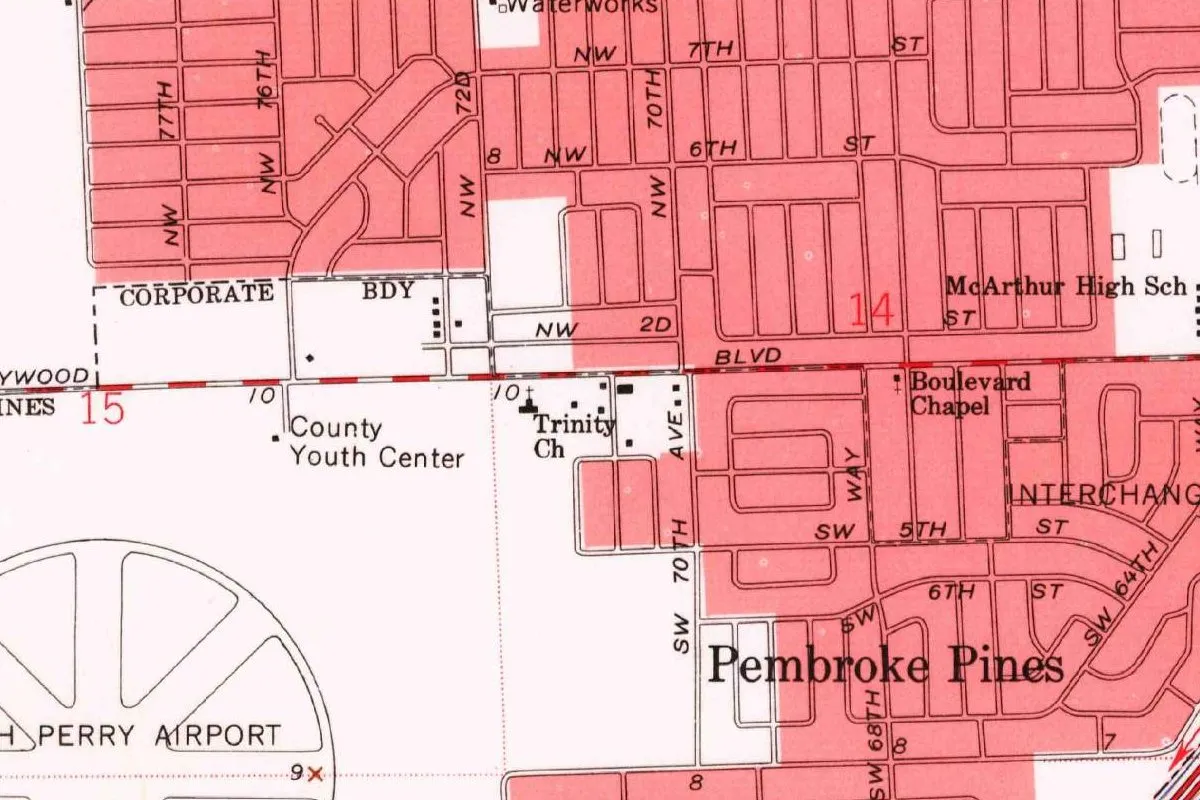
Before the houses, much of the land was a dairy. In 1943, Henry D. Perry sold 640 acres of his farm to the U.S. Navy for a flight-training field between Hollywood Boulevard and Pembroke Road. It’s North Perry Airport today, and you can spot its name at the corner of the 1962 survey map above. Broward County took the airport over in 1950, and housing followed the veterans who’d trained in South Florida and wanted to come back. A Henry D. Perry, Sr., also sold the dairy farm that became neighboring Miramar, according to that city.
Who picked the name, and when
There’s a wrinkle, though. The “Look Back” history credits Mayor Kipnis with suggesting the name “when incorporating,” and the town incorporated around 1960. But the city’s 2015 budget, in a section called “A Short History,” says “the first two tiny Pembroke Pines #1 and #2 subdivisions were created in 1954.” So the name was already on the ground several years earlier. The sources don’t say who picked it for those subdivisions, or whether Kipnis had anything to do with it.
The incorporation itself took two tries. The same budget history says a “Village of Pembroke Pines” was incorporated in 1959, but builders contested it and the village was dissolved because the boundaries were stated wrong on the ballot. A second election in January 1960 made it a city. The “Look Back” says that vote drew 425 ballots and was cast in a resident’s carport. Even the exact day varies: the fire department’s history gives January 16, 1960, and the budget’s community profile lists January 19.
The first city covered less than a square mile (2.6 sq km), with Pembroke Road as its southern edge. So the road that gave the city half its name was also the line where it stopped.
Quick answers
Is Pembroke Pines named after Pembroke in Britain?
Only indirectly. The city says the name comes from Pembroke Road, which it traces to Sir Edward Reed, who sat in Parliament for the Pembroke boroughs starting in 1874.
Were there really pine trees in Pembroke Pines?
Yes. The city says the name was chosen for the pines growing near Pembroke Road, and it describes the Turnpike being built through “pastures and pine forests” in 1957.
Who suggested the name Pembroke Pines?
The city credits Dr. Seth Kipnis, its first mayor, at incorporation. Its own budget history, though, shows Pembroke Pines subdivisions already existed in 1954.
When was Pembroke Pines incorporated?
In January 1960, after a first incorporation in 1959 was thrown out over a ballot error. City sources give both January 16 and January 19.
Key dates
- 1874Edward J. Reed is elected to Parliament as member for the Pembroke boroughs.
- 1881A syndicate led by Sir Edward Reed buys 2,000,000 acres of Florida land from Hamilton Disston, a DeLand paper reports in December.
- 1943Dairy farmer Henry D. Perry sells 640 acres to the U.S. Navy for a training field, today's North Perry Airport.
- 1954The first two Pembroke Pines subdivisions, #1 and #2, are created.
- 1959A Village of Pembroke Pines is incorporated, then dissolved because the ballot gave the boundaries wrong.
- 1960January: a second election makes Pembroke Pines a city, with Dr. Seth Kipnis as its first mayor.
Getting there
Open Pembroke Pines in Google Maps
Opens in a new tab. The pin is the center of Pembroke Pines in the USGS place-name record.
The closest airports, Amtrak stations and intercity bus stops, measured in a straight line from the center of Pembroke Pines.
Airports
- Fort Lauderdale/Hollywood International (FLL) 7 mi 11 km
- Miami International (MIA) 15 mi 24 km
Amtrak trains
- Hollywood station (HOL) 4 mi 6 km
- Fort Lauderdale station (FTL) 9 mi 14 km
Intercity buses
- FlixBus Hollywood Sheridan Street 4 mi 6 km
- Greyhound Boca Raton Trirail Station 28 mi 45 km
Distances are as the crow flies, not by road. We don't list schedules or fares because they change; check with the airline, Amtrak or the bus company before you go. Official data (FAA commercial service airports (2025), FAA airport locations, Amtrak stations and Intercity Bus Atlas) from the FAA and the U.S. Bureau of Transportation Statistics, checked Nov 13, 2026.
Sponsored
Staying in Pembroke Pines?
Compare hotels in Pembroke Pines, Florida, on Expedia.
See hotels in Pembroke PinesWe may earn a commission if you buy through this link. It never changes what we write. Read our affiliate disclosure
Historical Sources & References
- City of Pembroke Pines, “Pembroke Pines – A Look Back”. The name traced to Sir Edward Reed and Pembroke Road, Mayor Kipnis’s suggestion “because of the pine trees growing near Pembroke Road,” Henry D. Perry’s 1943 sale to the Navy, the Turnpike through “pastures and pine forests” in 1957, the 425 votes of 1960 and the first city limits.
- City of Pembroke Pines, FY 2015 Adopted Budget. “A Short History” (PDF p. 494): the Pembroke Pines #1 and #2 subdivisions of 1954, the 1959 village dissolved over the ballot, the second election of January 1960, and Dr. Walter Seth Kipnis. Community profile (PDF p. 61): incorporation on January 19, 1960.
- Pembroke Pines Fire Rescue, “History”. The Village of Pembroke Pines before 1960 and incorporation on January 16, 1960.
- Dictionary of National Biography, 1912 supplement: “Reed, Edward James”. Reed’s warship designs for Britain and other navies, his election in 1874 “as member for the Pembroke boroughs,” and his later seat for Cardiff.
- The Florida Agriculturist (DeLand, Fla.), December 28, 1881, p. 1. Disston’s sale of 2,000,000 acres to “the syndicate controlled by Sir Edward Reed” and the plan for a land company based in England.
- Henry Gannett, The Origin of Certain Place Names in the United States (USGS, 1905), p. 241. Older Pembrokes in Massachusetts (“named from the town in England”) and New Hampshire (“probably named for the Earl of Pembroke”), and none in Florida.
- GNIS feature 288686 (U.S. Geological Survey). Entry 288686 in the national gazetteer, for the city in Broward County.
- U.S. Geological Survey, Fort Lauderdale South sheet (1962). The 1962 sheet the Pembroke Pines map comes from.
Spot something wrong, or know more? Tell us here. You can also email us or use our contact page. Corrections are noted here with their date, never made silently.